· Digital Footprint Check · Content Marketing · 21 min read
How to Conduct Background Checks a Complete Guide
Learn how to conduct background checks legally and effectively. Our complete guide covers compliance, interpreting results, and making fair hiring decisions.

A background check is more than a box to tick. It’s the foundation of a safe, trustworthy team, protecting your company from problems ranging from safety issues to financial fraud. It verifies a candidate’s history so you bring the right people on board.
Why Background Checks Are Non-Negotiable
Before the how, the why. A solid screening process is your first line of defense against preventable risks.
Think of it like a house: you wouldn’t put up walls on a weak foundation. A new hire is part of your company’s foundation, and a good background check confirms they’ll strengthen it rather than introduce a weak spot.
Protecting Your People and Your Culture
Your first job as an employer is a safe place for your team and customers. One bad hire can put workplace safety at risk, hurt morale, and undo the work you’ve put into a positive culture.
Screening helps you spot red flags — a history of violence, theft, or other serious issues — before they become your problem. It’s due diligence, not judgment.
Where it matters:
- Workplace Safety: Identifying past violent offenses helps prevent conflicts and keeps the work environment secure.
- Asset Protection: For roles handling cash or sensitive data, screening for financial crimes like fraud is essential.
- Brand Reputation: Hiring someone whose past actions clash with your values can damage your reputation later.
Businesses are taking this more seriously. The global background check market was valued at USD 15.54 billion in 2024 and is projected to reach USD 39.60 billion by 2032. See the trends in this industry report from Data Bridge Market Research.
Building a Targeted Screening Strategy
Not every role carries the same risk, so a one-size-fits-all approach doesn’t work — it’s inefficient and can feel unfair. Tailor your screening to the duties of the job.
For example, a delivery driver needs a clean motor vehicle record. A CFO needs a deeper look at credit history and criminal record.
A targeted approach is more effective and shows you’re being thoughtful: you’re not digging into someone’s past without reason, but focusing on what’s relevant to the job. As you decide what to look for, the impact of a digital footprint on job opportunities adds another layer of insight.
A smart screening policy isn’t about disqualifying candidates—it’s about qualifying them. It confirms the information they’ve provided and gives you the confidence to make a great hiring decision based on facts, not assumptions.
Ultimately, a great background check process starts with knowing exactly what you need to verify for each role. Get that right, and you’re on your way to building a smarter, more effective, and legally sound screening program.
To help you get started, here’s a quick rundown of some of the most common checks and what they’re typically used for.
Common Background Checks and What They Uncover
This table is a quick reference to help you decide which screening tools are right for your needs.
| Type of Check | What It Verifies | Best For These Roles |
|---|---|---|
| Criminal Record Check | Felonies, misdemeanors, and pending charges at the county, state, or federal level. | Nearly all roles, especially those involving public trust, security, or vulnerable populations. |
| Employment Verification | Confirms past employers, job titles, and dates of employment from a candidate’s resume. | All professional roles to confirm experience and prevent resume fraud. |
| Education Verification | Verifies degrees, diplomas, and certifications from accredited institutions. | Positions requiring specific academic qualifications, like engineers, doctors, or accountants. |
| Motor Vehicle Records (MVR) | Driving history, including violations, suspensions, and license status. | Any role that involves driving a company vehicle, such as delivery drivers or sales reps. |
| Credit Report | Checks credit history, debt levels, and financial responsibility. | Financial positions, executives, or roles with access to company funds (e.g., CFO, controller). |
| Social Media Screening | Reviews public online activity for red flags like hate speech, threats, or illegal activity. | Public-facing roles, leadership positions, or any job where brand reputation is critical. |
Choosing the right combination of these checks ensures you get a relevant, 360-degree view of your candidate without overstepping. It’s all about being thorough but fair.
Staying Compliant in a Complex Legal Landscape
When you run a background check, you’re handling someone’s most sensitive personal information. That’s a heavy responsibility, and navigating the tangled web of legal requirements isn’t just a good idea—it’s mandatory. Getting this wrong can land you in some seriously hot water, complete with costly lawsuits and a black eye on your company’s reputation.
The big one you need to know in the U.S. is the Fair Credit Reporting Act (FCRA). Don’t let the name fool you; it’s not just about credit reports. The FCRA covers any “consumer report” used for hiring, which includes everything from criminal records to driving history. It’s the foundational rulebook for keeping the screening process fair and transparent.
The Three Pillars of FCRA Compliance
I find it helps to break FCRA compliance down into three core actions: get permission, be transparent, and follow a strict process if you find something that gives you pause.
First off, you must get the candidate’s clear, written consent before running any background check. This can’t be some fine print buried in a massive job application. It has to be a standalone document that makes it crystal clear you might use this information to make a hiring decision.
Next comes the disclosure form. This is another crucial document that tells the applicant exactly what kind of check you plan to run—its nature and scope. It’s a separate but equally important step that ensures there are no surprises.
Finally, if you get a report back with information that makes you reconsider hiring someone, you have to initiate the adverse action process. This is a two-step notification that gives the candidate a fair shot to see the report and dispute any errors before you make your final call. Skipping this is one of the easiest—and most expensive—compliance mistakes a company can make.
Key Takeaway: Consistency is your best friend on avoiding discrimination claims. Whatever your screening policy is—say, running criminal checks for all roles or only credit checks for finance positions—you must apply it the exact same way for every applicant in that role. No exceptions.
Navigating State and Local Laws
Just when you think you have the FCRA figured out, you realize it’s only the national standard. Many states, and even individual cities, have their own rules that add more layers to the process. You’ve probably heard of “ban the box” laws, which dictate when you can ask about criminal history.
For example, some laws say you can’t have a conviction question on the initial application. You have to wait until after the first interview or, in some cases, until you’ve already made a conditional job offer. The idea is simple: give people a chance to be judged on their skills and qualifications first.
These regulations are all over the map, so it’s critical to know the specific laws for your office location and where your candidates live. With a remote workforce, you could easily be juggling compliance across multiple states.
- California, New York, and Illinois are known for having some of the toughest regulations out there.
- Some laws limit how far back you can look into someone’s history, often capping it at seven years.
- Others prevent you from using non-conviction records (like arrests) in your hiring decisions.
The background check industry is massive. In the U.S. alone, it’s projected to pull in around USD 5.1 billion by 2025. Even with slowing growth, that number shows just how common these checks are, which is why regulators are watching so closely. To get a better feel for the numbers, you can explore the full scope of the background check services market on IBISWorld.
Handling Disputes and Adverse Action
Let’s play out a real-world scenario. You’ve found a fantastic candidate, but their background report comes back showing a criminal conviction. Your gut reaction might be to just move on to the next person in line, but the law requires you to hit the brakes and follow a specific procedure.
This is where the adverse action process kicks in.
- Send a Pre-Adverse Action Notice: Before you make any final decision, you have to send the candidate a notice. This package must include a copy of their background check report and a document called “A Summary of Your Rights Under the Fair Credit Reporting Act.”
- Give Them Time to Respond: You legally have to give them a reasonable amount of time (the industry standard is about five business days) to look over the report. This gives them a chance to spot any mistakes and dispute them with the screening company. Believe me, mistakes happen—identities get mixed up, and records can be out of date.
- Send the Final Adverse Action Notice: If the candidate doesn’t dispute anything, or if the report is confirmed as accurate and you still decide not to hire them, you must send a final notice. This letter officially informs them of your decision and provides the contact information for the screening company that provided the report.
This process isn’t optional. It’s a legal requirement that protects the candidate’s rights and shows that your hiring process is fair and above board, protecting both them and you.
Executing Your Background Screening Process
Alright, you’ve got a handle on the legal side of things. Now it’s time to roll up your sleeves and actually put that screening strategy into action. This is where the rubber meets the road—moving from planning to doing. Getting this part right is what separates a smooth, defensible process from a chaotic and risky one.
First thing’s first: you need a clear, written background check policy. This isn’t just busywork; it’s your playbook. It should spell out exactly which checks are required for different roles, creating standard “packages.” For example, an entry-level position might just need a criminal history check. But for a senior finance role? You’ll probably want to add a credit report and employment verification to the mix.
Launching the Check with a Trusted Partner
With your policy in hand, your next move is getting the candidate’s okay. This has to be done with a standalone, FCRA-compliant consent form—no burying it in a stack of other papers. Once you have their written permission, you can kick off the background check with your chosen screening partner.
Speaking of partners, choosing the right one is a huge deal. You need a provider that delivers accurate and timely results, sure, but their platform also needs to be easy to use. The goal is to find features that make life easier for both you and your candidates.
Here’s what I always look for in a screening provider:
- An intuitive dashboard where I can order checks and see their progress in real-time.
- Mobile-friendly candidate portals, because applicants need to be able to enter their info and give consent from their phones.
- ATS integrations that plug the screening process right into the hiring workflow I’m already using.
- Compliance tools to help manage those tricky FCRA requirements, like pre-adverse and adverse action notices.
This infographic breaks down the essential legal flow: consent, disclosure, and action. It’s a great visual reminder of the core steps.
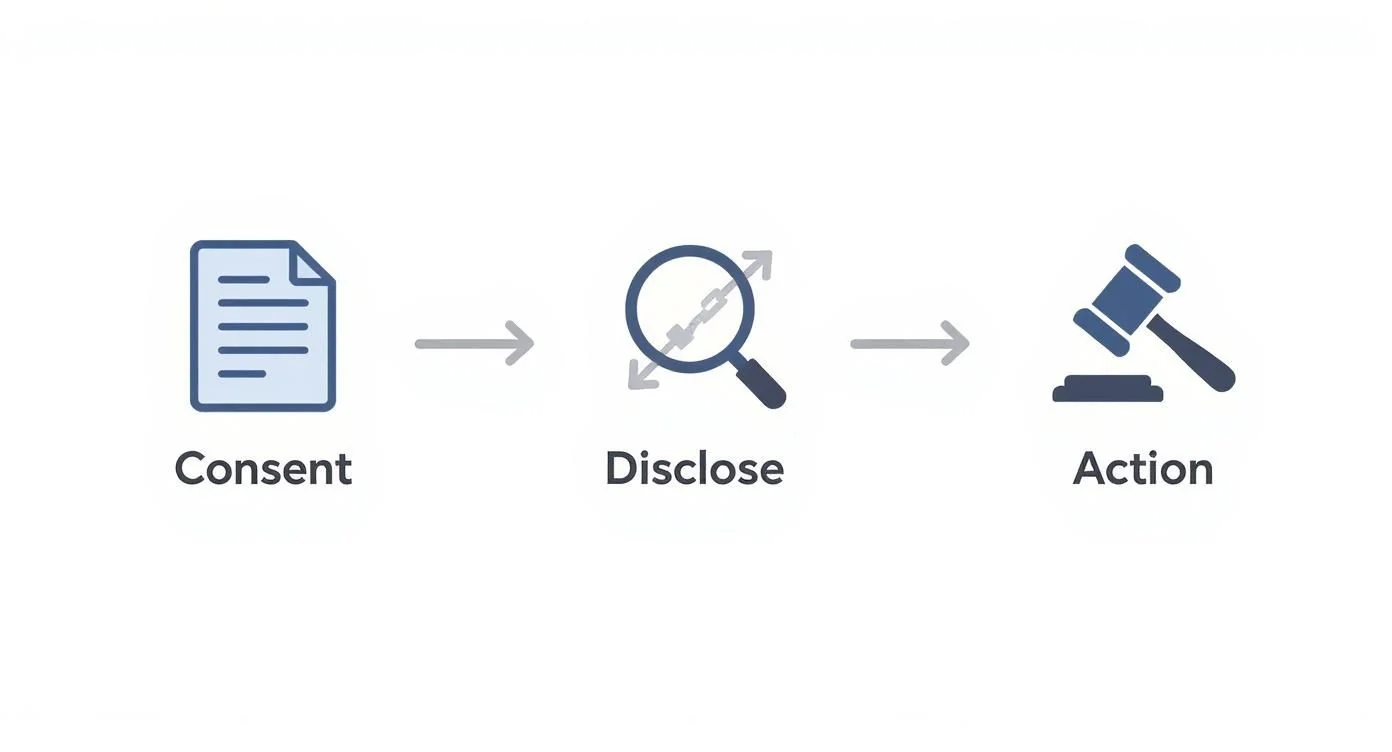
Each stage you see here is a distinct, mandatory step. Cutting corners isn’t an option if you want to maintain a fair and legally sound practice.
Monitoring Progress and Managing Expectations
Once the check is launched, the waiting game begins. Most background checks wrap up in about two to five business days, but don’t be surprised if some take longer. It really depends on the complexity. A manual search at a county courthouse with old-school paper records is naturally going to take more time than an instant database search.
It’s really important to manage your candidate’s expectations here. Let them know the typical timeline and give them a heads-up if any delays pop up. A good screening partner will provide status updates right on their platform, so you have full visibility without having to chase them down.
And for any landlords out there, taking a look at a streamlined tenant screening process can offer some great ideas for efficient workflows that you can adapt for hiring, too.
Pro Tip: Keep an eye on any “pending” statuses that seem to be stuck for longer than usual. It could mean the screening company needs more info from the candidate or is dealing with a slow courthouse. A quick, friendly follow-up can often get things moving again.
Enhancing Your Process with Modern Tools
Beyond the standard checks, today’s tools can offer a much more complete picture of a candidate. A Digital Footprint Check, for example, gives you a comprehensive view of a person’s public online presence. This isn’t about being sneaky; it’s about identifying publicly available information that might be relevant to the role.
This kind of check can pull from all sorts of public sources. To really make sense of the results, it helps to understand how public records shape a digital footprint. It’s key to interpreting the findings fairly and legally.
I’d recommend integrating these modern checks into your screening packages for certain roles, especially public-facing or leadership positions. It adds a valuable layer of diligence and helps ensure a candidate’s online persona aligns with your company’s values.
When it comes down to it, executing your background screening process effectively is about three things: a consistent policy, a reliable partner, and clear communication with your candidates. Nail this workflow, and you can make informed hiring decisions with confidence, all while keeping the process fair, transparent, and compliant from start to finish.
Reading Between the Lines: How to Interpret Reports and Make Fair Decisions
Getting the background check report back is a big step, but the file itself is just raw data. The real work is in figuring out what that information actually means for the role you’re trying to fill, and doing it fairly and consistently every time. A knee-jerk reaction to a single red flag can easily lead to a bad hire—or even worse, legal trouble.
First things first: you have to look at the findings through the lens of the job itself. Not every piece of information is a dealbreaker for every role. For instance, a shaky credit history might give you pause for a new CFO, but it’s probably not relevant at all for the software developer you’re hiring. Context is everything.
Assessing Criminal Records with Care
When a criminal record pops up, your first instinct can’t be a blanket “no-hire” policy. That’s a fast track to a discrimination claim. The Equal Employment Opportunity Commission (EEOC) has some pretty clear guidance here, pushing employers to do an individualized assessment. This is how you make sure your decision is actually related to the job.
So, how do you do that? It comes down to asking three critical questions about the offense:
- What was the nature of the offense? A conviction for petty theft from twenty years ago is a world away from a recent embezzlement charge, especially if the job involves handling company funds.
- How much time has passed? Recency matters. An older conviction might just be a sign of a past mistake, and the person has likely shown plenty of responsibility since then.
- Is it actually relevant to the job? This is the most important question of all. A DUI from five years back is a huge red flag for a delivery driver, but it probably has zero bearing on a graphic designer’s ability to do great work from an office.
The point isn’t to pretend the criminal record doesn’t exist. It’s about understanding its context. Running this quick assessment shows you’re making a thoughtful, role-specific decision, not just applying a rigid rule that could get you into hot water.
This thought process helps you make a defensible choice that balances keeping your workplace safe with hiring fairly. You’re shifting the question from “What did they do?” to “Does this history pose a realistic risk in this specific job?”
The Pre-Adverse and Adverse Action Process
Okay, so what happens if, after your assessment, you’re leaning toward not hiring someone because of what you found? This is where you have to pump the brakes and follow a very specific, two-step process required by the Fair Credit Reporting Act (FCRA). It’s designed to give the candidate a chance to see the report and dispute any errors before you make a final call.
1. Send the Pre-Adverse Action Notice
Before you officially make up your mind, you have to send the candidate a packet with two things:
- A complete copy of the background check report you used.
- A copy of the federally required document, “A Summary of Your Rights Under the Fair Credit Reporting Act.”
This isn’t optional. It gives the person a chance to spot any mistakes—and trust me, they happen—and get them corrected. You need to give them a reasonable window to respond, which is generally considered to be at least five business days.
2. Send the Final Adverse Action Notice
If the candidate doesn’t dispute the info, or if they do and it’s confirmed to be accurate, and you decide to stick with your decision, you have one more step: sending a final notice.
This letter officially lets them know your decision. It must include:
- The name, address, and phone number of the background screening company you used.
- A statement clarifying that the screening company didn’t make the hiring decision and can’t explain why you made it.
- A notice that the candidate can still dispute the report’s accuracy and request another free copy from the screening company within 60 days.
Getting this communication protocol right isn’t just a suggestion; it’s a non-negotiable part of conducting background checks legally. It keeps your process transparent and compliant, respects every candidate’s rights, and protects your company from some pretty significant legal risks.
Using Modern Tools for Smarter Screening
The world of background checks is anything but static. Gone are the days of clunky, slow, paper-based processes. Today, technology is making the entire screening experience faster, far more accurate, and packed with deeper insights.
It’s all about building a screening program fit for a dynamic workforce. These advancements aren’t just about convenience; they’re about managing risk more effectively. By embracing modern tools, you can finally shift from a reactive to a proactive safety and compliance posture.
The Shift to Continuous Monitoring
One of the biggest trends reshaping how we approach background checks is the move from a one-time screening at hiring to continuous monitoring. This model provides real-time updates on new developments tied to an employee’s record, like criminal activity or changes in professional license status.
For businesses in high-risk fields like finance and healthcare, ongoing verification is essential for managing risks that pop up long after someone is hired. This proactive approach lets you detect new criminal activities or compliance issues right away, so you can address them before they escalate.
Imagine an employee in a driving role has their license suspended. A one-time check at hiring would miss this. Continuous monitoring, however, would flag the change immediately, allowing you to take swift action and prevent a massive liability.
Harnessing AI for Accuracy and Speed
Artificial intelligence is another powerful force changing the game. AI-powered platforms can automate the tedious, manual work of data verification, drastically reducing turnaround times and minimizing the chance of human error.
Here’s where I’ve seen AI make a real impact:
- Accelerated Verifications: AI algorithms can instantly scan and cross-reference information from countless databases, confirming employment or education history in a fraction of the time it would take a person.
- Error Reduction: By automating data entry and review, AI slashes the chances of typos or misinterpretations that could lead to an inaccurate report.
- Smarter Analysis: Some advanced platforms use AI to help identify the most relevant information and filter out the noise, making reports much easier to interpret.
When you’re exploring new tech to refine your screening, check out how AI-assisted screening tools can improve candidate selection. They aren’t meant to replace human judgment, but to empower it with better, faster data.
Integrating modern technology into your screening doesn’t just make the process more efficient—it creates a better, more transparent experience for everyone involved, from the recruiter to the candidate.
The Power of ATS Integration
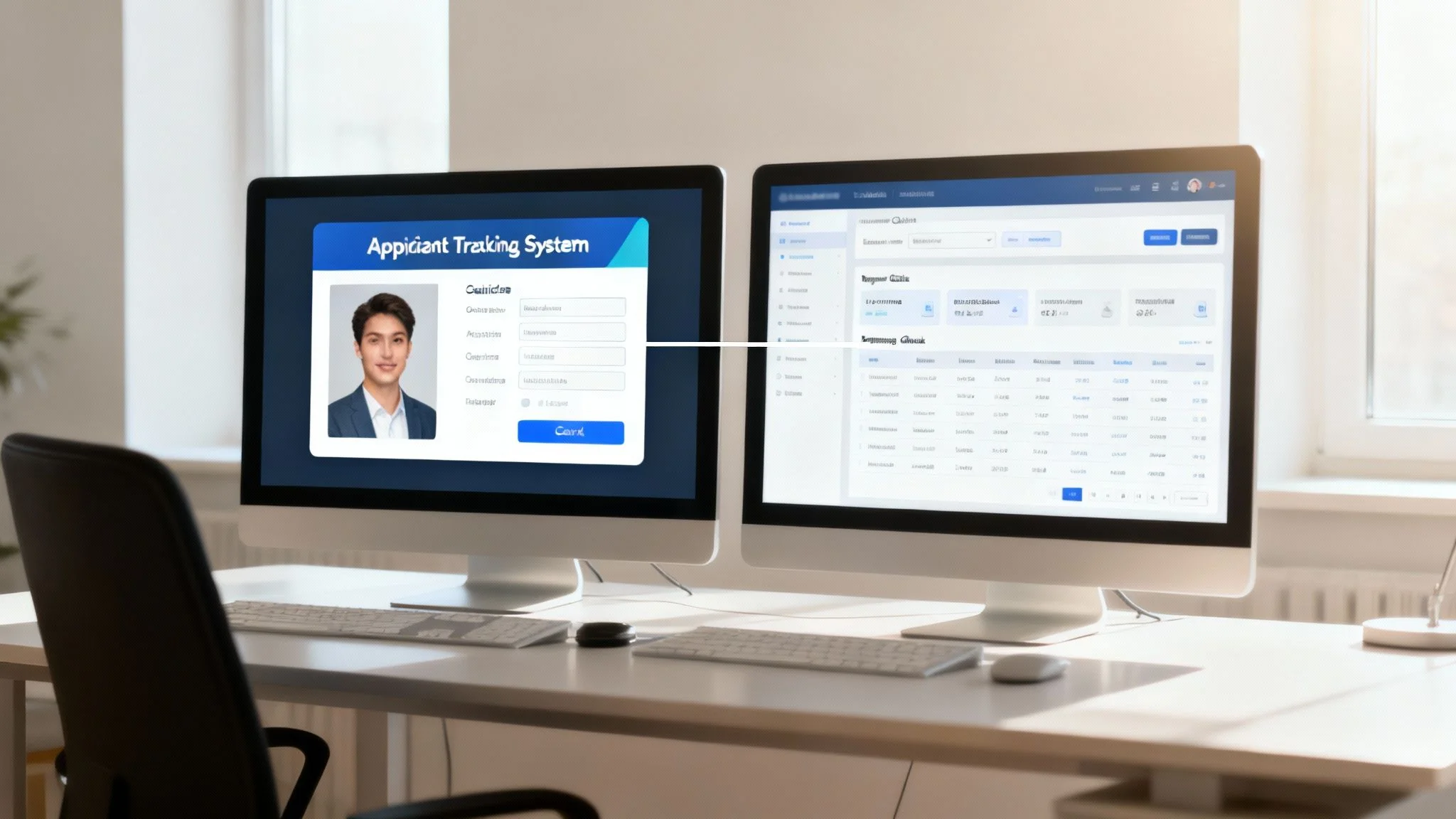
For any busy HR team, efficiency is everything. Manually juggling candidate data between your Applicant Tracking System (ATS) and a separate background check platform is a recipe for wasted time and costly mistakes. This is where seamless integration comes in.
Connecting your screening provider directly with your ATS creates a single, unified workflow. This allows you to:
- Initiate a background check with a single click right from the candidate’s ATS profile.
- Automatically send consent and disclosure forms to the candidate.
- Receive status updates and view the final report without ever leaving your primary hiring platform.
This kind of integration doesn’t just save your team countless hours. It also creates a smoother, more professional experience for your applicants. They get timely, automated communications and can complete their part of the process quickly, which reflects positively on your entire organization.
By combining these modern practices—continuous monitoring, AI-driven verifications, and ATS integration—you can elevate your entire approach to background checks. It’s about building a smarter, more secure, and more efficient hiring engine. For a deeper dive into the tools behind modern investigation, our guide on OSINT tools for digital footprint checking provides some valuable context.
Common Questions About Background Checks
Even with the best process in place, you’re going to run into questions when you start running background checks. It just happens. Let’s walk through some of the most common ones we see from hiring managers and HR pros so you can handle them with confidence.
Knowing what to expect makes the entire screening experience smoother for everyone involved—especially your candidates.
How Long Does a Background Check Usually Take?
This is always the first question, and the honest answer is: it depends. The timeline really hinges on how deep you need to go. A simple national criminal database search? That might come back in a few hours.
But for more comprehensive checks that involve digging into county court records or verifying a candidate’s job history, you’re typically looking at two to five business days. Delays can and do happen. Sometimes a courthouse clerk has to pull a physical file, or a past employer is just slow to get back to a verification request. It’s always smart to set those realistic expectations with candidates right from the start.
What Actually Shows Up on a Background Check?
What you see in the report is entirely based on the specific checks you order. A standard pre-employment screening package almost always starts with a Social Security Number trace to make sure the person is who they say they are. From there, you’ll typically see searches of national and county criminal records and the sex offender registry.
You can then layer on other searches depending on the job’s requirements:
- Employment and Education Verification: This is just what it sounds like—confirming that the jobs, titles, degrees, and certifications on their resume are legit.
- Motor Vehicle Records (MVR): Absolutely essential for any role that involves driving. This check pulls up their license status, violations, and any vehicle-related charges.
- Credit Reports: For jobs with financial responsibility, like handling company money, a credit check can offer a glimpse into their history of financial management.
It’s also crucial to remember that laws like the FCRA put limits on what can be reported. For example, in many states, certain non-conviction records can only go back seven years.
A lot of people think a background check uncovers every thing about a person’s past. The reality is that it’s a targeted report based on specific, legally allowed searches you choose. The goal is relevance, not digging up ancient history.
Can a Candidate Dispute Information in Their Report?
Yes, they can, and the FCRA gives them the absolute right to do it. If an applicant looks at their report and believes something is inaccurate or incomplete, they can file a formal dispute with the screening company that ran the check.
This is a really important step. Before you make a final decision not to hire someone based on what you find, you’re legally required to send them a “pre-adverse action notice.” This notice has to include a copy of the report and a summary of their rights, giving them a fair shot to point out any errors. The screening company then has to investigate the dispute, usually within 30 days, and fix the report if they find a mistake. Skipping this step is a major compliance risk.
Should I Run Background Checks on Every Employee?
While it might not be legally required for every position, running background checks consistently is a universal best practice. The single most important word here is consistency.
You need a written policy that clearly states which checks are performed for which roles, and then you have to apply that policy the exact same way for every applicant in that role. For instance, you might have a standard package for entry-level staff and a much more thorough one for senior leadership or finance roles. The biggest legal hot water you can get into is applying your screening rules inconsistently, as it can easily lead to claims of discrimination.
Ready to build a smarter, safer, and fully compliant screening process? Digital Footprint Check provides comprehensive, easy-to-understand reports that give you the confidence to make great hiring decisions.
Explore our compliant pre-employment screening solutions today.