· Digital Footprint Check · Content Marketing · 14 min read
Does Identity Theft Protection Work? a 2026 Reality Check
Does identity theft protection work? We analyze the evidence, reveal their true value, and show you free alternatives that are often more effective for 2026.

If you’ve just gotten a breach notice, seen a scary ad for credit monitoring, or started worrying that your personal information is floating around online, you’re probably asking one blunt question: Does identity theft protection work?
The honest answer is yes, but not in the way most ads imply.
These services usually don’t form an invisible shield around your identity. They don’t stop a company from getting breached. They don’t stop a criminal from trying your leaked email and password somewhere else. What they often do well is spot trouble sooner, alert you faster, and make the cleanup less chaotic.
That difference matters. A lot.
People tend to buy these services expecting prevention. What they usually get is monitoring, alerts, and some help after the fact. That’s still useful. It just isn’t magic.
The Billion-Dollar Question You Are Asking
Individuals rarely start researching identity theft protection out of curiosity. They start because something happened. A breach notice arrived. A bank flagged a transaction. A friend got locked out of a social account. Or an ad managed to tap directly into a low-grade fear that’s already there.
The fear isn’t irrational. Identity theft can spill into your finances, your reputation, your job search, and even your sense of personal safety. A fake account in your name, a loan inquiry you didn’t authorize, or exposed personal details in public databases can create stress long before any money is involved.
That’s why the market for these services feels so persuasive. The promise sounds simple: subscribe, and someone will protect your identity. But the key question isn’t whether the service feels reassuring. It’s whether it changes the outcome in a meaningful way.
A good place to start is understanding what identity theft protection actually includes. Once you strip away the marketing language, the product becomes much easier to judge.
What most people want: prevention.
What most services actually provide: detection, alerts, and recovery help.
That sounds less exciting, but it’s more realistic. As data can leak from retailers, apps, gaming accounts, old forums, public records, and reused passwords, “protection” usually means shortening the gap between something bad happening and you finding out.
That gap is where a lot of the damage happens.
If a service warns you quickly about a new credit inquiry, a change-of-address request, or exposed personal data, you may still have time to freeze credit, dispute activity, change passwords, and stop a small problem from becoming a bigger one. If it doesn’t, you’re left finding out later, often after the fraud has already spread.
How Identity Theft Protection Services Are Supposed to Work
Think of identity theft protection like a home security setup. It usually has four parts. Sensors, alarms, help after the break-in, and some financial assistance for cleanup.
That’s the basic model behind most services.
Microsoft’s identity guidance describes common components as credit monitoring, identity monitoring, dark web surveillance, suspicious-activity alerts, recovery support, and sometimes identity theft insurance in its overview of identity protection and prevention tools.
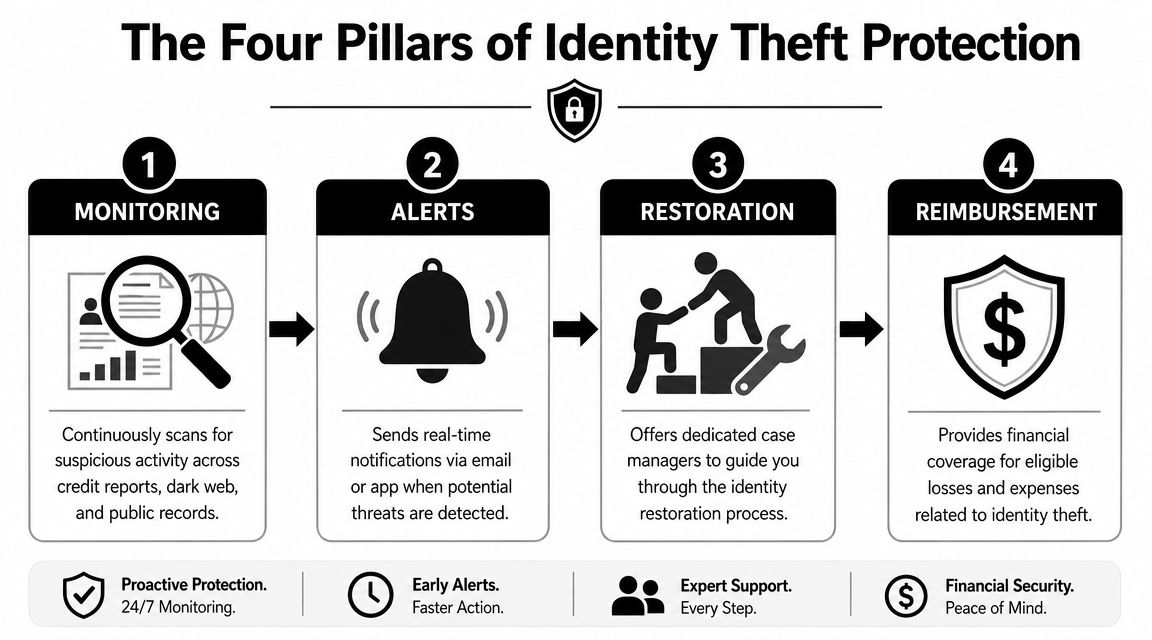
Monitoring watches for signs of misuse
This is the part most companies lead with. The service checks places where identity abuse often leaves traces.
That may include:
- Credit file activity like new inquiries or unfamiliar accounts
- Identity data exposure tied to your name, email, phone number, or address
- Dark web monitoring for leaked credentials or personal identifiers
- Public record checks that may reveal suspicious changes
Monitoring matters because you usually don’t get a warning at the moment your data is stolen. You get clues later, when someone tries to use it.
Alerts tell you something changed
An alert is the digital version of an alarm going off in your house.
If the service sees a new account inquiry, a possible credential exposure, or another suspicious event, it sends a notification by app, email, or text. The value here isn’t the message itself. It’s the time it buys you.
A fast alert can prompt you to freeze credit, contact an issuer, change passwords, or tighten account security before more damage happens.
A useful identity service isn’t just “watching.” It’s helping you react while the problem is still containable.
Restoration gives you human help
This is the least flashy feature and often one of the most valuable.
If identity theft does happen, restoration support may help you contact bureaus, work through dispute steps, gather documents, and manage the recovery process. That can save time and reduce mistakes, especially when you’re stressed.
For many people, this support is the primary reason to pay. Not because they expect perfect prevention, but because they don’t want to handle a messy fraud case alone.
Insurance helps with some cleanup costs
This part is easy to misunderstand.
Insurance in these plans usually doesn’t mean you’ll automatically get back every dollar connected to fraud. In most cases, it refers to eligible recovery-related expenses, not a blanket promise to cover all losses. More on that in a later section.
So yes, the system can work. But only if you understand what each part is designed to do. Sensors don’t stop a burglar from trying a window. They help you notice the break-in faster.
The Reality Behind the Promise of Protection
Here’s the plain answer to “does identity theft protection work.” It works as an early-warning and response tool. It does not work as true prevention.
That’s the part many ads blur.
Independent banking guidance from Old National says these services typically combine account monitoring, alerts, and restoration support, and explicitly states that they “don’t stop criminals from targeting you, they just respond to identity theft once it has happened” in its review of whether identity theft protection is worth it.

Protection is really about reducing discovery time
A lot of readers get tripped up by the word protection. It sounds like a lock. In practice, it often functions more like a smoke detector.
A smoke detector doesn’t prevent the fire. It helps you find out early enough to act.
That distinction explains why these services can still be worth paying for. If someone uses your information to trigger a new inquiry, reroute mail, or expose credentials tied to your email, early notice gives you options. Late discovery means you’re playing catch-up.
What these services usually can’t stop
Identity theft protection generally won’t stop:
- A phishing attack where you hand over login details
- Malware on a device
- Password reuse across multiple sites
- A company breach that exposes your data
- An attacker trying stolen credentials on another account
Those are different layers of the problem. Monitoring catches signs that your information is being used. It doesn’t block the original compromise in most cases.
That’s why some people end up disappointed. They buy a subscription expecting a defensive wall, then learn it’s more like downstream surveillance.
Where the value is real
The value is practical, not mystical.
A decent service can help when you want:
| Situation | What the service may help with |
|---|---|
| New credit activity | Alerts you before fraud spreads further |
| Exposed credentials | Warns you to change passwords and secure accounts |
| Confusing recovery steps | Gives you guided restoration support |
| Ongoing anxiety | Reduces the burden of checking everything yourself |
If you’re comparing products, it helps to read a grounded breakdown like this look at whether LifeLock is worth it, because the core issue usually isn’t whether the brand sounds strong. It’s whether the service matches the risk you’re trying to reduce.
Practical rule: Buy identity protection for faster detection and easier cleanup. Don’t buy it because you think it makes identity theft impossible.
That sounds like a downgrade. It isn’t. It’s just a clearer promise.
If you know the tool’s role, you can decide whether convenience, broader monitoring, and restoration help are worth paying for. If you expect invulnerability, you’ll almost always feel misled.
What Identity Theft Services Routinely Miss
Most identity theft services are strongest where data is easiest to monitor. That usually means credit-related signals, some public records, and certain kinds of exposed personal data.
That leaves blind spots. Some of them are big.
The Consumer Financial Protection Bureau says identity theft services mainly monitor personally identifiable information in credit applications and public records, and notes that insurance typically covers certain out-of-pocket recovery losses rather than stolen money itself in its explanation of identity monitoring services.
Credit isn’t the whole identity problem
A lot of fraud has little to do with a new credit card account.
People also run into identity abuse involving:
- Tax fraud, where someone tries to file in your name
- Medical identity misuse, which can create billing and record problems
- Benefits-related fraud, where government or employment systems are abused
- Social media takeovers, which can turn into impersonation or scam activity
- Gaming account theft, where linked payment methods, usernames, or digital items become targets
If a service is built mainly around credit monitoring, it may do very little for those scenarios. That’s not because it’s broken. It’s because the service is watching a narrower slice of your digital life than the ads imply.
Insurance often sounds broader than it is
Another common misunderstanding involves reimbursement.
Many users assume “identity theft insurance” means the plan will cover direct stolen funds across the board. That’s usually not how it works. The more common model is reimbursement for some recovery-related costs, such as expenses tied to fixing the problem, while direct unauthorized transaction losses may be handled elsewhere, disputed separately, or excluded.
That matters because cleanup costs and stolen money are not the same thing.
You should treat insurance in these plans as support for the aftermath, not proof that the service prevented the fraud.
Data exposure can happen far outside the credit bureaus
Your risk may come from places a traditional plan barely touches. Old forum accounts. Breached shopping sites. Public people-search listings. Usernames tied to gaming profiles. Dating app traces. Old phone numbers in public databases.
That broader exposure is one reason some people pair identity monitoring with tools focused on public online presence and removal. If you’re dealing with the credit consequences of fraud at the same time, resources on how to effectively clear collection accounts can also help untangle the fallout when identity misuse has already affected your report.
For the exposure side, many people don’t need more alerts first. They need to know where their information is already visible and how to reduce it. That’s where services focused on data broker removal and public exposure cleanup fit into the picture.
Why this confuses so many people
The phrase “identity theft” bundles together very different problems.
A new credit inquiry, a stolen Instagram account, a tax filing issue, and a fake medical claim all feel like identity theft to the victim. But many paid plans are built to notice only some of those signals. That’s why someone can pay every month and still feel blindsided when a non-credit problem hits.
Your Most Powerful Defenses Are Free
This is the part the ads don’t love. Some of the strongest identity protection steps cost nothing.
If your goal is to reduce risk rather than outsource worry, start with the controls that block or slow abuse directly. The Federal Trade Commission says a fraud alert can be placed for free for one year by contacting one of the three major bureaus, while a security freeze must be placed with each bureau separately, according to its guidance on what to know about identity theft.
The single strongest move for new account fraud
A credit freeze is often the most powerful free step for preventing someone from opening new credit in your name.
Why? Because it doesn’t just watch for new account activity after the fact. It restricts access to your credit file, which can make fraudulent new-account applications much harder to complete.
If you’re worried about someone using your Social Security number for loans or credit cards, this is usually more powerful than paying to be alerted after an inquiry appears.
Your free defense stack
A practical DIY setup looks like this:
- Freeze your credit with each bureau: This is the strongest free barrier against new-account fraud.
- Place a fraud alert when appropriate: This adds a warning for lenders and is easier to set up because contacting one bureau starts the process.
- Use unique passwords: Reused passwords turn one breach into many account takeovers.
- Turn on multifactor authentication: This reduces the chance that exposed credentials become a live account compromise.
- Check bank and card activity regularly: Fast detection still matters for transaction fraud.
- Review your credit reports: You want to catch unfamiliar accounts, inquiries, or personal detail changes.
- Audit your exposed data: Publicly visible phone numbers, emails, addresses, and usernames can feed social engineering and impersonation.
If you want a starting point for the monitoring side without paying first, this guide to free identity monitoring options is more useful than jumping straight into a subscription.
DIY Identity Protection vs. Paid Service
| Feature | DIY Method (Free) | Paid Service ($10-$30/mo) |
|---|---|---|
| New account fraud defense | Credit freeze can directly hinder new credit opening | Usually alerts you after suspicious activity is detected |
| Password security | Use a password manager and unique passwords | May not manage your passwords for you |
| Account takeover risk | Turn on MFA and watch account activity | May alert on exposure but usually won’t stop phishing or reuse |
| Credit monitoring | Manual report checks and account reviews | Automated alerts and ongoing monitoring |
| Recovery help | You handle disputes and outreach yourself | Often includes restoration support |
| Insurance | None built in | May include reimbursement for eligible recovery costs |
| Effort required | Higher | Lower |
| Cost | Free | Ongoing monthly fee |
Free doesn’t mean weak
People sometimes hear “free” and assume “basic.”
In security, that’s often backwards. A credit freeze, strong passwords, MFA, regular statement review, and careful monitoring of exposed personal information can reduce real risk more directly than a paid service alone.
One tool worth mentioning here is Digital Footprint Check’s free checker, which helps people look for exposed information across public sources. That’s useful because identity theft risk doesn’t begin only at the credit bureau. It often begins with what strangers can already piece together about you online.
The best low-cost strategy is layered. Block what you can. Monitor what you can’t. Clean up what doesn’t need to be public.
So When Should You Pay for Protection
Paid identity theft protection makes sense for some people. Just not for everyone.
If you’re organized, use a password manager, keep MFA on, review statements, and freeze your credit when needed, you may already have the strongest core controls in place. In that case, a paid service is mostly about convenience.
The people who may benefit most
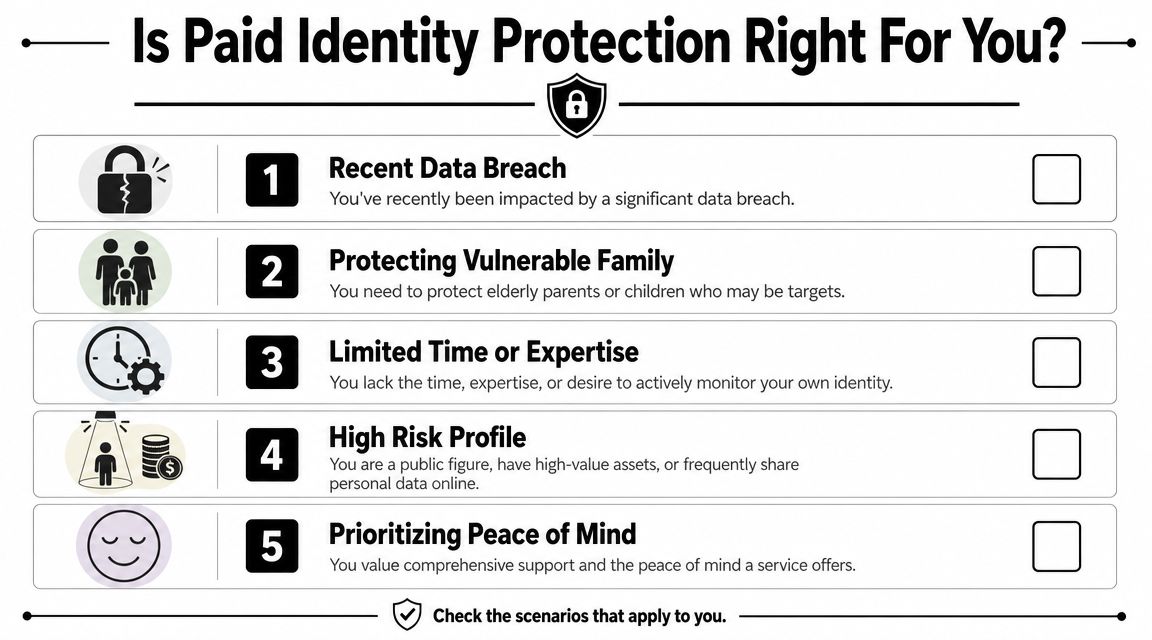
A subscription can be reasonable if any of these sound like you:
- You’ve recently dealt with a major exposure: You want broader monitoring while you clean up.
- You’re helping family members: Elderly parents, teenagers, or less technical relatives may benefit from centralized alerts and support.
- You won’t reliably monitor things yourself: A system you use beats a free plan you ignore.
- You want restoration help: If fraud happens, guided recovery can remove a lot of stress.
- Your digital footprint is unusually broad: Public-facing work, frequent online activity, or lots of old accounts can increase complexity.
The practical issue many people ask about is whether one plan can find enough exposure to matter when their information may already be scattered across breach dumps, gaming accounts, and public records. Experian recommends checking whether your phone number, email, or address are exposed online, while also using unique passwords and multifactor authentication, in its guidance on identity theft and credit protection.
What to check before you subscribe
Don’t focus only on brand recognition. Check the actual coverage.
Look for:
- Monitoring breadth: Does it go beyond credit and include identity data exposure or broader online signals?
- Alert quality: Will you get useful, understandable notifications?
- Restoration support: Is there real case help if something goes wrong?
- Insurance terms: What does it reimburse?
- Fit for your life: Are you buying a time-saver or trying to solve a risk the service can’t really address?
If you’re comparing products, community-style discussions can help surface tradeoffs. This roundup of identity theft protection options people discuss on Reddit is useful because it focuses on practical user concerns, not just sales copy.
A short explainer can also help you think through the decision:
The bottom line
So, does identity theft protection work?
Yes, if you judge it by the right standard. It can work well as an early-warning system, a convenience tool, and a source of restoration help. No, if you expect it to prevent identity theft on its own.
The strongest approach is layered. Use free controls to reduce risk directly. Use paid monitoring if you want broader visibility, faster alerts, or help with the cleanup. And before you buy anything, figure out what information about you is already exposed.
A smart first step is to run a free scan with Digital Footprint Check. It helps you see where your email, phone number, usernames, and other personal details may already be visible across public sources, so you can focus on the risks that apply to you instead of paying for vague peace of mind.