· Digital Footprint Check · Content Marketing · 20 min read
Reverse International Phone Number Lookup: Your Guide to
Our reverse international phone number lookup guide shows you how to use OSINT tools to identify unknown callers, stay safe, and protect your privacy.

When an international number pops up, is it a friend abroad, a business contact, or a romance scammer? A quick reverse lookup answers that question, turning unknown digits into useful information.
It's a practical skill for digital privacy, since your phone number is a key to your digital life.
Why You Need to Identify Unknown International Numbers
An unexpected call from another country can be jarring: a family emergency, a job opportunity, or something worse. Knowing who's on the other end protects your personal and financial life. In dating, gaming, and business, checking who you're dealing with before you engage matters.
Real-world cases where it helps:
- Online Dating Safety: You meet someone who claims to live abroad. A lookup verifies their location — a key step in catfishing detection.
- Marketplace Deals: You're buying or selling with someone overseas. Verifying identity helps prevent scams.
- Job Prospects: A recruiter with an international number reaches out. Is it a real company, or an attempt to harvest your data?
- Romance Scams: Persistent messages from an unfamiliar international number are a red flag for catfishing.
- Gaming Account Security: Someone wants to trade a rare item and gives you an international number to coordinate. Verifying it can prevent a scam.
This is a common problem. The reverse phone lookup market was pegged at $1.5 billion and is expected to reach $5 billion by 2033. Spam calls make up nearly 45% of all mobile calls. See the market trends at Archive Market Research.
Before diving deep into a search, run a few initial checks. They often tell you enough to decide your next move.
Initial Checks for Any International Number
| Action | Objective | Example Tool/Method |
|---|---|---|
| Analyze the Country Code | Determine the country of origin. | Use a country code list (e.g., +44 is UK, +61 is Australia). |
| Check Messaging Apps | See if a profile picture or name is linked. | Add the number to your contacts; check WhatsApp, Telegram, Signal. |
| Simple Search Engine Query | Find public listings or reports of spam. | Google Search using "(+XX) XXX-XXXX" format. |
| Look for VoIP Indicators | Identify if it's a non-traditional number. | Check the carrier info or look for patterns common to VoIP providers. |
These first steps are your baseline: fast, free, and often enough to tell you whether to investigate further or block and move on.
Protecting Your Digital Self
Your phone number is more than a way for people to call you; it’s a key that can unlock a huge chunk of your online life. Every account you tie it to, every service you sign up for, leaves a digital breadcrumb. Scammers and identity thieves are experts at following these trails.
Understanding the hidden dangers of your digital footprint is the first step toward building a real defense for your online identity.
This guide will walk you through the exact OSINT tools and methods to turn that mysterious number into solid intelligence.
The core idea is simple: information is your best defense. When you learn how to investigate an unknown number, you're taking back control of your digital privacy. You get to decide whether to block, report, or confidently answer the call.
Using OSINT to Uncover a Number's Identity
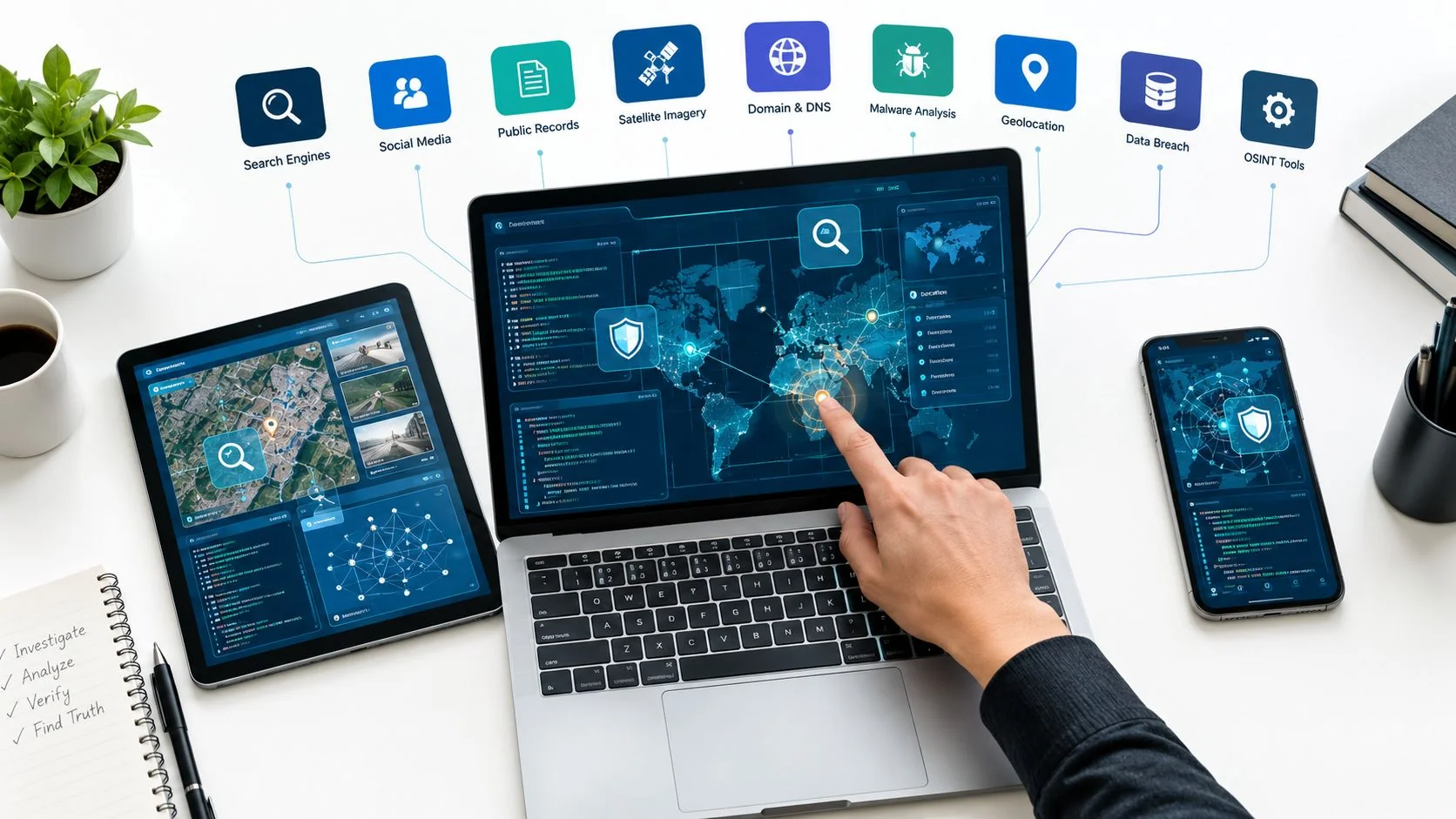
When a strange international number pops up on your phone, a quick Google search is a natural first step. But to get real answers, you need to think more like an investigator. This is where Open Source Intelligence (OSINT) comes in—it’s the practice of piecing together information from publicly available sources, and it's your best free tool for a reverse international phone number lookup.
OSINT isn't about hacking. It’s about leveraging publicly available data to connect the dots that are already scattered across the web. A single phone number can be a thread that unravels a person's entire online presence, from social media profiles to business listings, if you just know where to pull. This is a cornerstone of online identity protection.
Decoding the Number Itself
Before you even type anything into a search bar, the number itself gives you your first critical clue. The first one to three digits right after the plus sign are the country calling code. This instantly tells you the country of origin, which is a massive piece of the puzzle.
Knowing that a +44 number is from the UK or that +61 is from Australia immediately narrows your focus. It also helps you spot red flags, like someone in an online dating app claiming to be local but calling from a number registered halfway across the world. This simple check is a powerful tool for romance scam and catfishing detection.
A little background knowledge helps here, too. Understanding things like the role of VoIP in international calling can explain why some numbers aren't tied to a specific physical location, a key detail that can shape your investigation into a potential scam.
Mastering Search Operators
A standard Google search is usually too broad to be useful. For a precise reverse international phone number lookup, you need to use search operators—simple commands that force the search engine to look for exactly what you want. These are fundamental OSINT tools.
Let's imagine you got a call from +44 20 7123 4567. Here's how to dig deeper:
- Exact Match: Enclose the number in quotes—
"+442071234567"—to find only pages containing that exact string of digits. This immediately cuts out the noise from irrelevant search results. - Site-Specific Search: This is where it gets powerful. You can tell Google to search only within a specific website. To check for a LinkedIn profile, you'd search
"+442071234567" site:linkedin.com. This can be crucial for vetting job prospects. - Social Media Scans: You can apply the same logic to other major platforms, like
"+442071234567" site:facebook.comorsite:twitter.com. It’s a surprisingly effective way to surface public profiles where people have listed their contact info, aiding in dating app verification.
These aren't complicated tricks. They just turn a vague search into a targeted mission, often uncovering professional profiles, forum posts, or business pages linked to the number in seconds.
Checking Messaging and Social Apps
Lots of us link our phone numbers directly to apps like WhatsApp, Telegram, and Signal. This creates a simple, yet often overlooked, rich source for identification and is a practical step in any cybersecurity check.
The process couldn't be easier:
- Save the Number: Add the full international number (with the
+and country code) to your phone's contact list. A temporary name like "Unknown Caller" works fine. - Check the Apps: Open WhatsApp, Telegram, or Signal and look for that new contact.
- Look for Clues: If the number is registered, you’ll often see a profile picture and the name they’ve set for themselves. That's a huge win, potentially giving you a face and a name to work with in your catfishing detection efforts.
From there, you can do a reverse image search on the profile picture or use the name to fuel further OSINT digging. This is all part of learning how to conduct a proper background checking using OSINT.
A good OSINT investigation is like putting together a puzzle. Each new find—the country code, a search result, a profile picture—is another piece that helps you see the whole picture. It takes patience and a methodical approach, but the clarity you gain is essential for protecting yourself from identity theft and other online threats.
While these manual OSINT methods are powerful, they do take time. To take control of your digital identity, you can use a tool like the Digital Footprint Check free checker to see what information is already out there about you.
When to Use Specialized Lookup Tools
While manual OSINT is a fantastic starting point for digital privacy, there are times you'll hit a wall. You might dig up fragments—a random social media profile that hasn't been touched in years or an old forum post—but nothing that paints the full picture needed for true online identity protection.
This is exactly when specialized reverse international phone number lookup tools become your best bet.
These aren't just glorified search engines. Paid services pull from a massive web of data sources, including public records, data brokers, and private databases that are inaccessible to the average person. They are powerful OSINT tools that do the work of connecting the dots for you, often spitting out a single, comprehensive report that links a phone number to a name, address history, and even known associates.
High-Stakes Scenarios Demanding Deeper Insight
Free methods are perfect when you're just curious. But some situations, like preventing romance scams or identity theft, are far too serious for guesswork. For high-stakes scenarios, investing in a professional lookup service is a no-brainer when the consequences of being wrong are severe.
Consider these real-world examples:
- Persistent Harassment or Threats: If you're getting anonymous, threatening calls from an international number, figuring out the source is critical for your personal safety. A paid service can deliver the concrete details you’d need to involve law enforcement.
- Online Dating Verification: You’ve connected with someone overseas, and it feels like things are getting serious. Before you invest emotionally or financially, you need to verify they are who they say they are. A quick lookup is a key part of dating app verification and catfishing detection, helping you spot a romance scammer before it's too late.
- Vetting a Business Partner or Client: An international contact sends over a promising business proposal. A background check, starting with just their phone number, can uncover red flags like connections to fraudulent activities or a history of business complaints, protecting your reputation management.
In these cases, the small cost of a report is nothing compared to the potential price of fraud, emotional pain, or physical harm.
Comparing Free OSINT with Paid Services
So, which route should you take? The choice between free OSINT and paid services really boils down to a trade-off: your time versus your money, and how deep you need to go. Each has its place in your cybersecurity toolkit, and knowing the difference will help you pick the right tool for the job.
The accuracy of these lookup services has gotten significantly better thanks to improved data analytics and AI-powered algorithms. Some platforms are built for volume, offering plans that cover up to 200,000 monthly lookups, while others, like Truecaller, use a massive community of 450 million users to power their core identification features. You can get a deeper dive into the industry by checking out this report on the reverse phone lookup market.
Here’s a comparison table to break down what you get with each approach.
Free OSINT vs Paid Lookup Services
| Feature | Free OSINT Methods | Paid Services |
|---|---|---|
| Cost | Free (requires your time) | Subscription or per-report fee |
| Data Sources | Publicly available web pages, social media, search engines | Public records, data brokers, private databases, web sources |
| Report Depth | Often fragmented; requires manual connection of dots | Consolidated, detailed reports with names, addresses, etc. |
| Speed & Effort | Time-consuming and requires manual searching | Fast, automated results delivered in minutes |
| Best For | Initial checks, low-stakes curiosity, hobbyist investigations | High-stakes situations, personal safety, dating app verification |
Ultimately, free tools are great for surface-level checks. But when you need confirmed, actionable intelligence for scam prevention without spending hours hunting it down yourself, a paid service is the clear winner.
What to Look for in a Paid Service
Not all lookup services are created equal. If you decide to go the paid route, it's crucial to pick a provider that’s both effective and ethical. Before you hand over your credit card information, vet any potential service using these criteria.
Look for a service with:
- Transparent Pricing: You should know exactly what you’re paying for. Avoid services with confusing billing or sneaky hidden fees.
- A Clear Privacy Policy: Reputable companies are upfront about where their data comes from and how they protect your digital privacy. Make sure they operate within legal frameworks like GDPR or CCPA.
- Positive User Reviews: See what other people are saying. While no service is perfect, consistently good reviews about report accuracy and reliability are a strong signal.
- Comprehensive Data Coverage: The best services pull from a wide range of international sources, not just a single country's database.
These same principles apply to other kinds of online investigations. For instance, if you're working with an email instead of a phone number, our guide on performing a reverse email search walks through similar strategies for choosing the right tools.
Key Takeaway: Paid lookup tools are a strategic investment in your safety and peace of mind. They excel in situations where ambiguity is not an option and you need a fast, comprehensive answer to protect yourself, your finances, or your reputation management.
Verifying Information and Protecting Your Anonymity
Finding a name or a social media profile attached to an international number feels like a win, but don't celebrate just yet. That's just the start. The real work in any reverse phone number investigation is putting what you've found under the microscope to ensure your online identity protection.
The internet is full of outdated, misleading, or just plain wrong information. Romance scammers and identity thieves are absolute pros at building fake personas that look convincing at a quick glance.
This is where you need to get methodical. Start cross-referencing every piece of data. Does the name you found on WhatsApp line up with a LinkedIn profile? Does the location implied by the country code match what their social media posts are showing? Inconsistencies are the flashing red lights you're looking for in catfishing detection.
Spotting the Red Flags of a Fake Persona
Fraudsters usually work fast, and that pressure makes them sloppy. A hastily thrown-together fake identity will have cracks in it if you know where to poke. They're banking on you being too emotionally invested or just too busy to connect the dots. This is a common tactic in romance scams.
Keep an eye out for these tell-tale signs of a scammer's handiwork:
- Mismatched Details: The name on one profile is slightly different on another. Their job on a dating app is a world away from what's on their supposed professional profile.
- Freshly Created Accounts: The social media profile was made just a few weeks ago. It has a suspiciously low number of friends, uses generic stock photos, and shows almost no real human interaction. This is a major red flag for dating app verification.
- Vague or Generic Info: Their profiles are thin on details. You won't find specifics about their work, hobbies, or life story. Everything's kept surface-level to make verification nearly impossible and prevent scam prevention.
- Pressure and Urgency: This is a classic tactic used in identity theft schemes. They immediately start pushing for money, personal information, or to get you onto a different, more private chat platform. They want to isolate you.
Catching these signs early is the difference between sidestepping a threat and becoming another cybersecurity statistic.
Conducting Your Search Anonymously
While you're playing detective, it’s critical to protect your own identity and digital privacy. Every search you run leaves a digital breadcrumb trail. If you're not careful, the very person you're investigating could be alerted to your presence, which is a dangerous spot to be in if they have bad intentions.
Staying anonymous isn't about paranoia; it's just smart cybersecurity strategy. You want to gather intelligence without letting anyone know you're looking. This keeps you safe and stops your target from scrubbing their profiles or changing their tactics.
Key Takeaway: Your goal is to be a ghost. See everything, but remain unseen. Using the right OSINT tools and methods allows you to gather info safely without putting a target on your own back.
A few simple precautions can make all the difference:
- Use a VPN (Virtual Private Network): This is non-negotiable for online identity protection. A VPN masks your IP address, making your internet traffic look like it's coming from somewhere else. It's the foundation of anonymous searching.
- Browse in Private Mode: Your browser’s incognito or private mode is your friend. It prevents your search history and cookies from being saved locally on your machine.
- Create a "Sock Puppet" Profile: Don't use your personal accounts for research. Set up a separate, anonymous email and social media profile that has no connection to your real identity. Use this for all your OSINT digging.
These layers of separation are crucial. For a more comprehensive look at securing your digital life, check out our guide on personal cybersecurity best practices.
Turning the Lens on Yourself
Going through this process should spark a crucial question: What would someone find if they ran a reverse lookup on your number?
How many clicks would it take for a stranger to link your phone number to your name, your job, where you live, or even your family members? Your digital footprint could affect your job prospects, personal safety, and even your gaming profiles. Old forum posts, public social media profiles, and data broker sites can paint a detailed picture of who we are. This is the exact kind of information that scammers and identity thieves feast on.
This is precisely where a service like Digital Footprint Check comes in. Instead of just wondering what’s out there, you can see it for yourself. We scan hundreds of sources to show you exactly what's publicly tied to your information, from forgotten accounts to exposures in data breaches. Seeing your own footprint from an investigator's point of view is the single best way to understand your vulnerabilities and start your reputation management before someone else finds it. Get a free scan and take control of your online identity at www.digitalfootprintcheck.com/free-checker.
Understanding the Legal and Ethical Boundaries
When you run a reverse international phone number lookup, it can feel like you've unlocked a superpower for staying safe. But with that power comes a heavy dose of responsibility. Just because you can find a piece of information doesn't always mean you should, and how you use it is what matters. The line between legitimate cybersecurity research and illegal harassment is often thinner than people think.
You're not operating in a vacuum here. Major privacy laws like Europe's General Data Protection Regulation (GDPR) and the California Consumer Privacy Act (CCPA) have changed the game for digital privacy. These regulations give people significant rights over their personal data, including their phone numbers. Any OSINT tool or service you use has to play by these rules.
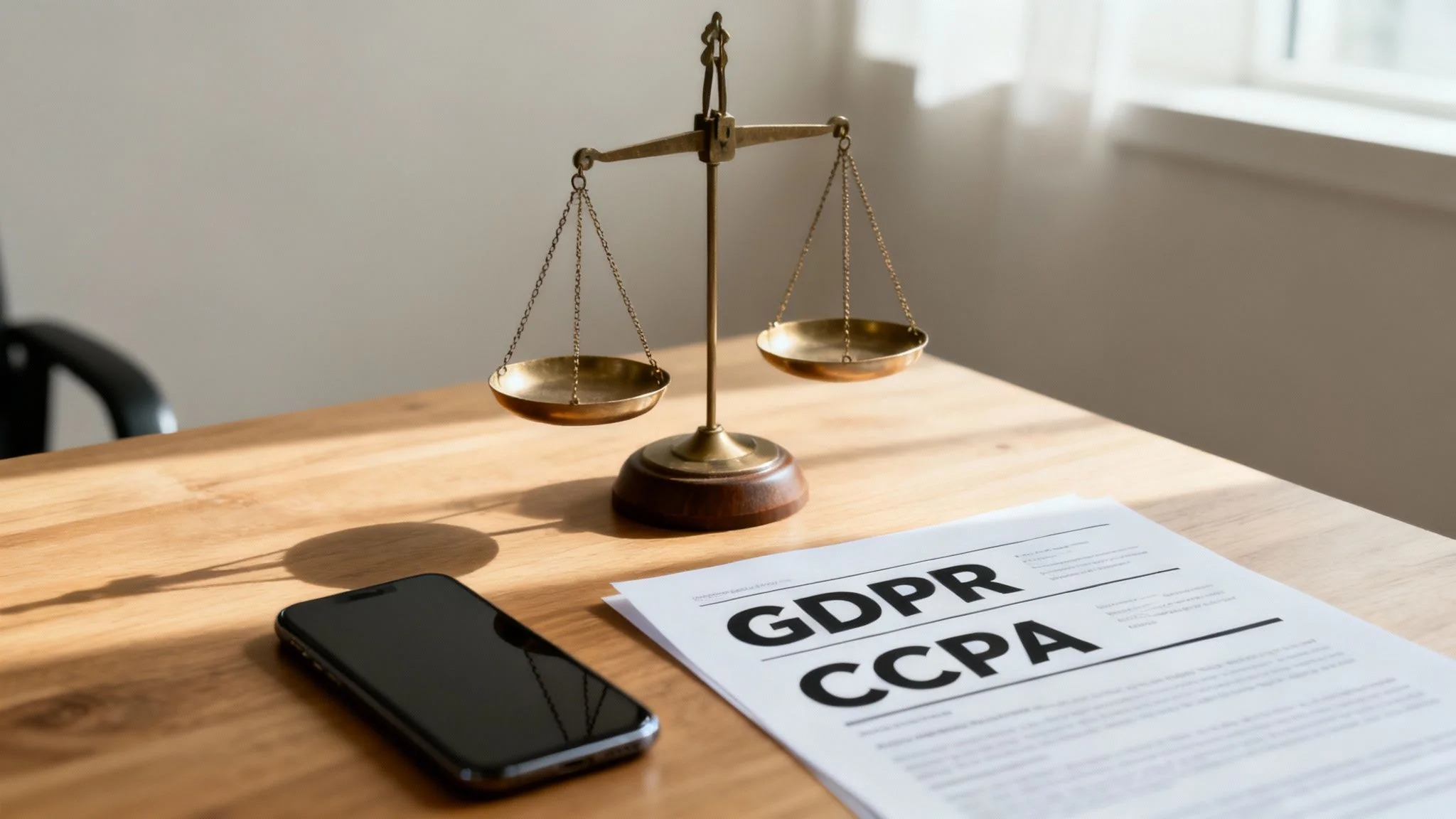
This legal landscape really boils down to your intent. Using a lookup to protect yourself from a romance scam is one thing. Using it to cause someone harm is another thing entirely.
Defining Legitimate Use vs Illegal Activity
The real difference between ethical digging and illegal activity comes down to your motivation and what you do next. A legitimate lookup is a defensive cybersecurity move—it's about protecting yourself or your assets from a potential threat.
Legitimate and Ethical Scenarios:
- Vetting an Online Seller: You're about to wire money to someone on an international marketplace. Verifying their number is a smart way to confirm they're a real person and not just a phantom account ready to take your cash, a key part of scam prevention.
- Confirming a Dating Profile: The person you connected with online seems a little too perfect. A quick check is a vital step in dating app verification and catfishing detection, saving you from a potential romance scam.
- Investigating a Suspicious Job Offer: An overseas recruiter slides into your DMs with a fantastic job offer. Researching the number helps confirm the company is legit before you start handing over sensitive documents, protecting your job prospects from identity theft.
On the flip side, illegal use involves weaponizing this information to frighten, control, or harm someone. These actions carry serious legal weight, often leading to hefty fines and even jail time.
Illegal and Unethical Scenarios:
- Stalking an Ex-Partner: Using a phone number to track someone's new address, find their workplace, or monitor their daily life without their consent is textbook stalking. And it's illegal.
- Harassing an Individual: This includes bombarding someone with messages after they've asked you to stop or using information you found to threaten or blackmail them. These are criminal offenses.
- Doxing: Publishing someone's private information online with the intent to cause them harm is a gross violation of digital privacy and is illegal in many places, severely impacting reputation management.
A good rule of thumb is this: if your goal is to protect yourself from a threat like identity theft or a romance scam, you're probably on solid ethical ground. If your goal is to intimidate, control, or scare someone, you've crossed a major legal and moral line.
Navigating the Gray Areas
Of course, it's not always so black and white. What if you suspect your friend's new partner is being shady? Looking them up might feel like you're protecting your friend, but you're also invading that person's privacy without any direct threat to yourself.
Or in a business setting, what about digging into a competitor's contact list? Some of that info might be public, but go too far and you could stray into corporate espionage. These situations call for careful judgment. Before acting, you have to ask yourself: are my actions proportional to the situation? Is this necessary for personal safety?
Much of the information you find comes from publicly available databases. For a better sense of what these records contain, our guide to navigating the world of public records offers a great breakdown of how they build a digital footprint. Understanding this helps drive home the sensitivity of the data you're dealing with.
Ultimately, responsibility is key. A reverse phone lookup is a tool for verification and protection, not for intrusion. Always put safety first, act within the law, and respect personal privacy.
Frequently Asked Questions
When you start digging into international phone number lookups, a lot of questions bubble up. You're probably wondering about the legal lines, what's really possible for online identity protection, and what to do if you find something sketchy. Let's clear the air so you can move forward safely and effectively.
Is It Legal to Look Up an International Phone Number?
Yes, for the most part, it is legal to run a reverse lookup on an international number using publicly available information (OSINT) or through legitimate services. What really matters here is your intent.
If you're using these methods to protect yourself—like dating app verification or scam prevention—you're well within your rights. The trouble starts when that intent turns malicious. Using this information for harassment, stalking, or any other illegal activity is a serious offense. Laws like GDPR also have strict rules about how personal data and digital privacy are handled, so always act ethically. For other common inquiries, a page covering general frequently asked questions can be a good resource.
Can a Lookup Reveal Someone's Live GPS Location?
Absolutely not. A legitimate reverse phone number lookup cannot give you a real-time GPS location. That kind of tracking is reserved for law enforcement agencies, and even they need a warrant to do it.
Any OSINT tool or app claiming it can track a phone's live location is almost certainly a scam designed to compromise your cybersecurity. Don't fall for it. What a lookup can sometimes provide is a general area associated with the number, like the city or region where it was first registered. It's historical data, not a live feed.
The key thing to remember is that these lookups provide registered or historical data, not a live feed of someone's movements. Understanding this difference is critical for managing your expectations for catfishing detection and staying safe.
What Should I Do If a Number Belongs to a Scammer?
If your investigation points to a scammer involved in romance scams or identity theft, the first and most important rule is to cut off all contact immediately. Don't reply, don't argue, and don't try to play games with them. It only encourages them.
Instead, take these practical cybersecurity steps:
- Block the Number: Block them on your phone and on any messaging apps they used, like WhatsApp or Telegram. Make it impossible for them to reach you again.
- Report the Profile: Go back to the platform where they first contacted you—be it a dating app, social media site, or marketplace—and report their account. This helps get them banned and protects others.
- Notify the Authorities: Report the scam to official bodies. In the U.S., this would be the Federal Trade Commission (FTC). Your country will have a similar agency. Reporting helps authorities build cases against identity thieves and warns others.
Your own phone number is a direct link to your digital life. It's worth finding out what's publicly connected to it before someone else does. Digital Footprint Check can show you your online exposure and help you manage it. Take the first step in online identity protection and reputation management. Get your free initial scan at www.digitalfootprintcheck.com/free-checker.