· Digital Footprint Check · Content Marketing · 17 min read
Identity Theft Protection Free: a Practical Guide for 2026
Get effective identity theft protection free. Our 2026 guide covers credit freezes, free monitoring, & actionable tips to secure your identity.

You don’t need to spend a fortune on subscriptions to get solid identity theft protection. In fact, some of the most powerful moves you can make are free. The best defense is a proactive one, and it starts with understanding your digital footprint and taking immediate, no-cost actions to secure it.
This practical guide is not about buying a product; it’s about building a smarter, more resilient defense system for your personal information. We’ll show you how to protect your job prospects, online profiles, and financial well-being without spending a cent.
Your First Line of Defense Against Identity Theft
Let’s be clear: identity theft is a real and constant threat with serious real-world impacts. Someone becomes a victim every few seconds, and the consequences—from financial chaos and a ruined reputation to affecting your job prospects—can be devastating. Criminals are always looking for new ways to exploit your data, which is why a passive approach just doesn’t cut it anymore.
The numbers are staggering. Just last year, in 2025, the Federal Trade Commission logged over 6.4 million reports of identity theft and fraud. The average financial loss per victim has now climbed to $1,600.
When you break it down, that’s a new victim every 4.9 seconds. This isn’t just a statistic; it’s a real person whose life, career, or personal safety has been compromised. The urgent need to take your personal security seriously has never been greater.
Fortunately, your most powerful defenses don’t have to cost a penny. It all boils down to taking control of the information about you that’s floating around in the public domain—your digital footprint.
Essential No-Cost Security Steps
You can lower your risk by focusing on three core areas: discovering your exposed data, locking down your credit, and strengthening your account security. Think of it as a simple, three-part process for building your initial defensive wall against scams, fraud, and reputation damage.
To help you get started, this comparison table highlights the most critical actions you can take today. These steps are fast, free, and effective at reducing your risk.
Immediate Actions for Free Identity Protection
| Action Item | Why It’s Critical | Time to Implement |
|---|---|---|
| Credit Freeze | Prevents anyone from opening new credit in your name, stopping financial fraudsters cold. | 15 minutes |
| Strong Passwords | Uses a password manager to create unique, complex passwords for every account. | 30 minutes (initial setup) |
| Multi-Factor Authentication (MFA) | Adds a crucial second layer of security, making it nearly impossible for hackers to access accounts even with your password. | 2-3 minutes per account |
| Digital Footprint Check | Reveals what personal information data brokers are selling about you online. | 5 minutes |
Taking these four steps is like locking your doors and windows before you leave the house—it’s basic security that makes you a much harder target for opportunistic criminals.
This infographic breaks down the foundational mindset for free identity theft protection.
As you can see, real protection starts with awareness. You have to check your footprint before moving on to preventative actions like freezing your credit and locking down your accounts.
Understanding what data you’ve exposed is the crucial first move. We call this your digital footprint—the trail of data you leave online across hundreds of platforms. It includes everything from old social media profiles and forum posts to the vast amounts of information scraped and sold by data brokers.
By proactively managing your digital footprint, you’re not just cleaning up your online presence; you’re actively removing the raw materials that criminals use to commit identity theft and other scams.
If you’re curious about just how much information might be out there, our guide on how to run a background check on yourself is a great place to start. This knowledge gives you a clear picture of what potential employers, landlords, or even fraudsters can dig up with a simple search.
Your journey to getting effective identity theft protection for free begins with seeing what’s exposed. Take the first step now by running a quick, free scan of your online presence.
Run Your Free Digital Footprint Check
Building a Secure Digital Foundation at No Cost
Real identity theft protection doesn’t have to cost a fortune. In fact, some of the most powerful security moves you can make are free. It all starts with forming better digital habits and locking down the accounts you use every day. Think of it less like buying an expensive alarm system and more like learning how to properly lock your doors and windows.
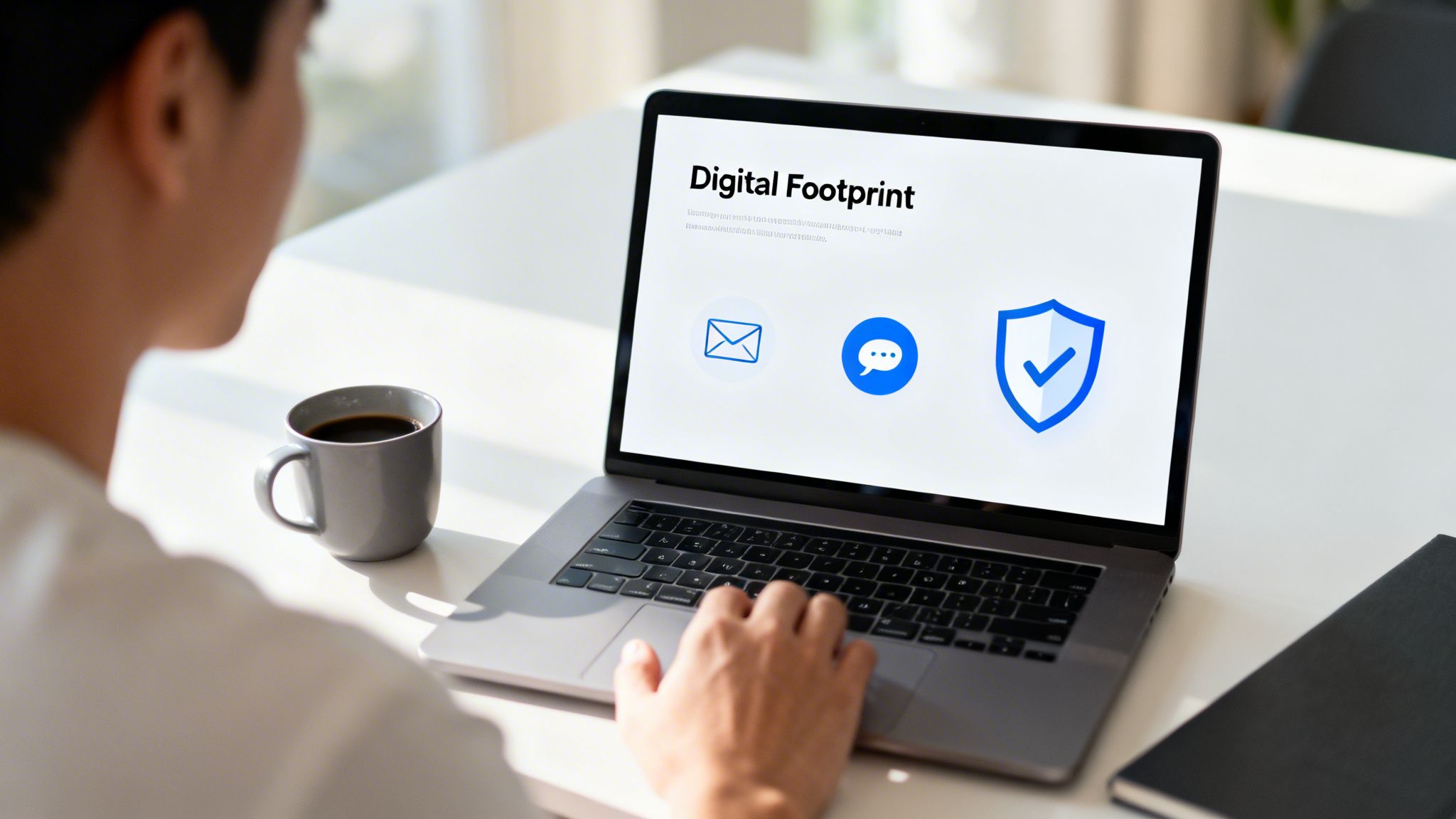
We’ve all heard the advice to “use strong passwords,” but that’s only half the story. The real major advantage is using a unique password for every website and service. This one change prevents a single data breach from turning into a nightmare, where criminals use one stolen password to unlock your entire digital life—from your gaming accounts to your bank.
Beyond Basic Passwords
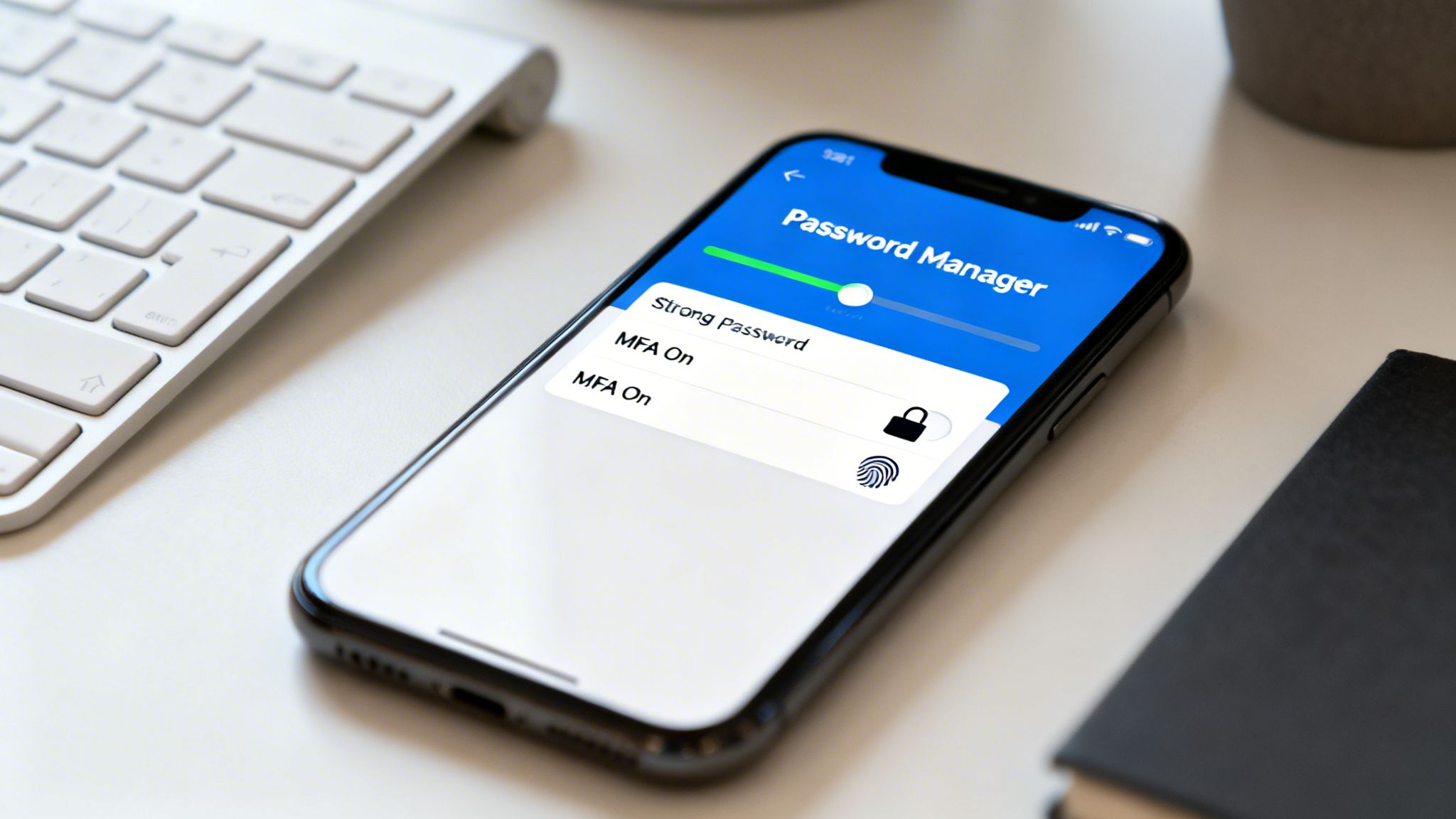
So how do you manage dozens of different, complex passwords? You don’t—you get a password manager to do it for you. This is the single most important tool for your digital security.
Free password managers generate and store complex passwords for all your accounts. You just have to remember one strong master password, and the app handles the rest, securely filling in your credentials when you log in. If you want to dive deeper, we have a whole guide covering password manager best practices that shows you how to integrate one into your daily life seamlessly.
Just by making this one change, you go from being an easy target to a much tougher one.
The Power of Multi-Factor Authentication
Even the best password can be stolen. That’s where multi-factor authentication (MFA) comes into play. It’s a second security layer that requires you to approve any login attempt from a trusted device, like your smartphone.
Let’s say a criminal buys your old username and password from a data breach. Without MFA, they could immediately try those credentials on your email or bank account. But with MFA enabled, their login attempt hits a brick wall. They have your password, but they don’t have your phone.
Key Takeaway: Turning on MFA is one of the most effective free security actions you can take. It blocks the vast majority of hijacking attempts, even when a thief already has your password.
You should stop what you’re doing and enable MFA on these accounts right now:
- Primary Email Account: This is the skeleton key to all your other accounts.
- Banking and Financial Apps: This is your money. Protect it.
- Social Media Profiles: Prevents hackers from impersonating you and damaging your reputation.
- Gaming Accounts (Steam, Epic, etc.): Protects your valuable game library and digital items from theft.
- Dating Apps: Secures your private conversations and helps prevent impersonation.
- Major Shopping Sites: Keeps your stored payment methods safe.
Nearly every major service offers MFA for free, and setting it up usually takes less than five minutes. It’s a tiny time investment for a massive security upgrade.
Think about a real-world scenario, like applying for jobs. Your professional networking accounts and email are high-value targets. A compromised account could mean missed interviews or, worse, sabotage from an impersonator. By securing them with a unique password and MFA, you’re protecting your career from a very real threat.
When you combine these free security fundamentals, you create a robust defense against identity thieves, all without spending a dime.
Using Free Tools to Monitor Your Online Identity
Setting up strong passwords and multi-factor authentication is a great first move, but real identity protection isn’t a “set it and forget it” task. It requires ongoing vigilance. You have to know when and where your data gets exposed.
The good news? You don’t need an expensive subscription to keep an eye on things. Several powerful, and free, tools can alert you to trouble long before it becomes a full-blown crisis. This is about shifting from a passive defense to actively monitoring your identity.
Free Credit and Identity Scanners
The easiest place to start is with your credit report. Thanks to U.S. law, you are entitled to a free report from each of the three major bureaus—Equifax, Experian, and TransUnion—every year. My advice? Stagger your requests. Pull one every four months. This gives you a year-round, rolling view of your credit activity, making it simple to spot any accounts you didn’t open.
Beyond your credit file, free scanning tools give you a much broader look at your online exposure. These tools show you where your personal details are showing up in public databases and, more importantly, in data breaches.
Finding your email on a breach list is a major red flag. It’s not just about getting more spam; it’s a critical warning that criminals have the raw ingredients to target you for fraud. For an extra layer of defense, especially against tax fraud, consider getting an IRS Identity Protection PIN (IP PIN). It’s a free six-digit number that adds a crucial security step to your tax filings.
The goal of free monitoring is simple: Find your exposed data before criminals can use it. Each piece of information you uncover and secure is one less tool a fraudster has at their disposal.
The Growing Threat of Synthetic Identity Fraud
Discovering your email in a data breach has serious implications, especially with the explosion of synthetic identity fraud. This is a nasty trick where criminals take real, stolen information—like your name or Social Security number—and combine it with fabricated details to create a brand-new, fraudulent identity.
This isn’t a small-time problem. Economic losses from synthetic fraud are projected to skyrocket to $30-$35 billion annually in the U.S. alone. In fact, attempts at this specific type of fraud jumped by a staggering 153% between late 2023 and early 2024. Knowing what data of yours is public is the first step to understanding your personal risk.
Here are the essential tools to add to your free identity protection toolkit:
- AnnualCreditReport.com: This is the official, government-mandated site for your free yearly credit reports. No catches.
- Credit Monitoring Services: Check with your bank or credit card provider. Many, like Capital One or Chase, offer free credit score monitoring and alerts as a customer perk.
- Digital Footprint Scanners: A service like our free data breach checker can quickly search for your email across thousands of known data breaches.
By weaving these free resources into a regular routine, you create a simple but surprisingly effective early-warning system. This proactive approach is the key to making identity theft protection a practical part of your everyday life, without spending a dime.
See If Your Data Has Been Breached for Free
The Power of a Free Credit Freeze
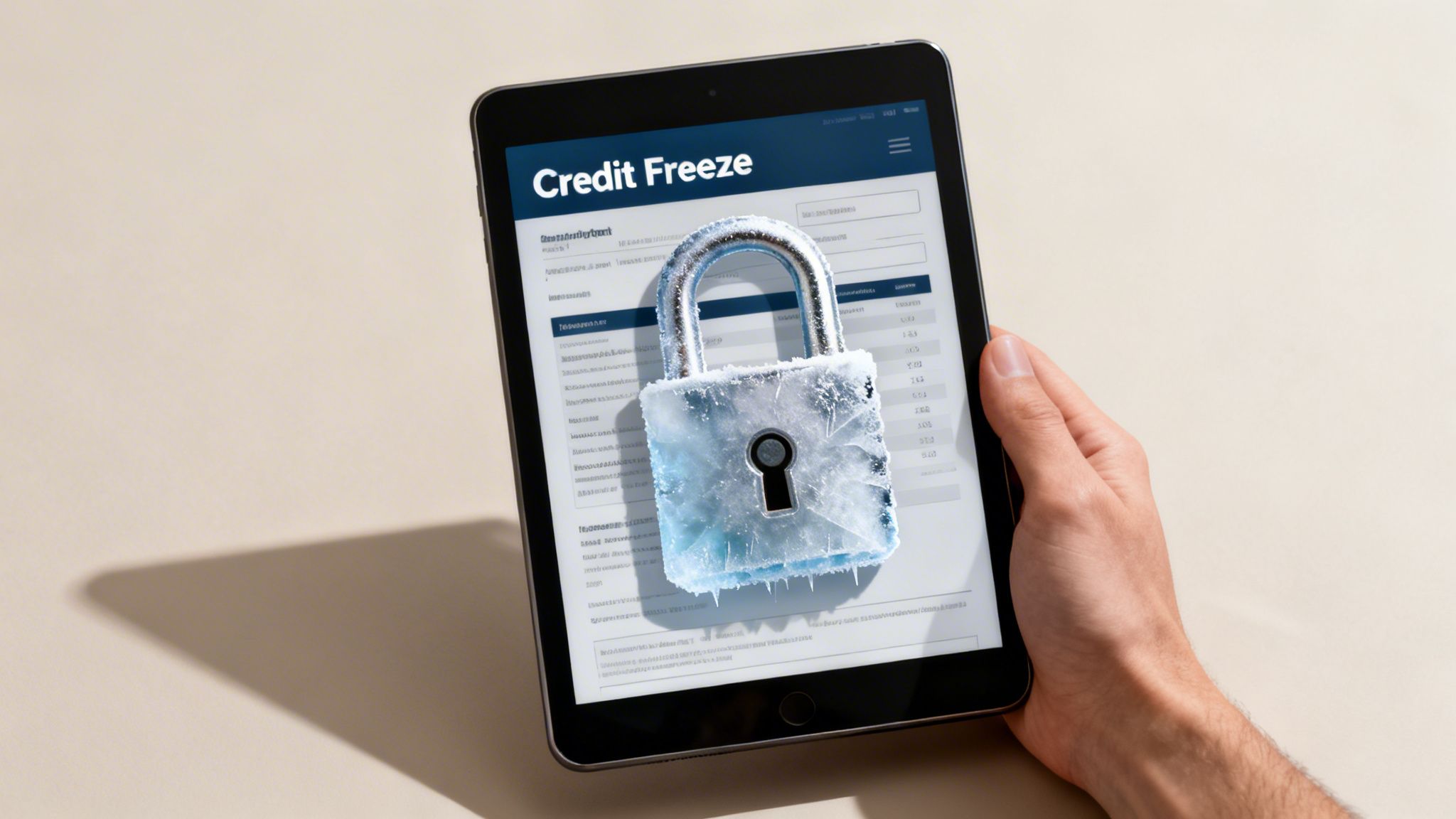
If there’s one single action you can take to slam the door on identity thieves, it’s a credit freeze. Think of it as the ultimate gatekeeper for your financial identity. It’s easily one of the most effective, high-impact, and free tools you have at your disposal.
When you freeze your credit, you’re instructing the three major credit bureaus—Equifax, Experian, and TransUnion—to deny access to your credit report. This one move makes it almost impossible for a criminal to open a new credit card, get a loan, or set up other financial accounts using your name.
Why is it so powerful? Because nearly every legitimate lender requires a look at your credit history before approving new credit. A freeze simply blocks that request, stopping the fraud before it even starts.
How a Credit Freeze Really Works
A lot of people worry that freezing their credit will hurt their score. That’s a complete myth. A credit freeze has zero impact on your existing credit score.
It also doesn’t stop you from using your current credit cards, mortgages, or other accounts. You can still check your own credit reports, too. The only thing it does is block new inquiries.
The process is surprisingly simple and, by federal law, free. You just need to contact each of the three bureaus separately.
- Equifax: Head to their security freeze website or call their automated phone service.
- Experian: Use their online Freeze Center or give them a call.
- TransUnion: Visit their credit freeze portal or phone them to start the process.
Each bureau will give you a unique PIN or password. Guard this information like gold. You will need it to temporarily “thaw” or permanently remove the freeze later.
A credit freeze is proactive defense, not a reactive cleanup. It’s about preventing a financial crime before it ever happens. By locking down your files, you take away one of the biggest reasons for a thief to target you in the first place.
Let’s say you’re looking for a new job. Your resume, filled with personal details, is floating around on different job boards and with multiple hiring managers. Placing a credit freeze gives you incredible peace of mind during this process. Even if your data ends up in the wrong hands, a fraudster can’t use it to open a new line of credit.
When you do need to apply for a car loan, mortgage, or new credit card, you can easily schedule a temporary “thaw” for a specific time frame. It’s a flexible tool that puts you firmly in control of who gets to see your financial data.
For those looking to lock down their personal information even further, check out our guide on data broker removal to shrink your overall attack surface.
Knowing the Limits of Free Protection
Free tools are an essential part of your security toolkit, but we need to be honest about where they fall short. Think of things like credit freezes and your annual credit report check as the first line of defense. They do a solid job of catching obvious financial fraud, but they’re just one piece of a much larger puzzle. They offer a strong defense, but they aren’t invincible.
The biggest blind spot for almost all free services? They can’t see beyond your credit file. A free credit alert won’t tell you if your gaming account password, your dating app messages, or your work email just got dumped onto the dark web. For criminals, this kind of non-financial data is a rich source for planning much bigger, more damaging attacks, like romance scams or catfishing.
Where Free Protection Falls Short
The world of identity fraud is evolving fast. While the headline number for global identity fraud actually dipped a little to 2.2% in 2025, that figure hides a much more frightening trend: sophisticated, multi-step fraud attacks skyrocketed by 180% in that same period.
This tells us that criminals are shifting their strategy. They’re running fewer, but far more complex, attacks that are often supercharged by AI and deepfake technology designed to bypass basic security. It’s a growing threat you can read more about how AI is changing identity fraud to really get the picture.
Free protection is primarily reactive—it alerts you after your credit file is impacted. Paid services are proactive, monitoring vast data sources to warn you of a potential threat before it escalates into full-blown identity theft.
Even if you do everything right with free tools, you’re not immune. In the event of a massive data breach at a company you trust, your information could be exposed through no fault of your own. When that happens, knowing your options, like participating in data breach class actions, becomes a critical part of your recovery plan.
Free vs. Paid Identity Protection Services
To make the right call for your situation, it helps to see a side-by-side comparison. Here’s a breakdown of what you can do yourself for free versus what a comprehensive paid service brings to the table, emphasizing the real-world impact.
| Feature | Free Protection (DIY & Basic Services) | Paid Protection (Comprehensive Services) |
|---|---|---|
| Credit Monitoring | Limited to annual reports or alerts from one bureau. | 3-bureau credit monitoring with real-time alerts. |
| Dark Web Monitoring | Generally not included. You must search manually. | Automated scanning for your SSN, passwords, and emails. |
| Identity Restoration | You handle all recovery efforts yourself. | Full-service restoration with dedicated case managers. |
| Insurance Coverage | No financial coverage for losses or expenses. | Includes stolen funds reimbursement and expense insurance. |
| Real-World Monitoring | No monitoring of gaming, social, or dating profiles. | Alerts for compromised gaming accounts, dating profile impersonation, and reputational risks. |
| Family Protection | You must set up and manage accounts for each person. | Often includes plans to monitor children and other family members. |
Ultimately, the choice depends on your personal risk level and how much time you’re willing to commit.
Free tools are a non-negotiable starting point for everyone. But if you have a significant online presence, handle sensitive data for work, or just want the peace of mind that comes with having experts on your side, upgrading to a paid service is a very smart investment in your security.
Frequently Asked Questions About Free Protection
It’s smart to be skeptical when you hear the word “free,” especially on something as serious as identity protection. Let’s tackle the questions that come up most often when people start taking control of their own security.
Is This Stuff Really Free, or Is There a Catch?
Yes, you can build a surprisingly strong defense against identity thieves without spending a dime. It’s all about being proactive. This means using a good password manager for unique credentials, turning on multi-factor authentication everywhere you can, and freezing your credit.
So, what’s the “catch”? It’s you. With free methods, you are the one doing the work. You have to monitor your accounts, check your reports, and respond to alerts yourself.
Paid services sell convenience and expertise. They offer automated monitoring, scan a wider range of data (like dark web forums, court records, and social media), and—most importantly—provide identity restoration specialists to clean up the mess if you become a victim. That hands-on help is something free options just can’t provide.
How Often Should I Be Checking My Digital Footprint and Credit Reports?
Consistency is everything. If you don’t build a routine, these free methods lose their power. I recommend checking your digital footprint at least quarterly. You should also do a spot-check after any big life event, like moving or starting a new job, to see what new information has popped up online.
On your credit reports, you’re entitled to a free one from each of the three major bureaus (Equifax, Experian, and TransUnion) every year through AnnualCreditReport.com.
Pro Tip: Don’t pull all three at once. Stagger them. Get your Equifax report today, your Experian report in four months, and your TransUnion report four months after that. This simple strategy gives you a free look at your credit activity every few months, making it much easier to spot fraud early.
If your bank or credit card offers free credit monitoring, pay close attention to the alerts. When one comes in, review it immediately. Speed is your best friend.
What Is the Single Most Effective Free Action I Can Take?
While a layered defense is always the highest standard, placing a credit freeze with all three bureaus is arguably the most powerful free move you can make. It’s the digital equivalent of putting a vault door on your financial identity.
A freeze blocks creditors from accessing your credit report, which stops a thief from opening a new credit card, getting a car loan, or taking out a mortgage in your name. It stops the most common types of financial identity theft cold.
It’s free to freeze and temporarily “thaw” your credit whenever you actually need to apply for a loan or card, and it has zero impact on your credit score. When you pair a credit freeze with strong, unique passwords and MFA, you’ve built a formidable defense without spending a single dollar. You can learn more about how all these pieces fit together by understanding identity theft checkers and how they help.
Taking control of your security is about making smart, consistent choices. Start today by discovering what’s out there about you.