
· Digital Footprint Check · Content Marketing · 15 min read
SMS Verification Online: 10 Services Compared
Compare 10 SMS verification online services, how they work, their limits, and privacy tips for safer use. Includes a side-by-side comparison table.

Why hand your personal mobile number to yet another app when all you need is a verification code? A separate number can reduce unwanted contact and keep a low-stakes signup away from the number you use for family, work, and account recovery. But replacing your number doesn't automatically make the signup anonymous or secure.
Services offering SMS verification online fall into two different categories. Consumer services rent numbers and display incoming codes in a dashboard. Developer verification APIs generate, send, and validate codes for a website or app you operate, using your customers' existing numbers.
Both have legitimate uses, including privacy-conscious signups, authorized testing, and phone-ownership checks. Neither guarantees acceptance: platforms can block virtual numbers, providers can recycle numbers, and messages sometimes never arrive. A successful code also doesn't establish someone's identity, a distinction reflected in NIST's authentication guidance, which treats telephone-network authentication as restricted.
Start with the account's future: If losing the number would lock you out of something valuable, don't use a disposable number.
The comparison below separates consumer number services from production verification APIs, with the limitations and privacy precautions that matter before you pay. Use these tools only for accounts and testing you're authorized to manage, not to bypass bans, impersonate someone, or evade platform safeguards.
Table of Contents
- 1. SMS Activate
- 2. TextVerified
- 3. TextVerification
- 4. NonVoIP.com
- 5. SecureIO SMS
- 6. Twilio Verify
- 7. Telnyx Verify
- 8. Vonage Verify API
- 9. Sinch Verification
- 10. Plivo Verify
- 11. Telesign
- SMS Verification Services at a Glance
- Verify Safely and Protect Your Footprint
1. SMS Activate
Category: Consumer number service. SMS-Activate's online SMS verification service provides virtual numbers for receiving verification codes without handing the target platform your personal mobile number. Its advertised inventory spans 190+ countries, with temporary activations and longer rentals lasting hours, days, or months.
That flexibility is its main attraction. A disposable activation can suit a low-stakes signup, while a longer rental can support authorized testing that requires repeat messages. The service advertises support for thousands of platforms, including Telegram, WhatsApp, and Google, but a listed platform isn't a guarantee that every available number will work.
Where the Convenience Ends
SMS Activate uses a pay-per-use model, advertising payment for activations that successfully receive a code rather than a subscription requirement. Codes appear in its dashboard as they arrive, although real-world delivery still depends on the sending platform, carrier routing, and available inventory.
- Best fit: A disposable account or authorized test where you don't need permanent control of the number.
- Standout benefit: Country selection and rental duration give you more flexibility than a basic public SMS inbox.
- Main limitation: Receiving the initial code doesn't guarantee that you can receive a later security challenge.
- Privacy precaution: Keep primary email, banking, employment, and valuable gaming accounts on numbers you control.
I'd choose it for a bounded task, not as a substitute for a private mobile line. Avoid assuming that hiding your personal number also hides your identity: the target platform can still associate your signup with your email, device, payment details, and activity.
2. TextVerified
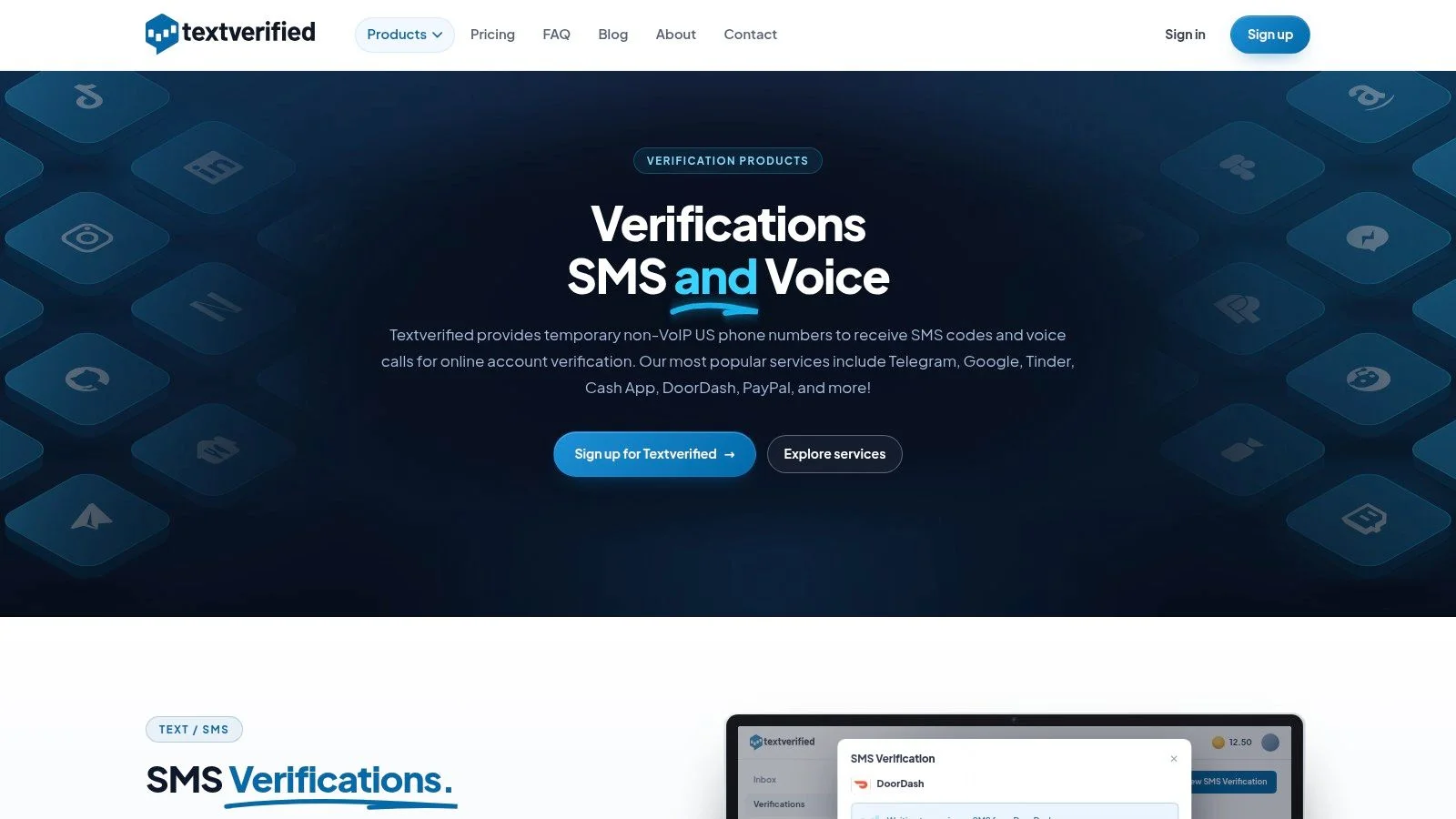
Category: Consumer number service. Need a US number and a choice between text and voice delivery? TextVerified focuses on temporary US numbers, with online code delivery and reactivation available for some numbers.
The voice option is useful when a legitimate verification flow offers a call instead of a text. However, the target platform still decides whether to accept the number, and reactivation shouldn't be treated as permanent ownership.
- Pros: Focused US inventory, SMS and voice support, and possible reuse through reactivation.
- Cons: Platform acceptance varies, reactivation isn't universal, and there isn't a single fixed rate covering every order.
- Before paying: Check the selected service, delivery method, current price, and conditions for retrieving the same number again.
A temporary number also doesn't make an account untraceable. Our explanation of whether prepaid phones are traceable helps distinguish keeping your personal number private from eliminating other identifying information.
For a gaming test account, that separation can be useful. For your main gaming profile, purchased content, or a professional account tied to job applications, use a recovery method you can maintain independently of a rental provider.
3. TextVerification
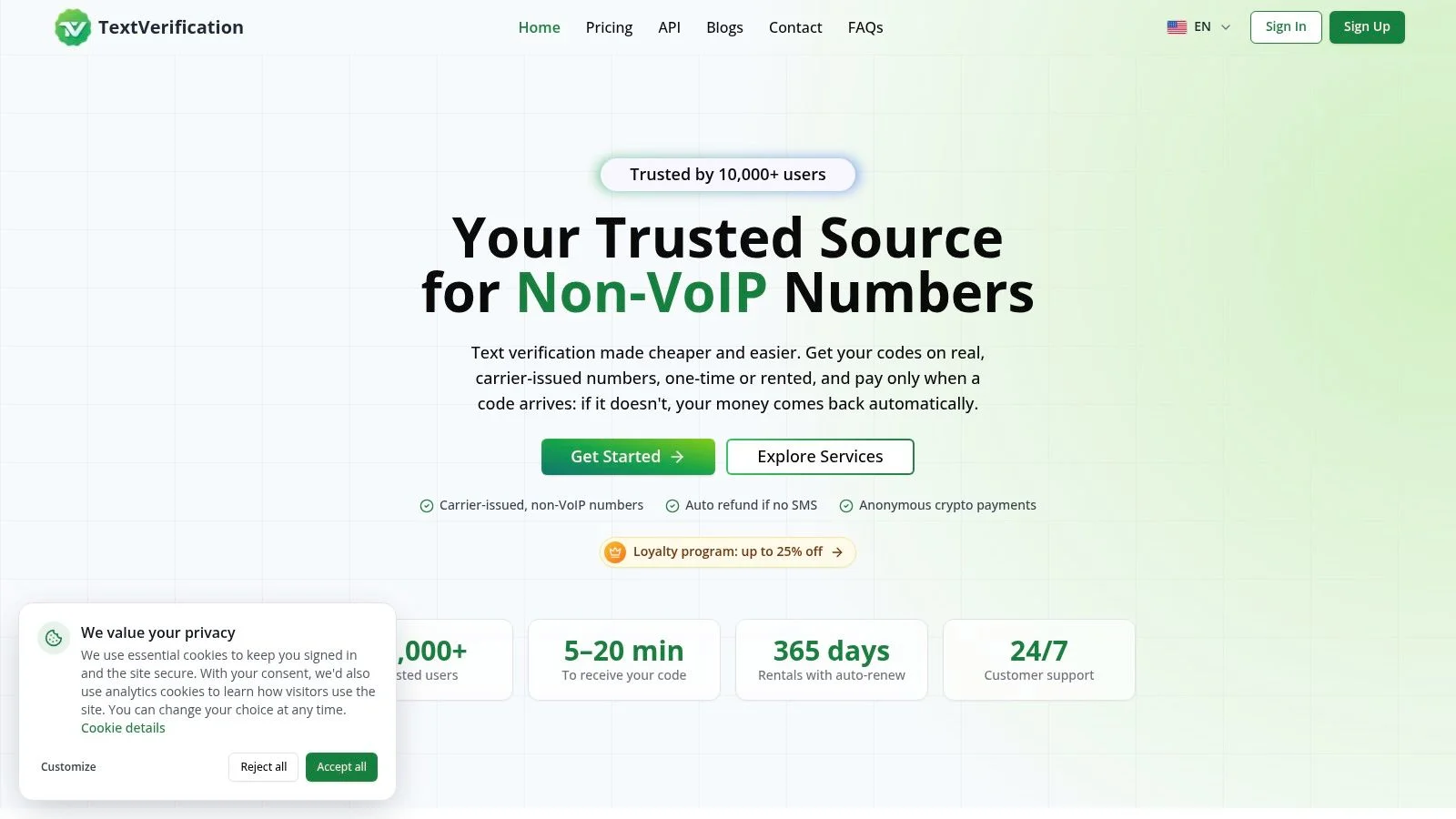
Category: Consumer number service. TextVerification is worth considering when rental duration matters more than getting the cheapest available activation. It offers one-time US numbers alongside rentals lasting days to months, with area-code and carrier selection available for some number types.
Say you're testing your own signup and notification flows across several sessions. A rental can make more sense than repeatedly ordering unrelated numbers, provided its terms support the messages and services you need.
Match the Product to the Task
The upside is choice: different durations, prices displayed before ordering, and API access for automation. Some products offer refunds when a code doesn't arrive, but that protection depends on the product's conditions.
The downside is that availability, selection controls, and pricing vary. An area-code preference doesn't establish residency, and a rented number isn't equivalent to owning a private mobile line.
Before ordering, check whether the rental receives only verification messages or also supports subsequent account notifications. Keep screenshots or records of the applicable rental and refund terms without retaining unnecessary codes.
For privacy, remove the number from the target account before the rental ends. Abandoning the dashboard doesn't remove the phone association from the service where you registered.
4. NonVoIP.com
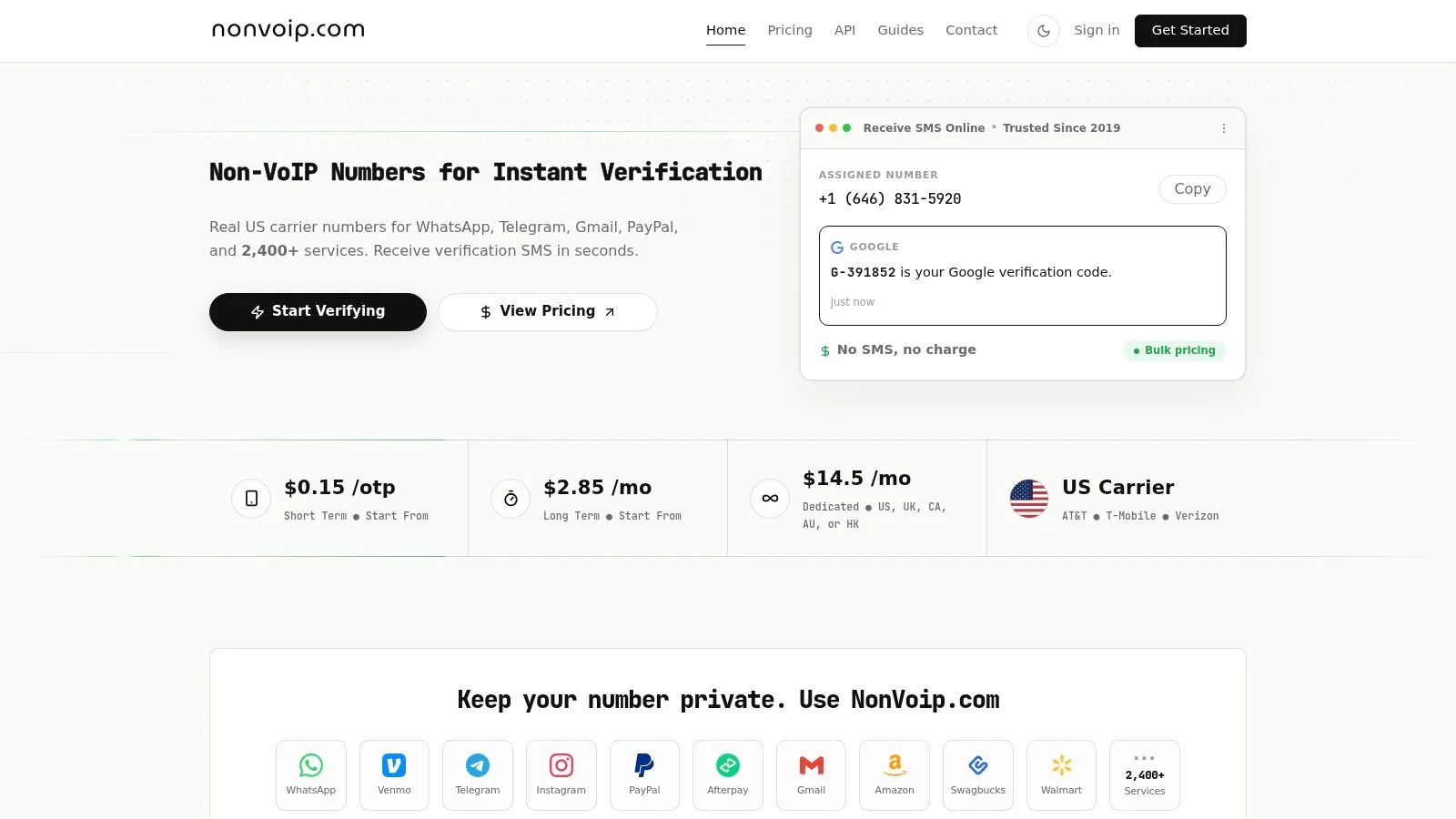
Category: Consumer number service. The useful distinction at NonVoIP.com is between short-term OTP orders, 30-day numbers, and dedicated-number options. Its service-specific ordering and online SMS delivery help separate a single activation from a longer-running requirement.
Don't treat the product name as a promise of universal acceptance. A platform can reject a number for reasons beyond line type, including its previous use or the platform's own verification policy.
- Pros: Separate short-term and longer-term products, service-specific pricing, and API options.
- Refund position: The provider says failed or no-code orders aren't charged or are credited back.
- Cons: Stock and prices can change, and exclusivity depends on the selected plan.
- Privacy check: Confirm that “dedicated” describes your actual rental rather than assuming every number is exclusive.
Our guide to a burner phone number explains the practical distinction between a temporary contact point and a number suitable for continued use.
For a dating signup, separating your personal contact number can reduce immediate exposure. It doesn't verify the person you're speaking with, and another user's SMS-verified badge shouldn't replace checking inconsistent profile claims or refusing requests for money.
5. SecureIO SMS
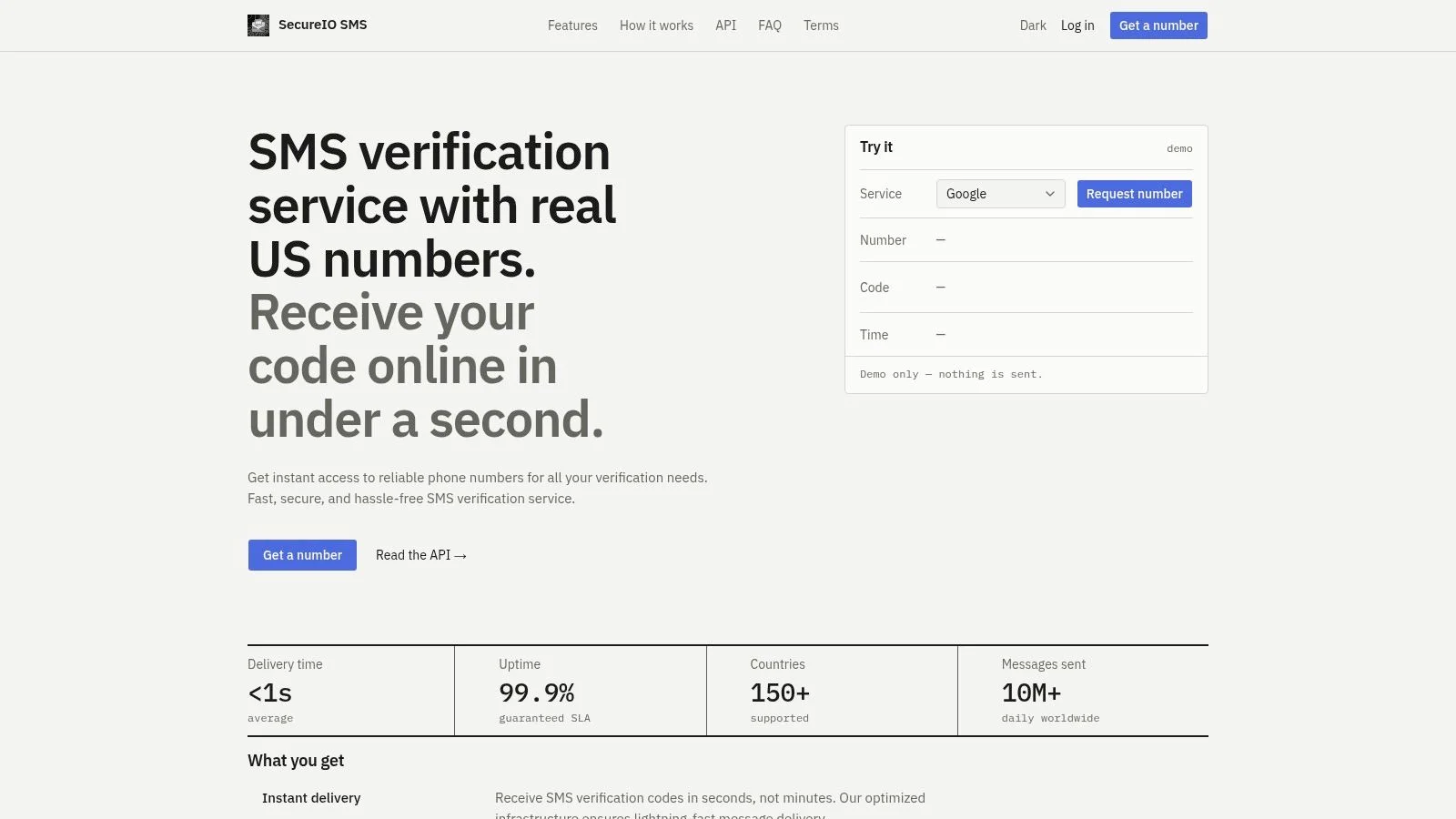
Category: Consumer number service. SecureIO SMS advertises US numbers for receiving verification codes online, and its stated policy is a refund when no code arrives. That makes it a reasonable candidate for a low-stakes activation, provided you read the current refund conditions before paying.
The draw is simplicity, not infrastructure. Pick the supported service, receive the code in your browser, done. No API keys, no integration work. That same simplicity is the ceiling: you get what the catalog lists, nothing configurable.
A Refund Isn't an Acceptance Guarantee
Pros: A focused one-off workflow and a stated no-code refund policy can limit the cost of an unsuccessful attempt. Cons: Acceptance remains platform-dependent, there's no universal rate to assume, and a refund doesn't compensate for an account you can't recover later.
Read the refund terms like a contract. Confirm when the eligibility window starts, what counts as successful delivery, and whether an unrelated incoming message can void your claim. Don't keep requesting codes while another attempt is still pending, since that can complicate troubleshooting if you need support later.
Receiving a message is also different from trusting its sender. Our guide to how attackers fake a sender ID explains why the displayed name isn't proof of authenticity.
Enter codes only into the legitimate service that requested them. Never send a code to someone claiming they need it to confirm a sale, a dating profile, or your ownership of an account.
6. Twilio Verify
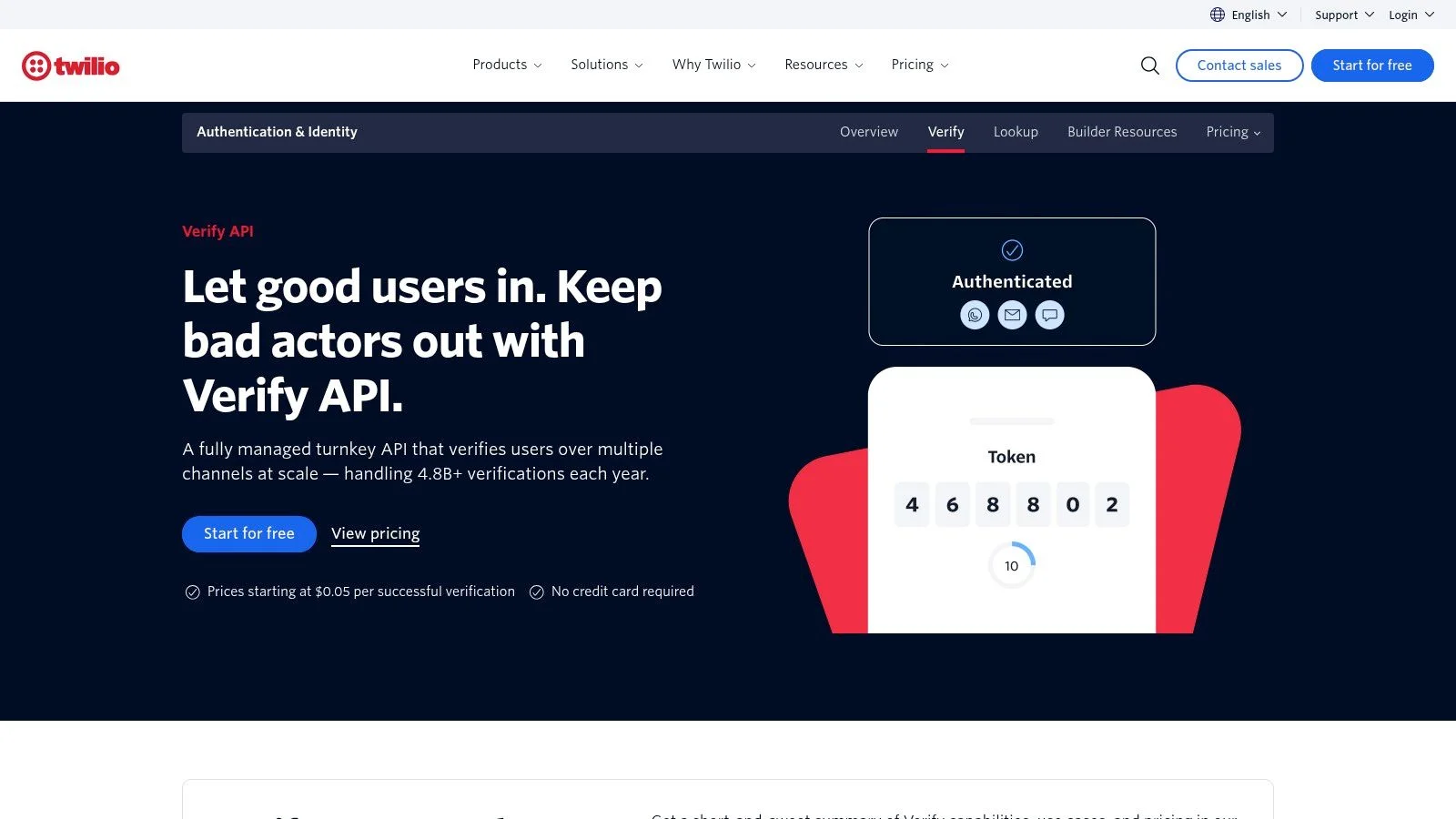
Category: Developer verification API. Twilio Verify serves a different purpose from a rented-number dashboard. It generates, delivers, and validates verification codes for your product, supporting SMS, voice, WhatsApp, email, and authenticator-app codes.
Its main benefit is managed verification logic: code lifecycle handling, configurable expiration and retries, fraud protections, and reporting. Teams still need to integrate the API and decide when a phone challenge is appropriate.
- Pros: Broad channel choice and less custom code for delivery and validation.
- Cons: The successful-verification fee isn't the whole bill; channel charges apply, and unsuccessful SMS delivery attempts can also cost money.
- Privacy precaution: Mask phone numbers in application logs and never log live verification codes.
Compare the cost of a completed legitimate signup, not just the advertised verification fee.
Security depends on implementation as well as delivery. A peer-reviewed analysis of popular Android communication apps found that 98.5% of analyzed apps violated at least one security rule in their SMS-OTP implementation.
Use rate limits, short-lived single-use codes, and stronger authentication for sensitive actions. A managed API reduces development work; it doesn't decide your account-recovery policy for you.
7. Telnyx Verify
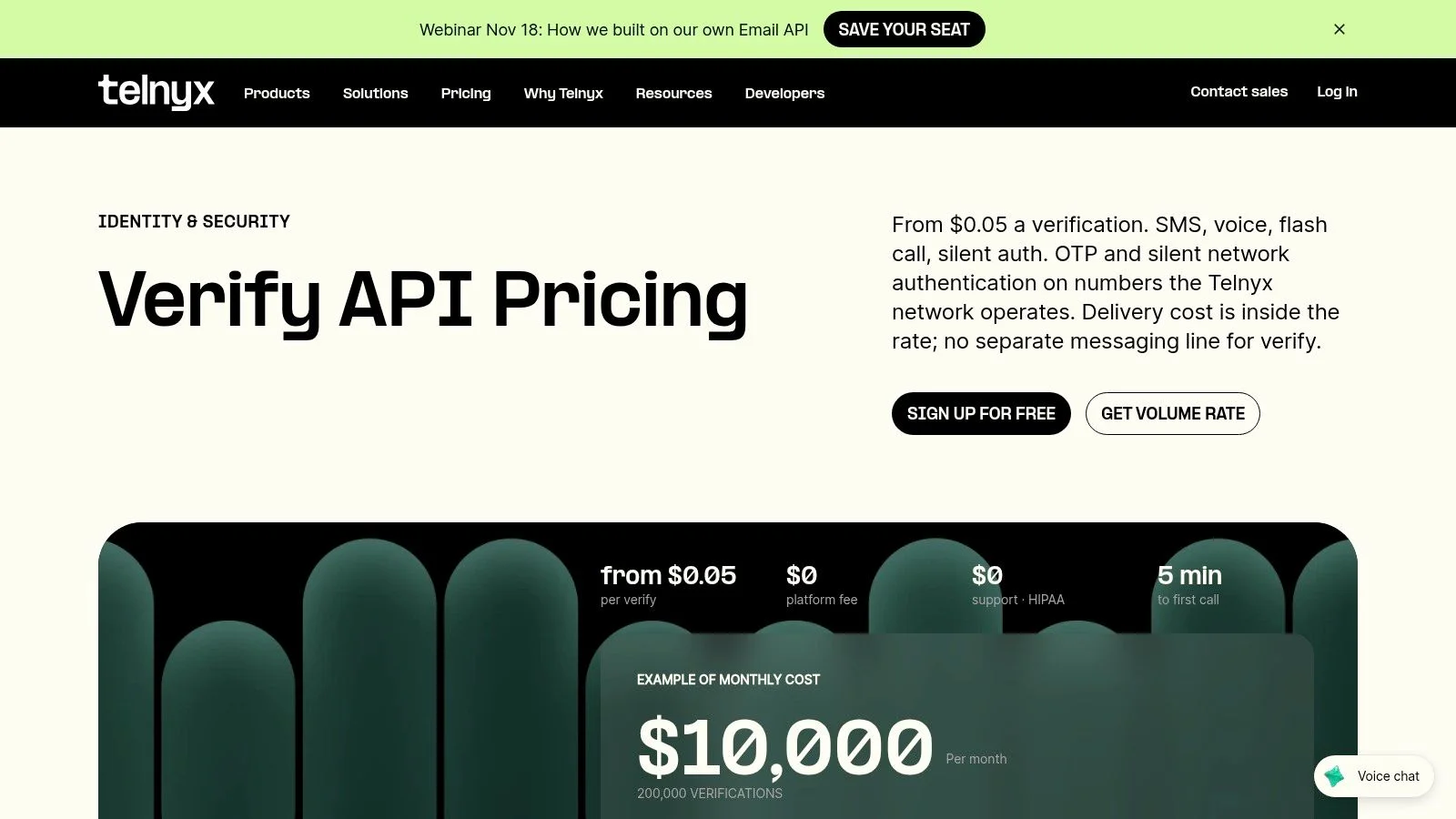
Category: Developer verification API. Start your Telnyx Verify comparison with destination-specific delivery charges, not its base verification rate. The service supports SMS, voice, flash call, and WhatsApp, with delivery costs charged separately from successful verification.
That separation makes the pricing components visible, but it also requires realistic forecasting. Your bill depends on where users live, which channel they use, and how often they retry.
Model the Entire Verification Journey
The advantage is a published base verification price, multiple delivery methods, and potential volume discounts. Related number-lookup products may also be relevant when you need line-type information.
The trade-off is integration work and a total cost that can't be inferred from the headline rate. Build estimates around completed verifications, abandoned attempts, resends, and fallback channels.
Operational variability isn't hypothetical: GSMA's mobile identity guide reports that approximately 10%–20% of SMS authentication volume may fail to complete because of dynamic prepaid markets and artificial traffic.
Normalize numbers into international format, throttle resends, and monitor conversion by destination and carrier. For privacy, retain only the number intelligence you need for a defined security purpose, rather than collecting every available attribute indefinitely.
8. Vonage Verify API
Category: Developer verification API. If your team needs configurable fallback rather than SMS alone, Vonage Verify API offers managed PIN generation and validation across SMS, voice, WhatsApp, email, and silent authentication. Its workflows can reduce the fallback logic you need to build yourself.
Vonage advertises developer trial credit and a Verify Conversion price based on successful verification, with additional messaging and voice charges. Confirm the applicable model and eligibility before treating a published rate as your complete cost.
- Pros: Multiple channels, configurable workflows, and managed validation.
- Cons: Channel charges increase total cost, commercial terms vary, and product integration is still required.
- Privacy precaution: Don't automatically cascade sensitive messages through every available channel without evaluating the risk.
Troubleshooting should distinguish a delivery problem from a handset problem. Our guide to not receiving SMS messages on iPhone covers device-side checks that can help before triggering repeated sends.
For a customer-facing product, show a clear retry timer and a support route. Don't punish legitimate users with an endless verification loop, but don't let unlimited fallback attempts become an abuse channel either.
9. Sinch Verification
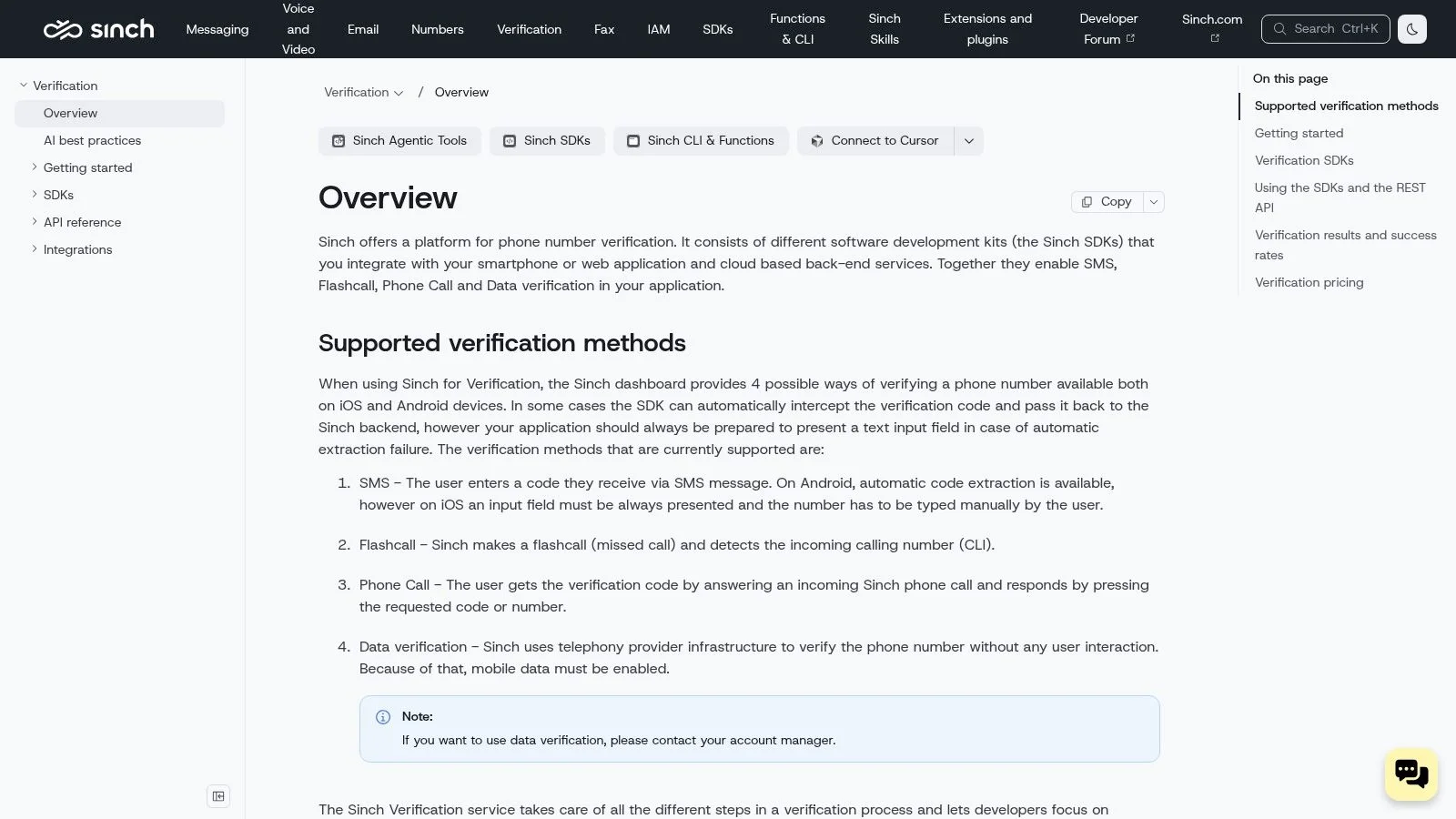
Category: Developer verification API. A message marked delivered isn't necessarily a completed signup. Sinch Verification is relevant for teams that want verification controls alongside delivery and conversion reporting, with SMS and alternatives such as flash call.
Its documentation describes retry controls and API or SDK integration options. Pricing depends on destination and operator and is available through the Sinch Build dashboard, rather than a universal public headline rate.
Measure Completion, Not Just Sending
Pros: Verification-specific controls, delivery and conversion metrics, and flash-call alternatives in supported flows. Cons: Rates require a destination-level comparison, and some methods need additional SDK or device support.
Before choosing a method, test it against the devices and operating systems your customers use. A channel that works in a developer test can still produce confusing instructions or accessibility barriers in production.
For privacy, keep operational analytics separate from unnecessary identity profiling. You need enough information to identify delivery failures and abuse, not a permanent history of every authentication detail.
Sinch is a sensible shortlist option when your team plans to monitor and improve verification after launch. It's less useful if nobody owns retry policies, conversion reviews, or support escalation once the integration goes live.
10. Plivo Verify
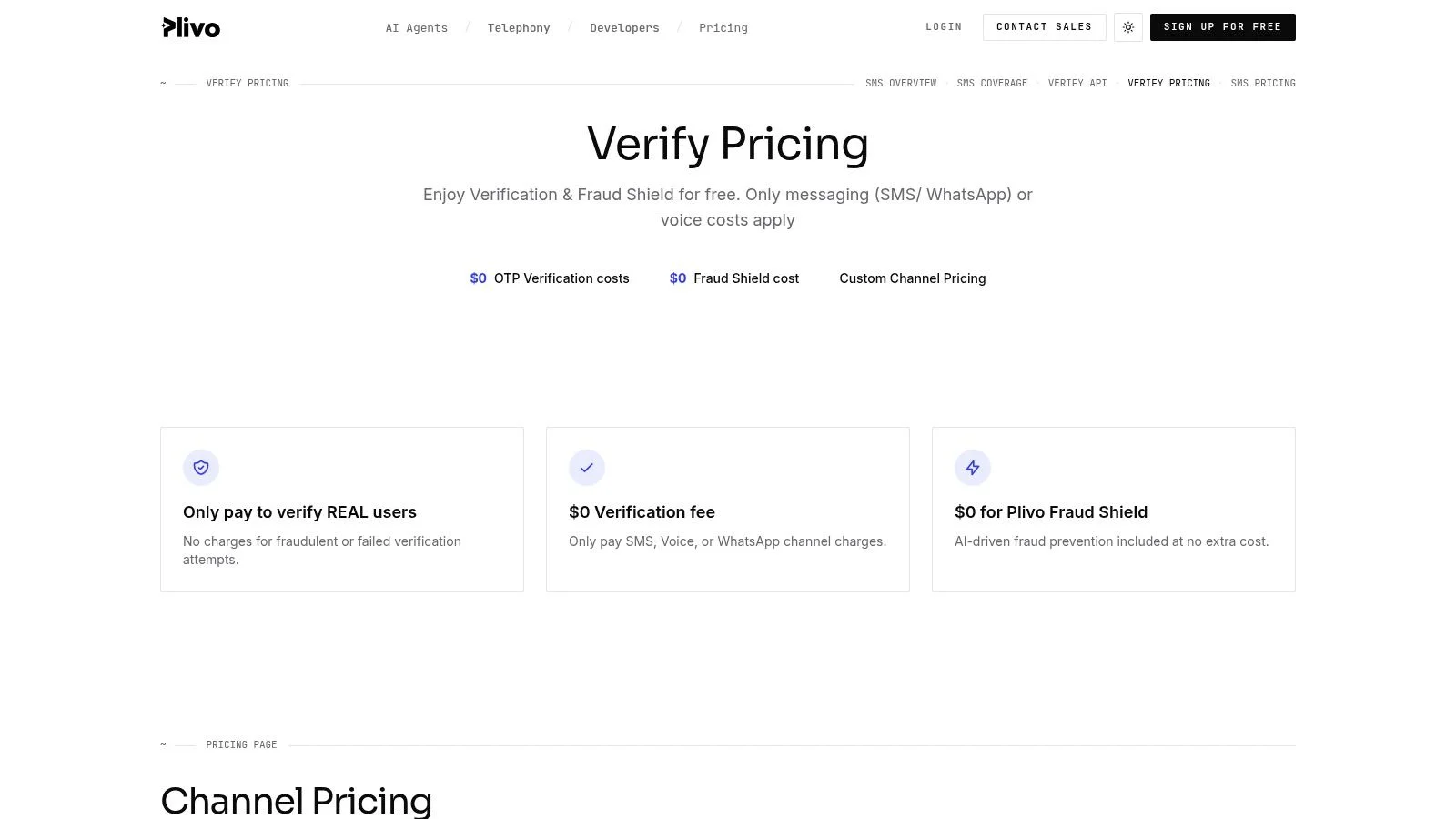
Category: Developer verification API. “No separate OTP verification fee” doesn't mean free authentication. Plivo Verify advertises that pricing approach, but SMS and voice channel charges still apply.
The more consequential restriction for a small project is access. Under its documented terms, Verify requires sales provisioning for direct brands and a minimum monthly commitment, making it better suited to established businesses than casual self-serve experiments.
- Pros: SMS and voice OTP support, no separate advertised OTP fee, and included Fraud Shield.
- Cons: Sales-led provisioning, commitment requirements, and country-dependent channel costs.
- Before committing: Compare expected usage with the commercial minimum and confirm which traffic qualifies.
- Privacy precaution: Review retention and access controls for phone numbers, delivery records, and fraud-related metadata.
Plivo belongs on a shortlist when an established business can justify the onboarding and commitment. It's a weaker fit when your priority is launching a tiny prototype without a sales conversation.
For sensitive accounts, treat SMS as a channel rather than an identity verdict. Add passkeys or security keys where appropriate, and avoid allowing a text code alone to authorize irreversible account changes or recovery.
11. Telesign
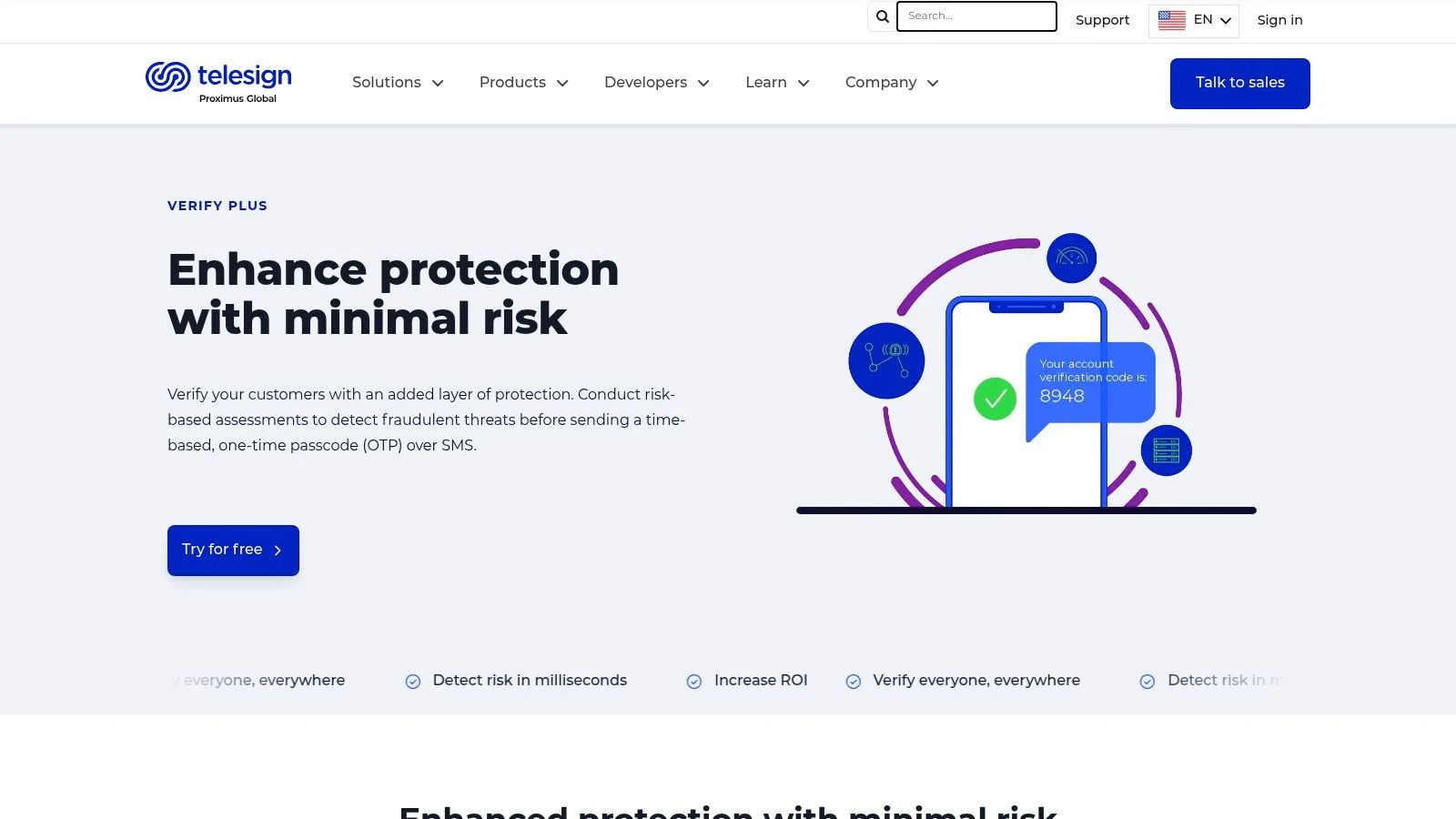
Category: Developer verification API. Telesign is the stronger conceptual fit when your question isn't “Can this number receive a code?” but “What risk does this signup present?” It combines verification capabilities with phone-number intelligence intended for business fraud workflows.
That can help teams assess suspicious registrations, but intelligence signals aren't proof of identity or wrongdoing. A legitimate customer may use a prepaid, recently ported, or otherwise unfamiliar number.
Buy the Workflow You Actually Need
Pros: Verification and number-risk assessment can support a broader signup-protection process. Cons: Pricing requires a sales conversation, and verification and intelligence may be separate cost components.
Request a quote for the complete workflow, including the specific risk features you intend to use. Confirm how your application should handle uncertain results, including manual review or an alternative verification route.
Our guide to what hackers can do with your phone number explains why number exposure deserves attention beyond spam prevention. NIST's authenticator guidance describes how attackers can persuade a carrier to transfer a victim's number and then receive authentication messages.
For privacy and fairness, use risk signals proportionately. Don't turn a number-risk result into an unsupported conclusion about an applicant, employee, dating contact, or customer.
SMS Verification Services at a Glance
| Service | Number Type | Best For | Refund / Pricing Transparency | Requires Integration |
|---|---|---|---|---|
| SMS Activate | Temporary and long-term virtual numbers | On-demand verification across many services and countries | Pay per successful code; no subscription stated | No |
| TextVerified | Temporary US numbers; some reusable | Short-term US SMS or voice verification | No single fixed rate listed; check price before ordering | No |
| TextVerification | One-time and rental US numbers | Flexible rental periods and optional API access | Prices shown by product; some products offer refunds if no code arrives | No; API is optional |
| NonVoIP.com | Short-term, 30-day, and dedicated numbers | One-off verification or longer-term number use | Prices listed by service; failed or no-code orders are stated to be uncharged or credited | No; API is optional |
| SecureIO SMS | US numbers for SMS verification | Simple, one-off code receipt | Automatic refund stated if no code arrives within 15 minutes; check current price and terms | No |
| Twilio Verify | Managed OTP API across SMS and other channels | Production authentication for apps and services | Published verification fee plus channel charges | Yes |
| Telnyx Verify | Managed verification API across SMS and other channels | Developer-built verification with multiple delivery options | Published base fee; delivery costs vary by destination and method | Yes |
| Vonage Verify API | Managed OTP API across multiple channels | Automated verification workflows with channel failover | Published conversion price plus messaging and voice charges | Yes |
| Sinch Verification | Managed SMS and flash-call verification API | Teams needing verification controls and performance metrics | Destination- and operator-based pricing; no single public headline price stated | Yes |
| Plivo Verify | Managed SMS and voice OTP API | Established businesses needing fraud-prevention features | No separate OTP fee advertised; channel charges and monthly commitment may apply | Yes |
| Telesign | Verification API with phone intelligence | Business fraud and signup-risk workflows | Quote-based; confirm included features and costs | Yes |
Verify Safely and Protect Your Footprint
The right choice depends on who controls the number, how long you need it, and what happens if access disappears. Consumer services and developer APIs solve different problems, so comparing them on price alone produces the wrong shortlist.
For low-stakes, one-off verification, a consumer number service can keep your personal mobile number away from an unfamiliar platform. Choose according to country availability, rental duration, exclusivity, platform acceptance, and refund conditions. Never use a temporary number for account recovery or an account you intend to keep.
For production authentication, choose a developer API according to supported channels, destination costs, fraud controls, reporting, and integration requirements. You're building a relationship with customers who need reliable access, not merely arranging delivery of a code. Keep a safer recovery route available and use stronger authentication for high-impact actions.
A code expires. The association between a phone number and an account may remain until someone removes it.
Privacy Precautions Before You Verify
- Separate sensitive accounts: Don't reuse rented numbers across financial, professional, dating, or valuable gaming accounts.
- Watch for reassignment: Remove old numbers from accounts before cancelling a mobile line or ending a rental.
- Keep codes confidential: Never forward a verification code to a supposed recruiter, buyer, support agent, or romantic contact.
- Avoid public inboxes: Don't use publicly readable SMS numbers for accounts containing personal information.
- Strengthen recovery: Prefer passkeys, security keys, or authenticator apps where available, and store recovery codes securely.
- Audit responsibly: Check your own information or conduct authorized reviews; a possible account match isn't proof of ownership.
Consequences extend beyond an inconvenient login. An abandoned recovery number can endanger a gaming profile, an exposed contact detail can invite targeted scams, and a forgotten public profile can complicate your professional reputation. Review account links before you lose access, not after.
Start with our free Digital Footprint Check to search your username or email and review potential public-profile matches. No account is required to start, and we never sell users' data. The free check provides a limited preview; paid plans provide deeper features including phone checks, social checks, gaming profile detection, and web reporting. Review the matches, remove unnecessary phone associations, and secure the accounts that matter before choosing another temporary number.