· Digital Footprint Check · Content Marketing · 19 min read
Best Background Check Service Providers 2026: Compare &
Find top background check service providers for HR, landlords & personal use. Compare features, pricing, and compliance for an informed 2026 choice.

A hiring manager is filling a role by Friday. A landlord wants to screen a new tenant before handing over keys. A college student wants to know what a recruiter, scammer, or stranger can learn from a quick search of their name. All three are asking for a “background check,” but they are not asking for the same kind of answer.
That difference shapes which tool makes sense. FCRA-compliant screening services are built for formal decisions such as hiring and tenant placement. OSINT and digital footprint tools serve a different purpose. They help people find what is already visible across the public web, data brokers, breach databases, and social platforms. Using one in place of the other can lead to legal trouble, bad decisions, or a false sense of safety.
Background checks are now part of ordinary decision-making in work, housing, and personal safety. The harder question is not whether to check. It is what kind of check fits your situation.
This guide sorts providers by use case so the options are easier to compare. Some tools are designed for HR teams that need consent, compliance, and documented workflows. Some are built for landlords who want rental screening. Others are useful for personal research, online dating safety, self-audits, or reputation cleanup. If you want to see what your own public trail looks like before someone else does, a self background check for your online footprint can answer a very different question than an employment screening report.
That distinction also helps explain why digital footprint tools belong in the same conversation. A traditional provider may tell an employer whether a record matches an applicant. A digital discovery tool can reveal old usernames, exposed contact details, breach exposure, or forgotten profiles that never appear in a standard hiring report. One checks the official file. The other checks what is scattered across the internet, like looking at both your locked filing cabinet and everything left out on the front porch.
If your situation involves family law or child welfare concerns, this overview of navigating Texas CPS with a criminal past adds useful context on how checks can affect real outcomes.
1. Digital Footprint Check

Digital Footprint Check stands apart because it isn't trying to be a traditional pre-employment screening company first. It's built for discovery. That makes it useful for individuals, families, job seekers, and security-conscious users who want to know what their online presence says before an employer, scammer, landlord, or stranger pieces it together.
It's like checking the outside of your house before guests arrive. A formal employment screening provider checks specific, regulated records for a decision. Digital Footprint Check helps you walk around the property and spot what's visible from the street: old usernames, exposed contact details, breached email accounts, forgotten gaming profiles, and public traces across the web.
Why it fits personal risk checks
Digital Footprint Check searches across 500+ sources, including social platforms, public records, breach databases, and gaming ecosystems. The platform offers free profile and breach checks without sign-up, and it presents findings in plain language rather than dumping raw OSINT on the user.
That matters if you're not a technical investigator. Many individuals don't need more data. They need a clearer answer to “What can strangers or employers learn about me in five minutes?”
Practical rule: Use a digital footprint tool when your goal is awareness, privacy cleanup, reputation management, or scam prevention. Use an FCRA-compliant screening provider when you're making a regulated hiring or housing decision.
A strong use case is self-screening before a job search. If you want a step-by-step walkthrough, this guide on how to run a background check on yourself pairs well with the platform.
Pros and tradeoffs
- Broad online visibility: It scans 500+ platforms, which is especially helpful when your digital life spans work accounts, social accounts, gaming profiles, and old signup trails.
- Low-friction starting point: Free checks and a simple onboarding flow make it easy to get a quick picture fast.
- Actionable guidance: The reports focus on what to do next, including removal and remediation steps.
- Monitoring option: Ongoing alerts help if your concern isn't a one-time search but continued breach exposure.
The main limitation is that it's a discovery-first service. It helps you find and understand exposures, but it doesn't act as an automated cleanup crew for third-party sites. Some fixes still require your time.
For personal safety, dating due diligence, scam prevention, and online reputation management, that tradeoff is often reasonable. For formal screening decisions, it should complement, not replace, a regulated background screening workflow. You can explore the platform directly at Digital Footprint Check.
2. Checkr

Checkr is one of the most recognizable names in employment screening. If your world includes recruiters, applicant tracking systems, and candidate portals, Checkr is designed for that environment.
Its strength is workflow. Instead of treating a background check as a one-off report, it treats it as part of hiring operations, with ordering, consent, status tracking, adverse action handling, and integrations built into the process.
Best for modern hiring teams
Employers often choose Checkr because it plugs into the tools they already use. That matters when a company hires repeatedly and needs consistency, not just a result. The platform offers modular services such as criminal checks, motor vehicle records, verifications, drug testing, and international screening.
The broader backdrop helps explain why vendors like Checkr matter. Fortune Business Insights projects the employment screening services market will grow from $7.78 billion in 2026 to $13.71 billion by 2034. As hiring spreads across locations and jurisdictions, employers need systems that can handle more than a county criminal search.
If you're comparing vendors for an HR team, this overview of background check services for businesses gives a useful shortlist mindset.
- Good fit: Startups, mid-market employers, enterprise HR teams
- Less ideal for: Personal lookups, dating checks, informal curiosity
- Watch for: Add-ons, manual verification delays, and international complexity
Hiring software is like airport logistics. The passenger only sees the gate. The value is in everything moving correctly behind the scenes.
For employers who want automation and integrations, Checkr is a strong option.
3. GoodHire by Checkr
GoodHire is easier to understand if you picture a small business owner hiring a manager for a second location. They don't want to build a screening program from scratch. They want a guided, compliant process that feels manageable.
That's where GoodHire fits. It brings FCRA-compliant workflows, paperless consent, and straightforward packages to smaller teams that may not run checks every day.
Why small employers like it
GoodHire covers the usual employment-screening categories, including criminal checks, motor vehicle reports, verifications, and drug tests. The interface tends to feel less enterprise-heavy than some larger suites, which matters when the user is an office manager or owner rather than a dedicated HR operations team.
One thing buyers often miss is that not every background service serves every purpose well. GoodHire itself points out that consumer-oriented search tools can contain outdated or inaccurate information, and that employers need different workflows and records than personal-search sites. That distinction is clearly discussed in GoodHire's guide to best background check services.
That's the key lesson here. GoodHire is for employment decisions, not casual snooping.
- Pros: Friendly for SMBs, paperless consent flow, solid mainstream screening coverage
- Cons: Quote-based elements can make costs less transparent, and advanced global or analytics needs may push larger teams elsewhere
For smaller employers that want a compliant path without heavy setup, GoodHire is an approachable choice.
4. HireRight
HireRight is a classic enterprise screening provider. It's the kind of platform companies choose when hiring happens across countries, business units, and regulatory environments.
If GoodHire feels like a guided toolkit, HireRight feels more like an industrial control room. That doesn't make it better for everyone. It makes it better for organizations with more complexity.
Where HireRight makes sense
HireRight offers criminal checks, identity verification, education and employment verification, and testing services, with broad international capability. For regulated industries or larger employers, that range can matter more than a simple package price.
Market growth supports that enterprise focus. Data Bridge Market Research projects the global background check market will expand from about USD 15.54 billion in 2024 to USD 39.60 billion by 2032 at a 12.4% CAGR. The same forecast says employment verification is the largest screening segment and criminal checks are among the faster-growing areas, which matches the compliance-heavy environment where HireRight operates.
If you're sorting through enterprise options, this roundup of best background check sites for businesses can help narrow the field.
Bigger employers don't just buy reports. They buy process control, auditability, and consistency across many locations.
The tradeoff is that smaller buyers may find HireRight less transparent on pricing and more than they need. Still, for large or multi-country hiring programs, HireRight remains a serious contender.
5. First Advantage
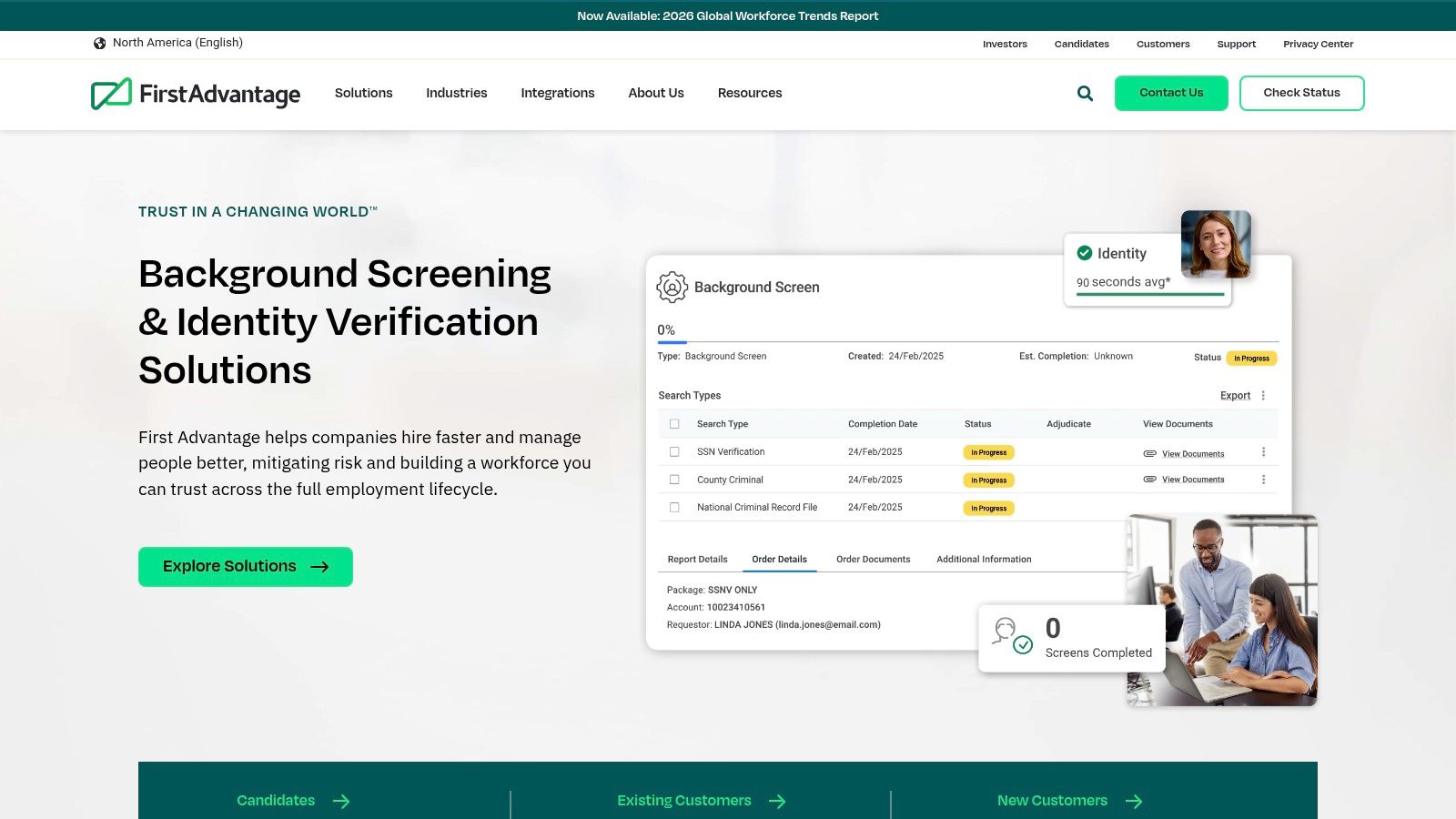
A company that hires nurses, screens warehouse contractors, and manages rental properties does not need three disconnected systems if one platform can support all three. That is the lane First Advantage occupies. It is built for organizations that treat screening as an ongoing risk and trust function, not only as a pre-hire task.
That distinction matters.
Some providers are easiest to understand if you picture a single job opening and a single report. First Advantage fits a different use case. It offers employment screening, identity services, sanctions checks, verifications, testing, and tenant-related tools, which makes it more relevant for companies that need different checks for different decisions.
Best for configurable enterprise programs
First Advantage works well in environments where the screening path changes by role. A seasonal cashier, a hospital employee with patient access, and a delivery driver who handles regulated goods should not all move through the same review process. First Advantage is designed for that kind of branching workflow, where rules, document requirements, and approval steps vary.
Its cloud-based model also aligns with how many large organizations now buy screening software. At the same time, some regulated buyers still care about how a vendor fits into existing governance, security reviews, and internal approval processes. In practice, that means the buying decision is often less about getting one more database search and more about choosing a provider that can fit the way your HR, compliance, and operations teams already work.
If quote-based pricing feels hard to compare, this guide to understanding background check pricing can help you ask better questions before signing a contract.
One more point helps avoid confusion. First Advantage sits firmly in the traditional screening category, where FCRA compliance, documented workflows, and adjudication support matter. That is different from an OSINT-style digital footprint tool, which is better for finding public online exposure or reputation risks before they become a hiring, tenant, or safety issue. They solve related problems, but not the same one.
- Strong at: Multi-team screening programs, identity-related workflows, tenant and employment use cases under one vendor
- Weaker for: Very small businesses that want instant self-serve setup and simple flat-rate packages
Organizations that need a configurable screening platform across several departments should review First Advantage.
6. Accurate Background

A candidate finishes an application on their phone during a lunch break, then gets stuck on a confusing screening form with no clear status update. For HR, that delay looks minor. For the candidate, it can feel like the company already makes simple tasks hard.
Accurate, often called Accurate Background, stands out for employers that care about that part of the process. It is a traditional employment screening provider, so the core job is still compliance-focused screening under formal hiring workflows. What makes it different is the extra attention paid to mobile-first steps and visibility for the person being screened.
That distinction matters because background checks are not only an HR task. They are also part of the first real interaction a new hire has with your company after accepting an offer. A clunky process can create drop-off, support tickets, and avoidable frustration before day one.
Candidate-friendly employment screening
Accurate offers criminal checks, employment and education verifications, identity services, drug testing, and global screening support. Its strength is not that it turns hiring into a public web search. It does not. Accurate belongs in the FCRA-compliant screening category, where documentation, consent, and adjudication workflows matter.
The practical question is use case. If you are an HR team hiring at scale, a provider like Accurate fits the job better than an OSINT-style digital footprint tool. If your goal is to see what public information about a person, executive, or brand is already exposed online, that is a different problem and needs a different kind of tool.
Accurate tends to make the most sense for mid-sized and larger organizations that want a modern candidate experience without giving up configurable compliance support. Smaller teams can still use it, but some will prefer simpler self-serve options if fast setup matters more than workflow depth.
You can review the platform at Accurate.
7. TransUnion SmartMove

TransUnion SmartMove is a tenant screening tool, not a hiring tool. That sounds obvious, but many people still try to use one type of background service for every decision. That's like using a kitchen thermometer to test your car battery. It's still a measuring device, but it's the wrong instrument.
SmartMove is designed for independent landlords and smaller property managers who need a practical rental workflow without building a full property-tech stack.
Built for rental decisions
The service combines applicant-authorized credit information, criminal records, and eviction-related records in a landlord-friendly flow. A useful feature is the invite-by-email process, which reduces the need for landlords to directly handle sensitive applicant information.
That's especially helpful for occasional screening. If you rent out one condo or manage a duplex, you probably don't want enterprise software. You want a straightforward process that feels compliant and manageable.
- Best for: Independent landlords, small property managers, occasional rental screening
- Not for: Employment decisions or general people-search use
- Keep in mind: Housing records can vary by jurisdiction, so no screening output should be treated as a complete life history
If you need rental-focused options, this guide to compliant tenant screening solutions offers added perspective. SmartMove itself is available at TransUnion SmartMove.
8. BackgroundChecks.com
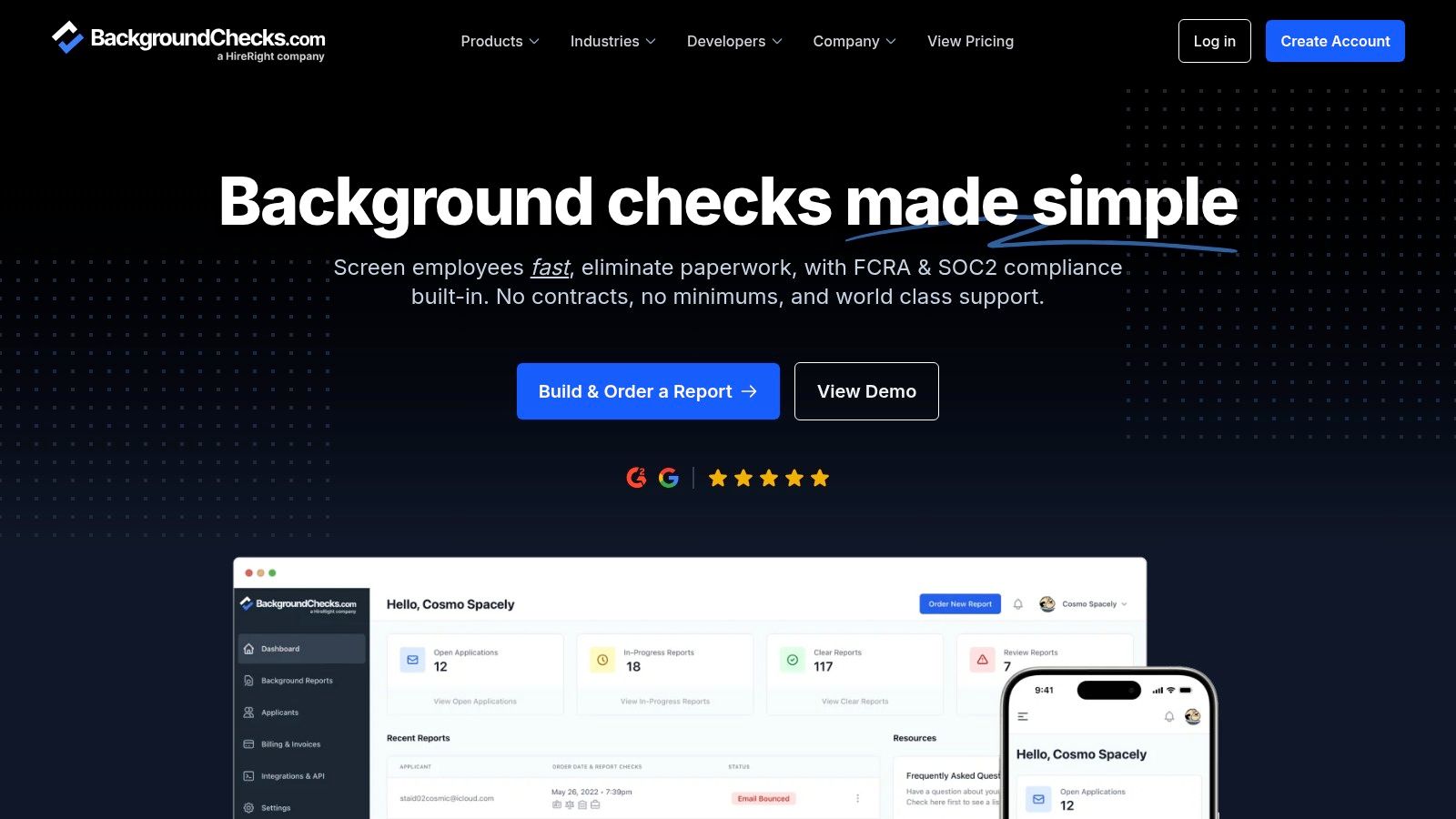
A small business owner posts a job, gets a few promising applications, and needs answers fast. They are not building a full hiring system. They just need a screening tool they can set up quickly, use a few times a month, and understand without a long onboarding process.
BackgroundChecks.com fits that use case well.
It sits in the traditional screening category, not the digital-footprint discovery category. That distinction matters. If you are making employment or tenant decisions, you need a provider built for formal screening workflows and legal compliance. If you are trying to understand someone's broader online presence, identity exposure, or public web traces, a people finder and digital research tool comparison is the more relevant reference point.
A practical fit for smaller teams with straightforward screening needs
BackgroundChecks.com offers criminal searches, sex offender searches, verifications, and screening packages that are easy to order. The experience feels closer to using a toolbox than adopting an operating system. You select the checks that match your process, send the request, and review the results.
That simplicity can be a real advantage for smaller employers. A local healthcare office, seasonal business, or family-owned company may not need deep workflow automation or custom integrations. They need a service that handles the basics clearly and predictably.
The tradeoff is flexibility. Simpler systems work well when your hiring process is simple. Once you need more customized adjudication steps, tighter ATS connections, or more configurable reporting, the limits show up faster.
BackgroundChecks.com can also come up in housing conversations, but buyers should be careful about using one platform for every screening task. Hiring, renting, and personal research are different jobs, much like using a tax form, a lease, and a medical intake sheet for different purposes. If your focus is rental screening, this guide to compliant tenant screening solutions gives more relevant context.
For occasional employer use, BackgroundChecks.com remains a sensible option. Just match the tool to the decision you are making, and do not confuse formal screening with broader OSINT-style reputation research.
9. BeenVerified
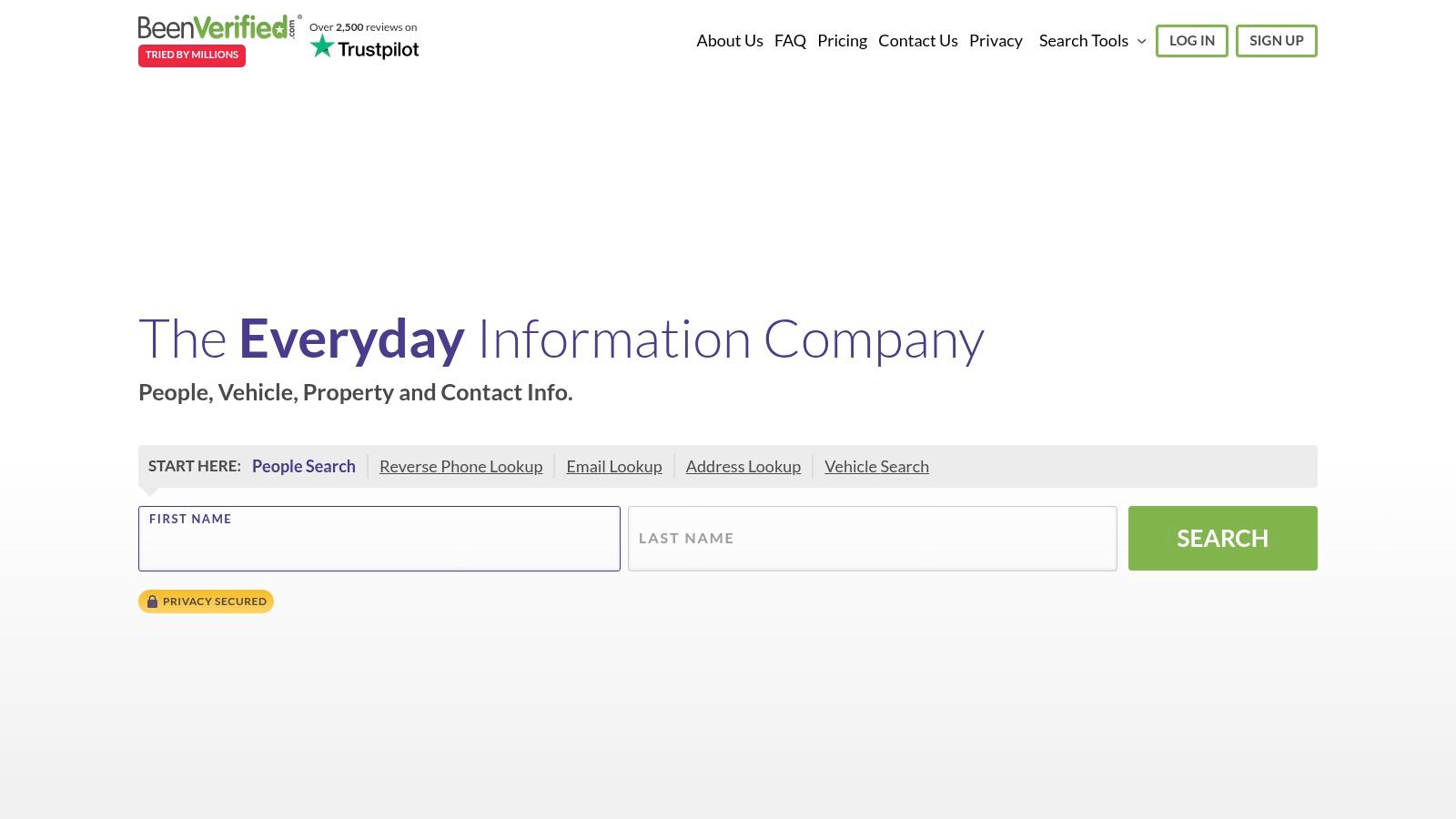
BeenVerified belongs in a different category from the employment and tenant tools above. It's a consumer-facing people-search service for personal due diligence. That means curiosity-driven searches, reconnecting with contacts, checking unfamiliar phone numbers, or getting context before meeting someone.
It does not mean hiring, housing, or credit decisions.
Useful for personal research, not formal screening
BeenVerified typically supports people search, reverse phone lookup, reverse email lookup, and address-based research. It can help surface leads such as possible contact details, social profiles, and public-record references.
That kind of broad sweep can be useful, but it comes with limits. Consumer-facing background search products can return stale or incomplete data. Even mainstream industry comparisons make that point, and they stress that the best provider depends on whether your use is informational or FCRA-regulated. Checkr's overview also illustrates how large some of these aggregation systems have become, noting that PeopleFinders draws on 6,000 data sources and more than 120 billion public records, while TruthFinder is described as combing billions of public records.
If you want more consumer-search options in this category, this guide to best people finder websites is a useful supplement.
- Pros: Easy for personal lookups, broad exploratory search style
- Cons: Data may be outdated or incomplete, and it's not suitable for regulated decisions
For informal personal research, visit BeenVerified.
10. TruthFinder
TruthFinder is another consumer-oriented background research tool, and it's best understood as a broad lead generator. You might use it to check who owns a phone number, research someone you met online, or connect scattered public details into a rough picture.
That can help with common real-world questions. Is this dating profile tied to other names? Does this email appear in places it shouldn't? Are there old addresses, aliases, or associated profiles worth checking further?
Where TruthFinder fits
TruthFinder supports people searches and reverse lookups, and some plans include alerts related to broader online exposure. It's designed for non-technical users, so the interface is usually less intimidating than doing your own manual OSINT search across multiple sites.
What's missing from many buying guides is a clear discussion of ongoing monitoring and behavioral-risk signals after the first lookup. Industry coverage increasingly mentions continuous monitoring, social-media screening, and adjudication support, but many comparisons still focus mostly on one-time packages. That gap is described in this article on choosing the best background screening provider.
That doesn't make TruthFinder a continuous risk-management platform in the employment sense. It just highlights a broader shift in how buyers think. They don't only want one answer once. They often want visibility over time.
TruthFinder still carries the same warning as other consumer search tools. Don't use it for employment, tenant, or credit decisions. For personal due diligence, though, it can be a useful starting point. You can review it at TruthFinder.
Top 10 Background Check Providers Comparison
| Product | Core features ✨ | UX & quality ★ | Value & pricing 💰 | Target audience 👥 |
|---|---|---|---|---|
| Digital Footprint Check 🏆 | 500+ source OSINT scans, breach & dark‑web monitoring, DIY removal guides | ★★★★★ privacy‑first, clear instant reports | 💰 Free one‑time checks; subscription for real‑time monitoring | 👥 Individuals, families, HR, security researchers |
| Checkr | FCRA‑compliant pre‑employment searches, ATS/HRIS integrations, automation | ★★★★★ fast, scalable automation | 💰 Enterprise/quote pricing; add‑ons & county fees | 👥 Mid→large employers, staffing platforms |
| GoodHire (by Checkr) | Paperless candidate consent, SMB packages, status tracking | ★★★★ straightforward UX for SMBs | 💰 SMB‑focused plans; quoting for advanced features | 👥 Small businesses, multi‑location teams |
| HireRight | Global criminal/verification checks, compliance resources, ATS integrations | ★★★★ strong compliance for regulated orgs | 💰 Custom enterprise pricing | 👥 Mid→large enterprises, regulated industries |
| First Advantage | Wide service catalog (tenant & employment), configurable programs, global reach | ★★★★ enterprise‑grade workflows | 💰 Custom pricing; suited for large programs | 👥 Enterprises, regulated sectors, property managers |
| Accurate Background | Mobile‑first candidate flows, real‑time status, configurable programs | ★★★★ modern UX; reliable enterprise support | 💰 Custom/quote pricing; scalable | 👥 Mid→large orgs seeking configurable screening |
| TransUnion SmartMove | Credit ResidentScore, criminal & eviction data, renter/landlord pay options | ★★★★ simple, bureau‑backed flow | 💰 Pay‑per‑screen; no monthly minimums | 👥 Independent landlords, small property managers |
| BackgroundChecks.com | Ready‑made packages, à la carte searches, self‑serve ordering | ★★★ fast to start; simple setup | 💰 Pay‑per‑check; fees per county/court possible | 👥 Small teams, occasional screeners |
| BeenVerified | People search, reverse phone/email, public records aggregation | ★★★ easy exploratory checks; consumer apps | 💰 Subscription with monitoring; auto‑renew caution | 👥 Consumers doing personal due diligence |
| TruthFinder | People search, reverse lookup, social links, optional dark‑web alerts | ★★★ simple interface for non‑technical users | 💰 Membership subscription; verify data accuracy | 👥 Consumers researching individuals (non‑FCRA) |
From Reactive Checks to Proactive Protection
A hiring manager reviews your application. A landlord checks your rental history. A date searches your name before meeting. In each case, someone else decides what story your background tells.
That is why choosing the right type of provider matters. FCRA-compliant screening services such as Checkr, GoodHire, HireRight, First Advantage, Accurate, and BackgroundChecks.com are built for formal decisions tied to employment. SmartMove is designed for rental screening. BeenVerified and TruthFinder can surface useful clues for personal research, but they are not built for regulated hiring or housing decisions.
The easiest way to understand the difference is to compare a certified inspection with a quick scan around a house. A formal background check is the inspection. It follows rules, uses defined data sources, and supports decisions with legal consequences. An OSINT-style digital footprint search is the walk-around. It helps you spot what is publicly visible, what looks neglected, and what could raise questions before anyone starts the formal review.
That distinction is critical because the risks are different. A recruiter may notice an old public profile that clashes with the image you want to present. A landlord may choose a consumer search tool and miss the fuller context a tenant screening product is designed to provide. Someone using a dating app may rely on one result, assume it is enough, and overlook other public traces that tell a different story.
Traditional background checks usually begin after an application, lease inquiry, or other decision point. Proactive protection starts earlier. You check your own digital trail first, the way a homeowner walks the property before listing a house. That early review can reveal exposed usernames, stale accounts, breach exposure, public posts, and identity links across platforms before an employer, landlord, match, or scammer pieces them together.
As noted earlier, screening programs often become part of long-term workflows once a company has its compliance process in place. For organizations, that means selecting a provider that fits the exact use case from the start. For individuals, it means something equally practical. You cannot control when someone searches for you, but you can reduce what they find and correct what no longer represents you.
Your online identity now affects more than search results. It can shape job prospects, dating safety, family privacy, scam risk, and account security. One forgotten forum profile or an old email tied to a breach can connect dots you did not realize were still visible.
Start with the task. Use a regulated screening provider for formal employment or housing decisions. Use a digital footprint discovery tool for awareness, cleanup, and early warning. For many people, the smartest approach is both. Learn what others can see, then fix what you can before that information carries weight.
A practical first step is to run a free scan with Digital Footprint Check. It shows what is publicly tied to your name, email, usernames, and accounts so you can spot privacy risks, breach exposure, and reputation issues before someone else does.