· Digital Footprint Check · Content Marketing · 17 min read
What Can Hackers Do With Your Phone Number? a Guide to
what can hackers do with your phone number? Learn the risks, how SIM swapping works, and how to protect yourself.
Hackers can do real damage with just your phone number. It's the starting point for hijacking your social media and bank accounts, impersonating you to scam your friends, and tracking your location.
Those ten digits can unravel your digital life, affecting your job prospects and safety through attacks like SIM swapping and targeted phishing.
Your Phone Number Is a Key to Your Digital Life
Your phone number is a universal identifier. It ties together bank accounts, social profiles, email, and dozens of other services, including gaming and dating apps that use it for verification.
That convenience creates a vulnerability: a hacker with your number holds a potential master key.
From a phone number, attackers use OSINT (Open Source Intelligence) tools to build a profile, map your relationships, and find the weakest points in your security. Your number is a core piece of your digital footprint, and it can lead to much more data.
Top 5 Threats from a Compromised Phone Number
The danger is real. A compromised number can lead from spam calls to financial loss and reputational damage, used in ways with real-world consequences.
A common tactic is SIM swapping, where a scammer convinces your carrier to move your number to a device they control. They then receive your calls, texts, and two-factor authentication codes, which can mean losing a gaming account or having a dating profile hijacked for scams.
Here’s a quick breakdown of the most common threats that can spring from a leaked phone number and the real-world impact they can have.
| Threat Type | How It Works | Real-World Impact |
|---|---|---|
| SIM Swapping | Tricking a mobile carrier to transfer your number to their SIM card. | Access to 2FA codes, leading to drained bank accounts, hijacked social media profiles, stolen gaming accounts, and identity theft. |
| Phishing/Smishing | Sending fraudulent text messages with malicious links or requests. | Tricking you into revealing passwords, credit card numbers, or other sensitive data, often leading to financial loss or account takeovers. |
| Digital Profiling & OSINT | Using OSINT tools to link your number to other public data points. | Identity theft, doxxing, highly personalized scams, and even physical safety risks. This can affect job prospects if employers find concerning linked data. |
| Account Recovery Abuse | Using your number as the primary method to reset passwords on your accounts. | Locking you out of your own email, financial, and gaming accounts. Criminals can then use these accounts for fraud. |
| Spam & Romance Scams | Selling your number on lists used by spammers and scammers. | Constant unwanted calls and messages. Your number could be used for catfishing, creating fake dating profiles to run romance scams. |
As you can see, once your number is out there, it can be used as a lever to pry open almost any part of your digital life. The consequences ripple outward, affecting your finances, your reputation, and even your personal safety.
Understanding SIM Swapping Attacks
Of all the ways your phone number can be turned against you, SIM swapping is one of the most destructive. Think of it like a thief convincing your building's super to hand over the master key to your apartment. They don't have to kick down the door; they just walk right in with permission they should have never gotten.
That's the core of a SIM swap. An attacker uses social engineering—often armed with personal details they scraped up online—to fool your mobile carrier's customer service rep. They pretend to be you and persuade the agent to transfer your phone number from your SIM card to one they control.
The moment they succeed, every call and text meant for you is redirected to their device. This includes the one-time passcodes and two-factor authentication (2FA) codes from your bank, email, and social media accounts.
How a SIM Swap Unfolds
The process is simple for a determined attacker. They usually follow a few key steps to methodically dismantle your digital life.
- Information Gathering: First, the hacker uses OSINT tools to dig up personal information about you from data breaches or public social media profiles. They're looking for your full name, date of birth, and maybe the last four digits of your Social Security number—all the little details commonly used for identity verification.
- Contacting the Carrier: Armed with your data, they call your mobile provider. They might spin a story about losing their phone or claiming it was stolen, insisting they need to activate a new SIM card immediately.
- The Takeover: If the customer service agent falls for the act, they deactivate your SIM card and light up the new one in the hacker’s possession. You'll probably notice your phone suddenly loses service, which is often the first—and only—warning sign you get.
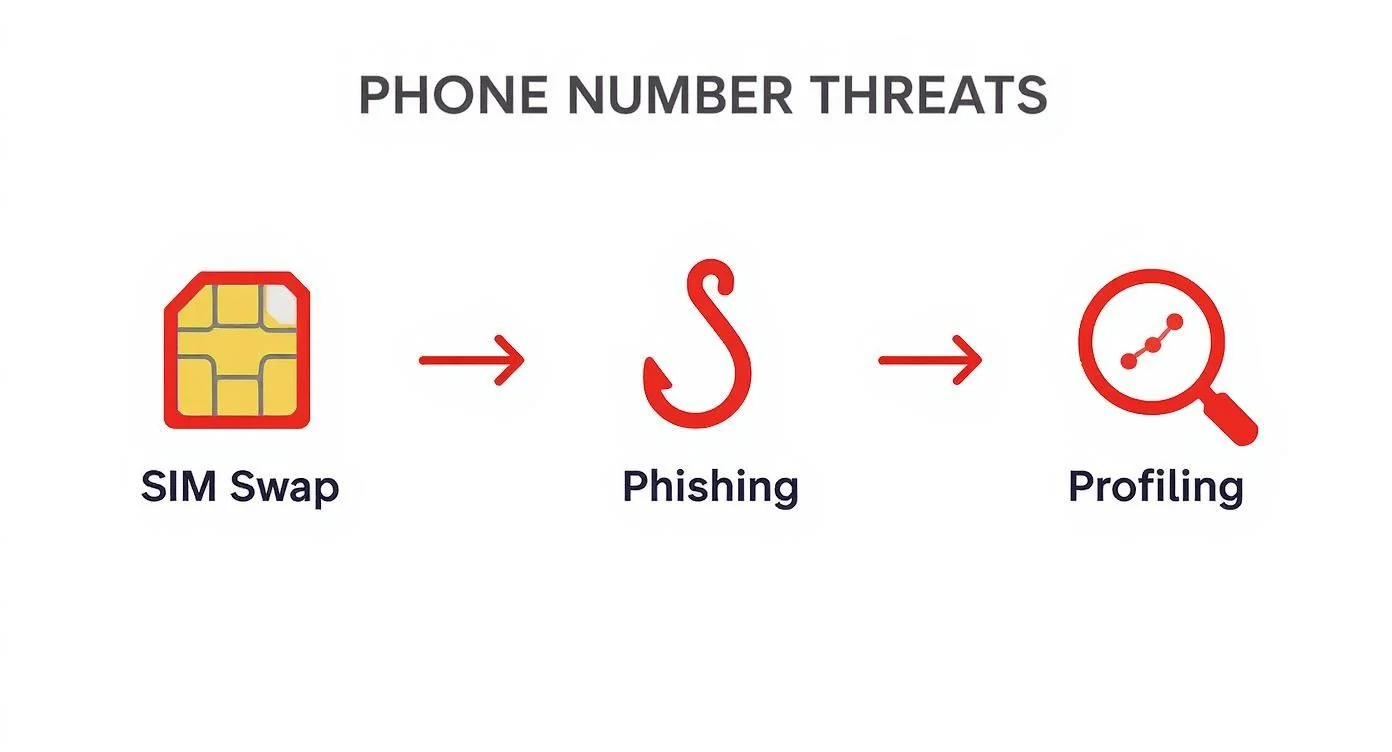
This infographic shows how a SIM swap is just one of several threats that start with a compromised phone number.
As the visualization shows, attackers can start with something as simple as a SIM swap or phishing text and use it to build a detailed profile for much more damaging attacks down the line, including identity theft and reputation damage.
The Real-World Consequences
The fallout from a successful SIM swap can be financially and emotionally devastating. With total control over your text messages, attackers can start hitting the "forgot password" link on your most important accounts.
A compromised phone number becomes the ultimate skeleton key. Once an attacker intercepts your 2FA codes, they can bypass security measures on accounts you thought were safe, gaining access to your financial assets, private conversations, and personal data.
SIM swapping has become a go-to tactic for criminals looking to leverage a phone number into a full-scale account breach. Statistics show a frightening trend: SIM swapping attacks surged by 400% in the US in 2021, highlighting how prevalent this threat has become. You can dig into the details of how hackers weaponize phone numbers in this report on major cyber attacks.
The end game? Draining bank accounts, stealing cryptocurrency, and hijacking valuable social media handles or gaming profiles. Your phone number is the gateway, and once it's compromised, your entire digital identity is on the line. This is why securing your mobile account isn't just a good idea anymore—it's essential for your online safety.
Recognizing Phishing and Social Engineering Scams
Beyond technical attacks like a SIM swap, your phone number is a direct line for scammers to get inside your head. This is the art of social engineering, where attackers play on basic human psychology—trust, fear, urgency—to trick you into handing over the keys to your digital life.
These scams usually land in your text messages, a tactic called smishing (SMS phishing), or come through as phone calls, known as vishing (voice phishing). The goal is always the same: pressure you into clicking a bad link, sharing a password, or giving up a verification code that was just sent to you. These tactics are frequently used in romance scams, where a fraudster builds trust before asking for "help" that leads to financial theft.
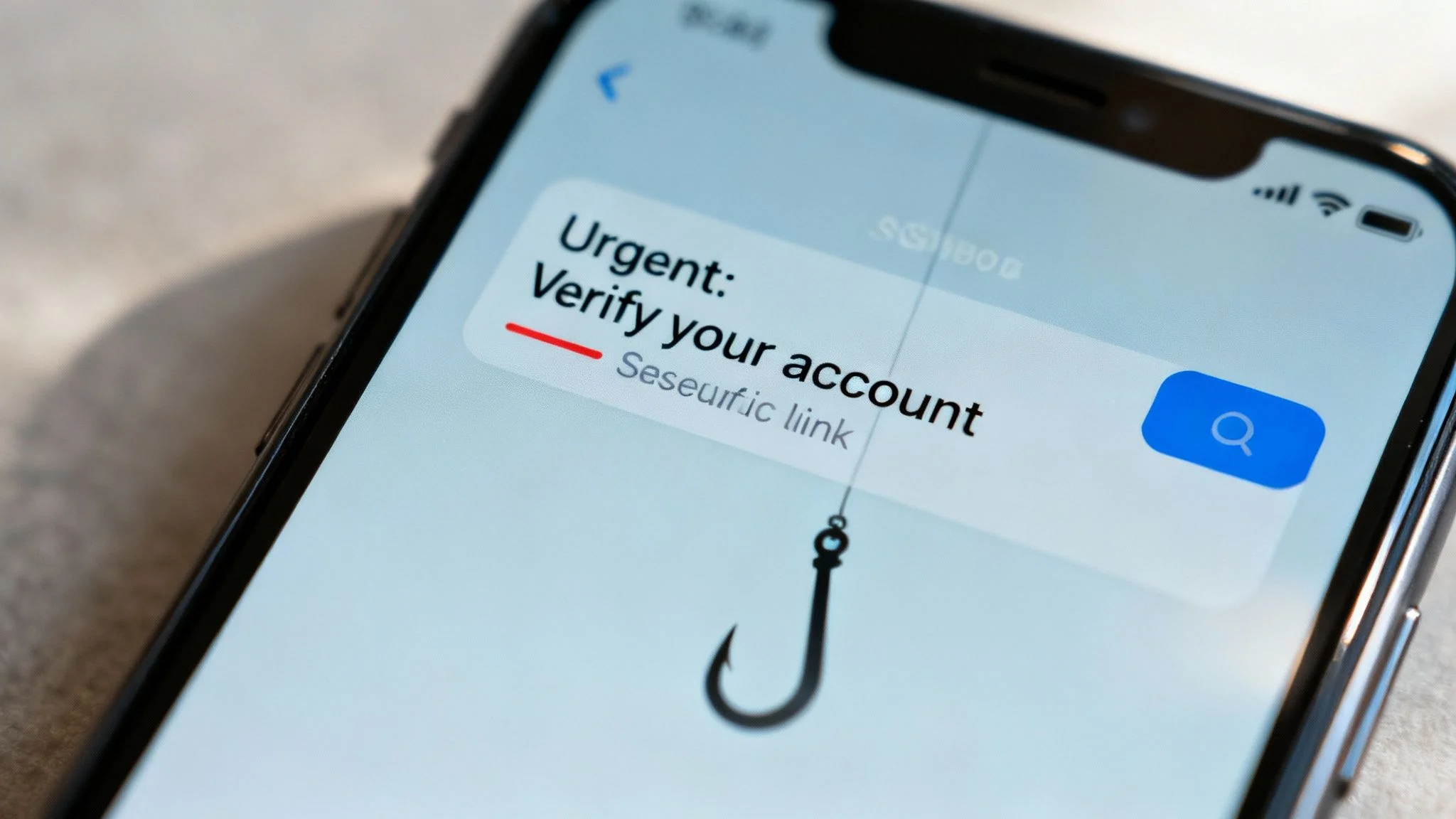
This stuff is devastatingly effective because it bypasses fancy security software and targets you directly. According to the FBI's 2022 Internet Crime Report, phishing was the most common type of cybercrime, with 300,497 victims reporting losses of over $52 million.
Common Smishing and Vishing Tactics
Scammers have a whole playbook of convincing stories designed to make you act first and think later. Their messages are carefully crafted to create a sense of panic or curiosity that overrules your common sense.
Here are a few real-world examples you've probably seen or will see:
- Fake Delivery Alerts: You get a text claiming a package from FedEx or UPS is stuck and you need to click a link to reschedule. That link, of course, goes to a fake site ready to steal your login or credit card info.
- Urgent Bank Notifications: A call or text message, supposedly from your bank, warns you about a suspicious transaction on your account. To "verify" your identity, they ask for your password, PIN, or that one-time code they just sent to your phone.
- Dating App Verification Scams: You match with someone on a dating app who insists you verify your identity through a "safety" link they provide. This link is a phishing site designed to steal your personal information or install malware.
- Gaming Account Security Warnings: A message pretending to be from Steam or Blizzard says your account has been compromised. It insists you must click a link right now to secure it. The link leads straight to a phishing page to steal your login and valuable in-game items.
The core of every phishing scam is manufactured urgency. Attackers know that if they give you time to think, you'll likely spot the red flags. By creating a crisis, they rush you into making a mistake.
Spotting the Red Flags
While these scams can look convincing, they almost always contain little clues that give them away. Training yourself to spot these signs is your best line of defense. Knowing about more sophisticated tricks is also key; understanding MFA fatigue attacks, for instance, can help you recognize when a scammer is trying to wear you down.
If you receive a strange text from an international number you don't recognize, you can dig a little deeper. Our guide shows you how to run a reverse international phone number lookup to get more information, which is a useful step in catfishing detection.
Always be suspicious of unexpected messages that demand immediate action, especially if they're pushing you to click links or share personal data. A healthy dose of skepticism is your best friend.
How Your Number Fuels Digital Profiling and OSINT
It's easy to think of your phone number as just a string of digits, something you give out for calls and texts. But to a hacker or data miner, those 10 digits are more like a master key. They can use it to unlock a shocking amount of personal information scattered all over the internet, piecing together a detailed dossier on your life.
This process is often called digital profiling, and it leans heavily on something called Open Source Intelligence (OSINT). Attackers take your number and plug it into specialized search tools and data broker websites. These platforms are designed to crawl the web and connect that single piece of data—your phone number—to social media profiles, public records, old forum posts, and massive lists from data breaches.
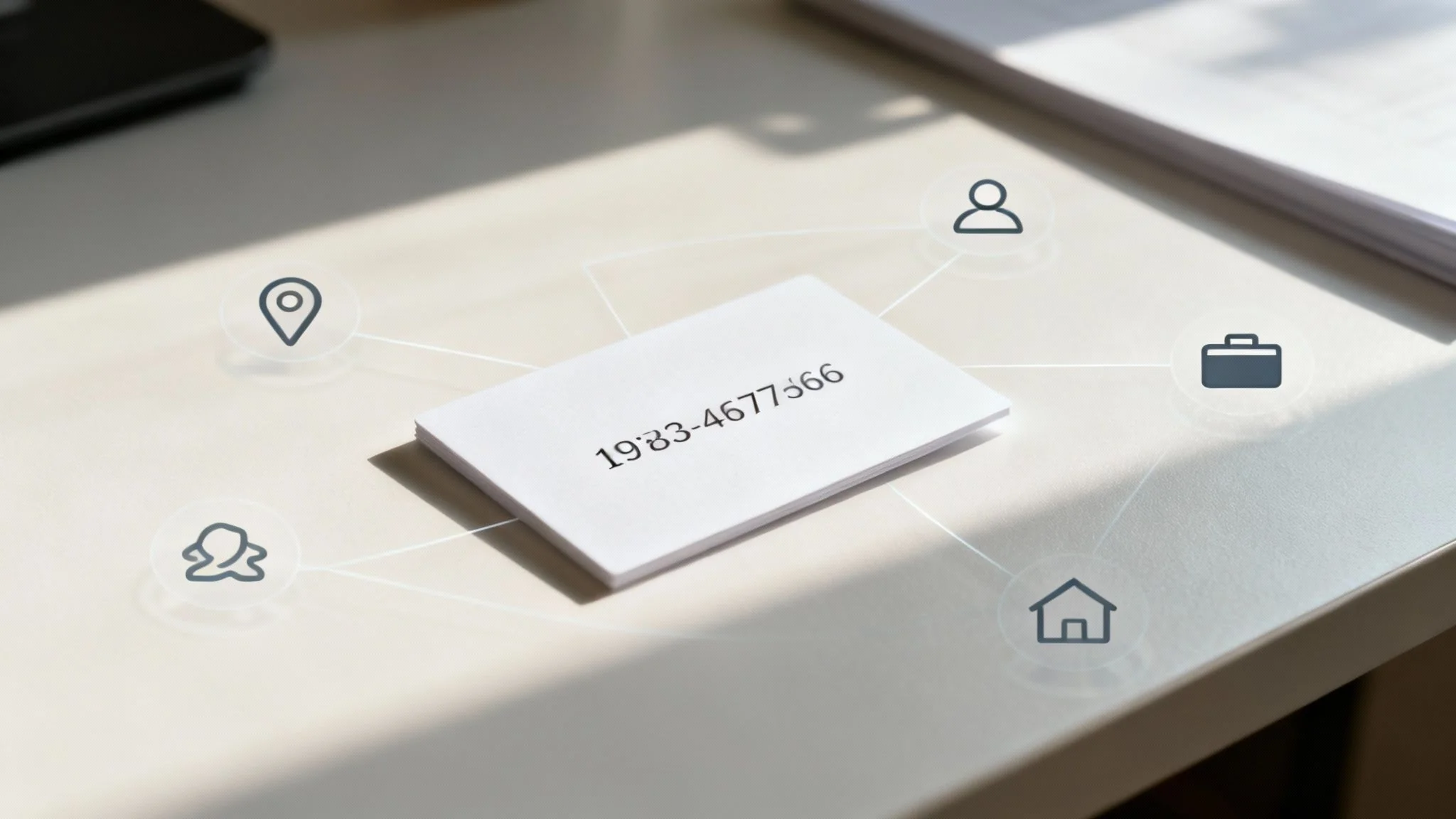
Suddenly, what was just a number is no longer anonymous. It's now linked to your full name, your home address, pictures of your family, and even the company you work for. This information can negatively impact your job prospects if a potential employer conducts an online search and finds unprofessional or compromising content linked to you.
From Data Points to a Full Profile
The information scraped together from your phone number becomes a powerful weapon in the wrong hands. An attacker doesn't just see a random collection of facts; they see a complete, three-dimensional picture of you.
Here’s a practical guide to what a basic profile built from just a phone number can easily include:
- Personal Identifiers: Your full name, date of birth, and both current and past home addresses.
- Social Connections: Direct links to your Facebook, LinkedIn, and Instagram profiles, which immediately reveal your friends, family, and personal interests.
- Professional Life: Your current employer, job title, and even your work history, often scraped directly from professional networking sites. This can be used for reputation management attacks.
- Online Activities: The usernames you use on gaming platforms, forums, and other websites where you might have used your number to sign up, exposing you to gaming account security risks.
- Dating Profiles: Links to profiles on dating apps, which can be used for catfishing, romance scams, or personal harassment.
A single exposed phone number can be the starting point for a complete invasion of your privacy. Hackers stitch together publicly available information to understand your habits, relationships, and vulnerabilities, creating the perfect blueprint for a targeted attack.
This detailed profile makes you a prime target for highly personalized spear-phishing attacks. Think about it: an email mentioning your boss by name or referencing a recent family vacation is far more believable than a generic scam. The dangers of a compromised digital footprint go way beyond simple spam; they can threaten your job, your personal safety, and your financial security.
You can learn more about what hackers can learn about you from your digital footprint in our detailed guide.
Practical Steps to Protect Your Digital Identity
Knowing what a hacker can do with your phone number is one thing. Actually doing something about it is what matters. This practical guide will help you move from just being aware to actively defending yourself, protecting your finances, job prospects, and even your personal safety.
The good news is that you can build a pretty solid defense with just a few key security measures. These steps make it much, much harder for an attacker to get a foothold.
First things first, figure out where your phone number is already exposed. You can start with a quick scan using a tool like the free checker at www.digitalfootprintcheck.com/free-checker to see if your number has popped up in data breaches or public profiles. This gives you a clear, actionable starting point for your reputation management.
Fortify Your Mobile Account
Your first line of defense is your mobile carrier account itself. This is the front door for SIM swappers, and you need to lock it down. It’s non-negotiable.
Get in touch with your provider and ask to set up a port-out PIN or add a port freeze to your account.
Think of this as a secret password for your phone number. Without it, nobody—not even a slick, convincing scammer on the phone with customer service—can transfer your number to a new device. It’s one of the single most effective moves you can make to shut down SIM swap attacks cold.
Upgrade Your Two-Factor Authentication
Using two-factor authentication (2FA) is a great habit, but if you’re only using SMS text codes, you’re still at risk. A successful SIM swap makes SMS-based 2FA useless because the attacker starts getting your codes instead of you.
The solution? Ditch the texts and upgrade to a stronger method.
- Authenticator Apps: Switch over to apps like Google Authenticator or Authy. These apps generate time-sensitive codes right on your device, separate from your phone number. This is crucial for gaming account security and financial apps.
- Hardware Security Keys: For mission-critical accounts like your primary email or bank, nothing beats a physical key like a YubiKey. This method is as close to phishing-proof as it gets.
By moving away from SMS codes, you break the dangerous link between your phone number and your account security. For more strategies, our guide on how to prevent identity theft online dives even deeper.
Manage Your Digital Footprint Proactively
Over the years, your phone number has likely ended up in places you’ve forgotten about—old social media profiles, one-off online shopping accounts, dating apps, and gaming forums. It's time to start cleaning that up.
Start by digging into the privacy settings on all your social media and online accounts. If your phone number is listed publicly, hide it. Better yet, if the platform doesn't require it, delete it from your profile entirely.
For new sign-ups, newsletters, or online contests, use a secondary or virtual number from a service like Google Voice. This simple trick keeps your real number out of the hands of data brokers and spammers, helping with scam prevention and online dating safety.
Think of your primary phone number like your home address—you wouldn't pin it to a public bulletin board for everyone to see. Treat it with the same level of care online.
Finally, securing your actual devices is just as crucial as protecting your number. If you're ever selling or giving away an old phone, knowing how to remove your iCloud account from an iPhone is a fundamental step to protect your data. Each of these proactive measures builds on the others, creating a layered defense that makes your digital identity a much harder target to hit.
What to Do If Your Number Is Compromised
That sinking feeling when your phone suddenly goes dead—no service, no calls, no texts—could be more than a network outage. If you suspect your phone number has been hijacked, you have to move fast. Every second an attacker has control is another opportunity for them to reset your passwords and lock you out of your own life.
The very first thing you need to do is contact your mobile carrier immediately. Don't wait. Call them and explain that you believe you're the victim of a fraudulent port-out or a SIM swap attack. Ask them to freeze your account instantly and restore service to your SIM card. This one call is your most powerful move—it cuts the attacker off at the source.
Once you’ve alerted your carrier, it’s time for a full-scale security lockdown.
- Change Critical Passwords: Your phone number is the key to everything, so start changing the locks. Immediately reset the passwords for your primary email, all banking apps, any financial accounts, and high-value gaming or social media profiles. Prioritize any account that uses your phone number for password recovery.
- Notify Your Financial Institutions: Call your banks and credit card companies. Tell them what happened and ask them to place a fraud alert on your accounts. They need to be watching for any unusual or unauthorized activity to prevent identity theft.
- Monitor Your Digital Footprint: A compromised phone number is often just the beginning. Hackers can use it to create fake profiles, apply for credit in your name, or sell your personal information on the dark web. It’s vital to keep an eye on your exposure. For long-term peace of mind, consider using one of the best dark web monitoring services to get immediate alerts if your phone number or other credentials show up in a new data breach.
Working through these steps methodically will help you contain the damage and start taking back control of your digital identity.
A Few Lingering Questions
Even after all this, you probably still have a few specific questions bouncing around. Let's tackle some of the most common ones to make sure these concepts are crystal clear.
Can Someone Read My Texts With Just My Phone Number?
The short answer is no, not directly. Someone can't just plug your phone number into a magic box and see your messages.
But here's the catch: your phone number is the key they need for a SIM swapping attack. If they pull that off, they become you. Your cell service gets rerouted to their phone, and suddenly, every text message—from your friends, your family, and your bank—goes straight to them. So while the number itself isn't enough, it's the critical first step to getting that kind of access.
Is It Safe to Give My Phone Number to Apps?
Every time you hand over your number, you're taking a small risk. Think of it like handing out keys to your house. Reputable apps from companies you trust will use it responsibly, mostly for verifying your identity (like on dating apps) or securing your gaming account.
The problem is, not every app is trustworthy. Less scrupulous ones might sell your information to data brokers or marketers, adding your number to lists that get passed around and eventually breached. A good rule of thumb is to use a secondary number—like a Google Voice number—for services you don't fully trust. It helps keep your main number out of the crosshairs of scammers.
How Can I Find Out if My Phone Number Is on the Dark Web?
Your number lands on the dark web when a company you gave it to suffers a data breach. Hackers steal user data in bulk, then package it up and sell it to other criminals. It’s not something you can just go and search for yourself—the dark web isn't like Google, and trying to poke around there is a bad idea.
The only practical way to know if you’ve been exposed is to use a service that specifically monitors for this. These tools scan known data breach collections and dark web markets to see if your phone number, email, or other details pop up where they shouldn't, which is a crucial part of proactive online identity protection.
Your phone number is more than a string of digits; it’s a core piece of your digital identity. The first step to locking it down is figuring out where it's already exposed. Digital Footprint Check helps you uncover where your information is publicly available, giving you the power to take back control of your reputation, prevent identity theft, and secure your online life. See what's out there with our free checker at www.digitalfootprintcheck.com/free-checker.