· Digital Footprint Check · Content Marketing · 14 min read
Identity Theft How Does It Happen? a Complete 2026 Guide
Wondering 'identity theft how does it happen'? Our 2026 guide explains common methods like phishing and data breaches, and shows you how to protect yourself.

A lot of people think identity theft starts with something dramatic. A stolen wallet. A hacked bank account. A stranger opening a credit card in your name overnight.
Sometimes it does. More often, it starts smaller. You notice a password reset email you didn’t request. Your gaming account logs you out. A buy-now-pay-later application gets rejected even though you never applied. Then you see a strange charge, or a lender mails you about an account you’ve never heard of.
That’s what makes this topic so confusing. The visible damage usually appears at the end, but the initial theft often started weeks or months earlier through data exposure you never saw.
The scale is often underestimated. In the United States, the FTC recorded nearly five million total fraud and identity-related reports in 2023, with total losses exceeding $10 billion, the highest level on record, and more than 1.1 million identity theft cases nationwide according to the U.S. Bureau of Justice Statistics summary of FTC identity theft data. That should change how we think about identity theft. It isn’t a rare fluke. It’s part of everyday digital life.
The consequences go beyond money. Identity theft can lock you out of email, damage your credit, derail a job application, expose private details about your home and family, and put a target on accounts you use for work, gaming, taxes, shopping, and dating. If someone gains access to the right combination of personal details, they can impersonate you in places that affect your reputation and safety, not just your bank balance.
One useful first step is understanding your own digital footprint. You can’t protect information you don’t realize is already exposed.
Introduction: More Than Just a Stolen Wallet
A stolen debit card is easy to understand. Someone takes the card, uses it, and you dispute the charges.
Identity theft is messier because criminals don’t always need to steal a physical object. They can steal access, trust, and enough facts about you to pass as you. That might mean logging into your email with a reused password, answering account recovery questions with information found online, or combining old breach data with details from social media.
Why the old mental model doesn’t work
Many people still picture identity theft as someone grabbing mail from a mailbox or lifting a purse in a parking lot. That still happens, but it’s no longer the whole story.
Today, criminals often work like puzzle-builders. They collect a little here and a little there. One breach gives them your email and password. A public profile gives them your birthday. A people-search listing gives them an address history. A phishing text gets the last missing piece.
Identity theft usually isn’t one single event. It’s a chain of small exposures that become dangerous when someone connects them.
Why this matters in daily life
The phrase identity theft how does it happen sounds simple, but the answer matters because modern identity theft affects parts of life people don’t always connect to cybersecurity:
- Your career: A compromised email account can expose resumes, HR messages, payroll details, or professional contacts.
- Your gaming life: A hijacked gaming account can reveal payment methods, linked email addresses, friends lists, and usernames reused elsewhere.
- Your personal safety: Public records, social posts, and account access can reveal where you live, where you work, and who’s in your household.
A person doesn’t need your full life story to hurt you. They just need enough verified fragments to look legitimate.
The Anatomy of a Stolen Identity
Identity theft happens when a criminal gathers personally identifiable information, often called PII, and uses it to impersonate you or build a version of you that systems will trust.
Think of your identity like a jigsaw puzzle. A single piece may not show much. Ten pieces from different boxes can suddenly form a picture.
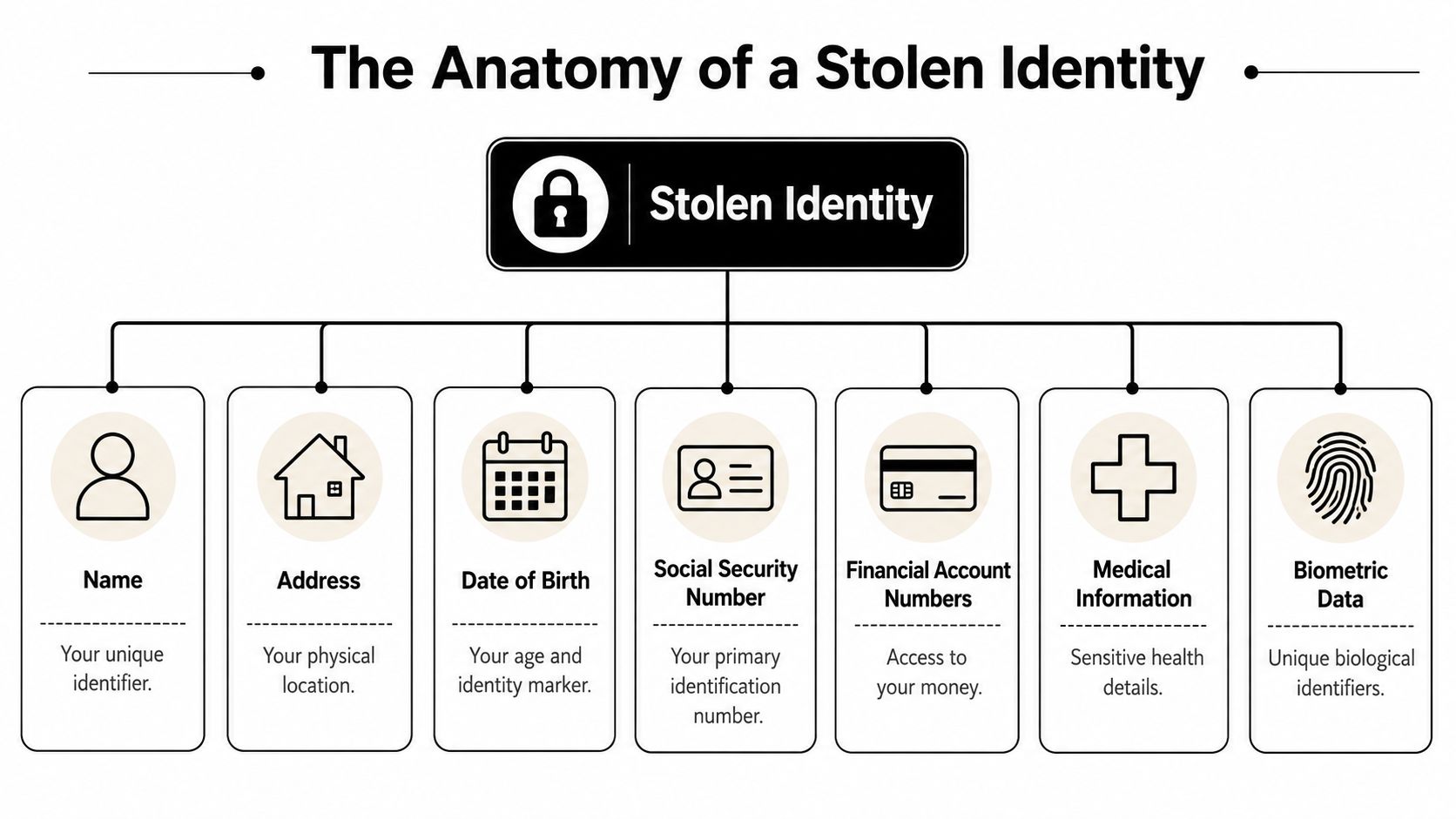
The obvious pieces
Some details are clearly sensitive. It is common knowledge that these can be dangerous in the wrong hands:
- Social Security number: Often used in identity verification and account applications.
- Bank or card numbers: Direct route to financial fraud.
- Government ID details: Useful for verification checks and false applications.
- Medical information: Sensitive enough to support fraud and invasive impersonation.
If a criminal gets these, the risk is easy to see.
The pieces people underestimate
Other details look harmless on their own. They aren’t. Identity theft usually happens when attackers acquire personal information and then combine it with authentication credentials or account recovery data; common collection paths include phishing, data breaches, malware, and exposure through public records or social media, as explained in this overview of identity theft collection paths.
That’s why these smaller details matter:
- Date of birth
- Address history
- Phone number
- Mother’s maiden name
- Names of pets or schools
- Email address
- Username patterns
A birthday posted online might seem trivial. But if a criminal already has your email from a breach and your address from a public record, that birthday becomes part of a verification package.
What thieves are really trying to build
They’re not always trying to steal one account. Often, they’re trying to build one of two things:
- A believable version of you for account takeover, password resets, and fraud checks.
- A synthetic identity made from real and fake details that passes basic verification.
That second category catches people off guard. Criminals don’t always impersonate you directly. Sometimes they use part of your real identity to create someone new on paper, which can be harder to detect than a stolen credit card.
Practical rule: If a website, app, or public post asks for a piece of personal information, assume it might become one puzzle piece in a larger attack.
Nine Common Ways Your Identity Is Stolen Online
Most identity theft methods fall into three buckets: deception, technical compromise, and exposed data. Criminals mix them freely. A phishing text might lead to a password theft, which leads to email takeover, which leads to financial fraud.
One reason this spreads so quickly is the amount of exposed data already circulating. SpyCloud’s 2025 research found more than 53 billion unique identity records on the web, with 7.6 billion recaptured in 2024 alone, including employee, consumer, and organizational credentials, according to this summary of identity fraud by the numbers.
Deception attacks
These methods rely on getting you to hand over something yourself.
- Phishing emails: Fake messages that push you to “verify” a password, card, or tax login.
- Smishing texts: Text messages about package issues, account suspensions, or fake security alerts.
- Voice impersonation: Calls pretending to be your bank, employer, or a government office.
- Social engineering in chat: Attackers build trust in DMs, gaming chats, or dating apps, then ask for a code or login help.
A common example is a text saying your bank account is locked. You tap the link, enter your credentials, and the thief immediately tries them on the legitimate site.
Technical compromise
These methods don’t require you to volunteer anything.
- Data breaches: A company gets compromised, and your account details leak.
- Malware or infostealers: Malicious software on a device captures saved passwords, cookies, or autofill data.
- Credential stuffing: Criminals test a stolen password on lots of other services because many people reuse logins.
- SIM swapping: They take over your phone number to intercept one-time codes and password resets.
If you’ve ever wondered how a thief got into your email “without hacking,” credential reuse is one of the most common answers. If the same password was used on a gaming site and your inbox, one breach can gain access to both. If you want to understand how phone-number takeover fits into that chain, this guide on clone SIM card risks and warning signs is worth reading.
Exposed data and offline spillover
Not all theft starts with a hack.
- Public records and people-search sites: Address history, relatives, and phone numbers can support impersonation.
- Oversharing on social media: Birthdays, school names, pet names, travel plans, and family relationships help with account recovery questions.
- Skimming and physical theft: Card skimmers, stolen mail, and discarded documents still matter.
- Synthetic identity fraud: Criminals blend real and fake data to create a new identity or strengthen a false one.
Here’s a quick reference you can use.
| Method | What They Steal | How to Prevent It |
|---|---|---|
| Phishing | Logins, card details, verification codes | Verify messages through official apps or websites |
| Data breach | Email addresses, passwords, profile data | Change exposed passwords and never reuse them |
| Malware | Saved passwords, cookies, autofill data | Keep devices updated and avoid unknown downloads |
| Credential stuffing | Access to multiple reused accounts | Use a unique password for every service |
| SIM swapping | Phone-based verification access | Add carrier protections and stronger account security |
| Social engineering | Account recovery details, trust-based info | Never share codes or reset links with anyone |
| Public records exposure | Address history, phone numbers, relatives | Audit public exposure and remove listings where possible |
| Skimming or mail theft | Card data, account numbers, documents | Inspect card readers and secure incoming mail |
| Synthetic identity fraud | Real identity fragments | Monitor credit, tax, and account activity closely |
The Attacker Playbook From Data to Damage
A thief doesn’t usually grab one fact and instantly open a loan. There’s a process. It looks less like a movie hack and more like careful assembly.
Take a simple example. Your old gaming forum account is part of a breach. The email and password pair leaks. You reused that password on your main email years ago and forgot about it.
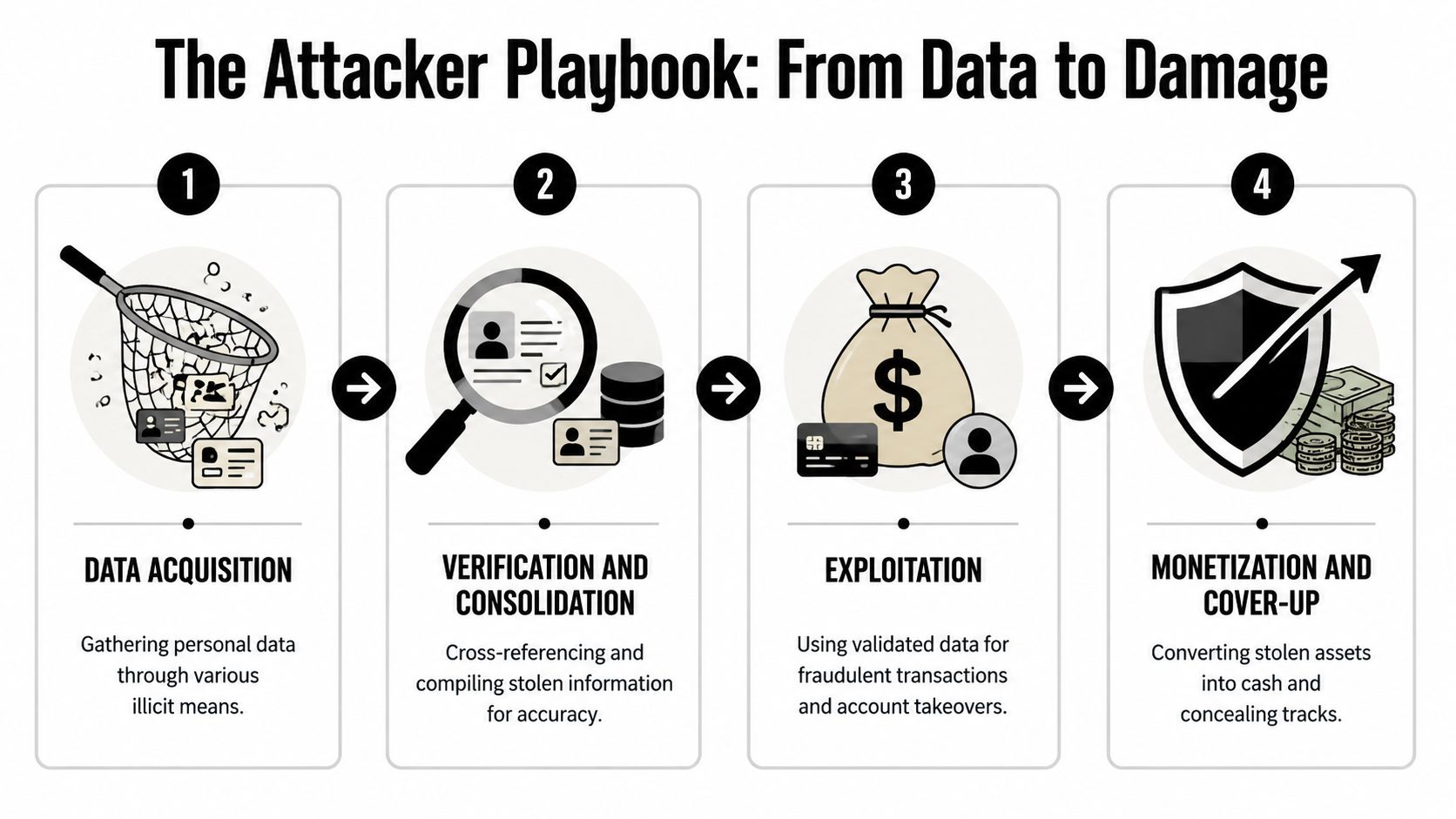
Stage one and two
First comes acquisition. The attacker gets your breach credentials, maybe along with your username and IP history from old logs or forum posts.
Then comes verification and consolidation. They test that login on major email providers, shopping accounts, and payment platforms. Once they enter your inbox, they search for terms like “invoice,” “tax,” “bank,” “resume,” “crypto,” or “password reset.” They may also search your public profiles to gather more context. This is one reason many stolen records later circulate in places discussed in guides about how the dark web works and why exposed data gets traded.
Stage three
Now the criminal starts exploiting access.
They reset passwords on linked accounts. They may take over your gaming profile and sell in-game items or stored payment access. They may enter a shopping account and place orders. They may review your inbox for job applications, tax messages, or landlord communications.
This matters for reputation too. If your email is the center of your digital life, whoever controls it can impersonate you across services.
A stolen inbox is often more valuable to a criminal than a stolen card, because email controls resets, receipts, identity checks, and trust.
Stage four
The final stage is monetization and cover-up.
The attacker cashes out through purchases, transfers, fake applications, resale of account access, or later fraud using the details they gathered. They may delete alerts, archive warning emails, or change recovery settings so you don’t notice quickly.
That’s why “identity theft how does it happen” isn’t just about the first theft. The first theft is often just the key that opens the rest of the house.
Red Flags Your Identity Is Compromised
The earlier you spot a problem, the more damage you can limit.
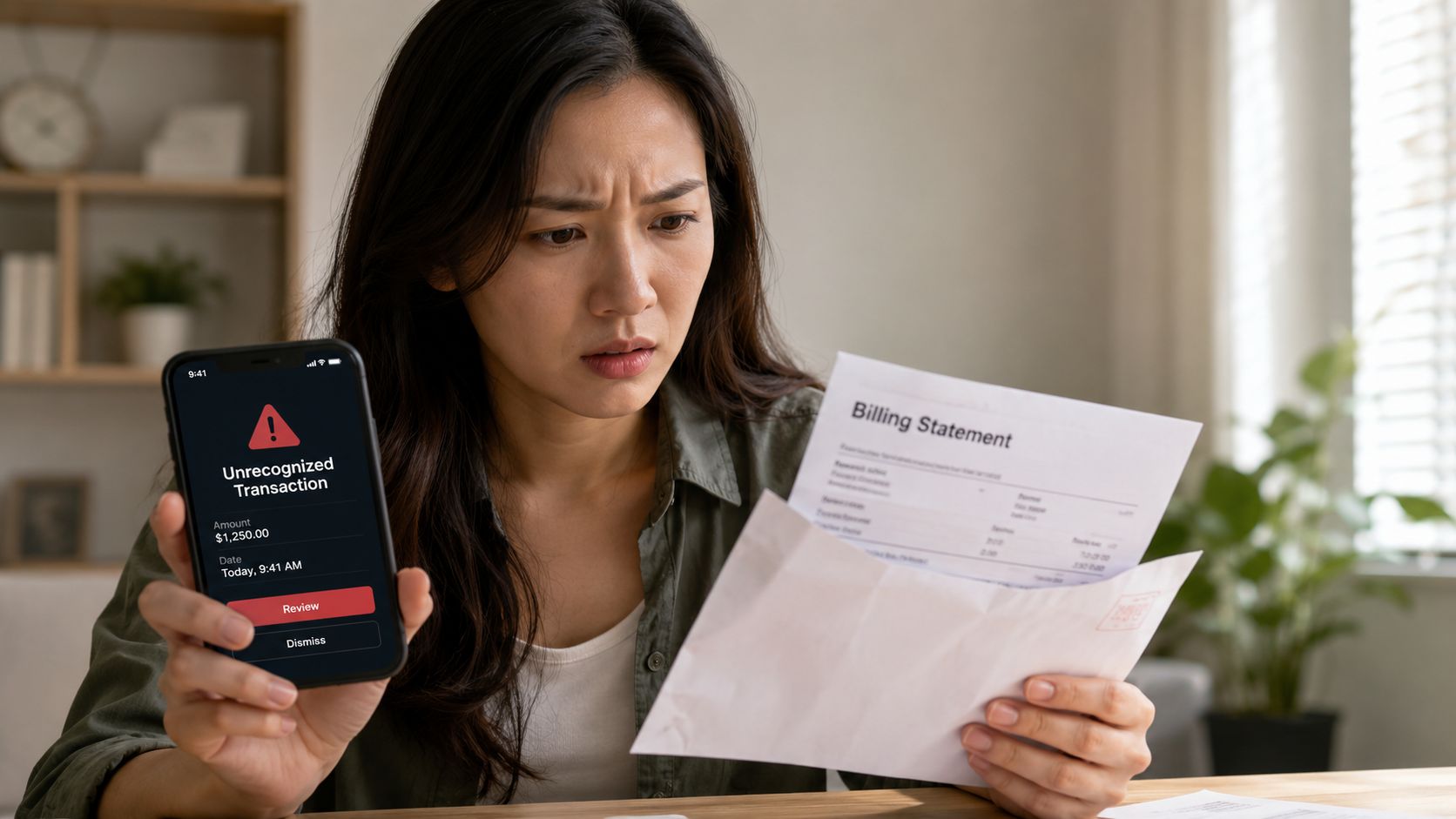
Some warning signs are obvious. Others are subtle enough that people explain them away for weeks. That delay helps criminals stay inside accounts longer.
Financial warning signs
Watch for these first:
- Unrecognized charges: Even a tiny charge can be a test before bigger fraud.
- Bills for unknown accounts: This can point to new-account fraud.
- Debt collection calls about accounts you never opened: A serious signal that your identity may be in use.
- Denied credit for no clear reason: Sometimes the first clue that someone else already used your identity.
Digital warning signs
These often appear before money disappears:
- Password reset emails you didn’t request
- Login alerts from devices or locations you don’t recognize
- Locked accounts even though you know your password
- Messages, posts, or profile changes you didn’t make
- Missing emails in your inbox or trash
If your email, shopping, gaming, or tax account suddenly behaves differently, don’t assume it’s a glitch. Start checking immediately. This roundup of signs your identity has been stolen gives a practical checklist you can compare against your own situation.
Real-world signs people miss
Mail stopping without explanation can mean someone changed an address. Friends receiving strange DMs from your account can signal takeover. A gaming account with altered inventory, linked payment changes, or new friend requests can be more than an account problem. It can be the first visible sign that one of your reused credentials was compromised elsewhere too.
A short explainer can help you spot the pattern faster:
If you notice one red flag, check connected accounts immediately. Identity theft often spreads sideways from the first compromised account.
Your Proactive Defense Against Identity Thieves
Passive defense isn’t enough anymore. Waiting until a bank alerts you is waiting too long.
One major blind spot in many explainers is the account-takeover chain. Experian notes that many discussions of identity theft under-explain credential stuffing and account-takeover chains, where stolen passwords from one breach are reused to compromise email, banking, shopping, and tax accounts. That’s why using unique passwords for each service is critical.
Start with account security
Here’s the core defense stack:
- Use a password manager: It helps you create and store a different password for every site.
- Turn on multi-factor authentication: Especially for email, banking, cloud storage, shopping, and gaming platforms.
- Protect your email first: Email is the reset hub for everything else.
- Review saved payment methods: Remove cards from accounts you rarely use.
- Audit recovery options: Old phone numbers and backup emails can become weak points.
Reduce the amount of exposed data
Security isn’t only about passwords. It’s also about visibility.
If your name, old addresses, usernames, breached credentials, and public profiles are easy to find, an attacker has a head start. That’s why it helps to run an exposure check, remove old accounts where possible, tighten privacy settings, and monitor where your data appears. One option is Digital Footprint Check, which searches for exposed information across public sources, breach data, social platforms, and related online records so you can see what’s already visible before someone else pieces it together.
Don’t forget old devices and paper records
Digital identity protection isn’t just online. Retired laptops, phones, and office hardware can still contain browser data, saved files, and login remnants. If you’re disposing of old equipment, secure destruction matters. This guide from Reworx Recycling for secure ITAD explains why proper data destruction is part of privacy protection, not just an IT housekeeping task.
A common prevention routine looks like this:
- Lock down email and banking first
- Replace reused passwords
- Check what personal data is publicly exposed
- Remove unnecessary accounts and old listings
- Monitor alerts instead of relying on memory
What to Do Immediately If You Are a Victim
If you think your identity has been stolen, speed matters. You don’t need to solve everything in one hour, but you do need to contain the damage fast.
Start with the accounts that can open up the rest.
Your first response checklist
Secure your email account Change the password, sign out of other sessions, and review recovery settings, forwarding rules, and trusted devices.
Contact your bank and card issuers Report unauthorized activity, freeze affected cards or accounts, and ask what fraud steps they recommend.
Change passwords on linked accounts Focus on banking, shopping, payment apps, tax accounts, cloud storage, and gaming platforms. If you reused passwords, assume multiple accounts are at risk.
Place fraud alerts or security freezes with the major credit bureaus This helps stop new accounts from being opened in your name.
Report and document
Keep screenshots, emails, timestamps, and notes from every call. Documentation helps when disputing charges or proving the timeline.
Then report the theft through the FTC at IdentityTheft.gov and consider filing a local police report if financial accounts, official records, or physical theft are involved. If you suspect hidden account abuse connected to one email address, it can help to review all services tied to that inbox. This guide on finding all accounts linked to your email is useful for that cleanup process.
Watch the places criminals revisit
After the first wave, monitor the accounts attackers often return to:
- Email and cloud storage
- Shopping accounts with stored cards
- Tax and government portals
- Gaming accounts with linked payments
- Professional accounts that contain resumes, HR messages, or client communication
Recovery is usually a process, not a single fix. Close the entry point first, then work outward through every connected account.
The best time to prepare is before anything happens. The second-best time is now, while you still control most of the accounts tied to your name.
A simple way to start is with Digital Footprint Check, which helps you review what personal information, profiles, and exposed account data may already be visible online. That kind of visibility makes it easier to spot risk early, clean up forgotten accounts, and reduce the chances that scattered details about you get turned into a usable identity.