· Digital Footprint Check · Content Marketing · 22 min read
10 Signs Your Identity Has Been Stolen & How to Check
Worried about fraud? Learn the top 10 signs your identity has been stolen, from odd credit reports to fake accounts, and what to do next. Check your risk now.
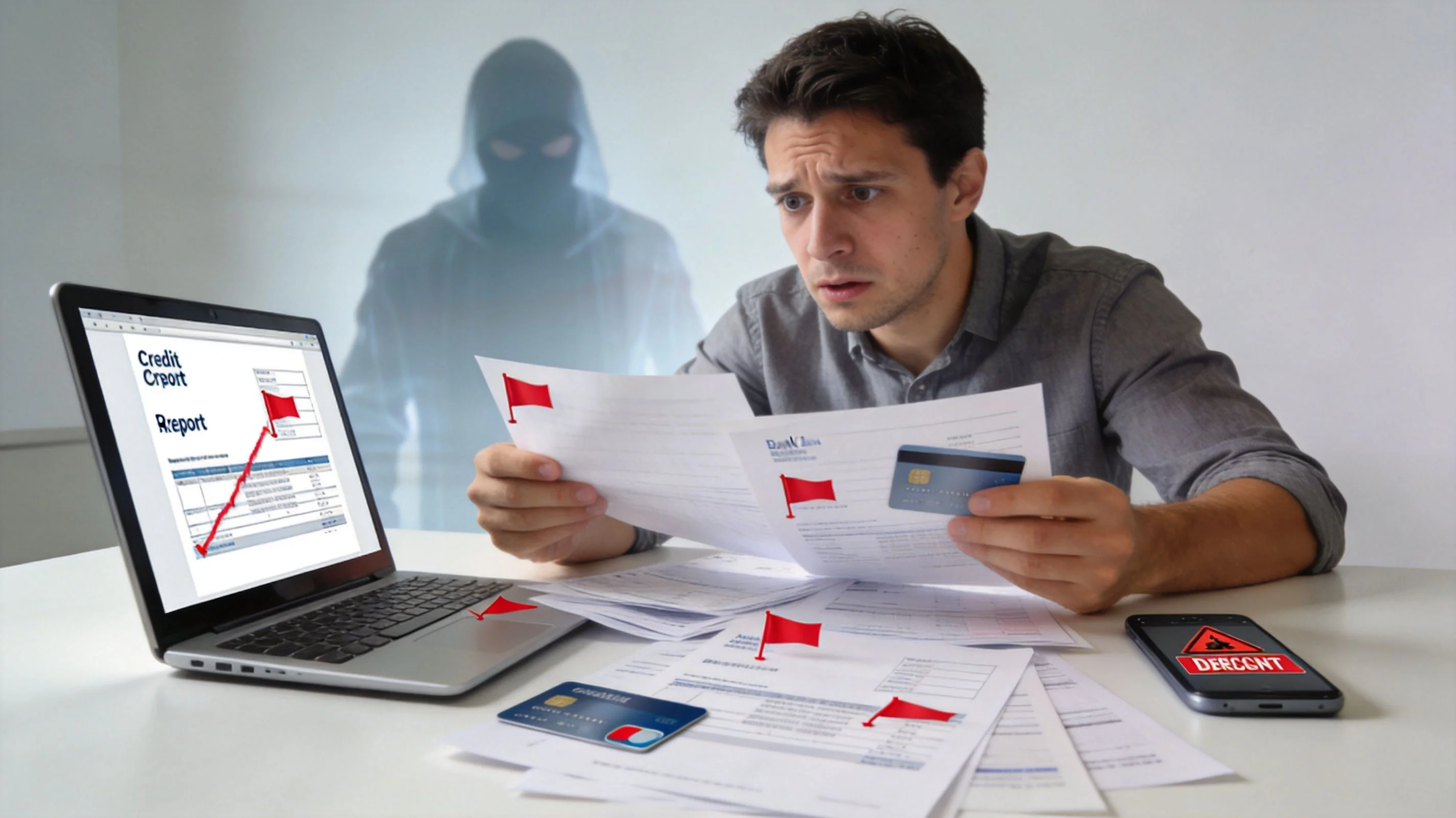
You check one account and find a charge you do not recognize. By lunch, a letter shows up for a credit card you never opened. That evening, an email says your password was changed.
That kind of day feels random at first. It can look like spam, a bank error, or a one-off login problem. In many cases, it is the early stage of identity theft, where small signals appear in different places before the full problem becomes visible.
Identity theft reaches far beyond a stolen card number. It can touch your bank accounts, tax records, medical files, job applications, email, social profiles, and even accounts you rarely think about. A thief often starts with one useful piece of information, such as a password, address, Social Security number, or intercepted document, then tests where else it works. A house key is a good comparison. One key may open only one door, but if the thief also finds your wallet, mail, and login details, more doors start opening.
The good news is that warning signs usually appear before the worst damage is done. The hard part is connecting them early enough to act. That is where a simple detection plan helps. Along with the 10 signs below, you will see what each one can mean, what to do right away, and how to check for related exposure across your online footprint. Tools such as Digital Footprint Check can help surface hidden links between leaked data, old accounts, and public records, while practical habits like watching for the early warning signs discussed in this guide to preventing credit card fraud can help you catch trouble sooner.
Treat this article like a home inspection checklist. You are not just looking for obvious break-ins. You are also checking windows, locks, and side doors that are easy to miss.
1. Unfamiliar Accounts or Activity on Credit Reports
Your credit report works like a scoreboard for your financial identity. If a credit card, loan, utility account, or hard inquiry appears there and you did not authorize it, someone may be using your information behind the scenes.
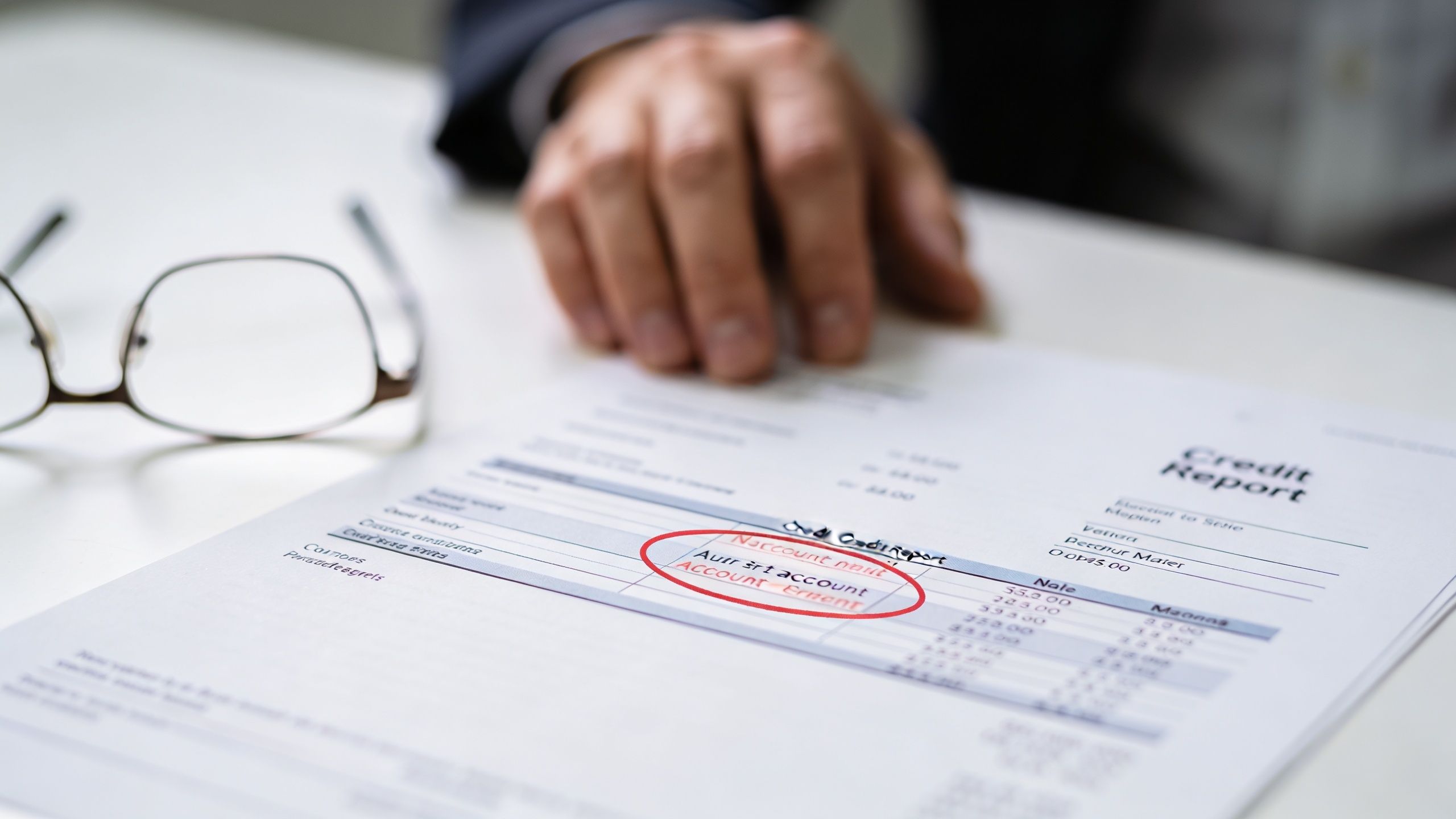
A credit report often shows the problem before a bill arrives. New accounts, unfamiliar balances, wrong addresses, and hard inquiries can all be early clues. In simple terms, a thief may be using your name, date of birth, address, or Social Security number to borrow money or apply for services as if they were you.
A common scenario is easy to miss until it becomes urgent. You apply for a car loan or apartment, expecting a routine check, and the lender points out a store card or personal loan you have never seen. By that point, missed payments may already be lowering your credit standing.
What to do right away
Pull your reports from all major credit bureaus and read them line by line. Check every account, inquiry, address, and employer entry. Small details matter. A wrong street address or a lender name you do not recognize can be the thread that helps you trace the whole problem.
If something looks unfamiliar, act the same day.
Practical rule: An account you do not recognize is enough reason to file a dispute and place a fraud alert or credit freeze right away.
Then work backward to find how the exposure may have happened. Old email accounts, reused passwords, public records, and breached contact details often connect the dots. For this reason, tools like Digital Footprint Check’s guide to preventing credit card fraud can support both prevention and investigation by helping you spot where your personal data may already be circulating.
Keep notes as you go. Save screenshots of the suspicious entry, record the date you found it, and write down each bureau or lender you contact. If the unfamiliar account has already gone delinquent or appears tied to collections, DebtBusters financial recovery resources can help you understand what collection activity may look like while you sort out whether the debt is fraudulent.
Later in the process, it helps to watch a walkthrough of what fraudulent activity can look like in practice:
2. Unexpected Bills or Collection Notices for Accounts You Didn’t Open
Identity theft often announces itself through the mail. A bill from a wireless carrier you don’t use, a collection letter for a payday loan you never requested, or a medical invoice from a clinic you’ve never visited can all mean the same thing. Someone used your identity as if it were their own.
This sign is especially important because thieves don’t only target banks. They open utility accounts, subscription services, buy-now-pay-later plans, retail cards, and service agreements. If the account goes unpaid, the first sign you see may be a collector’s notice.
Don’t ignore “small” debts
People sometimes ignore a suspicious bill because the amount seems minor. That’s risky. Fraudsters often test stolen information on lower-friction accounts before attempting bigger fraud later.
Keep every suspicious envelope, email, and account number. Ask the collector or billing company for written validation and for the application details tied to the account. You want dates, service addresses, contact information used to open it, and any supporting records.
- Organize the paper trail: Save letters, screenshots, account numbers, and call notes in one folder.
- Dispute in writing: Written disputes create a clearer record than a phone call alone.
- Check for wider exposure: Search for your email, phone, and address across public-facing sources and breach records.
- Use recovery help when needed: If collections are already involved, DebtBusters financial recovery resources can help you understand what collection activity may look like.
This kind of fraud rarely stays neatly contained. If one unknown bill appears, assume there may be more accounts behind it.
3. Missing or Stolen Mail, Including Tax Documents and Financial Statements
Your mailbox is still part of your security system. If bills, bank statements, tax forms, replacement cards, or other expected mail suddenly stop arriving, pay attention.
Identity thieves often need a physical foothold. They may steal documents from a mailbox, change an address, or intercept papers that contain account numbers, tax details, or enough personal information to answer security questions. Missing mail can be an early sign, not just an inconvenience.
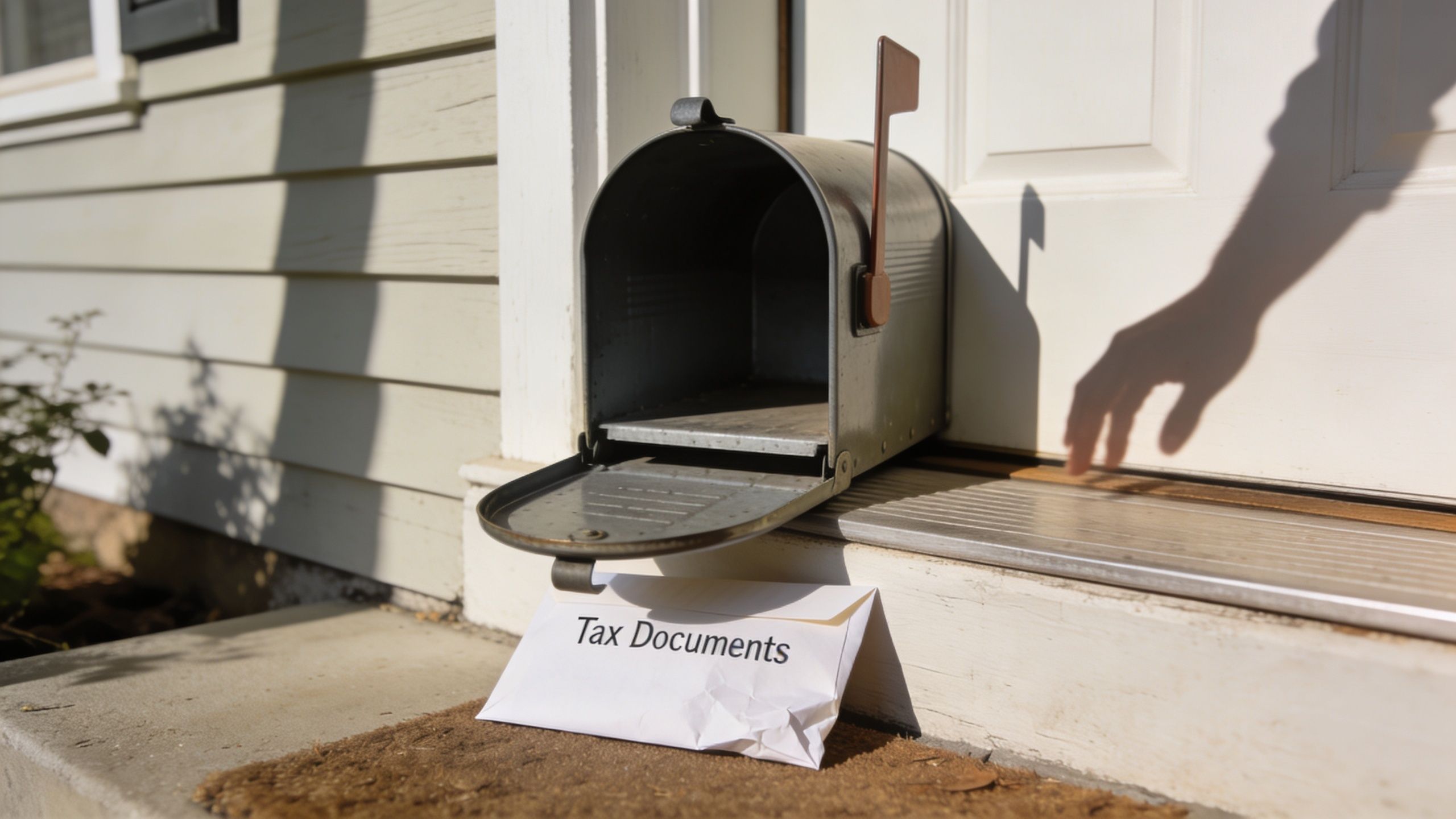
A realistic example is a person who expects a W-2 or bank statement but never receives it, then later learns a tax filing or account update was made using those details. Another is a homeowner who notices pre-approved credit offers stopped arriving because mail has been redirected.
Treat missing mail as a security issue
If your usual statements disappear, don’t assume the company went paperless. Confirm your mailing address directly with your bank, insurer, employer, and any tax-related agency you deal with.
Missing financial mail often means someone is trying to buy time. If you don’t see the notice, you can’t stop the fraud early.
A few practical steps help fast:
- Use delivery previews: Services like USPS Informed Delivery can help you notice when expected mail never reaches your hands.
- Collect sensitive mail promptly: Don’t leave tax forms or bank mail unattended in a curbside box.
- Verify address changes: Check major accounts for unauthorized updates to your mailing details.
- Search public records: If your address appears incorrectly online, that can create more confusion and risk.
Digital footprint tools can complement this by checking where your address and identity details appear online, especially if false records or stale listings are adding to the problem.
4. Social Media Accounts or Emails You Don’t Recognize
Not every identity thief starts with a credit application. Some start by becoming you online.
You might find a fake LinkedIn page using your name, a dating profile using your photos, or a gaming account tied to your email that you never created. These aren’t just embarrassing copies. They can damage your reputation, target your contacts, or become stepping stones toward financial fraud.
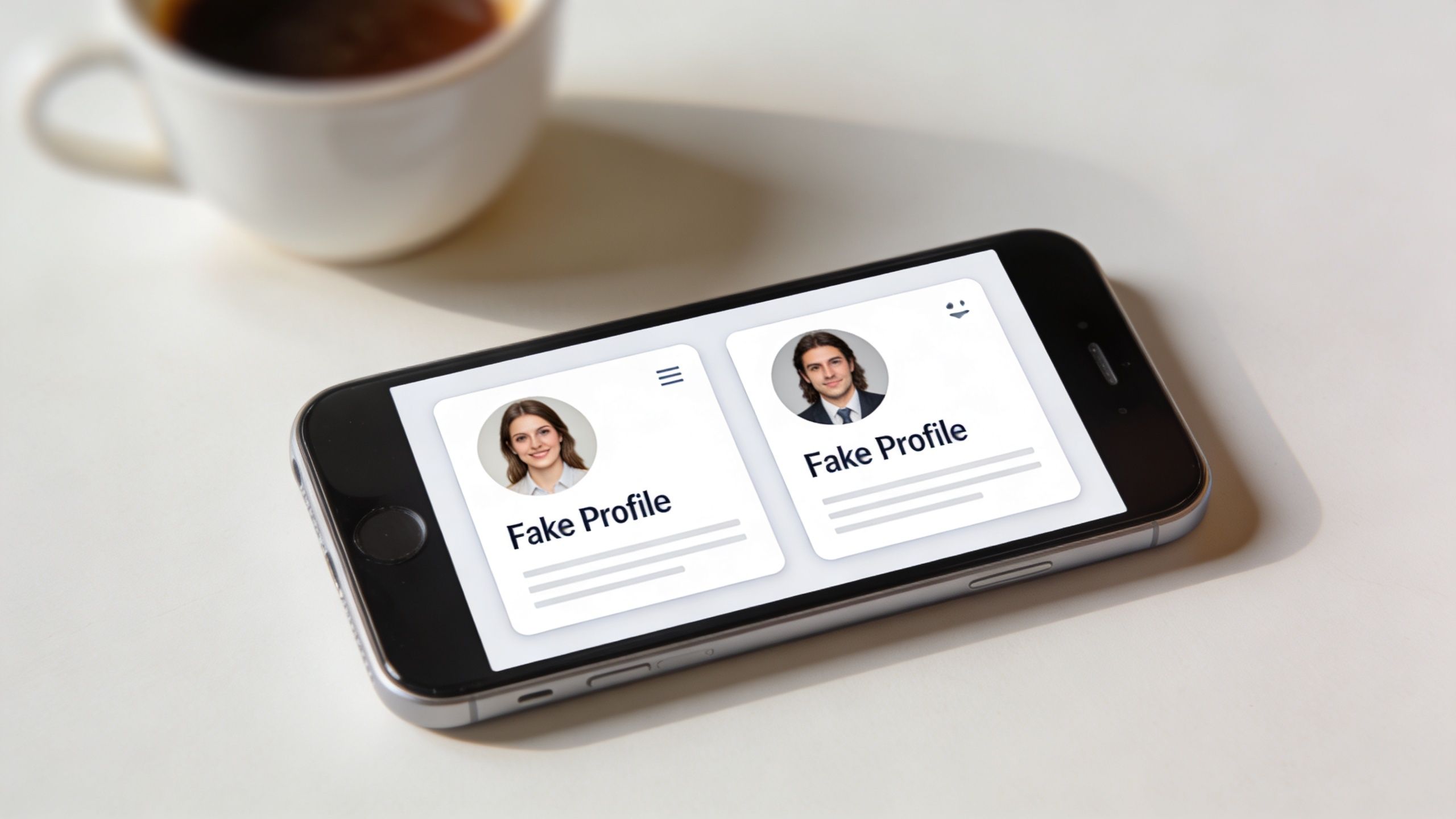
One job seeker might discover a fake LinkedIn profile with invented experience and a different location. A parent might find a social account using their family photos. A gamer might notice accounts on Steam, PlayStation Network, or Xbox tied to an email address they thought was private.
Search for yourself like a stranger would
Look up your full name, usernames, phone number, and email variations in search engines and on major platforms. Search images too. Reverse image checking can sometimes reveal profiles built from stolen photos.
Digital account misuse also overlaps with breaches. If your email has been exposed, scammers may use it to create new profiles or reset access on older ones. That’s why it helps to run an account exposure check such as checking whether your email was hacked.
- Document before reporting: Take screenshots of fake profiles, URLs, and visible activity.
- Secure your real accounts: Change passwords and enable two-factor authentication.
- Warn close contacts: If a fake account is messaging people as you, tell them before the scam spreads.
- Report impersonation directly: Most major platforms have impersonation reporting channels.
Online identity theft doesn’t always drain a bank account first. Sometimes it attacks trust, reputation, and relationships before money enters the picture.
5. Calls or Emails From Creditors or Collection Agencies for Unknown Debts
A debt collector calling about a balance you’ve never heard of is one of the clearest signs your identity has been stolen. It usually means the fraud has already moved beyond setup and into unpaid debt.
This often catches people off guard because the first contact doesn’t come from the company that opened the account. It comes from a third party that now wants payment. If you panic and pay just to stop the calls, you can make the situation harder to untangle later.
Slow the conversation down
When a collector contacts you, don’t admit the debt is yours and don’t pay it on the spot. Ask for the account details in writing. You need the creditor name, amount, date opened, and any identifying information used on the application.
A common scenario is a young adult getting repeated calls about a medical bill from a state they’ve never visited. Another is a person who starts hearing from multiple collectors in a short period, which can suggest more than one fraudulent account has been opened.
Ask for verification before discussing payment. Identity theft cases get harder when the paper trail starts with an accidental admission.
You should also:
- Log every contact: Write down dates, names, phone numbers, and what each caller said.
- Dispute formally: Send written disputes and keep copies.
- Check for breach exposure: Unknown debt often points back to leaked personal data.
- Escalate if needed: If the calls become aggressive, debt relief for harassing calls may help you understand your options.
Collection activity is often the symptom, not the origin. The underlying problem may be several fraudulent accounts hiding behind that first phone call.
6. Denial of Credit or Loan Applications You Applied For
You fill out a normal application for a credit card, car loan, or apartment lease. Your income is steady, your payment history seems fine, and you expect a routine answer. Then the lender says no.
That kind of denial can be an early warning sign of identity theft. Credit files work like a financial report card. If someone has opened accounts in your name, missed payments, or generated a burst of hard inquiries, the lender may be seeing a damaged version of you.
A second red flag is even sharper. You receive denial letters for applications you never submitted. That often means a thief is testing your information with multiple lenders to see where it works.
Read the denial notice like a map
A denial notice usually includes the reason for the decision and the credit bureau used. Those details matter. If the letter mentions late payments, high balances, too many recent applications, or a credit score drop that does not fit your real behavior, treat it as a clue, not just a rejection.
Start with the items that are easiest to verify:
- Request the adverse action details: Ask which credit bureau the lender checked and the exact reason for the denial.
- Review recent inquiries: Look for banks, finance companies, or lenders you do not recognize.
- Check the accounts tied to the denial: One fraudulent card or loan can lower your score enough to block a legitimate application.
- Place a fraud alert or freeze: This adds a checkpoint before new credit can be approved.
An OSINT check can help here too. If your Social Security number or other identifiers have been exposed in public breach data, that may explain why lenders are seeing activity you did not create. Reviewing what someone can do with your SSN helps connect a loan denial to the larger identity theft picture.
Do not rush to reapply. If fraud is the cause, a second application can add another hard inquiry while the false information remains on your report. Clean up the file first, then try again.
A denial is sometimes less about your finances than about someone else using your name first.
7. Tax-Related Issues and IRS Notices You Can’t Explain
You sit down to file your taxes, enter your information, and get a message that your return has already been submitted. That is the tax version of arriving home and finding someone else has changed the locks. Your name is still on the door, but someone got there first.
Tax identity theft often shows up through confusion before it shows up through proof. A notice mentions wages from an employer you never worked for. An IRS letter refers to a refund, filing, or account change you did not make. Sometimes the first sign is a rejected e-file. Other times, it is a tax transcript or notice that does not match your real work history.
The reason this category matters is simple. Tax records connect directly to your Social Security number, income history, and government benefits. If a thief gets into that part of your identity, the problem can spread beyond one false return.
Start by treating every unexplained tax notice like a smoke alarm. It does not always mean a fire, but you should check immediately.
A practical next step is reviewing what someone can do with your SSN. That helps explain why a tax issue may be part of a larger identity theft pattern, not a one-off filing problem.
Here is a clear response plan:
- Read the notice closely: Look for the tax year, the action reported, and any employer or income listed that you do not recognize.
- Respond quickly and keep records: Save the letter, note the date it arrived, and keep copies of every form or response you send.
- Check for mismatch clues: Unknown wages, duplicate filings, and refund activity you did not request are all strong warning signs.
- Use the IRS identity theft process if needed: If the notice points to fraud, follow the IRS steps to report identity theft and protect your account.
- Look beyond taxes: An OSINT check with Digital Footprint Check can help you see whether your personal details are showing up in breach data, public records, or other exposure points that may explain how the fraud started.
Filing early can reduce the chance that a thief files first, but timing alone does not solve the bigger problem. You still need to correct the record and watch for related misuse.
Tax fraud feels abstract until a refund is delayed or the government says your income does not match reality. Then it becomes concrete very fast.
8. Medical Bills or Records for Services You Never Received
Medical identity theft is different from credit card fraud because the damage can affect both your finances and your care history. If you receive a bill, explanation of benefits, prescription notice, or medical record for services you never received, treat it seriously.
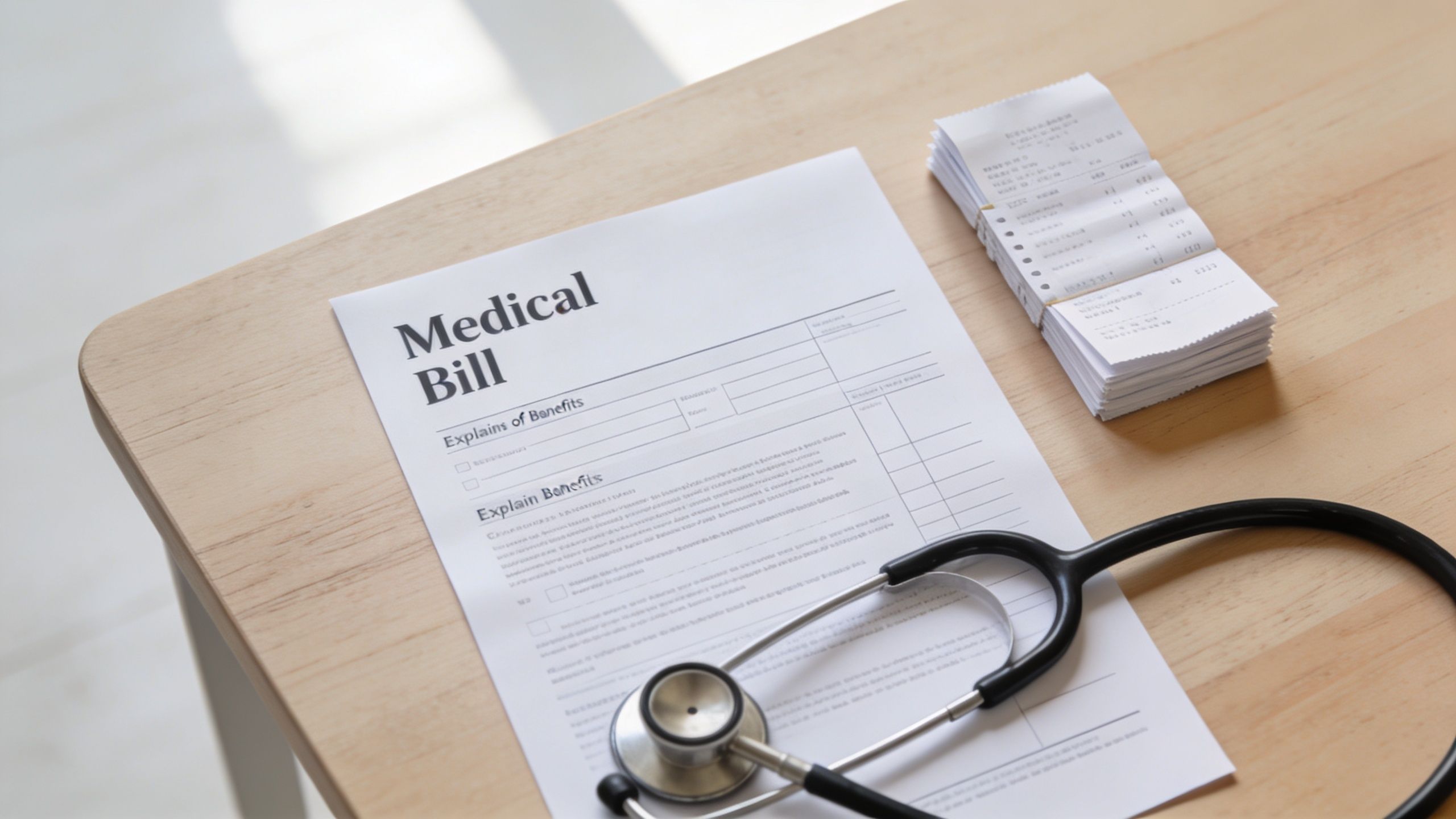
A realistic example is receiving a bill for a surgery or emergency visit in another city. Another is spotting prescription charges for medications you’ve never taken. If those records stay in the system, future providers may see false information tied to your name.
Why medical fraud can linger
Medical fraud can remain hidden because people often skim insurance paperwork or ignore confusing provider notices. Thieves take advantage of that gap.
Review every explanation of benefits, provider invoice, and insurance claim summary. If something is wrong, contact both the provider and your insurer. Ask for copies of the records used to support the claim and request corrections in writing if your file has been contaminated.
A false medical record can follow you longer than a false charge. Money can be reversed. Bad health information can keep resurfacing.
It also makes sense to check whether your personal information may have been exposed through a healthcare-related breach or publicly accessible listing. The earlier you connect the dots, the easier it is to stop repeat misuse.
9. New Accounts or Changes to Existing Accounts You Don’t Remember
Account takeover often begins subtly. You sign in to a store, bank, streaming service, or gaming profile and notice small details that feel off. Your mailing address is different. A recovery email has been added. A phone number is unfamiliar. You may even get password reset messages or two-factor codes you never asked for.
Those changes matter because they are often the thief’s first move. Changing contact details is like replacing the locks and redirecting the spare key. Once that happens, the person misusing the account can block your alerts, approve resets, and keep using the account while you struggle to get back in.
Watch for takeover clues inside the account
A realistic example is logging into a retail account and finding a new shipping address saved for future orders. Another is seeing a new authorized user on a credit card or a recovery email on a financial account that does not belong to you. In gaming or social platforms, the warning sign may be harder to spot at first, such as changed profile details, unfamiliar purchases, or login history from devices you do not recognize.
Account discovery is a practical step. If you want to check whether your information has already appeared in exposed databases connected to account misuse, run a free data breach check for your email address. That can help you connect an odd account change to a larger exposure problem.
Use a simple review routine:
- Check profile details: Review your address, phone number, recovery email, and any linked accounts.
- Look at login history: Many services show recent devices, locations, or sign-in attempts.
- Reset access in the right order: Change the password first, then update recovery options and sign out other sessions.
- Turn on account alerts: Notifications for logins, password changes, and profile edits help you catch new activity fast.
If an existing account changes without your permission, treat it like someone has already stepped inside your house, not like they are only rattling the doorknob. Act quickly, document what changed, and contact the company before the account is used for purchases, transfers, or further identity fraud.
10. Third-Party Notifications About Data Breaches Affecting Your Information
A breach notice doesn’t always mean your identity has already been stolen. But it does mean your risk has changed.
If a company tells you your email, password, phone number, Social Security number, or other personal data was exposed, take that message seriously. Breach notices often arrive before the fraud appears on a statement or report. That gives you a chance to act while the problem is still in the “risk” stage.
One of the product details you can use here is straightforward: Digital Footprint Check searches 500+ platforms, including data breach databases, social networks, gaming profiles, professional networks, and public records. That matters because exposure rarely stays in one place once personal data spreads.
A breach notice is a starting point
A practical response is simple. Change the password on the breached account, change any reused passwords, review financial statements, and tighten account recovery settings. If highly sensitive data was involved, a fraud alert or credit freeze may be appropriate.
You can also check for known exposure directly with Digital Footprint Check’s free data breach checker. That kind of scan helps you see whether one breach notification is part of a larger pattern.
- Keep the notification: Save the email or letter in case fraud appears later.
- Change related passwords: Especially if you reused the same one elsewhere.
- Monitor linked accounts: Watch email, financial, shopping, and cloud accounts tied to the same login.
- Treat exposure as active risk: Don’t wait for a thief to prove the warning was real.
10 Signs of Identity Theft: Comparison
| Indicator | Implementation Complexity 🔄 | Resource Requirements ⚡ | Expected Outcomes ⭐ 📊 | Ideal Use Cases 💡 | Key Advantages |
|---|---|---|---|---|---|
| Unfamiliar Accounts or Activity on Credit Reports | Moderate 🔄🔄 | Moderate ⚡⚡ (credit monitoring, disputes) | Strong evidence of identity theft; credit damage possible ⭐⭐ 📊 | Suspected credit fraud or unexplained score drops | Clear paper trail on reports; formal dispute processes |
| Unexpected Bills or Collection Notices for Accounts You Didn’t Open | Low–Moderate 🔄🔄 | Moderate ⚡⚡ (document collection, debt validation) | Physical proof for disputes; potential credit impact ⭐⭐ 📊 | Unknown charges, utility/subscription or medical fraud | Tangible documentation; traceable billing records |
| Missing or Stolen Mail, Including Tax Documents and Financial Statements | Low 🔄 | Low–Moderate ⚡⚡ (USPS alerts, secure mailbox) | Early warning before major fraud; preventive value ⭐⭐ 📊 | Mail theft concerns; tax-season protection | Preventive detection; USPS services and delivery confirmations |
| Social Media Accounts or Emails You Don’t Recognize | Moderate 🔄🔄 | Moderate ⚡⚡ (monitoring, account recovery) | Reputation damage but removable; evidence for takedown ⭐⭐ 📊 | Impersonation, scams using your identity online | Platform removal/recovery procedures; quick mitigation if detected |
| Calls or Emails from Creditors or Collection Agencies for Unknown Debts | Low 🔄 | Moderate ⚡⚡ (documentation, legal/consumer complaints) | Clear indicator of active credit fraud; legal/credit consequences ⭐⭐ 📊 | Active debt collection or harassment after fraud | Dated records exist; protections under FDCPA/FCRA |
| Denial of Credit or Loan Applications You Applied For | Moderate 🔄🔄 | High ⚡⚡⚡ (investigation, disputes, credit freezes) | Significant impact on credit access; actionable denial reasons ⭐⭐ 📊 | Unexpected loan denials or unexplained hard inquiries | Lenders provide written reasons; supports formal disputes |
| Tax-Related Issues: Fraudulent Tax Returns or IRS Notices | High 🔄🔄🔄 | High ⚡⚡⚡ (IRS forms, long coordination, possible legal help) | Severe, long-lasting consequences; refund delays and investigations ⭐⭐ 📊 | Suspected tax identity theft or fraudulent returns filed | Official IRS documentation and established resolution protocols |
| Medical Bills or Records for Services You Never Received | Moderate 🔄🔄 | High ⚡⚡⚡ (provider coordination, record corrections) | Medical record contamination and insurance impact; care risks ⭐⭐ 📊 | Medical identity theft affecting records or claims | Detailed provider records; insurer dispute channels available |
| Finding New Accounts or Changes Made to Existing Accounts You Don’t Remember | Moderate 🔄🔄 | Moderate ⚡⚡ (alerts, password managers, MFA) | Immediate account takeover risk but often stoppable if rapid action ⭐⭐ 📊 | Account takeover, unauthorized changes to existing accounts | Timestamped notifications; rapid remediation options |
| Third-Party Notifications About Data Breaches Affecting Your Personal Information | Low 🔄 | Low–Moderate ⚡⚡ (password changes, monitoring, credit checks) | Preventive early warning; reduces risk if promptly addressed ⭐⭐ 📊 | Proactive response after vendor or platform breaches | Early alerts and recommended mitigation steps; free monitoring offers |
Your Action Plan Securing Your Identity Today
You log in to a bank account and everything looks normal. Later that week, a debt collector calls about an account you have never seen before. Identity theft often works like a leak behind a wall. The first clue is small, but the water has usually been spreading for a while.
Recognizing warning signs is only the starting point. The next step is to respond in a way that limits damage, preserves proof, and helps you find any other places your information is being used.
Begin with the places where identity misuse usually leaves tracks. Review bank and credit card statements. Check credit reports for unfamiliar accounts or hard inquiries. Watch for missing mail, password reset messages you did not request, and notices about bills or debts that do not belong to you. These checks are simple, but they work because thieves rarely stay invisible everywhere at once. They tend to leave fingerprints in routine systems first.
The harder part is that identity theft is no longer limited to paper statements and lender notices. Personal information can also surface in old online accounts, breach databases, public records, social media profiles, gaming platforms, and forums you forgot you ever joined. A criminal may test a reused password on an old email account, create a fake profile with your name, or change recovery settings on an account you have not checked in months.
Early action is therefore critical. Waiting gives a thief more time to open accounts, intercept documents, change account details, or build a more convincing version of your identity across multiple systems.
A practical response plan looks like this:
- Lock down the affected account first: Change the password, recovery email, and two-factor settings. If available, sign out other sessions and review recent login history.
- Place a credit freeze or fraud alert if new credit activity appears: This helps stop additional accounts from being opened in your name.
- Dispute errors in writing: Send written disputes to credit bureaus, collectors, insurers, banks, or service providers so there is a clear paper trail.
- Keep evidence organized: Save screenshots, bills, denial letters, emails, case numbers, and notes from phone calls.
- Look for the wider pattern: One suspicious account may be the visible part of a larger problem.
That last step is where many people stop too soon. Closing one fraudulent card does not address an exposed email account, a breached password reused elsewhere, or a public record listing that makes impersonation easier. Digital Footprint Check can help you look for breach exposure, hidden accounts, and public records tied to your information, which makes it easier to spot related risks before they turn into new fraud.
For tax-related protection, Allied Tax Advisors on identity security explains one way to protect your filing process.
The goal is not to panic every time a strange message appears. The goal is to build a repeatable habit: check the signal, confirm what changed, secure the account, document what happened, and scan for connected exposure. That process helps you regain control while the problem is still small enough to contain.
If you want to see what personal information may already be exposed online, try the Digital Footprint Check free checker. It can help you look for breach exposure, hidden accounts, and public records connected to your identity so you can catch risks earlier.