· Digital Footprint Check · Content Marketing · 14 min read
How to Report Stolen Drivers License: Your 2026 Action Plan
Lost your driver's license? Learn how to report stolen drivers license, contact the DMV, prevent identity theft, and monitor your data with our 2026 guide.
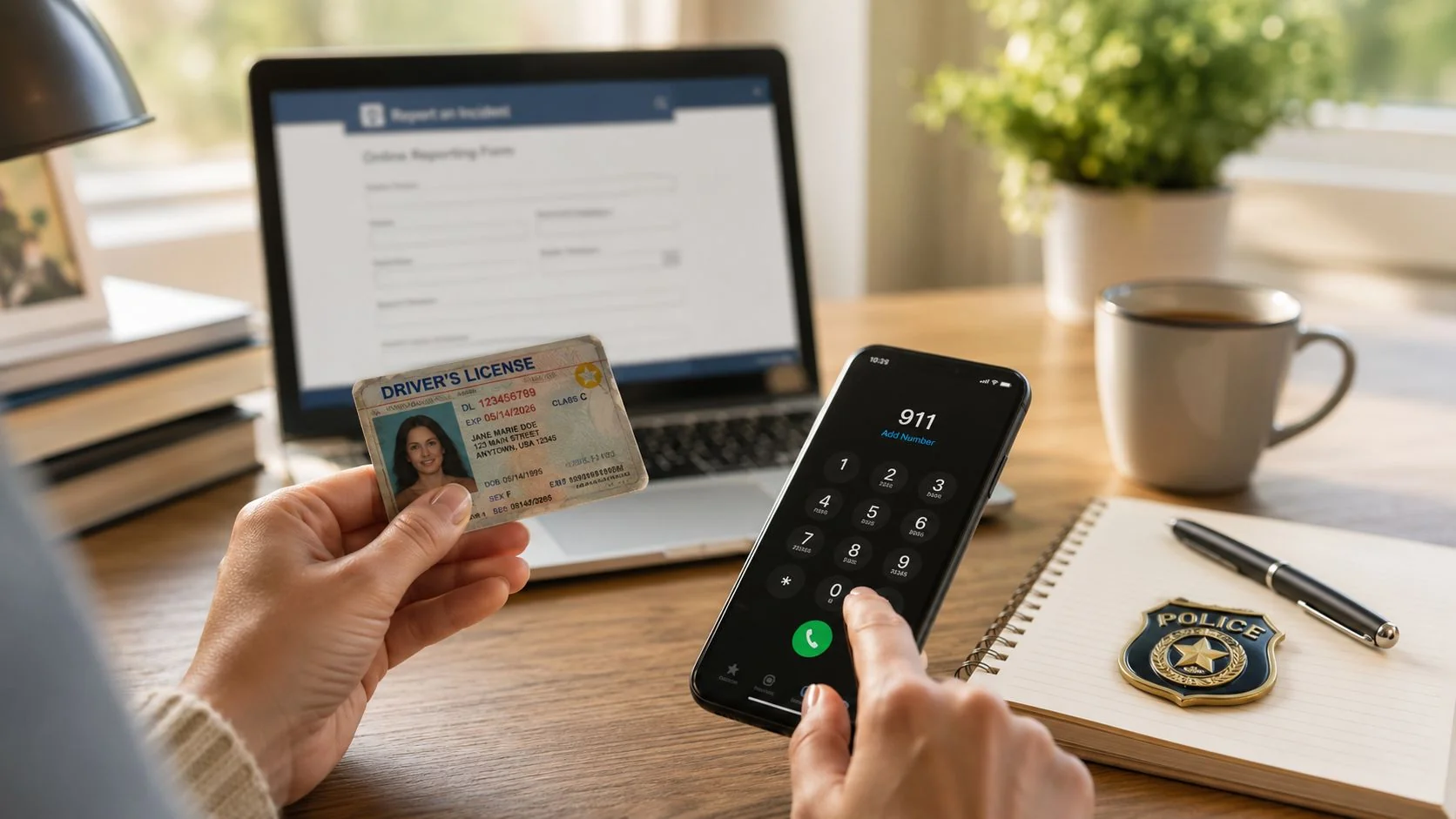
A stolen driver’s license used to mean inconvenience. In June 2026 alone, data breaches at a Texas state agency and U.S. insurer AssuranceAmerica exposed over 9.8 million driver’s license records, affecting roughly 4% of all 242 million licensed drivers in the U.S. according to TechCrunch’s reporting on the 2026 driver’s license breaches. That changes the math. If your license is stolen, lost, copied, or leaked, you’re not just replacing an ID card. You’re defending a core piece of your identity.
Panic doesn’t help. Speed does.
The right response has two tracks. First, you report stolen drivers license activity fast so there’s an official record before someone uses your identity. Second, you treat the incident like a broader privacy and identity-theft problem, because criminals can use a license number for account fraud, impersonation, traffic violations, and reputation damage that shows up later.
If you’re worried someone has already started misusing your identity, review these signs your identity has been stolen and compare them to what you’re seeing. Then get moving.
The Reality of a Stolen Drivers License in 2026
A driver’s license is one of the most useful identity documents a criminal can get. It carries your legal name, address, birth date, license number, and often enough detail to support social engineering against banks, insurers, employers, and account recovery systems.
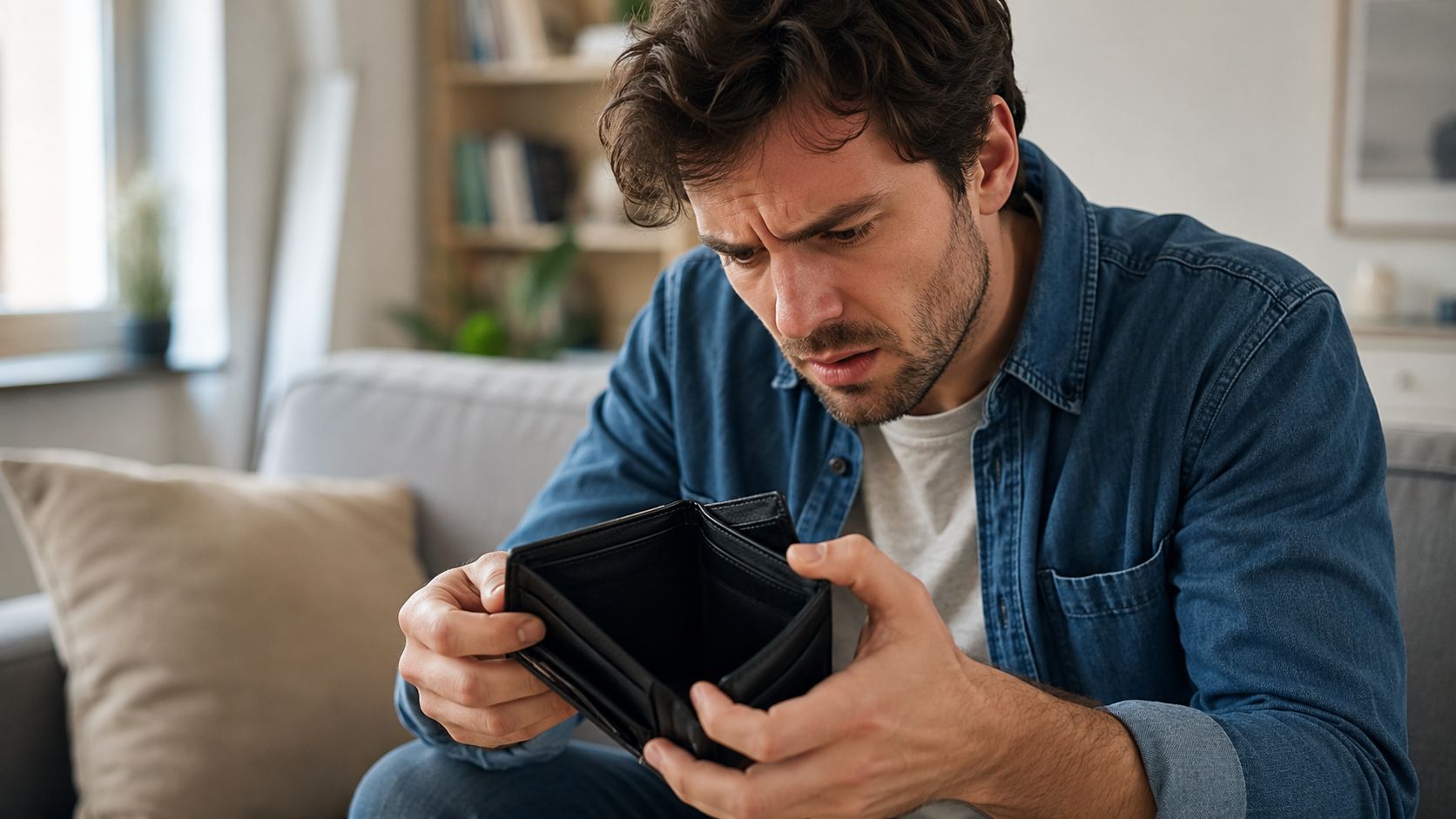
That’s why a stolen license deserves the same urgency people usually reserve for a stolen credit card. A card can be canceled. A license often stays useful to criminals long after the physical theft.
Why the risk is larger now
The environment changed because exposure no longer depends only on a wallet theft or a purse snatching. Massive breach activity has put millions of license numbers into circulation. Once that data spreads, someone can combine it with information from public records, social media, gaming profiles, people-search sites, dating apps, and breach dumps to impersonate you more convincingly.
Practical rule: Treat a missing license as both a physical theft problem and a digital identity problem.
That mindset matters because fraud signs can show up in places people don’t expect. You might see strange mail, debt collection notices, a ticket from a place you’ve never visited, or a problem during a background check for a new job. The thief may never need your wallet again. They only need the information from it.
Control starts with documentation
Your goal in the first day is simple. Create a paper trail that proves you acted fast, told the right agencies, and tried to block misuse. That record protects you later if someone uses your identity in traffic stops, account openings, or other fraud.
Do not wait to see if the card “turns up.” If you strongly suspect theft, act as if it’s already being abused.
Your First Three Emergency Calls
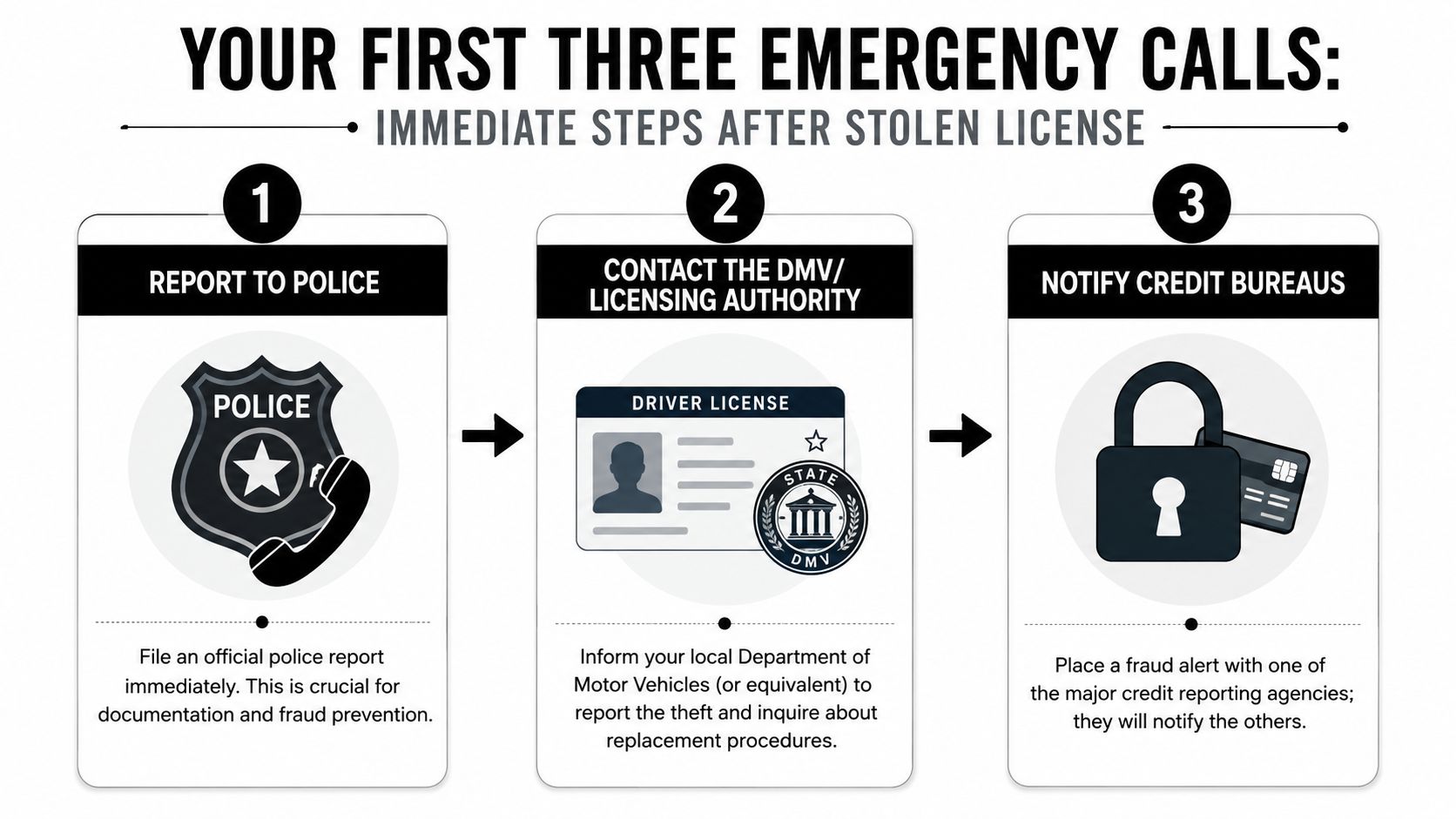
The first few hours matter. If you want the best chance of minimizing fallout, make three contacts in this order: law enforcement, your DMV or licensing agency, and a credit bureau.
Call one, the police
File a police report immediately if you believe the license was stolen rather than misplaced. You need an official theft record tied to a date, location, and incident description. That report becomes your defensive document if a thief later uses your identity.
Include the facts you know:
- Where it likely happened. Store, parking lot, rideshare, gym locker, workplace, or vehicle.
- When you last had it. Even an approximate time helps.
- What else was missing. Wallet, cards, insurance documents, keys, mail, or phone.
- Whether there was suspicious activity. Strange purchases, account alerts, or attempts to access your phone number.
Some people hesitate because they think police won’t care about “just an ID.” That’s a mistake. Reporting theft early is the difference between saying “I think someone used my information” and saying “I reported this before the fraud happened.”
For people dealing with a stolen car and stolen license at the same time, VekTracer’s guide on vehicle theft is worth reading because it shows how fast documentation protects you when law enforcement or insurers need a clear timeline.
Call two, your DMV or licensing authority
After the police report, contact your state DMV or equivalent agency. The FTC guidance highlighted in South Carolina’s DMV process is blunt about this. The DMV can place a “Verify ID” flag on the license, and that flag alerts law enforcement if someone presents the stolen ID. South Carolina also makes the order of operations clear. A police report can be mandatory before the replacement process begins, as explained by the South Carolina DMV replacement guidance.
Ask these questions directly:
- Can you place a Verify ID or equivalent fraud notation on my record?
- Do you require a police report for a stolen license replacement?
- Can I get a temporary license or receipt for legal driving?
- Will the old credential be canceled automatically when the replacement is issued?
- Are there any extra identity-theft reporting steps in this state?
Report the theft first. Replace the card second. If you reverse that order, you lose time and may miss fraud controls your state can place on the record.
If your phone account or number was also compromised during the theft, read this guide on how a clone SIM card attack works. Criminals often chain identity theft methods together. A stolen license plus a hijacked phone number is a dangerous combination.
A practical overview can help before you call. This short walkthrough covers the immediate sequence:
Call three, a credit bureau
A stolen license doesn’t automatically mean credit fraud, but it raises the risk enough that you shouldn’t wait for proof. Contact one of the major credit reporting agencies and place a fraud alert. The agency you contact will notify the others.
This step matters because many thieves don’t use the license itself. They use the identity details on it to apply for accounts, pass verification checks, or build a fake profile around your name.
Your first three calls create the core record you’ll rely on later:
- Police report for theft documentation
- DMV report for license-level fraud controls
- Credit alert for financial identity risk
That’s your emergency foundation.
Locking Down Your Identity and Finances
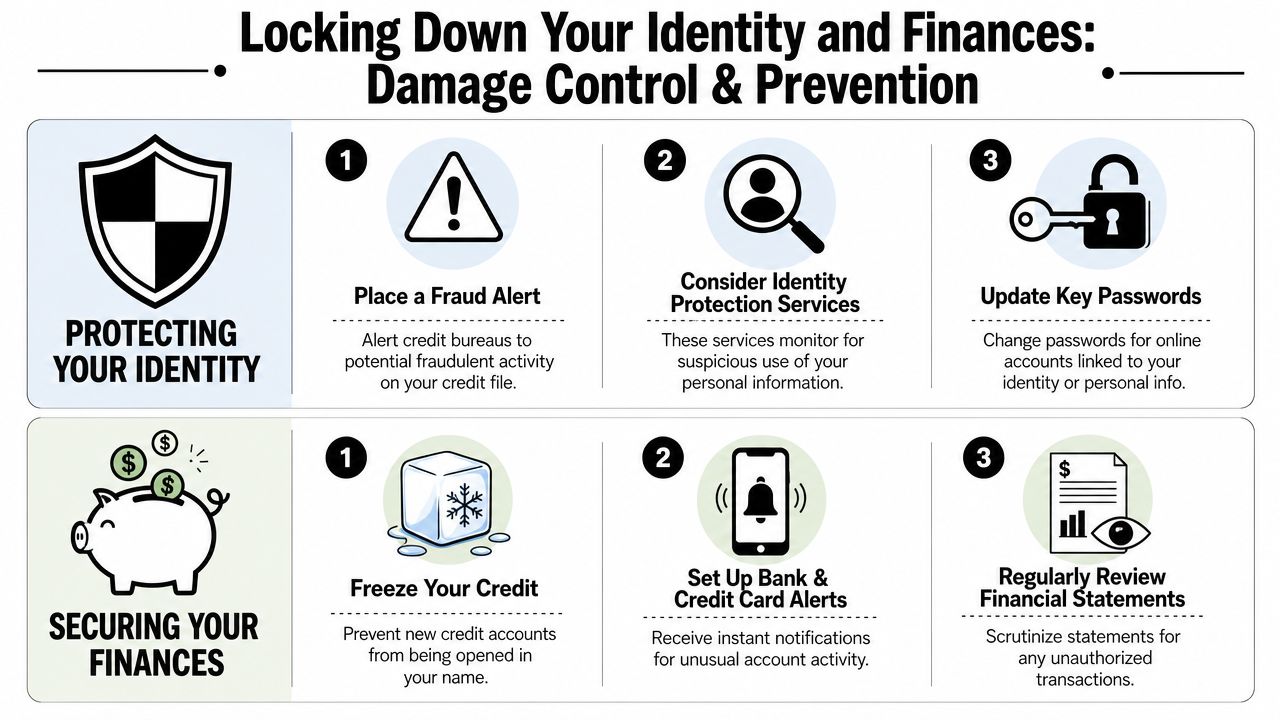
Once the immediate reporting is done, switch from reaction to containment. The thief wanted more than a plastic card. They wanted a shortcut into your financial life and online identity.
Fraud alert or credit freeze
People confuse these constantly. Don’t.
A fraud alert tells lenders to be more careful before opening new credit in your name. It’s useful when you want a lighter control and don’t want extra friction every time you apply for credit.
A credit freeze is stronger. It blocks new credit from being opened unless you lift the freeze. If your license was stolen in a way that suggests deliberate theft, not mere loss, freezing your credit is usually the better move.
Use this quick comparison:
| Protection step | What it does | Best for | Tradeoff |
|---|---|---|---|
| Fraud alert | Warns creditors to verify identity more carefully | Lower-friction precaution | Less restrictive |
| Credit freeze | Restricts new credit opening | Higher-risk theft situations | You must manage the freeze when applying for credit |
If you expect to apply for a loan or apartment soon, a fraud alert may be easier to manage. If your wallet was stolen, your bag was taken, or other personal data was exposed with the license, I’d lean toward the freeze.
Secure accounts that depend on your identity
Contact your bank, card issuers, and any financial institution where your identity details might be used for verification. Tell them your driver’s license was stolen and ask them to note the account for enhanced verification.
Focus on:
- Banking access. Ask how they handle identity verification if someone calls pretending to be you.
- Card issuers. Review recent activity and turn on real-time alerts.
- Insurance and benefits accounts. These often hold personal details criminals use for impersonation.
- Brokerage or payment apps. Thieves may test identity details on less obvious accounts first.
This is also the right moment to change passwords on key accounts, especially email. Email is the control tower for password resets, billing notices, and security alerts.
If a thief gets your identity document and your email, they can do much more damage than if they get either one alone.
If you want a legal perspective on how seriously identity theft can escalate, Gerald Miller P.A. explains the criminal dimension of identity theft in a way that helps people understand why fast reporting matters.
Watch for signs that show up later
The FTC guidance summarized by Aura notes that warning signs can include unauthorized tickets, traffic stops, or new credit accounts, and that scanner tools can help reveal whether a stolen license number is circulating online. The FTC-focused identity-theft warning guide from Aura is useful here because it highlights how delayed the warning signs can be.
That delayed pattern is why people get blindsided. They replace the card, assume the issue is over, and only discover the fraud later.
For broader prevention habits, this overview of identity theft protection basics is a useful refresher while you’re tightening everything up.
Preparing Your Documentation for a Smooth Process
Walking into a police station or DMV without the right details wastes time you don’t have. Build a simple evidence packet before you go.
What to bring for the police report
Write down the theft timeline in plain language. Don’t try to sound formal. Be accurate.
Include:
- Your identifying details. Full name, current address, contact number, and if known, your license number.
- Last confirmed possession. The last place and time you remember having the card.
- The suspected theft setting. Pickpocketing, burglary, stolen wallet, car break-in, or missing after a transaction.
- Related items. Debit cards, insurance card, work badge, passport card, mail, or anything else taken at the same time.
- Early warning signs. Suspicious texts, account lockouts, weird charges, or calls from collectors.
If the officer gives you a report number before the final report is ready, keep that number immediately in your phone and on paper.
What to bring for the DMV
Most DMVs want enough evidence to confirm you are who you say you are, even when your primary photo ID is the item that disappeared. Gather what you still have. Birth certificate, passport, Social Security documentation, proof of address, and any secondary identification can all help depending on the state.
Some people hit a snag here because they assume a police report is always required to start any fraud process. That isn’t universally true. While a police report is the highest standard, some jurisdictions like New York’s DMV and the national FTC portal allow individuals to begin the fraud reporting process with other documentary evidence, which can prevent delays if a report isn’t immediately available, as noted by the New York DMV fraud reporting guidance.
That matters if you’re waiting on a report copy, traveling, or dealing with a delayed police response.
Keep one clean file
Create one folder, digital or physical, with:
- Police documents
- DMV receipts and replacement confirmation
- Names of officials you spoke with
- Dates and times of calls
- Any fraud alerts or financial notices
If your situation starts touching card fraud or misuse of financial instruments, this overview of Michigan credit card theft and fraud laws gives useful context on how these cases can overlap.
A clean file makes disputes easier. It also helps if an employer, landlord, insurer, or court ever asks you to document what happened.
Navigating State Rules and Replacement Timelines
State rules are all over the place. People get tripped up because they assume the process is standardized. It isn’t.
Procedural differences between states are significant: California requires a MyDMV login for online duplicates, Minnesota mandates a notarized form, and Texas requires a physical police report copy. These variations contribute to a 40% higher error rate for applicants assuming uniform processes, according to the process summary referenced in this state replacement procedures video resource.
That tracks with what I see in practice. People show up with the wrong documents, use the wrong channel, or miss a state-specific condition and end up delaying their own replacement.
Why assumptions cause delays
Some states prioritize online convenience. Others care more about in-person identity proof. Some issue temporary credentials quickly. Others rely on mailed replacements and stricter paperwork.
One detail can hold up the entire process. In California, address timing matters before an online duplicate request. In Minnesota, notarization changes the prep work. In Texas, missing the physical police report means you’re not done.
State driver’s license replacement requirements 2026
| State | Key Requirement | Average Fee | Estimated Timeline |
|---|---|---|---|
| California | MyDMV login required for online duplicate requests, plus a 3-day address processing window before requesting | Not provided in verified data | Not provided in verified data |
| Minnesota | Notarized confirmation of identity form required, and a fresh photo deadline applies for temporary cards printed with old photos | Not provided in verified data | Temporary card rules include a 30-day fresh photo deadline |
| Pennsylvania | Mail-in DL-80 form used for replacement | Not provided in verified data | 15-day interim license |
| Texas | Must bring a physical copy of the police report for stolen card replacement | Not provided in verified data | Not provided in verified data |
| Oregon | Replacement process requires official reporting first | $39.50 | 2 to 3 weeks |
Texas is especially clear on theft-specific replacement. The Texas Department of Public Safety FAQ on lost or stolen driver licenses says you must bring a copy of the police report to the DMV office as proof before a new license can be issued.
Oregon is a good example of a state where practical details matter. The process includes a $39.50 replacement fee, the online receipt can act as a temporary license, and the new card generally arrives in 2 to 3 weeks, based on this Oregon replacement summary.
My recommendation
Don’t rely on generic advice from a friend, a forum comment, or a national checklist. Use your state’s own replacement page and verify the exact channel, document list, and theft-specific rules before you leave home.
A stolen license is stressful enough. Don’t add an avoidable second trip.
Proactive Monitoring Your Digital Footprint
Replacing your license closes one problem. It doesn’t close the larger one. Your license number and identity details can keep circulating long after the physical card is gone.
That’s where OSINT, or open source intelligence, becomes useful. OSINT is the disciplined practice of finding what information about you is exposed across public-facing sources, breach traces, public records, social platforms, and account fragments scattered online.
Why post-replacement monitoring matters
Many people think identity theft is obvious. It often isn’t. A criminal may test your data subtly first, use it in low-visibility fraud, or build a synthetic profile around your information before trying anything larger.
The FTC guidance summarized earlier notes that warning signs such as unauthorized tickets or new credit accounts often appear long after the theft, and scanner tools that search the web can provide early warning when stolen license details are circulating. That’s exactly why ongoing monitoring matters.
The impact can reach beyond banking. Identity misuse can affect:
- Job prospects if bad data appears in background-related records
- Personal safety if your address or identifying details spread widely
- Gaming profiles if thieves link your identity to compromised gaming accounts
- Dating app trust if someone uses your details for catfishing or fake verification
- Reputation management if impersonation accounts start appearing
What to look for
You’re trying to answer a practical question. Where is my information showing up that I didn’t intentionally place there?
Check for:
- Unexpected public profiles tied to your email, phone number, or username
- Breach exposure involving credentials linked to your identity
- People-search listings showing excessive personal detail
- Fake or duplicate accounts on social, gaming, or dating platforms
- Strange references in public records that need review
If you want a stronger understanding of the methods behind this kind of monitoring, these top tools for monitoring your digital footprint and keeping your data safe are a useful starting point.
A replacement card restores your ability to drive. It does not tell you where your identity data has spread.
That’s the difference between recovery and real protection.
Your Long-Term Identity Protection Checklist
Treat this as your maintenance routine, not a one-time fix.
Keep these habits in place
- Keep your fraud controls active. If you placed a credit freeze, leave it in place unless you need to lift it for a specific application.
- Review account activity regularly. Don’t just scan balances. Read line items, alerts, and mailed notices.
- Protect your email first. Use a strong unique password and tighten sign-in security because email controls your resets and recovery links.
- Save every theft document. Police report, DMV records, receipts, and notes from calls all belong in one file.
- Watch for delayed identity misuse. Tickets, collection notices, and unfamiliar account activity can appear well after the theft.
- Audit your online exposure. Publicly visible data can fuel impersonation, fraud, romance scams, account takeovers, and reputation damage.
For a broader prevention framework, this guide on how to protect against identity theft is a solid companion resource.
You don’t need to be paranoid. You need to be systematic. That’s how you regain control after a stolen license.
A stolen license can become a long-tail identity problem if you only replace the card and stop there. Run a free check with Digital Footprint Check to see where your personal data may be exposed across public sources, breach traces, social profiles, gaming accounts, dating platforms, and other online footprints. If you want to catch misuse early and protect your privacy, start with the free checker at www.digitalfootprintcheck.com/free-checker.