· Digital Footprint Check · Content Marketing · 19 min read
How Much Does a Username Search Service Cost? a 2024 Guide
Understand username search service cost with our complete guide. Compare pricing models, features, and find the right OSINT tool for your budget and needs.
The username search service cost can range from free for a quick social media check to several thousand dollars a month for a full-blown OSINT platform used by cybersecurity professionals. What you pay is a direct reflection of the depth, speed, and reliability of the data you need to protect your digital life, whether you’re navigating online dating, securing a job, or protecting your gaming accounts.
Understanding the Tiers of Username Search Services
Picking the right username search service is like choosing how you want to travel. You could take the bus, drive your own car, or hire a private jet. Each gets you to your destination, but they serve different purposes, come with different costs, and offer different capabilities for protecting your online identity.
Making the right choice boils down to your mission. Are you trying to stay safe while online dating by verifying someone’s identity? Are you managing your professional reputation to ensure old posts don’t jeopardize your job prospects? Or are you a business conducting corporate due diligence where the stakes are much higher? The answer dictates the level of tool you need.
The Three Main Service Levels
To get a handle on the costs, it helps to break these services down into three main tiers.
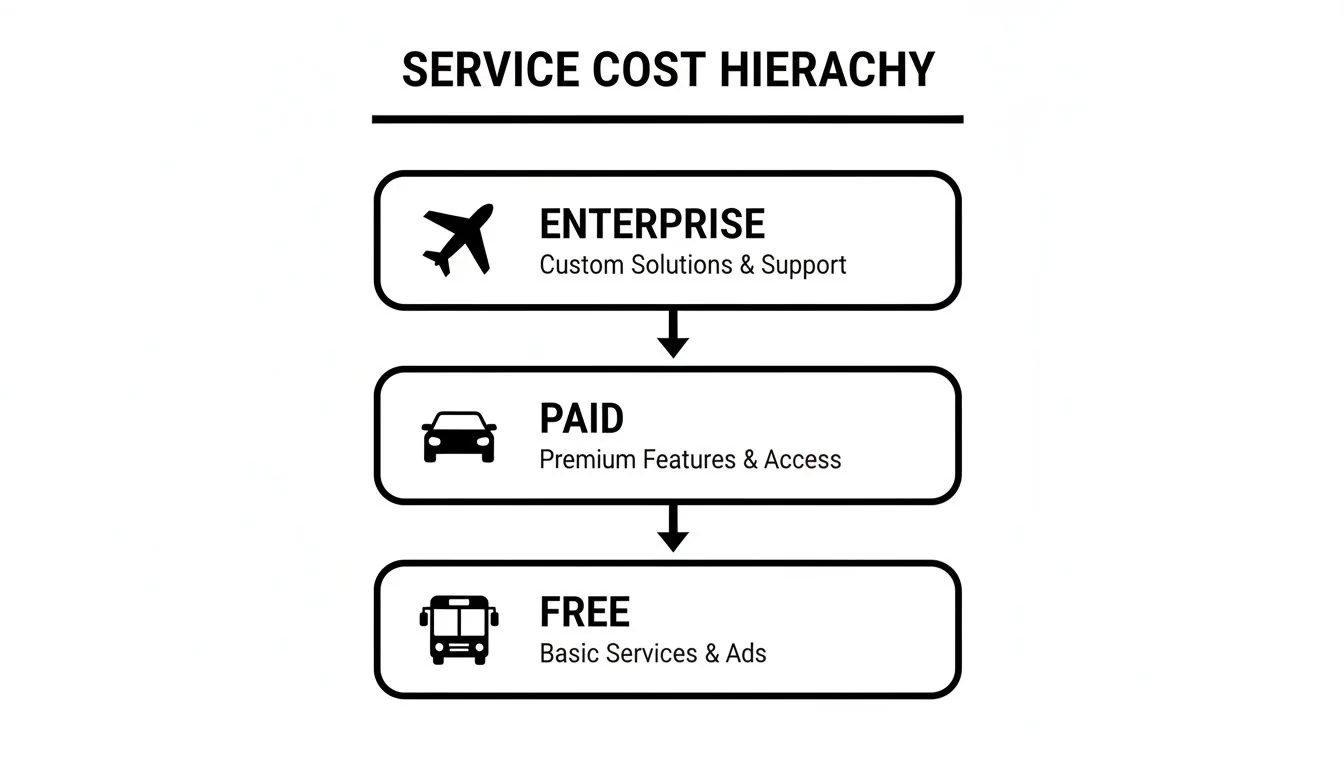
- Free Services (The Public Bus): These tools are like the public bus. They’re accessible to everyone, cost nothing, and will get you to the most common destinations—like finding a public Instagram or Twitter profile. The downside? They run on a fixed route, meaning they only check a limited number of popular websites and often cough up outdated or incomplete information, leaving you vulnerable to romance scams or catfishing attempts based on false negatives.
- Paid Subscriptions (The Personal Car): Stepping up to this tier is like owning your own car. It costs you more upfront, but it gives you the freedom and flexibility to go wherever you want, whenever you want. For a monthly or annual fee, these services run much deeper searches across hundreds of platforms, including niche forums, data breach records, and gaming sites, delivering far more accurate and timely results crucial for effective identity theft protection.
- Enterprise Solutions (The Private Jet): When you’re dealing with high-stakes corporate investigations, cybersecurity threats, or serious brand protection, enterprise platforms are the equivalent of a private jet. They offer incredible speed, access to exclusive data sources (like dark web marketplaces), and powerful analytics. The price is substantial, but so is the capability. You’re paying for mission-critical intelligence on demand to prevent large-scale fraud and manage corporate reputation.
The image below gives you a clear visual of how these service tiers stack up, starting with the accessible free tools and moving up to the powerful enterprise solutions.
This hierarchy makes it clear: as the cost goes up, so does the power, scope, and reliability of the service. This isn’t surprising. The broader market for online information retrieval, like SEO tools, is projected to hit $106.15 billion by 2030. This massive valuation shows just how much value is placed on finding accurate information online.
Username search services are a specialized part of that landscape. They use similar, sophisticated tactics to pinpoint digital identities among trillions of online data points, justifying their pricing tiers. To dive deeper, you can explore more about these market trends and their impact on search costs to get the bigger picture.
To make it even simpler, here’s a quick breakdown of what you can generally expect from each service level.
Username Search Service Tiers at a Glance
| Service Tier | Typical Cost | Key Features | Best For |
|---|---|---|---|
| Free Services | $0 | Basic search on 20-50 popular social sites; Results may be outdated or incomplete; Ad-supported. | Casual users, quick personal lookups, or verifying a single social media handle. |
| Paid Subscriptions | $10 - $100 / month | Search across 300+ sites (forums, gaming); Faster results; Data export; Privacy protection. | Individuals concerned with online dating safety, reputation management, and identity theft. |
| Enterprise Solutions | $500 - $5,000+ / month | Comprehensive search across 1000+ sources including dark web; Advanced analytics; Team collaboration; API access. | Corporations, law enforcement, cybersecurity firms, and brand protection teams. |
Ultimately, the tier you choose will depend entirely on how critical, comprehensive, and fast you need your information to be to protect your digital life.
Deconstructing the Pricing Models
To understand the username search service cost, you must first understand how these services bill you. It’s like picking a cell phone plan—the “best” one depends entirely on your usage habits. Most services use one of three core models, each designed for a different user with a different mission, from personal safety to corporate cybersecurity.

Understanding these structures is critical because they dictate not just your total spend, but the real-world value you get for your money. These services often borrow from common pricing models for lead-data businesses, so understanding those principles can give you an edge. Let’s break down what you’ll find.
Pay-Per-Search: The One-Time Investigation
Think of this as buying a single movie ticket. You pay a one-time fee for one specific, isolated search. It’s the perfect fit for a singular, immediate need, like running a quick check on a potential date you met on a dating app to detect catfishing red flags or verifying a single job candidate’s digital presence before an interview.
- Pros: Cost-effective for rare use, no long-term commitment, and you only pay for what you need.
- Cons: Costs can stack up quickly if your needs increase, and you miss out on continuous monitoring features that are key for ongoing identity protection.
This is the go-to for individuals or small businesses with occasional, well-defined search needs.
Key Takeaway: The pay-per-search model offers precision and control for one-off tasks. You won’t get stuck paying for a tool you don’t use regularly. It’s the right choice for targeted, infrequent digital reconnaissance for personal safety or reputation checks.
Subscription Plans: The Continuous Monitor
A subscription is like having a streaming service for your digital safety. You pay a recurring fee, typically monthly or annually, for continuous access. This model is built for anyone who needs to perform regular checks—a parent monitoring their child’s online activity for signs of cyberbullying, a professional managing their online reputation for job prospects, or an individual proactively watching for signs of identity theft.
Subscription tiers almost always vary. Paying more unlocks more searches, access to deeper data sources like gaming forums or data breach records, and advanced features. If you’re weighing your options, our guide on how to compare OSINT tools can help you determine which subscription level offers the best value for your security needs.
Custom Enterprise Plans: The Bespoke Security System
For large organizations, cybersecurity firms, or legal teams, off-the-shelf plans don’t suffice. Enterprise plans are the equivalent of a bespoke security system, custom-built to handle specific, high-stakes challenges like large-scale fraud detection or brand reputation management. These plans are tailored to the organization’s unique needs, often including:
- High-Volume API Access: For integrating the service’s search power directly into their own in-house software.
- Team Collaboration Features: So multiple investigators or analysts can work on cases together seamlessly.
- Dedicated Support and SLAs: Guarantees of uptime and reliability for mission-critical operations.
Pricing is negotiated directly and reflects the massive scale and specialized features required. This model is a serious investment in institutional-level cybersecurity and intelligence gathering.
What Drives the Price of an OSINT Tool?
Ever wondered why one username search tool is free while another costs thousands a year? The price isn’t arbitrary. It’s a direct reflection of the power, depth, and speed of the intelligence you receive—factors that directly impact your ability to prevent scams, protect your identity, and manage your reputation.
Think of it like this: a free tool is a quick Google search, skimming the surface. A premium service is like hiring a private investigator with access to exclusive databases. You get what you pay for, and understanding what’s under the hood helps you decide if you need a basic check or a deep-dive investigation.
Depth and Breadth of Data Sources
The single biggest factor driving cost is where the tool looks for information. A basic service might just scan the usual suspects: Instagram, X (formerly Twitter), and Facebook. That’s fine for a casual lookup, but it barely scratches the surface of a person’s digital life.
Premium services justify their higher cost by digging into a much wider, more obscure digital world. This often includes places like:
- Niche Forums and Communities: Specialized forums for hobbies, professions, or unique interests where real context—and potential red flags—are found.
- Gaming Networks: Profiles on platforms like Steam, Xbox Live, or PlayStation Network can reveal a person’s associations, behavior, and even the value of their digital assets, a key area for gaming account security.
- Data Breach Records: These tools cross-reference a username against massive databases of compromised credentials to see if it has been exposed in a breach, a critical step in preventing identity theft.
- Dark Web Mentions: The most advanced tools monitor illicit marketplaces for any mention of a username, a vital feature for spotting identity theft before significant damage occurs. For a deeper look, check out our guide on the best dark web monitoring services to see the tech involved.
Accessing and constantly indexing these hard-to-reach sources requires massive technical resources, and that cost is passed on to the user.
Speed and Freshness of Data
Another huge difference is how the tool gets its data. Most free or cheap services rely on cached data—a snapshot of information that could be days, weeks, or even months old. It’s fast and cheap for the provider, but it can give you dangerously outdated results, leading to a false sense of security.
In contrast, top-tier platforms perform real-time searches. They query the sources directly when you hit “search” to pull the most current information possible. This is non-negotiable for time-sensitive work, like vetting a date before you meet them or responding to an immediate security threat. This live-query capability costs more in processing power and API access, which is why you pay more for it.
Real-World Impact: Imagine you’re a recruiter. A cached report might show a candidate’s clean, professional profile. But it misses the toxic comments they posted on a forum just yesterday. A real-time search catches everything, potentially saving your company from a disastrous hire that could damage its reputation.
Sophistication of Analysis
Finally, what the tool does with the data it finds is a major price differentiator. A basic tool will just dump a list of links on you. It’s on you to sort through it all.
More advanced platforms use technology to make sense of the information and connect the dots for you. This can include AI-driven features like sentiment analysis to gauge the tone of online comments or entity recognition to identify links between different accounts that seem unrelated.
For corporate clients, some services even package findings into legally admissible reports formatted for court proceedings. That kind of feature commands a serious premium because of the legal and compliance work involved. The more raw data the tool turns into actual intelligence, the more you can expect it to cost.
Free vs Paid: What You Really Get

The gulf between free and paid username search tools isn’t just about price—it’s a chasm separating reliability and risk. While “free” is always tempting, the true username search service cost often comes in the form of bad data, missed threats, and compromised privacy.
Imagine you’re a hiring manager checking out a top candidate. A free tool gives you the all-clear on their social media, but it misses a string of toxic comments they made on a niche gaming forum last month. Why? Because free services often run on old, cached data. Making a critical hiring decision on that incomplete picture is a recipe for disaster that could harm your company’s reputation.
The same risk applies to online dating safety. A free search might offer a false sense of security, failing to connect the dots and identify a potential romance scammer or catfisher. It leaves you exposed.
The Hidden Price of Free Services
So, what’s the real cost? Often, it’s your own data. Many “free” services make their money by logging your searches, tracking your activity, and selling that aggregated data to marketers. In this model, you’re not the customer—you’re the product.
When you use a free tool for a serious investigation, you’re trading your privacy for incomplete, unreliable results. It’s a trade-off that’s rarely worth making, especially when personal safety is on the line.
Paid services, on the other hand, have a straightforward business model. Your subscription pays for their access to comprehensive data, real-time results, and robust privacy measures. They have a legal and financial duty to protect your information, not sell it. You can see a similar dynamic when comparing the best free email finder tools to their paid counterparts; the limitations quickly become obvious.
Feature Showdown: Free vs. Paid Username Search Tools
Let’s break down exactly what you get—and what you give up—when choosing between free and paid tools. The differences in their technical capabilities are night and day. Premium services are built for precision, operating in an ecosystem where finding accurate information is a massive industry.
The global SEO market is projected to hit $106.15 billion by 2030, a figure that highlights the immense value placed on cutting through digital noise to find what matters. Paid username search tools are built on that same high-value principle.
This table gives a clear side-by-side comparison:
| Feature | Free Services | Paid Services |
|---|---|---|
| Data Accuracy | Often outdated due to cached data, leading to incomplete results or false negatives. | Real-time queries provide the most current information available for accurate assessments. |
| Comprehensiveness | Limited to a few dozen popular social media sites, missing crucial context from other sources. | Scans hundreds of sources, including niche forums, gaming sites, and data breach records. |
| Privacy Policy | May log and sell user search data to advertisers or other third parties. | Strong privacy policies with a commitment to not sharing or selling your search activity. |
| Customer Support | Typically nonexistent, with only a basic FAQ page for troubleshooting. | Dedicated customer support teams available to assist with complex searches and technical issues. |
Ultimately, free tools have their place for a quick, casual search where the stakes are low. But for any task that involves personal safety, professional reputation, or financial security, a paid service isn’t a luxury—it’s a necessary investment in accuracy and peace of mind.
For those just getting started with online investigations, our guide on OSINT tools for beginners provides a great foundation for understanding the landscape.
How to Choose the Right Tool for Your Mission

Now that we’ve broken down the different pricing models and what drives costs, you can start hunting for a service that fits your needs without breaking the bank. The real trick is matching your specific mission—whether it’s online dating safety, reputation management, or scam prevention—to the right tool and price.
Remember, the best username search service cost isn’t just the lowest number you can find. It’s about getting the most value for what you need to accomplish.
Let’s walk through a few real-world scenarios. Each case involves someone with different goals, budgets, and stakes, showing how to connect your needs to the right kind of service.
Case Study 1: The Cautious Online Dater
Mission: Someone using dating apps wants to verify a potential match before meeting in person. The goal is to detect catfishing, check for obvious red flags, and ensure their personal safety.
- Goals: Confirm the person’s identity across multiple social platforms and look for inconsistencies in their stories or profiles.
- Budget: Modest, aiming for $15-$30 per month.
- Information Needed: A comprehensive list of public profiles on social media, forums, and other platforms. Real-time data is essential to avoid being deceived by a recently created fake profile.
Recommendation: A mid-tier subscription plan is perfect here. It provides broad, real-time coverage across hundreds of sites for a reasonable monthly fee, offering peace of mind and tangible protection against romance scams. A pay-per-search model could work for a single check, but a subscription is better for someone actively dating.
Case Study 2: The Diligent Recruiter
Mission: A corporate recruiter is vetting a top candidate for a senior management role. They need to confirm the candidate’s professional background and ensure their public digital footprint aligns with company values to protect the brand’s reputation.
- Goals: Verify professional history and uncover any public red flags, like toxic behavior, hate speech, or undisclosed conflicts of interest.
- Budget: Flexible. This is a business expense, and preventing a bad hire is more important than saving a few dollars.
- Information Needed: A deep, real-time search that hits professional networks, public records, news archives, and even obscure forums. The data must be accurate and up-to-the-minute.
Recommendation: This mission demands a higher-tier paid subscription or a high-credit report from a top-shelf, pay-per-search service. The cost is easily justified by the need for legally defensible, accurate data to prevent a bad hire—a mistake that could cost the company thousands in lost productivity and reputational damage.
Questions to Ask Before You Subscribe
Before you pull out your credit card, ask these tough questions. This simple checklist will help you find a tool that actually delivers on its promises.
- What specific platforms do you search? Demand a list. Don’t fall for a vague promise of “hundreds of sites.” Ensure it covers areas relevant to your needs, like gaming sites or professional forums.
- How fresh is your data? You need to know if they’re running searches in real-time or just pulling from a cached database that might be weeks out of date.
- What is your privacy policy? Get clarity on whether they log, share, or sell your search history. Your own digital privacy should be a top concern.
- How are search credits or limits defined? Understand exactly what counts as one “search” so you don’t get hit with unexpected charges. For a deeper dive on tracking down specific accounts, our guide on how to use a username tracker can give you more context.
Why Your Digital Safety Is a Worthy Investment
It’s easy to look at the username search service cost and see it as just another monthly bill. But that’s the wrong perspective. This isn’t an expense; it’s an investment in your security, your reputation, and your peace of mind.
The real cost isn’t what you pay for a subscription. The real cost is the potential damage from not knowing what’s out there.
A good OSINT service connects the dots for you, providing tangible, real-world protection. We’re talking about preventing devastating financial loss from a sophisticated romance scam, securing that dream job by ensuring your digital footprint is squeaky clean, or protecting a gaming account worth thousands of dollars from being hijacked.
Each of those nightmare scenarios comes with a price tag far higher than any monthly fee.
The true measure of a search service’s value lies in the crises it helps you avert. Proactive monitoring is always cheaper than reactive damage control.
Once you grasp the basics of identity theft protection, you see why this is so critical. You can’t afford to wait for a problem to find you first. Take the first step to securing your digital life—it doesn’t have to cost a thing to get started.
Ready to see what your footprint actually looks like? Get a foundational overview of your online presence by using our free, secure tool at www.digitalfootprintcheck.com/free-checker.
Got Questions? We Have Answers
Diving into the world of username searches and OSINT tools can feel a little confusing at first. Let’s clear up some of the most common questions people ask about how these services work, what they cost, and how to use them the right way.
Are Username Search Services Legal to Use?
Yes, absolutely. A legitimate username search service sticks to finding information that’s already in the public domain. Think of it this way: all the data they find is from publicly available sources—stuff anyone could technically dig up on their own if they had enough time and patience. The real value is that these tools do the legwork for you, pulling all those scattered pieces together in seconds.
But here’s the critical part: while the tool itself is legal, how you use the information matters. Using it for anything malicious like harassment, stalking, or discrimination is illegal and flat-out wrong. The right way to use these services is for responsible purposes, like checking on a new date for safety reasons or doing professional due diligence.
How Is This Different from a Google Search?
Think of a regular Google search like casting a single fishing line into the vast ocean. You might catch something, but you’re only scratching the surface. Google is amazing at indexing public web pages, but it often misses what’s hidden behind social media logins, buried deep in niche forums, or tucked away on gaming platforms.
A dedicated username search service is more like using a specialized, deep-sea trawling net. It’s designed to query hundreds of specific sources all at once—including many places Google can’t easily reach. You get a much more focused and complete picture of where a username has been used across the internet.
What Should I Do with the Information I Find?
The whole point is to gain awareness so you can make smarter, safer decisions—not to start a confrontation.
Here’s how that plays out in the real world:
- For personal safety: If you run a search on a new acquaintance from a dating app and find major red flags (like multiple fake profiles), you use that knowledge to quietly and safely create distance, preventing a potential romance scam.
- For reputation management: You search your own username and find some old, embarrassing posts that could hurt your job prospects. Now you know what to focus on to clean up your digital footprint.
- For professional vetting: As a recruiter, you use the findings to inform your hiring decision, sticking to your company’s official policies and protecting your brand.
It’s all about using information to protect yourself, your family, or your business.
Protecting your online identity starts with understanding what’s out there. The first step is usually the biggest one, and Digital Footprint Check offers a no-risk way to get started.
Take control of your digital life today with a free, secure scan at www.digitalfootprintcheck.com/free-checker.