· Digital Footprint Check · Content Marketing · 14 min read
Bank of America Fraud Alert: Verify & Secure Your Money
Received a Bank of America fraud alert? Learn to verify if it's real or a scam. Our guide shows how to confirm alerts & protect your money.
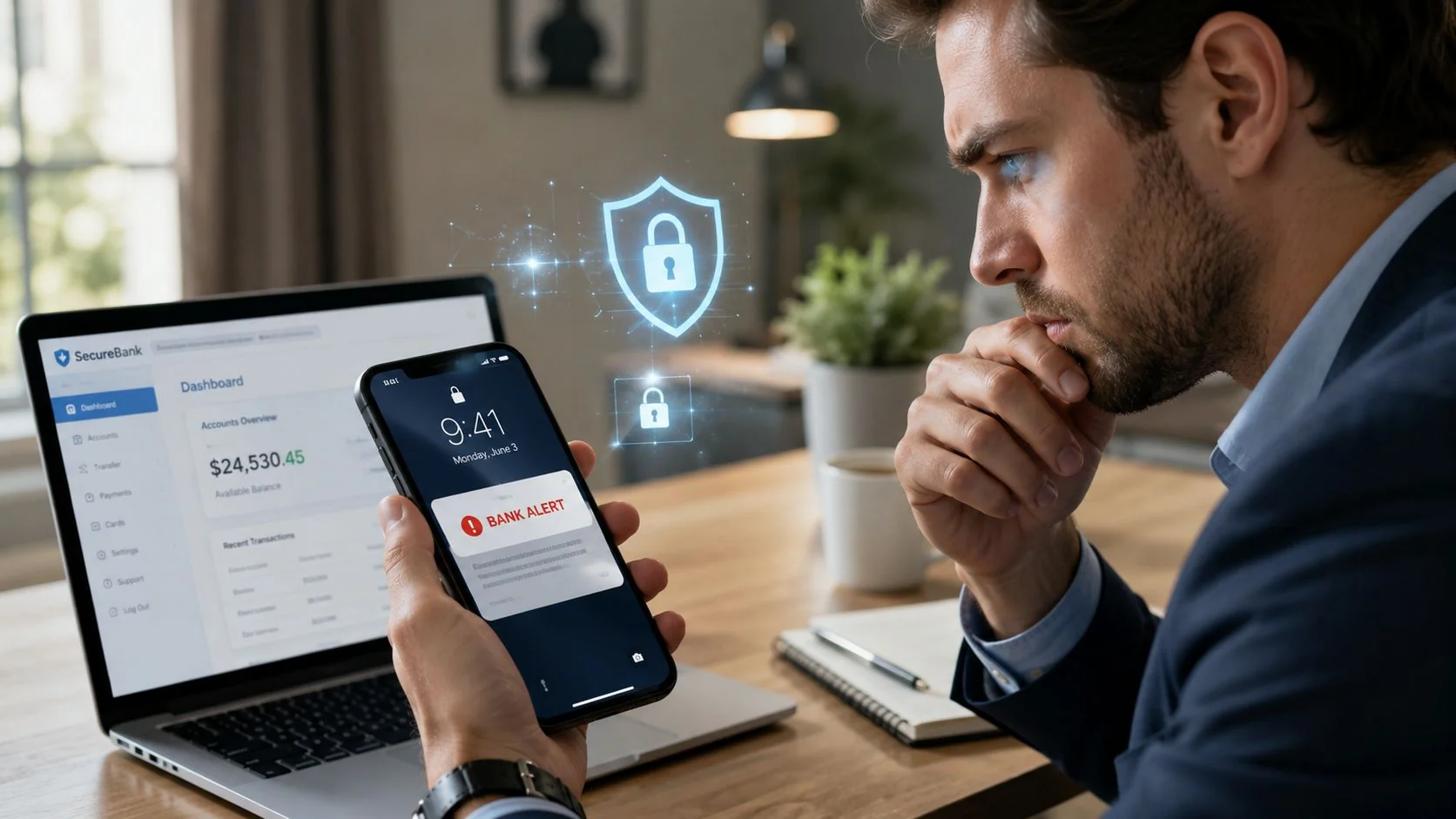
Your phone lights up with a text that says Bank of America spotted suspicious activity. It wants you to confirm a charge, call a number, or tap a link right away. Your pulse jumps because the message could be real, and waiting feels risky.
That tension is exactly why these alerts work so well for both banks and scammers. Real alerts are meant to help you react fast. Fake ones are built to make you panic fast.
The stakes around bank controls and customer communications aren’t abstract. On July 11, 2023, the CFPB announced an enforcement action requiring Bank of America to pay over $250 million in penalties and consumer redress for various issues, which reflects the intense scrutiny banks face around account management and customer communications, as described in the CFPB announcement about Bank of America enforcement.
If you’re staring at a suspicious alert now, focus on one thing first: slow down enough to verify it through channels you already trust. If the text came from an unknown number, you can also review guidance on how to find out unknown numbers before you engage with anything.
That Dreaded Text Just Arrived What Now
A typical message looks believable because it borrows the tone of a fraud warning you expect from your bank. It mentions suspicious activity. It says your account may be locked. It tells you to act now.
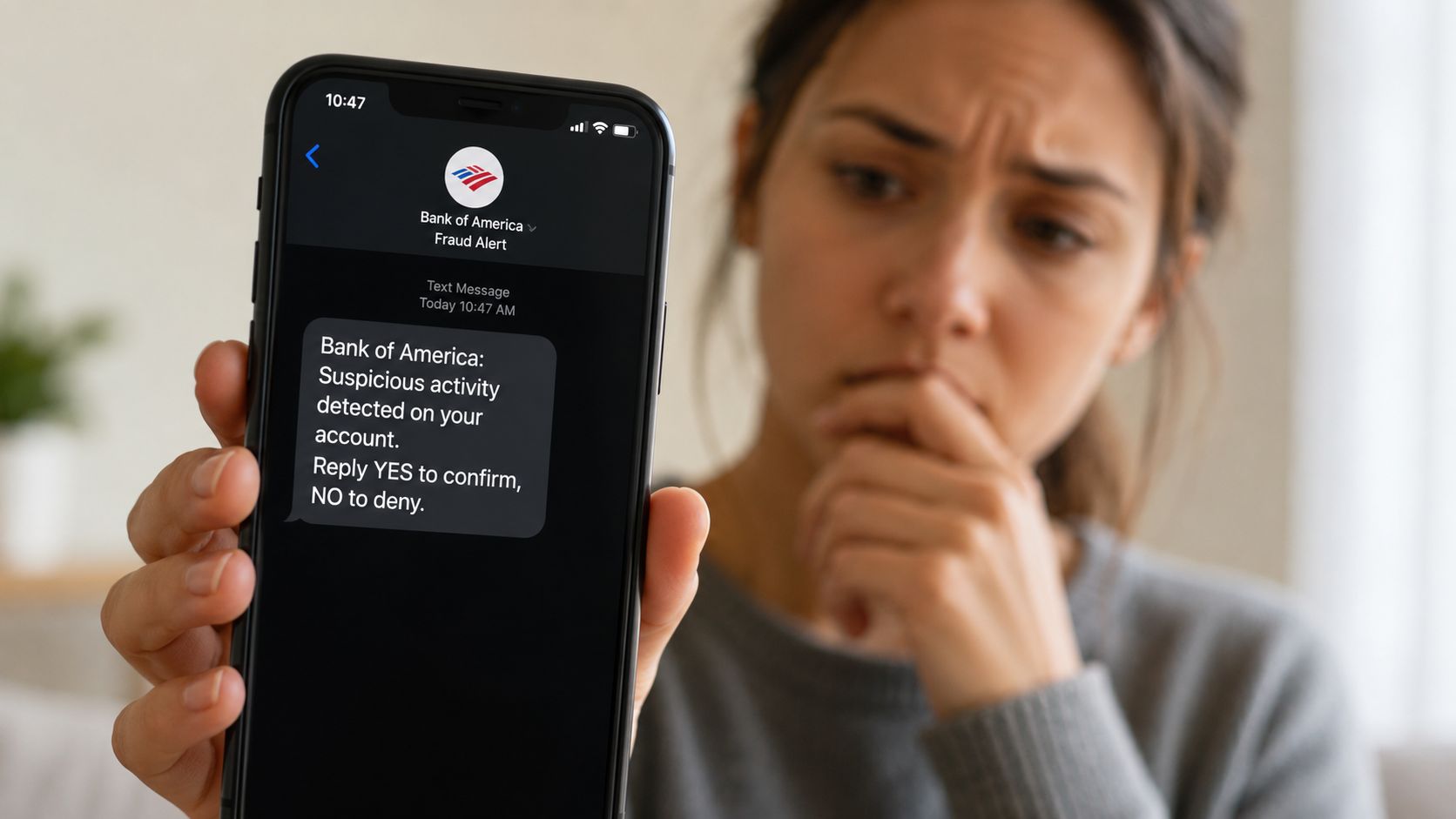
That’s where people get trapped. The message doesn’t need to be perfect. It only needs to create enough fear that you stop checking and start reacting.
The first move matters most
If this just happened, don’t reply, don’t click, and don’t call any number inside the message. Treat the text as untrusted until you confirm it another way.
Practical rule: A real security event doesn’t become safer because you respond through a suspicious text. Verification has to happen outside the message.
A lot of people assume the question is whether the alert itself is real. The better question is whether the communication path is real. A real account issue can still arrive inside a fake text. Attackers know that if they catch you during a genuine moment of concern, you’ll be more likely to trust them.
Why this feels harder than it should
Banking customers now expect rapid notification, and criminals exploit that expectation. If you regularly get account notices by text or app, a fake alert blends into your normal routine.
That’s why this guide focuses on the part many articles skip. It’s not just about turning alerts on. It’s about understanding how scammers try to defeat your judgment after the alert arrives, then locking down both your bank account and your broader identity if the situation is bigger than one card transaction.
Understanding Legitimate Bank of America Fraud Alerts
A legitimate Bank of America fraud alert usually starts after the bank detects activity that falls outside your normal account pattern or after a sensitive profile change hits the account. The alert may arrive by app notification, text, or email. Its job is to pull you back into a secure review process you control.
That distinction matters.
Scammers study real bank alerts, then copy the wording, timing, and transaction language closely enough to get a rushed response. The alert itself may describe a real concern, but the scammer’s goal is to hijack the path you use to respond. That is how a simple fraud check turns into account takeover, password theft, or a broader identity problem.
What a legitimate alert is actually asking you to do
A real alert is trying to get you to verify recent activity or review an account change through channels you already trust. In practice, that means opening the Bank of America app yourself, typing the official website into your browser yourself, or calling a number you already saved or pulled from the back of your card.
The message may mention a card purchase, login attempt, address change, or check order. Those details can be legitimate. They can also be copied into a fake text by someone who wants you reacting before you think.
Process is the key test. If the message pushes you into its link, its phone number, or a live conversation with a stranger, treat that as a risk sign.
Details worth saving before you are under pressure
Bank of America tells customers to report suspicious texts by forwarding them to 7726 and to send screenshots to abuse@bankofamerica.com. Save those now. Do the same with the fraud number you trust for your account, whether that is the number on your card or one you verified through the bank directly.
Here is the short list to keep handy:
- Report suspicious texts: Forward to 7726
- Send screenshots: Email abuse@bankofamerica.com
- Use a verified bank number: Call the number on the back of your card or one you have already confirmed through your account materials
A saved contact reduces bad decisions.
What should reassure you, and what should not
A polished message is not proof. Familiar branding is not proof. Even a text that arrives right after a real purchase is not proof, because criminals often send alerts in bulk and catch customers during normal account activity.
What does help is a clean verification path that stays inside trusted systems. If you sign in through the official app and see the same alert there, that is useful. If nothing appears in your account, or the text tries to keep you on the phone while asking for one-time codes or login details, assume you are dealing with social engineering.
That is the part many people miss. Fraud alerts do not just protect you from card misuse. They also create an opening that criminals use to collect enough information for wider abuse. If anything about the event suggests your information may be exposed beyond one transaction, review these signs your identity has been stolen and widen your response.
The same caution applies outside banking. Anyone who is emotionally invested in getting quick answers can be pushed into trusting the wrong channel, whether the topic is account security or finding answers about a cheating partner. The tactic is the same. Create urgency, then control the conversation.
Real Alert vs Fake Scam A Side-by-Side Comparison
A convincing scam alert usually does one thing well. It gets you to leave the bank’s channel and enter the scammer’s channel.
That shift poses the chief danger. The text itself may look ordinary. The primary attack starts when the message pushes you to call a number, tap a link, share a one-time code, or stay on the phone while someone “helps” you secure the account. As noted earlier, Bank of America warns about smishing and impersonation. The detail that matters in practice is simple. Fraudsters do not just imitate alerts. They try to take control of the entire verification process.
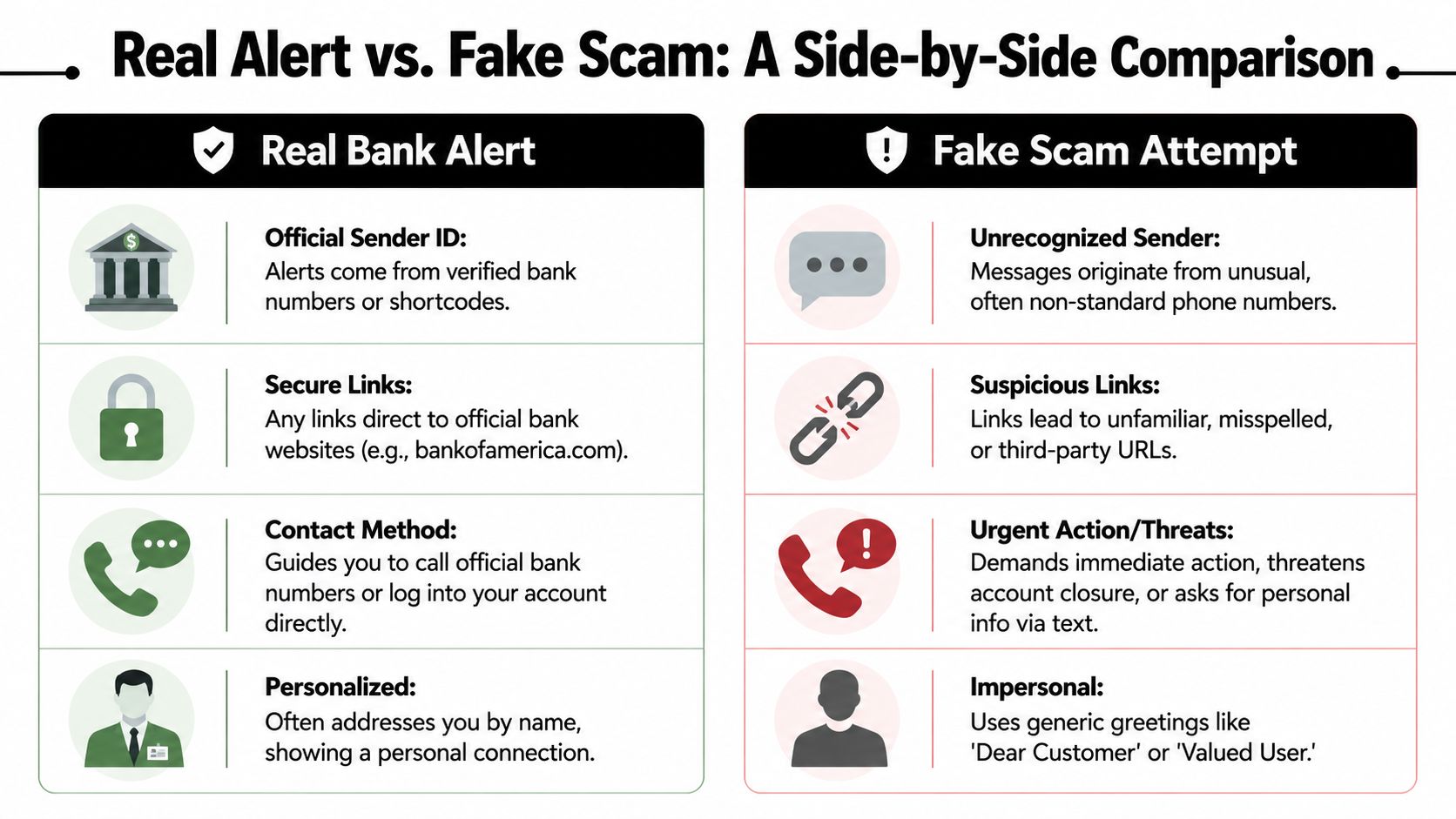
Legitimate vs Scam Bank of America Alert
| Characteristic | Legitimate Alert | Likely Scam Alert |
|---|---|---|
| Where it leads | Back to your normal banking routine, such as checking the app yourself | Into a new path the sender controls |
| Link or number in the message | May refer you to official channels you already know | Wants you to tap a link or call a number supplied in the text |
| Goal of the interaction | Confirm account activity or prompt a safe review | Collect login details, card data, passcodes, or enough information to keep the attack going |
| Tone | Clear and restrained | Urgent, threatening, or overly dramatic |
| Reaction when you pause | Real support can wait while you verify independently | Scammers push for immediate action and dislike delays |
| Handling of security codes | Does not need you to read back one-time passcodes | Often asks you to repeat codes “for verification” |
| Scope of the story | Stays focused on account activity | Expands into unusual claims, secret procedures, or warnings not to trust others |
How scammers defeat the alert itself
The stronger scam is usually conversational. A criminal on the phone can sound calm, trained, and believable. I have seen this pattern repeatedly. They use just enough correct language to lower your guard, then they start steering your choices.
A scammer may say the text was legitimate but the app is delayed. They may claim the fraud team is handling the case manually. They may tell you not to contact the number on the back of your card because it will “restart the investigation.” That is not customer support. That is social engineering.
One rule filters the noise. If anyone claiming to be the bank tries to isolate you from normal verification, end the interaction.
Red flags that deserve immediate suspicion
These signs matter more than perfect grammar or a familiar logo:
- The message supplies the path. It tells you exactly where to click or which number to call.
- The caller wants one-time passcodes. That often means they are trying to log in as you right then.
- They keep you engaged while actions happen in real time. That prevents you from checking the account independently.
- They broaden the incident. A simple card alert suddenly becomes a story about wire fraud, device compromise, Zelle exposure, or an urgent security transfer.
- They tell you who not to trust. Any warning to ignore bank staff, app messages, or standard security prompts is a serious sign of manipulation.
This same pressure tactic appears outside banking. People dealing with deception in personal relationships often run into the same mix of urgency, selective truth, and controlled communication, which is why resources on finding answers about a cheating partner can also sharpen your eye for how manipulation works.
If the message or call suggests someone has more than your card number, review the broader warning signs in this guide on signs your identity has been stolen. A fake fraud alert can be the first visible sign of a larger identity problem.
Your Step-by-Step Emergency Response Plan
When you’re rattled, you need a sequence. Not general advice. A sequence.
Start here and move in order.
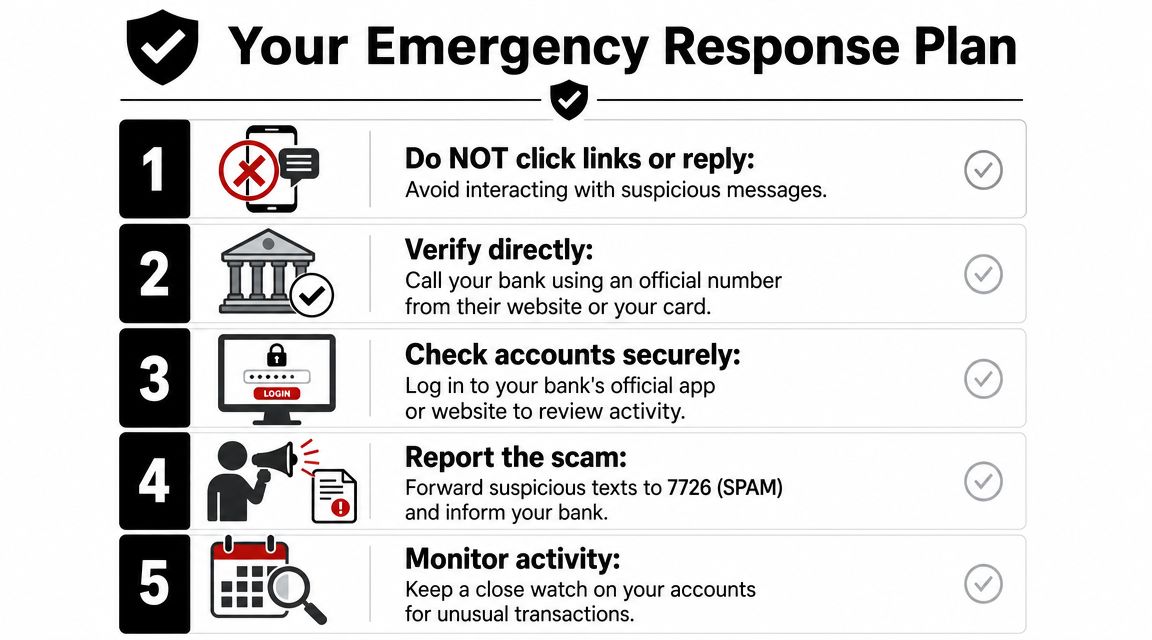
Step 1 Stop interacting with the message
Don’t tap, reply, or call. Leave the message alone.
If you’ve already opened it, that’s not the end of the world. What matters is whether you acted through it. Reading a text is different from following its instructions.
Step 2 Verify through a channel you chose
Open the Bank of America app yourself. Or type the official site into your browser yourself. If you need to call, use the number on the back of your card or the official number you’ve already saved.
At this stage, a lot of scams collapse. They depend on routing you into their channel, not the bank’s.
Step 3 Review your account activity carefully
Check recent transactions, transfers, card controls, profile changes, contact information, and security settings. Look for anything that seems out of place, not just the transaction named in the text.
A fake alert sometimes distracts you while the problem is elsewhere, such as a login change, new payee, or altered contact detail.
This video gives a useful visual reset before you act:
Step 4 Secure the account if anything looks wrong
If fraud appears likely, lock the card in the app if that option is available, report the activity to the bank, and change your online banking password. If you reused that password anywhere else, change those accounts too.
Also review your authentication settings. If your phone number or email was changed without your approval, treat the situation as more than a simple card issue.
Quick check: If you gave away a password, one-time code, or approval for a transfer, respond as if the attacker had account access until proven otherwise.
Step 5 Report the scam and keep watching
Forward suspicious texts to 7726, send screenshots to abuse@bankofamerica.com, and continue monitoring the account. Watch for follow-up attempts. Scammers often come back by text, call, or email after the first contact.
If this kind of incident has you thinking about broader account hardening, it’s worth reviewing practical account takeover prevention habits so one bad interaction doesn’t turn into a larger compromise.
When Bank Fraud Becomes Identity Theft
A lot of people stop at the bank account. That’s a mistake when the attacker may have more than card details.
There’s a critical difference between account-level alerts from your bank and a fraud alert at a credit bureau. Bank of America explains that a bank alert flags suspicious activity on existing accounts, while a credit-bureau fraud alert is designed to stop criminals from opening new lines of credit in your name in its digital banking alerts guidance.
When to escalate beyond the bank
Escalate your response if any of these happened:
- You shared sensitive identity data: Social Security number, full login details, or other personal data tied to lending and verification.
- Your email or phone access was affected: That can weaken account recovery and one-time code security.
- You see signs of broader misuse: Unknown accounts, credit inquiries, or identity questions you didn’t trigger.
- The scam involved more than one service: For example, bank access plus email compromise or unusual password resets elsewhere.
If the issue is limited to one card transaction and the bank handles it promptly, the response may stay at the account level. If your personal data may be exposed, think bigger.
What a credit-bureau fraud alert changes
A bank can watch your existing relationship with that bank. A credit-bureau fraud alert helps slow down new-account fraud by requiring extra verification before lenders open credit in your name.
That’s why Bank of America’s broader identity-theft guidance also points people toward freezing credit with Experian, Equifax, and TransUnion when identity theft is suspected. A freeze is a stronger lock on new credit activity. A fraud alert is a warning flag that tells lenders to verify more carefully.
A simple decision framework
Use this rule of thumb:
| Situation | Bank-only response may be enough | Add credit-bureau action |
|---|---|---|
| Strange card charge only | Often yes | Usually not unless other data was exposed |
| You gave up login credentials | No | Yes |
| Your phone, email, or address changed unexpectedly | No | Yes |
| You suspect identity theft beyond one account | No | Yes |
If you’re unsure whether the incident points to a wider misuse of your identity, this overview of what criminal identity theft is helps clarify when a financial problem becomes a larger identity problem.
Proactive Protection Find and Secure Your Exposed Data
Fraud alerts are defensive tools. They matter. But they don’t solve the upstream problem, which is that scammers often know enough about you to make their messages sound plausible.
They may have your phone number, email, old passwords, address history, or fragments of personal data from breaches and public sources. That information helps them write better phishing texts, impersonate support staff more convincingly, and time their outreach when you’re likely to believe them.
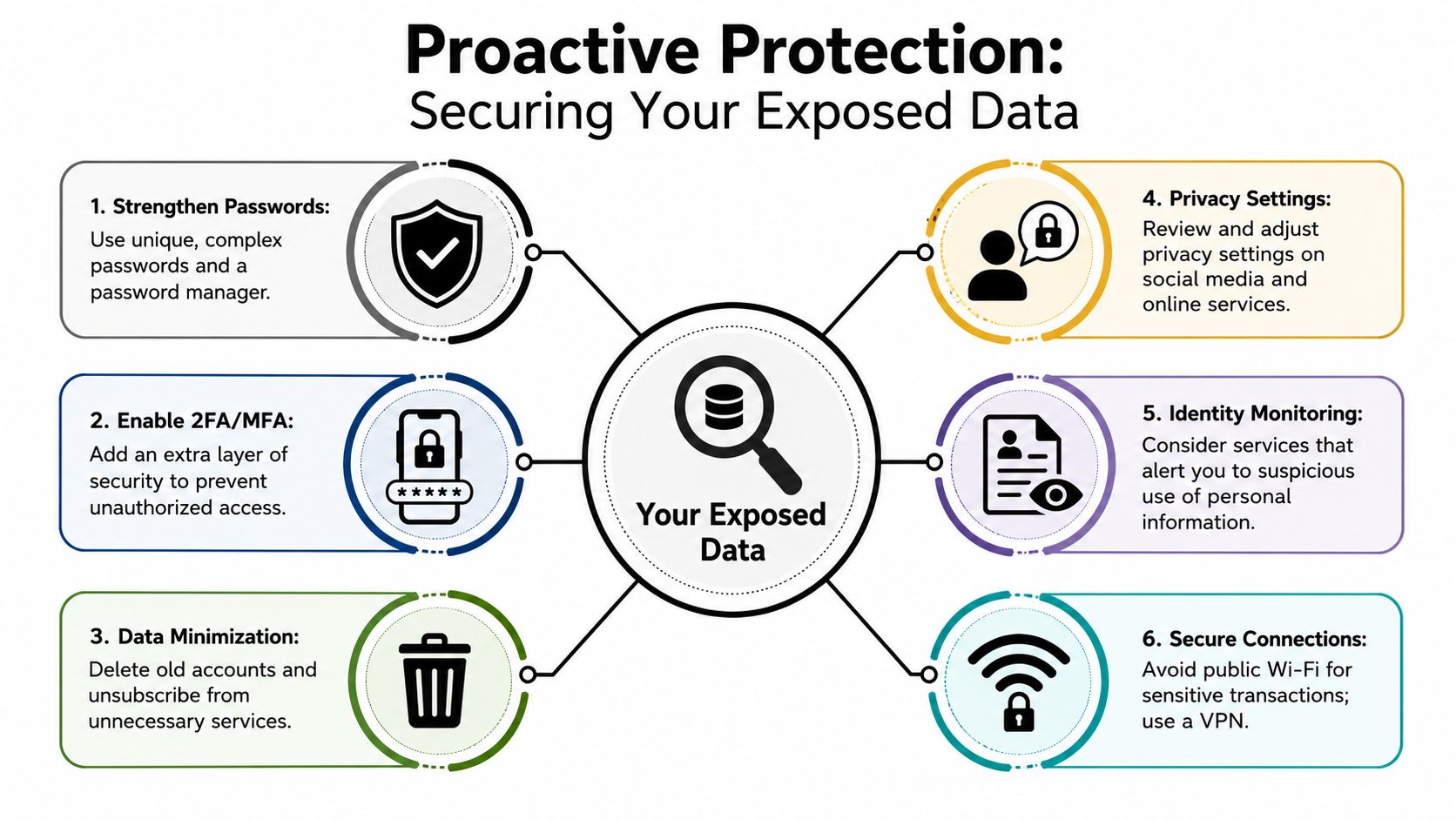
What actually reduces risk over time
The strongest long-term protection comes from reducing what attackers can use and hardening the accounts they target most.
- Use unique passwords: Banking, email, and mobile carrier accounts should never share passwords.
- Turn on MFA where available: Especially for email, banking, and primary cloud accounts.
- Clean up old accounts: Dormant accounts create unnecessary exposure.
- Review privacy settings: Social profiles often reveal details useful for impersonation.
- Protect sensitive logins on trusted networks: Avoid handling high-risk account tasks on public Wi-Fi.
- Watch your identity footprint: Exposure drives credibility in scams.
Why digital footprint awareness matters
Fraud is often considered only after a message arrives. By then, the attacker may already know enough to sound legitimate.
A digital footprint review changes that mindset. It helps you identify what personal data is exposed across public sources, breach-related mentions, and old accounts that still point back to you. That kind of visibility doesn’t just help with bank scams. It also affects job searches, personal privacy, family safety, and the odds that a criminal can convincingly impersonate you online.
The more personal context a scammer has, the less “spammy” the scam feels. Good prevention starts before the first alert.
If you want to understand how your information gets collected and resurfaced online, start with this guide on how to find what data brokers have on you.
A smart next step is to run a check on what information about you is already exposed online. Digital Footprint Check offers a free checker that helps you spot publicly accessible personal data, old accounts, and identity signals that scammers can use to make a fake Bank of America fraud alert look real.