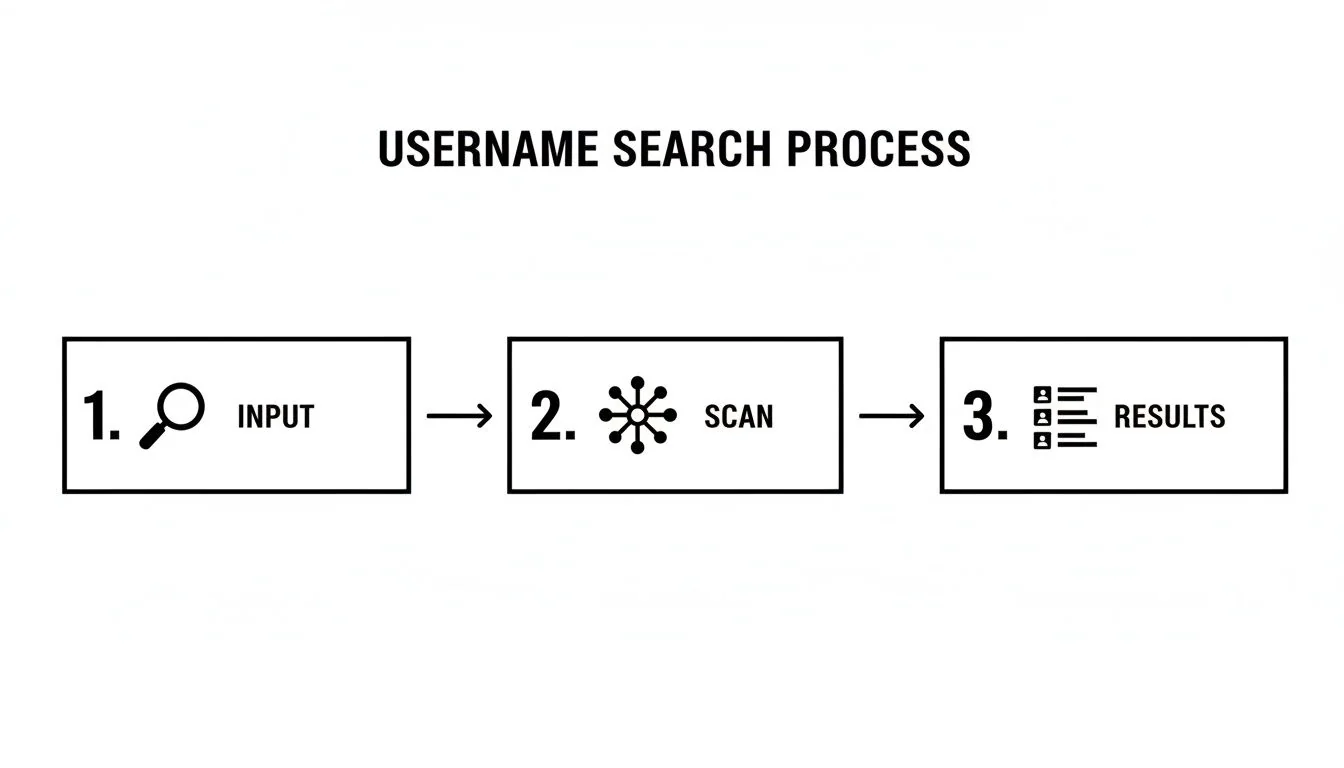
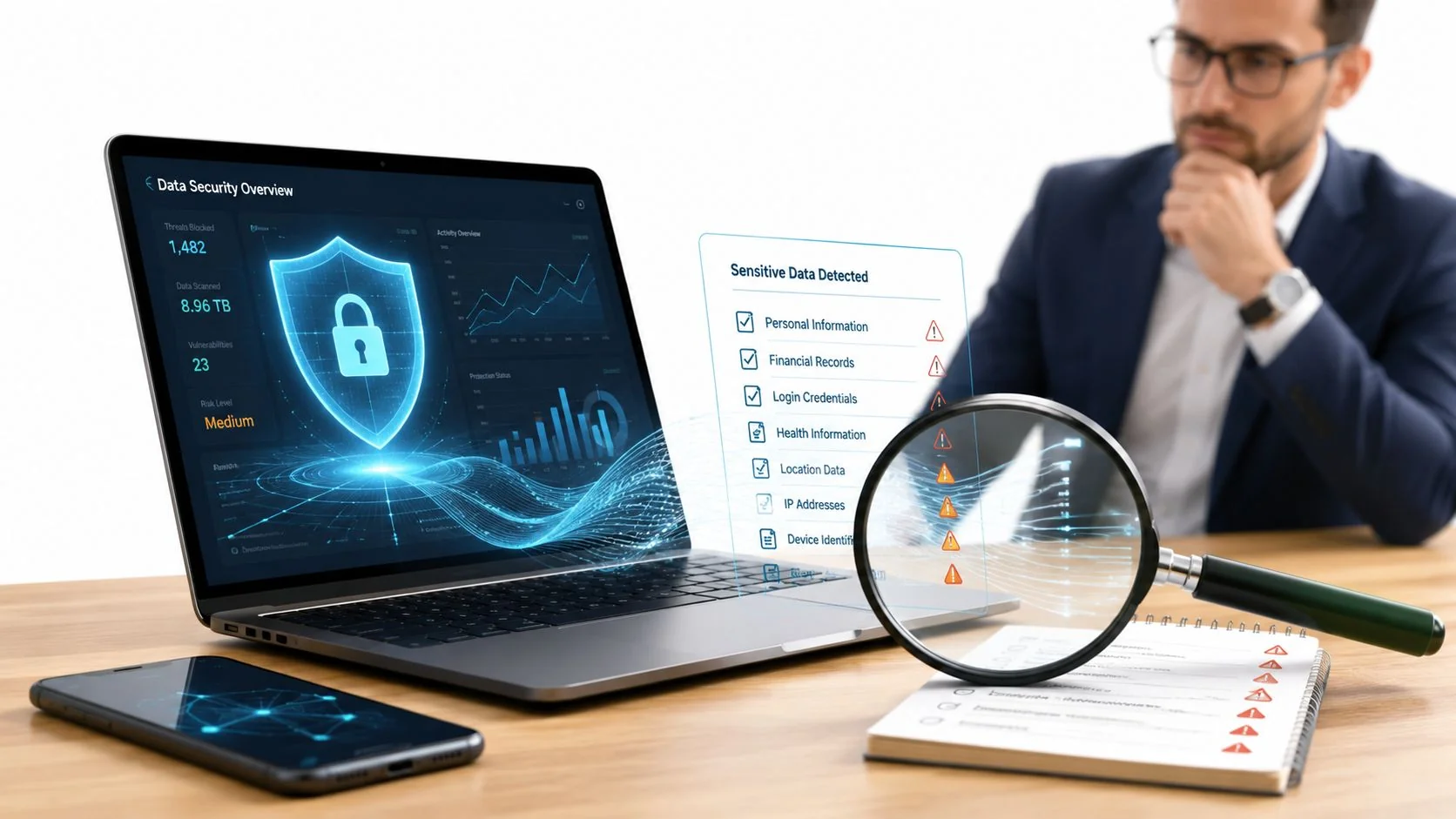
· Digital Footprint Check · Content Marketing · 14 min read
How to Find Out Unknown Numbers: a 2026 Guide
Want to know how to find out unknown numbers calling you? Our 2026 guide covers free search tricks, reverse lookup tools, and how to protect your privacy.
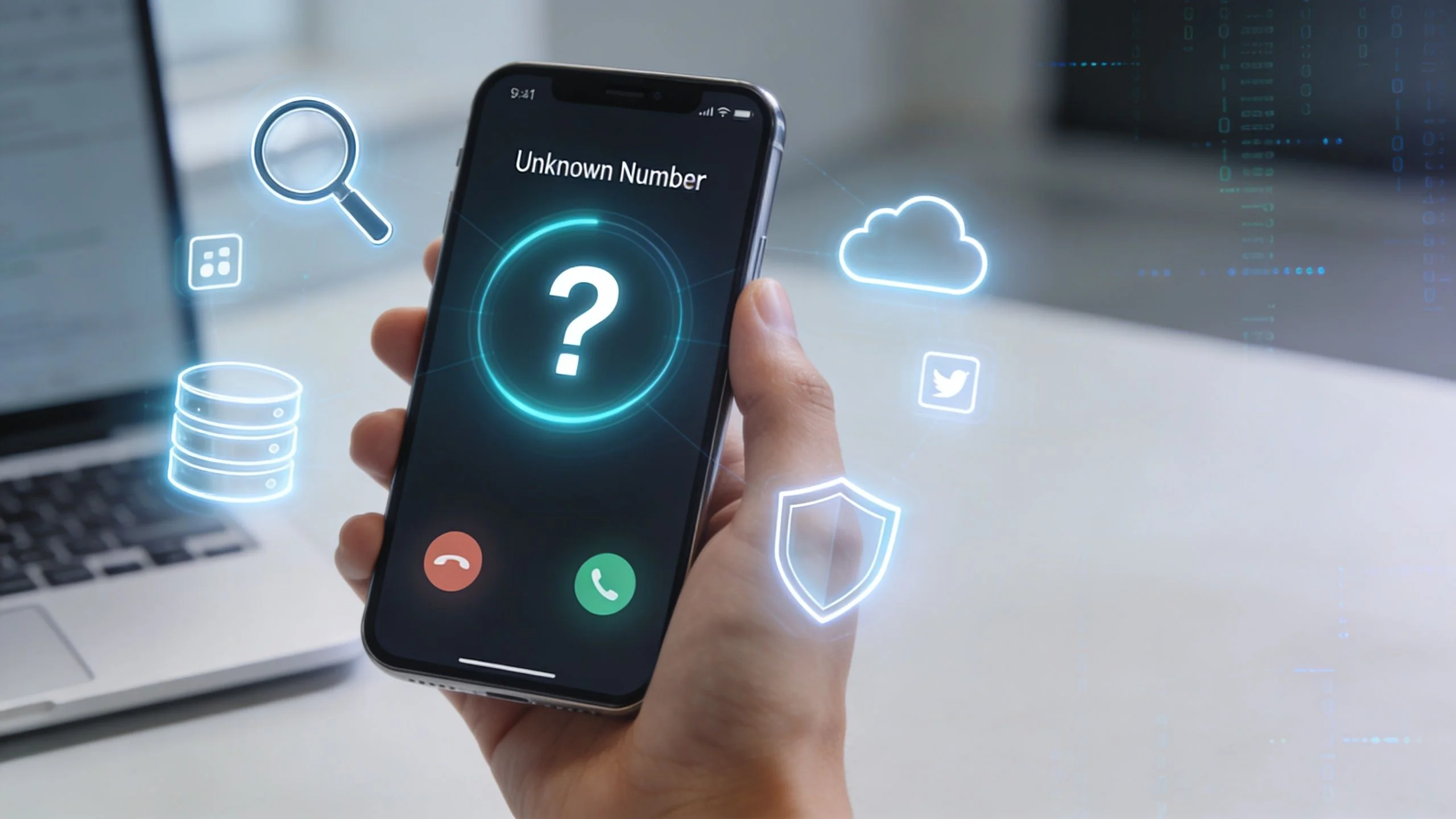
Your phone lights up. The caller ID says Unknown or shows a number you don’t recognize. You let it ring once, then stare at it longer than you want to admit.
That reaction is reasonable. An unknown call might be harmless. It might be a recruiter, a delivery driver, a doctor’s office, a client calling from a direct line, or someone from a dating app finally moving off the platform. It might also be a scammer testing whether your number is active and whether you’ll engage.
The stakes are not small. In 2025 alone, consumers lost over $40 billion to phone-based scams, with the average victim losing $1,100, according to the FTC (FTC scam loss data). If you’ve searched for ways to identify a suspicious caller, you’re not being paranoid. You’re doing basic digital self-defense.
Finding out who’s behind an unknown number is partly about curiosity. It’s also about fraud prevention, personal safety, dating verification, and protecting your professional opportunities. A missed call can affect more than your inbox. It can affect who gets access to your attention, your trust, and your data.
That Unknown Number: The Story Behind the Call
Individuals don’t look up a number for fun. They do it because the call arrived at the wrong moment and raised the wrong question.
A number calls twice in one afternoon. No voicemail. Later that evening, a text appears with a vague message like “Hey, is this still your number?” The next morning, the same number tries again. If you’re job hunting, you worry about missing an opportunity. If you’re dating online, you wonder whether someone gave you a burner number. If you’re helping an older parent manage scam risk, you worry about what happened when they picked up.
That’s why how to find out unknown numbers matters beyond simple caller ID. A phone number often sits at the center of a much larger digital trail. One call can be the first sign that your number is circulating in lead lists, scraped directories, or scam workflows.
Why people check unknown callers
The reasons are usually practical:
- Safety first: You want to know whether the caller is legitimate before you respond.
- Professional risk: Recruiters, hiring managers, and clients don’t always call from a main switchboard.
- Dating and social trust: A number can reveal whether someone’s story is consistent.
- Family protection: Unknown calls aimed at teenagers or older relatives deserve a closer look.
Sometimes the answer is simple. A search reveals a business listing or a public profile. Sometimes the trail is messy, which is why people often compare tips shared in communities like this discussion of number lookup experiences on Reddit.
Unknown caller research works best when you treat it as verification, not confrontation.
The bigger issue behind the call
An unknown number is often a privacy problem in disguise. If someone can reach you, they may have found your number through a data broker, an old social profile, a marketplace listing, or a leaked contact database. The same methods you use to identify them can often be used, in reverse, to identify you.
That’s the story behind the call. You aren’t just trying to name a caller. You’re trying to understand what information is exposed, how people connect it, and what you should do next.
Your First Moves Quick and Free Initial Checks
The best first step is not paying for a report. It’s building a quick, disciplined workflow and seeing what turns up in public view.

Start with search engines
Type the number into Google or DuckDuckGo in more than one format. Search it with and without spaces, with country code, and in quotation marks.
Examples to try:
- “5551234567”
- “(555) 123-4567”
- “+1 555 123 4567”
Why this works: people paste numbers into forum posts, complaint boards, small business directories, event pages, and cached profile pages in inconsistent formats. One format may return nothing while another reveals a name or company.
Then add context words:
- “5551234567” scam
- “5551234567” recruiter
- “5551234567” WhatsApp
- “5551234567” reviews
Check social platforms directly
Search the number inside platforms where people often attach a phone for account recovery or contact discovery. Facebook, LinkedIn, Instagram, Telegram, and some messaging apps can surface clues even when a full profile isn’t publicly visible.
What you’re looking for isn’t always a direct hit. It may be:
- a profile with a matching business name
- a username that matches a voicemail name
- an old marketplace listing
- a profile photo reused elsewhere
If you’re also auditing your own exposure, a simple free digital footprint check with no signup can help show how your number might connect to public accounts.
Use caller ID apps carefully
Apps like Truecaller can be useful because they rely on large user-contributed contact databases and call labeling. That makes them fast for common spam patterns and known business lines.
They also have trade-offs. Crowdsourced labels can be outdated, wrong, or overly broad. A number marked as “spam” might belong to a legitimate business using outsourced calling. A number marked with a person’s name may reflect how one user saved it, not a verified identity.
Practical rule: Treat app-based caller names as a lead, not proof.
Skip outdated tricks
A lot of advice online still points people to *69. That advice lingers because it used to be familiar. It’s not a reliable answer for modern unknown callers.
*Many guides suggest dialing 69 to identify the last caller, but this service is largely obsolete for addressing current threats. It only works for the most recent call and fails when callers use modern call-blocking or spoofing technology, which is standard practice for scammers and spammers (explanation of why *69 fails).
That matters because the callers you most want to identify are often the ones deliberately hiding.
A simple free workflow
Before you spend anything, do this in order:
- Search the number in multiple formats: Don’t rely on one search string.
- Look for public complaints or business mentions: Repeated reports matter.
- Check major social and messaging platforms: Especially if the caller claims a personal connection.
- Review voicemail and text style: Formal, vague, urgent, or manipulative language tells you a lot.
- Don’t call back immediately: Let the research lead your next move.
Free checks won’t solve every case. But they often tell you whether the number belongs to a normal person, a business, a recycled line, or a caller who’s leaving almost no public trail at all.
Level Up with Reverse Phone Lookup Services
When free checks stall, reverse phone lookup services become the next layer. They don’t perform magic. They aggregate records.
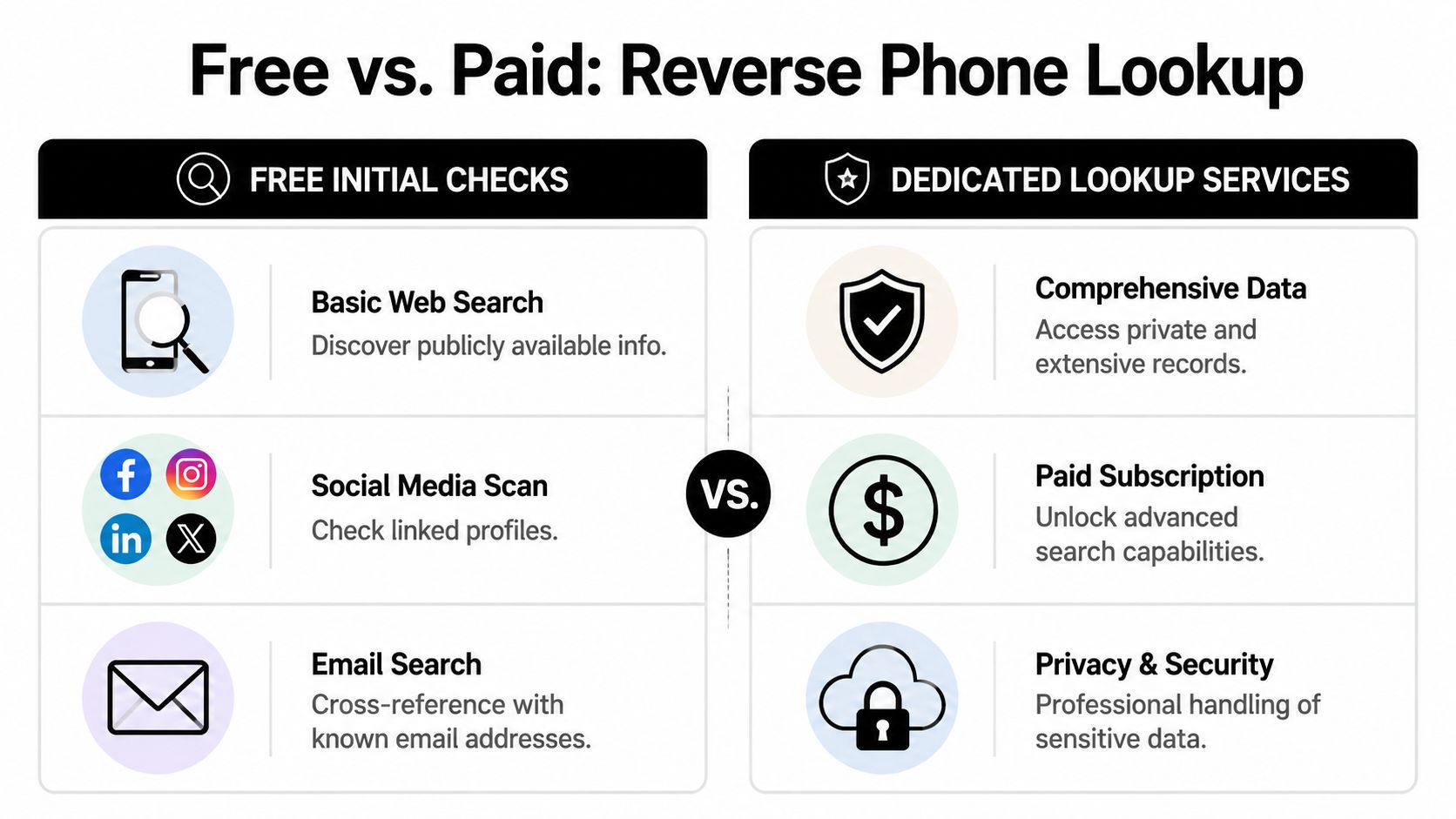
Platforms such as Spokeo and Intelius pull together information from public records, online directories, and other online and offline sources. That can surface a name, rough location, associated addresses, relatives, or linked online accounts. But there’s a hard limit you need to understand: they cannot reveal numbers hidden by caller ID blocking, which makes them weak against intentionally anonymous callers (Avast’s overview of reverse phone lookup limits).
What paid lookup tools are good at
A proper reverse lookup service can help when the number has a public footprint. That usually means:
- The caller used the number consistently: for directories, registrations, listings, or older public accounts.
- The number belongs to a person or business with records attached: address history, business filings, or directory entries.
- You need confirmation, not a full investigation: enough context to decide whether to answer, ignore, or block.
For everyday use, that’s often enough. If the lookup shows a real estate office, contractor, nonprofit, or local business, you can verify through the company’s official site before calling back.
Where lookup tools disappoint
These services struggle when the caller is deliberately evasive. That includes:
- spoofed numbers
- blocked caller ID
- newly activated prepaid lines
- numbers used only in closed apps
- numbers with almost no public footprint
A clean “no result” doesn’t mean the call is safe. It often means the caller left less public data behind.
Comparison of Phone Number Identification Methods
| Method | Cost | Speed | Information Revealed |
|---|---|---|---|
| Free search | Free | Fast | Public web mentions, complaints, visible social traces |
| Paid service | Paid | Fast to moderate | Aggregated records, possible names, addresses, directory-level identity clues |
| Comprehensive OSINT scan | Varies | Moderate | Broader cross-platform links, public footprint mapping, reputation and exposure context |
How to judge whether a lookup result is credible
Not every report deserves trust. Check for consistency across multiple fields.
Use this checklist:
- Name matches the context: If the voicemail says “Mike from logistics,” does the lookup tie to a transport or delivery business?
- Location makes sense: If the caller claimed to be local, does the area line up?
- Associated profiles fit the story: A dating app contact who claims one profession but links to a very different public presence deserves scrutiny.
- Old data is labeled as old: Many services recycle stale records.
A practical example: if a number lookup shows a person’s name, then a search of that name plus city reveals a business page, and the voicemail references that same business, confidence goes up. If the lookup returns one name but everything else points elsewhere, keep digging or walk away.
If you’re dealing with an overseas caller or a number with an international format, it helps to review approaches built for reverse international phone number searches, because format and public record availability vary a lot by country.
A reverse lookup is strongest when it confirms a pattern you already see. It’s weakest when you ask it to identify a caller who has taken care to leave no public pattern at all.
A Phone Number Is the Key to Your Digital Footprint
A phone number isn’t just a contact detail. It’s often the link that ties together separate parts of a person’s online life.

That’s why unknown caller research overlaps with privacy work. When a number appears on one platform, it can sometimes be connected to profiles on others through recovery settings, old listings, reused usernames, messaging handles, breached data, and public references.
The risk isn’t theoretical. A 2026 cybersecurity report found that a publicly exposed phone number increases an individual’s risk of being targeted in a successful identity theft attempt by 65%, because it serves as a primary key for linking disparate breached datasets (Forbes Advisor identity theft statistics).
What one number can reveal
Think about common real-world situations.
A person you met on a dating app shares a number but keeps their surname private. A search of that number may connect to a messaging profile photo. That photo may match an older social account. That social account may point to a workplace, city, or another name.
A recruiter texts from a mobile number instead of a corporate line. The number may connect to a LinkedIn profile, a conference speaker page, or a professional directory entry that confirms they are real.
A gamer uses a number for account recovery or marketplace transactions. That number can sometimes connect gaming handles, resale profiles, Discord identities, and old community posts.
Why this matters for your own exposure
When people ask how to find out unknown numbers, they usually focus on the incoming call. The more important question is often this: what can someone learn about me from my number alone?
Review your exposure in these categories:
- Professional identity: Does your number connect to your real name, employer, résumé, or licensing profile?
- Personal life: Is it attached to family-facing social profiles, old classifieds, or neighborhood groups?
- Dating safety: Could a stranger move from your number to your full identity faster than you intended?
- Gaming and hobby accounts: Are your handles, communities, or secondary profiles easy to pivot into?
For a deeper look at that risk, this guide on what hackers can do with your phone number gives useful context.
The phone number as a pivot point
Investigators call this a pivot. You start with one identifier and use it to discover others.
A phone number works unusually well as a pivot because people keep it for years, reuse it across services, and often expose it without realizing it. A username changes. An email alias changes. A phone number tends to stay put.
If a number links your work life, social life, and old accounts together, anyone who identifies that number gains a map of your online identity.
That’s why caller identification and digital footprint management belong in the same conversation. The same trail that helps you verify a stranger can help a stranger profile you.
Navigating the Ethical and Legal Boundaries
Being able to trace a number doesn’t give you permission to do anything you want with what you find. Good OSINT work is not stalking with better search habits. It is disciplined, lawful verification.

The boundary starts with the source of the data. Publicly accessible information is not the same thing as unrestricted information. Some records are visible for narrow purposes. Some are published in limited contexts. Some can be viewed but should not be repurposed for harassment, intimidation, or pressure.
The ability to identify unknown numbers is limited by privacy protections and data classification standards. Privacy concerns directly affect what data can be shared publicly, especially when individual identification becomes possible, creating a legal boundary on all OSINT work (Brock University guidance on privacy and public data limits).
Legitimate uses
Many readers of this material are on solid ground when they use number research for purposes like these:
- Verifying a suspicious caller: before replying, calling back, or clicking any link they sent
- Checking a business contact: to confirm a contractor, buyer, recruiter, or client is real
- Dating safety checks: to confirm that a person’s name, age, or location story isn’t fabricated
- Family protection: especially when older relatives or teens receive manipulative calls
Uses that cross the line
Problems start when the intent changes from verification to control.
Avoid using number lookup methods to:
- harass or threaten someone
- track a person’s movements
- collect information for blackmail or coercion
- bypass privacy settings or platform rules
- build dossiers on coworkers, neighbors, or ex-partners without a lawful reason
A practical standard
Ask two questions before you search thoroughly.
- Am I trying to verify safety or legitimacy?
- Would I be comfortable explaining this search to a neutral third party?
If the answer to either question is no, stop.
Public data should be used with restraint. The fact that something can be found doesn’t mean it should be exploited.
There’s also a quality issue. Public records and social traces can be incomplete, stale, or attached to the wrong person. Shared family plans, recycled numbers, and business forwarding lines create confusion. Ethical use means not overstating certainty. If the evidence is weak, say it’s weak.
From Reactive Searching to Proactive Protection
A reactive problem often initiates the process. A call arrives. A text appears. A number feels off. The desire for clarity drives the subsequent search.
That’s useful. The methods above work in layers. Start with free searches. Move to social checks. Use a reverse lookup when the number has a public footprint. Apply judgment before you respond. That’s the practical side of how to find out unknown numbers.
The stronger move is proactive. If you can piece together someone else’s identity from a number, someone can try the same with yours. That’s why number lookups belong inside a broader privacy routine that includes old profiles, data broker exposure, breach awareness, dating app caution, and reputation monitoring.
Shift the question
Instead of asking only, “Who is calling me?” start asking:
- What does my phone number reveal about me?
- Which old accounts still expose it?
- Could a scammer connect it to my workplace, family, or gaming identity?
- Would a recruiter or stranger get an accurate picture of me from what’s public?
That mindset matters for households and for companies. If you manage staff, customer contacts, or public-facing teams, broader resources on cyber crime protection for NZ businesses can help frame phone-based risk as part of a larger security issue rather than an isolated nuisance.
Build a routine, not a one-off search
A better privacy habit looks like this:
- Audit your number exposure: Search for your own number in the formats others would use.
- Remove or minimize unnecessary public listings: Old classifieds, profile bios, and forum posts linger.
- Separate identities where possible: Keep work, dating, gaming, and personal uses from collapsing into one trail.
- Monitor what stays public: Use tools and processes designed for ongoing visibility, not just one emergency search.
If you want a practical place to continue, this guide to top tools for monitoring your digital footprint and keeping your data safe is a strong next step.
Unknown callers will keep happening. The true win is reducing how much advantage your number provides them in the first place.
A smart next step is to run your own details through Digital Footprint Check and see what’s publicly tied to your phone number, email, usernames, and profiles. Instead of only reacting to suspicious calls, you can find exposed accounts, spot privacy risks, and start reducing what strangers, scammers, recruiters, or data brokers can learn about you.