· Digital Footprint Check · Content Marketing · 24 min read
10 Credit Card Fraud Examples You Need to Know
Explore 10 real-world credit card fraud examples, from skimming to synthetic identity theft. Learn how to spot scams and protect your financial identity.

In 2024, consumers reported more than 440,000 cases of credit card fraud to the Federal Trade Commission, making it one of the most commonly reported forms of fraud in the U.S., according to the FTC’s consumer fraud data. That number matters because credit card fraud usually does not start with the card. It starts with the small pieces of personal data you leave across the internet.
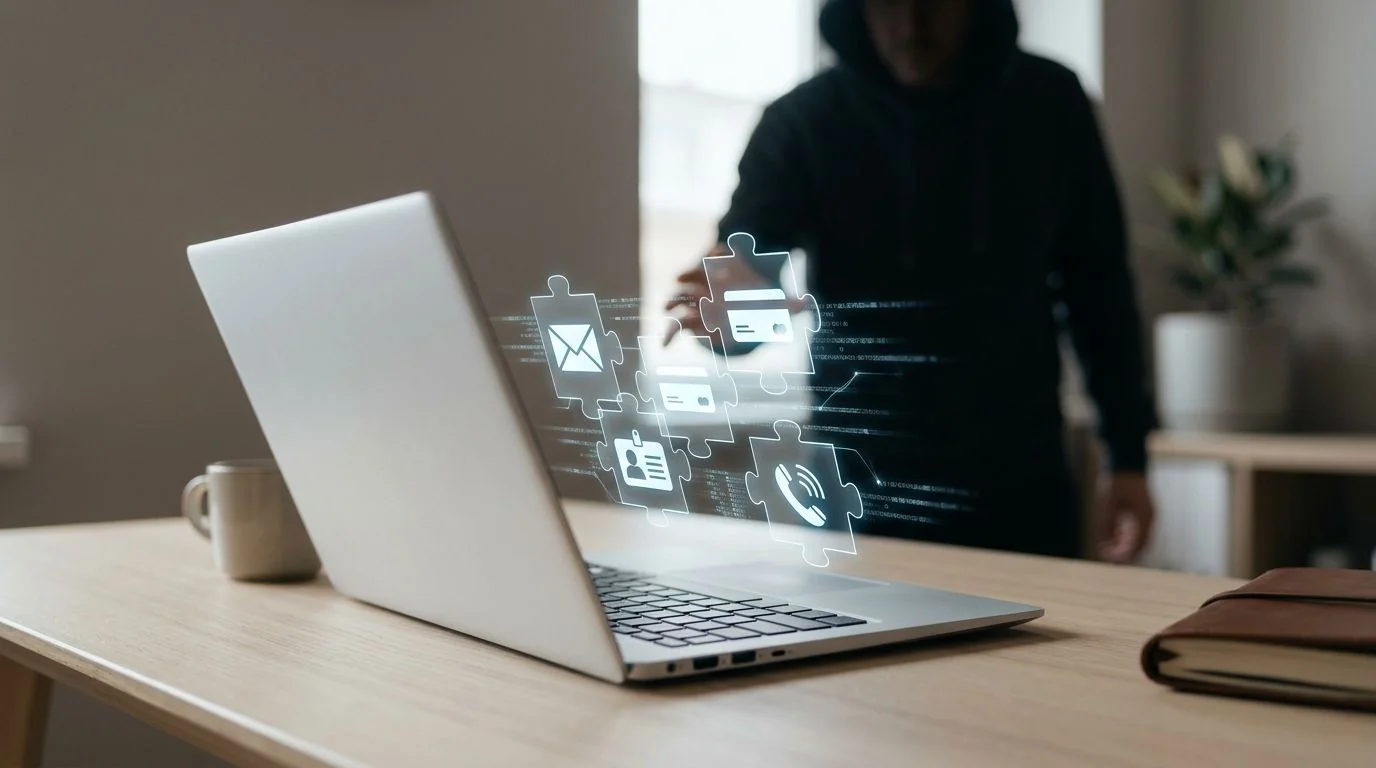
A card number is only one ingredient. Fraudsters look for the full set: your email address, phone number, home address, old passwords, merchant logins, and any public profile that helps them answer security questions or impersonate you. A digital footprint works like a trail of receipts. One exposed detail may seem harmless, but several details combined can give a criminal enough context to make fake purchases, reset accounts, or pass identity checks.
That is why a list of credit card fraud examples is really a list of ways exposed data gets turned into money. A leaked email can lead to phishing. A reused password can open a shopping account that already stores your card. A public mobile number can support a SIM swap attempt. Once readers see that pattern, fraud looks less random and more preventable.
Prevention starts with visibility. If you can identify which accounts are exposed, which credentials have appeared in leaks, and what personal details are easy to find about you, you can close gaps before someone uses them against you. A practical first step is running a digital footprint check to spot data exposure linked to credit card fraud risk.
1. Card-Not-Present Fraud
Card-not-present fraud is one of the most common forms of payment fraud because the criminal never needs to touch your card. They use the card number, expiration date, CVV, or stored payment details to buy something online, in an app, over the phone, or through a subscription service. From your side, the first sign is often confusingly simple. Your card is still in your wallet, but a charge appears anyway.
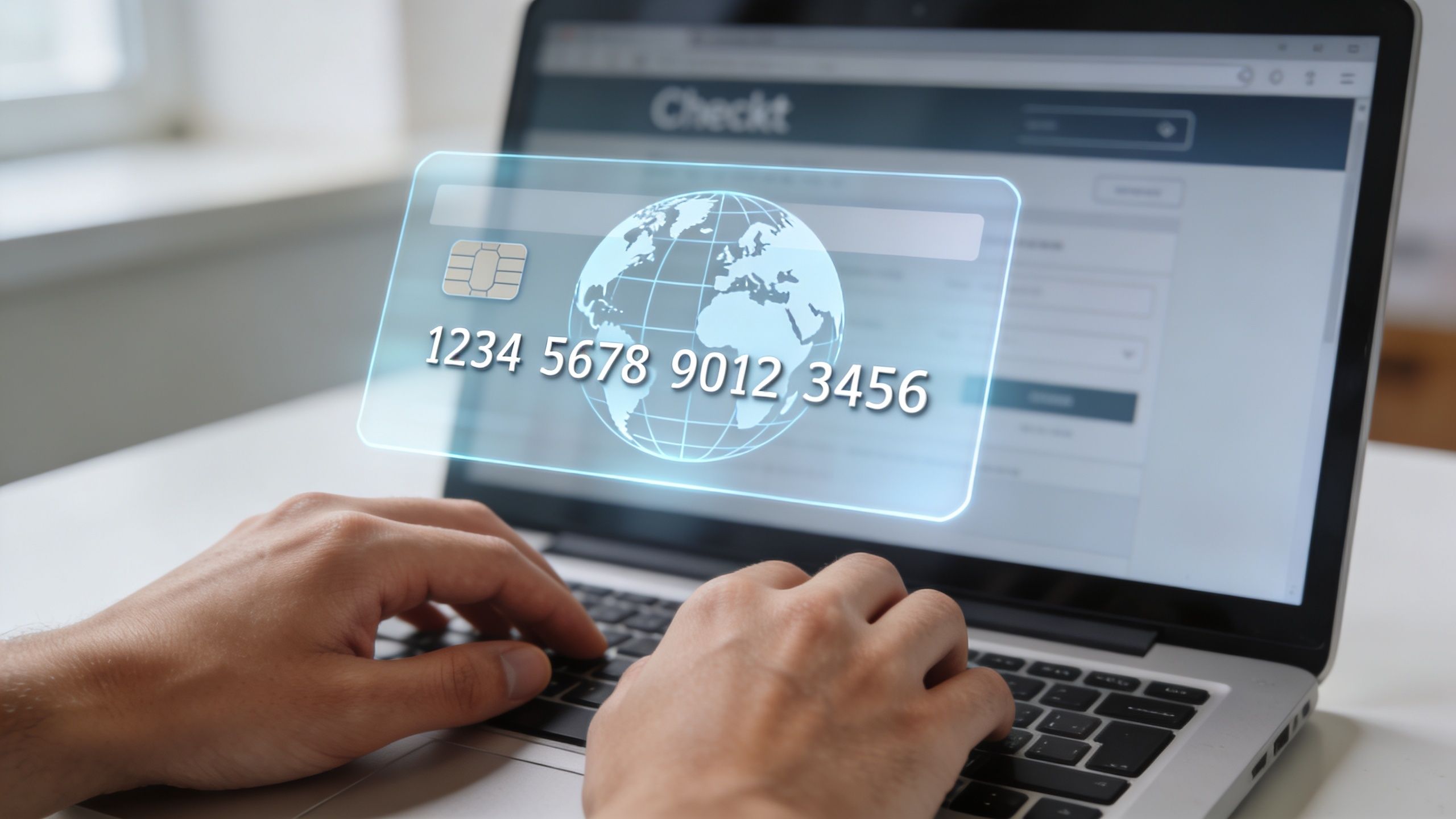
For merchants, each fraudulent online order can trigger chargebacks, fees, lost inventory, and extra review costs. For cardholders, the pattern often starts with a small test purchase, such as a cheap app charge or low-cost retail item. If that transaction succeeds, the attacker learns the card still works and may quickly try larger purchases or use the card in several stores before the issuer blocks it.
The important detail is that card-not-present fraud rarely depends on the card number alone. A criminal gets better results when they also have the surrounding details that make the order look legitimate. Billing address. Email address. Phone number. Access to a shopping account that already stores your card. Your digital footprint supplies those details more often than people realize.
A public email address can help an attacker find accounts tied to online retailers. A reused password from an old breach can open a merchant login where your shipping details and saved card are already waiting. A phone number or home address posted online can help a criminal pass basic verification checks. It works like assembling a puzzle. One piece may not do much, but several pieces together can make a fraudulent transaction look ordinary enough to slip through.
Practical rule: Treat an unfamiliar online charge as a sign that both payment data and personal data may be exposed.
Start with the fast protections:
- Turn on instant transaction alerts: Ask your card issuer to send a notification for every online purchase.
- Use virtual card numbers when your bank offers them: A temporary number reduces the value of stolen card details.
- Audit saved payment methods: Remove stored cards from shopping sites and apps you no longer use.
- Check what attackers can already see about you: An account takeover prevention check for exposed personal data and risky accounts can show whether leaked credentials, public profiles, or exposed contact details are making card-not-present fraud easier.
- Change passwords on retailer accounts: Focus first on stores where your card is saved, especially if you have reused that password anywhere else.
The core lesson is simple. Criminals do not need the plastic card if your online identity gives them enough context to shop as if they were you.
2. Identity Theft and Account Takeover Fraud
Identity theft and account takeover fraud both use your personal data, but they work in different ways. Identity theft means someone uses your information to open a new account, apply for credit, or impersonate you as a new customer. Account takeover means they break into an account you already own and change details such as the password, recovery email, phone number, or shipping address.
The difference matters because the warning signs are different. A new account in your name can sit unnoticed until a credit report changes or a debt collector contacts you. A taken-over retail or bank account can be abused within minutes because the criminal steps into a profile that already has saved cards, order history, and trust signals attached to it.
A takeover works like getting the keys to a furnished apartment instead of building a new one from scratch. The attacker does not need to convince every system that they belong there. Your existing account already contains that history.
What this looks like in real life
You try to sign in to a shopping account and your password fails. A password reset email never arrives because the recovery address was changed first. Later, you find an order confirmation for electronics shipped to an address you do not recognize.
Identity theft can be quieter. A criminal may use your full name, date of birth, phone number, and address to apply for store credit or a new card. If those details are visible through old data breaches, public records, social media, or people-search sites, the application looks more believable to automated checks and customer service staff.
That is the digital footprint connection. Publicly exposed data gives criminals the raw material to answer security prompts, guess which email you use for shopping, and pass basic identity verification. One exposed phone number or old address may seem harmless on its own. Combined with leaked credentials and public profile details, it becomes a convincing identity package.
Focus on defenses that match the fraud pattern:
- Watch for profile changes, not just charges: Review password reset notices, new device logins, shipping address edits, and recovery email changes.
- Check your credit reports regularly: Unexpected inquiries or new accounts can signal identity theft before bills arrive.
- Reduce exposed personal details: Remove or limit public birthday, family names, old addresses, and resume data where possible.
- Separate high-risk accounts: Use one email for banking and another for shopping or public sign-ups so a single exposed address reveals less.
- Review what attackers can already learn about you: An account takeover prevention check for exposed personal data and risky accounts can show whether your visible digital footprint is making impersonation easier.
The practical lesson is simple. Fraudsters often succeed because they know enough about you to look legitimate. Limiting what is publicly exposed makes both identity theft and account takeover harder to pull off.
3. Phishing and Social Engineering Attacks
Phishing remains one of the simplest ways to steal card data and account access. The attacker sends a message that looks like it came from a bank, delivery service, retailer, or payment platform. You click, land on a convincing page, and type in the information for them.
The trick works because the criminal doesn’t need advanced malware if they can get you to volunteer the data. A fake security alert about a suspended account, an urgent text about a failed delivery, or a call from someone claiming to be your bank can all end with stolen card details.
Why exposed contact data makes phishing worse
If your email, phone number, and usernames are easy to find, attackers can tailor messages to you. They can reference a gaming handle, an employer, or a recent online purchase. That makes the message feel less random and more believable.
Fraudsters often combine small public details to create one convincing lie.
Watch for these signs:
- Mismatch between display name and sender address: The brand name may be familiar, but the actual email isn’t.
- Urgent pressure: Messages that demand immediate action are often bait.
- Login links in unsolicited messages: Open the official app or type the site yourself instead.
- Requests for full card details over phone or email: Legitimate companies don’t need them in that way.
Password managers help because they won’t autofill credentials into the wrong domain. Spam filters help too. But reducing your exposed contact data helps at an earlier stage. The less a criminal knows about you, the harder it is to build a believable pretext.
4. Data Breach Exploitation
A data breach can exist in the background for months, then show up as fraud long after you forgot the affected service existed. That’s why it deserves its own place among credit card fraud examples. The breach itself may happen to a retailer, app, or service provider. The damage lands on you later.
What makes breach exploitation dangerous is the mix of information. It isn’t always just a card number. It can be your name, address, email, phone, login credentials, and purchase history. That bundle gives criminals multiple ways to monetize the same victim.
Breach data isn’t only about payments
If an attacker gets your old shopping login, they may access saved cards or stored addresses. If they get your email and password from one site, they may try the same combination elsewhere. If they get enough identity data, they may move toward account opening fraud.
One emerging blind spot is gaming. According to the gaming-account angle provided in the verified data, over 300 million gaming accounts were compromised across platforms such as Steam and Epic Games in 2025, and criminals have used stolen gaming credentials to add cards for in-game purchases or abuse linked accounts, as discussed in this overview of credit card scam risks. Many people don’t think of a gaming profile as financially sensitive until it has a saved payment method or shares the same login pattern as their email and retail accounts.
What to do when your data is exposed
- Check whether your email, phone, or username appears in breach-related exposure.
- Change passwords immediately if a breached account reused an old password.
- Remove saved cards from inactive services and apps.
- Use a breach monitoring tool: Digital Footprint Check’s free data breach checker can help you spot exposure before it turns into direct fraud.
A breach gives attackers raw material. Your goal is to reduce how much that material can still access.
5. Skimming and Device-Based Fraud
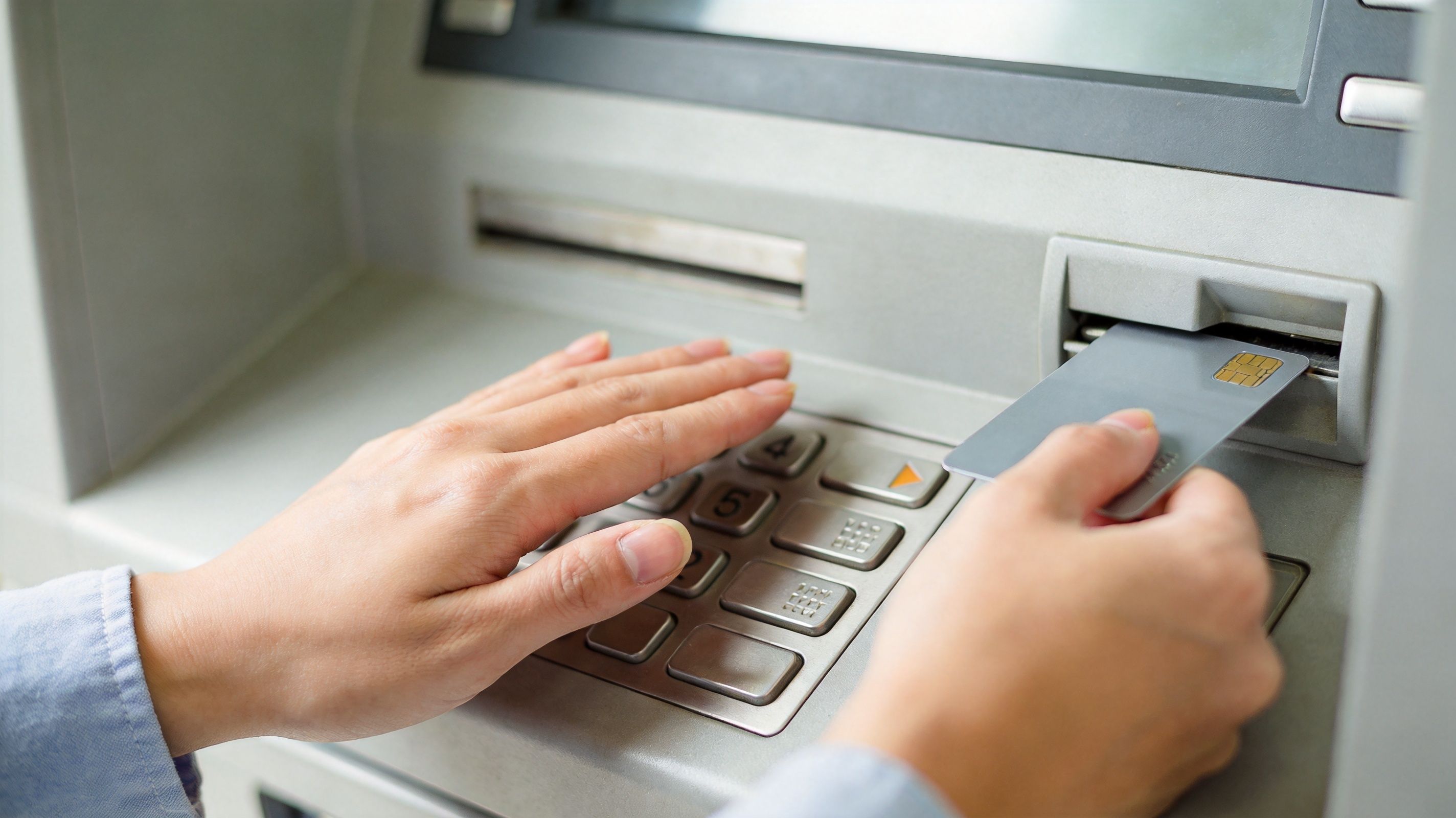
Skimming is one of the oldest credit card fraud examples, but it still works because it targets a simple habit. People trust the machine in front of them. A criminal takes advantage of that trust by attaching a fake card reader to an ATM, gas pump, or checkout terminal so it copies the data stored on the card. In some cases, they also add a hidden camera or a fake keypad to capture the PIN.
Industry reporting has shown that compromised card incidents tied to skimmers and similar devices continued to rise in 2025, with thousands of compromise reports affecting large numbers of cards. The pattern matters more than any single number. These attacks are still common, and they often happen in places people use quickly, such as fuel pumps and outdoor ATMs.
Skimming may look like a physical-world crime, but the next step is often digital. Stolen card data becomes more useful when criminals can connect it to information already exposed in your digital footprint, such as your email address, phone number, billing ZIP code, or leaked login credentials. That combination can help them pass basic verification checks, test the card online, or target your accounts with follow-up fraud.
A skimmed card works like a copied house key. By itself, it may open one door. Combined with details pulled from public records, breaches, and exposed profiles, it can give a criminal access to much more.
That is why prevention is not only about the payment terminal. It is also about reducing how much personal data an attacker can pair with stolen card details. A tool such as Digital Footprint Check helps you see what contact information and identity clues are already exposed, so you can remove or secure them before they are used to support card fraud.
Inspect the machine before you use it. Tug lightly on the card reader. Check for loose plastic, unusual thickness, crooked keypads, broken security seals, or colors that do not match the rest of the terminal. Cover the keypad when entering your PIN, even if the area looks empty.
For a visual explanation of how these attacks work, this short video is useful:
Use chip or contactless payment when possible. Those methods make copied magnetic stripe data less useful. After using an ATM or gas pump, review your account for small test charges, location mismatches, or transactions that appear at odd hours. If your digital footprint check shows exposed phone numbers, emails, or old addresses, lock those down too. Skimming often starts at the machine, but the fraud grows when criminals can connect that card to the rest of your identity.
6. Synthetic Identity Fraud
Synthetic identity fraud often starts with a detail that seems too small to matter. A real Social Security number. An old address from a people-search site. A phone number still attached to abandoned profiles. Criminals stitch those pieces together with invented information and create a new person on paper, then use that profile to open credit accounts and spend until the file collapses.
The Federal Reserve has described synthetic identity fraud as one of the fastest-growing financial crime problems because it can sit inside normal-looking credit activity for long periods, according to the Federal Reserve Payments Study and related fraud resources. That is what makes it different from a straightforward stolen-card incident. The account may look legitimate at first because the identity is partly real.
A synthetic identity works like a counterfeit key made from real cuts. If enough pieces match, the lock opens. Lenders may see on-time payments, a mailing address, and a consistent phone number, so the file appears trustworthy until the fraudster pushes the limits and abandons the debt.
Your digital footprint can supply those matching pieces. Public records, broker listings, leaked contact details, old usernames, and exposed family connections all help an invented identity look more believable. In some cases, the victim is a child, an older adult, or someone who does not check credit often, which gives the synthetic profile more time to grow.
That is why prevention starts earlier than a credit alert.
Use a digital footprint scan to find exposed addresses, phone numbers, and profile links that make identity stitching easier. If your information appears in places you did not expect, remove what you can and lock down what you cannot. A good companion step is following these password manager best practices, because exposed accounts often reveal the extra data criminals use to strengthen fake identities.
- Review your credit reports for unfamiliar names, addresses, or accounts.
- Freeze your credit if you are not applying for new loans or cards.
- Pay attention to mail, debt notices, or tax documents for people you do not know.
- Check your exposed data regularly with a tool such as Digital Footprint Check so you can spot identity clues before criminals reuse them.
Synthetic identity fraud succeeds when scattered facts about you stay scattered and unnoticed. The more clearly you can see your public data trail, the harder it becomes for someone else to turn it into a usable financial identity.
7. Account Credential Stuffing and Password Reuse Exploitation
Credential stuffing turns one old breach into many new break-ins. Criminals buy or collect stolen username and password pairs, then use automated tools to test them across retailers, food delivery apps, travel sites, digital wallets, and email accounts. If the same password still works somewhere else, they can get into an account that already holds saved card details.
It works like trying the same house key on every door in the neighborhood. The key was stolen elsewhere, but the actual problem is reuse.
That is why this fraud type is closely tied to your digital footprint. Old email addresses, recycled usernames, exposed phone numbers, and public profile details help attackers match leaked credentials to live accounts. A login pair from a years-old forum breach becomes much more useful when your current email, handle, or recovery number is easy to find online.
How the fraud unfolds
The attacker starts with a breached credential list. Automated bots test those logins at scale, usually on sites where people store payment cards for convenience. Once inside, the criminal may place orders, buy gift cards, redeem loyalty points, change the password, or update notification settings so you notice later.
The account itself may not look sensitive at first. A retail profile, streaming service, or travel account can still expose saved cards, billing addresses, and purchase history. Those details give the criminal more than a one-time purchase. They also reveal habits, locations, and contact information that can support later fraud.
Your email account is the highest-value target in this chain. If attackers can get into email, they can reset passwords for shopping and financial accounts and erase the warning messages that would have alerted you.
Use these steps to reduce the risk:
- Use a unique password for every account that stores money, cards, or personal data.
- Store passwords in a manager so you do not fall back on small variations of the same password.
- Turn on multi-factor authentication, especially for email, retailers, and payment apps.
- Watch for alerts about logins from new devices, password changes, or disabled notifications.
- Review your exposed phone number and recovery data with this SIM swap and phone exposure guide, because reused credentials become more dangerous when attackers can also hijack recovery steps.
- Refresh your password habits with these password manager best practices.
A digital footprint check helps here because it shows which identifiers about you are easy to find. If old usernames, email addresses, or phone numbers are still public, attackers have more ways to connect leaked credentials to real accounts you still use. Reducing that exposure will not erase a breach, but it does make credential stuffing less accurate and less profitable.
If someone gets your email account, credit card fraud often follows. Email is the master reset tool for everything else.
8. SIM Swap Fraud and Phone-Based Account Takeover
A SIM swap happens when a criminal convinces a mobile carrier to move your phone number onto their SIM. Once they control the number, they can receive one-time codes sent by text message and intercept account recovery flows.
This is one of the most disruptive credit card fraud examples because victims often notice the phone problem first. Your device suddenly loses service. A few minutes later, password resets and transaction alerts go to the attacker’s phone instead of yours.
Why your public phone number matters
If your number appears in old business listings, resumes, marketplace profiles, or public records, the attacker has more material to impersonate you with. They may call the carrier armed with your name, address, and other details scraped from the web.
Take these steps before you need them:
- Add a carrier PIN or passcode: This creates another barrier before any number transfer.
- Prefer authenticator apps over SMS codes: Text-based security is better than nothing, but it’s a weaker option.
- Reduce public exposure of your number: Audit profiles, directories, and cached listings.
- React fast to sudden signal loss: If your phone unexpectedly loses service, contact your carrier from another device immediately.
- Review phone-number exposure risks: Digital Footprint Check’s SIM cloning resource can help you understand where your number may be visible.
A phone number is often treated like proof of identity. That’s exactly why criminals target it.
9. Triangulation Fraud and Marketplace Exploitation
Triangulation fraud works like a hidden relay. A shopper buys an item from what appears to be a normal marketplace seller. The seller then uses stolen credit card details to purchase that same item from a legitimate retailer and has it shipped to the shopper. The shopper receives the package, the retailer sees a standard order, and the actual cardholder is left with the unauthorized charge.
That setup makes the fraud harder to spot than a fake storefront or a stolen account login. Each person in the chain sees only part of the scheme. The buyer sees a delivered order. The retailer sees payment and shipping details. The criminal sits in the middle and collects the difference between the marketplace sale and the purchase made with stolen card data.
Your digital footprint can make this easier for them.
Publicly exposed addresses, phone numbers, usernames, and old marketplace profiles help criminals build seller accounts that look believable or test whether a shipping address is active. A home address posted on a public profile can confirm where goods can be sent. A reused email address can connect your marketplace identity to retail accounts and shipping updates. Even small details, such as how your name appears on different platforms, help a fraudulent seller look more consistent and trustworthy.
A common warning sign is a purchase trail that does not line up. You may see a card charge from a retailer you do not remember using, while no order confirmation appears in your main inbox because the fraud touched a different account, a secondary email, or a guest checkout flow.
If a charge appears from a retailer but you never received the matching order emails, review every email address and shopping account tied to that retailer.
To reduce your risk:
- Use separate email addresses for marketplaces and major retail accounts.
- Turn on purchase, shipment, and address-change alerts.
- Review saved addresses and payment methods in retail accounts, especially older ones.
- Be cautious with public posts that expose your home address, phone number, or selling history.
- Check what criminals can already see about you online with an OSINT review such as Digital Footprint Check, then remove or reduce the exposed details that could help them validate accounts or shipping information.
Triangulation fraud succeeds by making stolen-card purchases look ordinary. The less visible your personal data is, the harder it becomes for a fraudster to stitch together the trust signals that keep this scheme running.
10. Employment and Tax Fraud Identity Exploitation
Employment and tax fraud don’t always look like credit card fraud at first, but they can lead directly to financial abuse. A criminal may use your identity to apply for work, submit payroll forms, intercept tax-related records, or create enough official-looking activity to support other fraud later.
This form of abuse creates a long cleanup process. You may discover it through tax notices, employer records, or unexplained account applications. By then, your identity has already been used in systems that are hard to unwind.
Why professionals and job seekers should care
Job boards, public resumes, professional bios, and business directories often reveal full names, work history, cities, phone numbers, and email patterns. That data helps criminals impersonate you with more credibility. It can also help them answer verification prompts used in financial applications.
People who use one email everywhere face a bigger problem. If your work-facing email appears in breaches, criminals can connect it to payroll portals, benefits systems, and financial accounts.
A better approach includes:
- Use a separate email for job applications and public professional profiles.
- Monitor tax and payroll records for activity you didn’t authorize.
- Limit the amount of personal detail visible on resume databases.
- Audit your professional footprint regularly, including old bios and staff pages.
For many victims, the first sign is paperwork that shouldn’t exist. That usually means the attacker had your identity details long before you noticed the fraud.
10-Point Comparison of Credit Card Fraud Examples
| Fraud Type | Typical Complexity 🔄 | Resource Requirements ⚡ | Expected Impact/Scale 📊 | Detection Difficulty ⭐ | Key Mitigation Tips 💡 |
|---|---|---|---|---|---|
| Card-Not-Present (CNP) Fraud | Medium, needs card data and evasion | Low, bought card data, basic automation | High, direct financial loss and chargebacks | High, looks like legitimate ecommerce activity | Enable 2FA, use virtual cards, monitor alerts |
| Identity Theft & Account Takeover | High, requires aggregated PII and time | Medium, data aggregation and credential access | High, long-term credit and account damage | High, can remain undetected for months/years | Scan breach databases, freeze credit, unique emails |
| Phishing & Social Engineering | Low–Medium, craft convincing lures | Low, email/SMS templates and distribution | Variable, from credential loss to large breaches | Medium, success depends on user awareness | Verify senders, hover links, train users, spam filters |
| Data Breach Exploitation | High, technical intrusion and exfiltration | High, skilled hackers and infrastructure | Very High, large-scale exposure across millions | High ⭐, often undetected until disclosure | Monitor breaches, receive alerts, use virtual cards |
| Skimming & Device-Based Fraud | Medium, physical installation and concealment | Medium, skimming hardware and placement | Moderate–High, targeted financial theft at terminals | Medium, small test transactions can delay discovery | Inspect devices, cover PIN, prefer chip/contactless |
| Synthetic Identity Fraud | High, builds fake identities over time | Medium–High, data blending and credit activity | High, systemic lender losses and long detection | Very High ⭐, hard to correlate to real person | Monitor credit reports, set fraud alerts/freezes |
| Credential Stuffing & Password Reuse | Low, automated large-scale logins | Low, leaked lists and bots | High, widespread account takeovers if reused | Medium, rapid but detectable abnormal logins | Use unique passwords, password manager, enable 2FA |
| SIM Swap & Phone-Based Takeover | Medium–High, social engineering of carriers | Low–Medium, intel on target and carrier interaction | High, direct access to SMS 2FA and funds | Medium–High, can be swift and disruptive | Add carrier PIN, use auth apps/hardware keys, limit phone exposure |
| Triangulation & Marketplace Exploitation | Medium, coordinates purchases and drop shipping | Medium, stolen card use, logistics, resale channels | Moderate, goods stolen and resold, merchant losses | Medium, purchases appear legitimate to merchants | Monitor orders/statements, use virtual cards, audit addresses |
| Employment & Tax Fraud Identity Exploitation | Medium–High, uses SSN and employment systems | Medium, stolen SSN and filing processes | High, tax refund theft and employment record issues | Medium, often found during tax filing cycle | Monitor IRS account, file early, request an IRS identity PIN |
Take Control Your Action Plan Against Fraud
The biggest lesson across these credit card fraud examples is simple. Criminals rarely act with one isolated piece of data. They combine what they can steal with what you leave exposed. A card number becomes more valuable when it comes with a billing address. A breached password becomes more dangerous when it provides access to a shopping account with saved payment methods. A public phone number becomes risky when it helps a fraudster pass an identity check.
That is why digital footprint management belongs in any fraud prevention strategy. If you only monitor charges, you are reacting at the final stage. You also need visibility into the earlier stages. Those include breached credentials, public contact details, exposed usernames, old accounts, gaming profiles, public records, and professional listings that reveal more than you intended.
Start with the basics. Review card and bank alerts. Use unique passwords. Protect your email account with strong multi-factor authentication. Remove saved cards from accounts you no longer use. Tighten privacy settings on social platforms. Check whether your phone number, address, or usernames are publicly visible in places you forgot about years ago.
If you have children or teenagers who game online, include those accounts in your review. If you are job hunting, treat public resume exposure as a privacy issue, not just a recruiting issue. If you run a business or work in HR, remember that employee exposure can become organizational exposure.
The goal isn’t to disappear from the internet. It is to know what is visible and reduce what criminals can weaponize. OSINT tools are helpful here because they show how strangers can piece together your identity from scattered sources. That view is often more useful than checking a single app or a single credit report in isolation.
Digital Footprint Check is built for exactly that kind of visibility. The platform searches across 500+ platforms, including social networks, breach databases, gaming profiles, professional listings, and public records, so you can understand where your data is exposed and what needs attention first. That can help individuals protect themselves, help parents review family exposure, and help employers assess online identity risks more responsibly.
If you’re thinking about payment security from a compliance angle, this PCI DSS service provider guide is also worth reviewing.
Ready to see your digital footprint? Run a free, instant scan at Digital Footprint Check free checker and take the first step toward securing your identity.
If you want a practical next step, use Digital Footprint Check to scan for exposed accounts, breached credentials, public contact details, gaming profiles, and other online traces that criminals can turn into fraud. A free check can help you spot risks early and decide what to remove, lock down, or monitor more closely.