· Digital Footprint Check · Content Marketing · 17 min read
Do Employers Check Social Media? What They See and How to
Do employers check social media? Yes. Discover what recruiters look for, the red flags that get you rejected, and how to audit your online presence.

Yes, employers check social media. Today, this practice has evolved from a niche tactic to a standard part of the pre-employment screening process. Your online presence has become a crucial extension of your professional identity.
Think of it this way: your resume tells a potential employer the polished, official story you want them to see. Your social media profiles, however, provide the unfiltered, behind-the-scenes commentary that recruiters are eager to review to understand your character, judgment, and overall fit. This guide will walk you through why your digital identity matters, what employers are looking for, and how you can manage your online reputation to protect your job prospects.
Why Your Social Media Is Now Part of Your Resume
It wasn’t long ago that a sharp resume and a well-written cover letter were all you needed to make a killer first impression. But today, your digital footprint adds a layer of context that those formal documents just can't provide. Hiring managers are on a mission to get an authentic glimpse into your personality, judgment, and overall character, which has a real-world impact on your job prospects.
And this isn't just a casual glance over your profile picture. Statistics show that a staggering 92% of employers now use social media in their hiring process. In fact, 67% of hiring decision-makers are actively using social platforms to research candidates, and 71% say it's an effective way to screen out people who won't be a good cultural fit. These numbers highlight a fundamental shift in how professionals are vetted.
The Shift to a Holistic Candidate View
Employers are trying to answer one big question: Who are you beyond a list of skills and job titles? They're digging for clues about your potential cultural fit, your level of professionalism, and even your communication style. Your online activity helps them build a much more complete picture of you as a person they might work with every day, impacting everything from team dynamics to brand reputation.
This trend is part of the much bigger picture of the rise of social recruiting, where your online narrative has become a critical piece of managing your career and protecting your online identity.
Here’s a breakdown of what a recruiter learns from your resume versus your social media profiles.
What Your Resume Says vs What Your Social Media Reveals
| Information Source | What It Reveals | Recruiter's Perspective |
|---|---|---|
| Your Resume | Professional qualifications, work history, and curated skills. | "This tells me what you can do. It's the polished, on-paper version of you that I expect to see." |
| Your Social Media | Personality, communication style, real-world judgment, and cultural alignment. | "This shows me who you are. It's an unfiltered look at your character, how you interact with others, and whether you'd fit our team." |
This comparison table illustrates why both matter. The resume gets your foot in the door, but your social media presence often determines if you'll be invited to stay.
The content you share, the comments you leave, and the way you engage with others can either reinforce your qualifications or raise some serious red flags.
Your digital footprint offers an unfiltered look at your judgment and professionalism. It answers the questions that a resume can’t, providing insight into your true character and how you might represent the company's brand.
Ultimately, what an employer finds online can make or break their decision. They're trying to mitigate risk—whether that's hiring someone unprofessional, discovering discriminatory behavior, or simply realizing a candidate doesn't align with the company's core values. This is reputation management in action.
Get ahead of their search by learning exactly what employers see when they Google you. This practical guide will show you how to transform your online presence from a potential liability into one of your most powerful career assets.
Red Flags and Green Flags: What Recruiters Are Actually Looking For

When a recruiter or hiring manager pulls up your social media, they aren't just scrolling through vacation photos for fun. They're on a mission, often using OSINT (Open Source Intelligence) techniques to gather publicly available information. Think of them as detectives trying to see if the person on paper matches the person online.
They are actively looking for signals—clues that either confirm you're a great fit or raise serious concerns. This process really comes down to two things: red flags that can sink your application, and green flags that can make it float to the top. Knowing the difference is your first step to making your online presence work for you.
Digital Red Flags That Raise Alarms
Red flags are the deal-breakers. These are the posts, images, or comments that scream poor judgment, a lack of professionalism, or an attitude that clashes with the company's culture. Sometimes, just one serious red flag is enough to get your resume tossed in the "no" pile.
Recruiters are always on the lookout for a few key things:
- Discriminatory Content: Any posts, shared memes, or "jokes" with racist, sexist, homophobic, or other offensive undertones are usually instant disqualifiers. This type of content is a major liability for any organization.
- Unprofessional Behavior: This is a big one. It includes constantly complaining about your current or former job, spilling confidential company secrets, or getting into nasty, hostile arguments online. A real-world example: in 2021, an employee was fired after a video of them making derogatory comments about their employer went viral on TikTok.
- Evidence of Illegal Activities: Obvious posts about using illegal drugs or engaging in other unlawful acts can make an employer seriously question your reliability and judgment, posing a significant risk.
- Poor Communication Skills: If your profiles are riddled with spelling errors, incoherent rants, or you just can't seem to communicate a clear thought, it directly contradicts the "excellent communicator" skill you listed on your resume.
What someone says online, even years ago, can have real-world consequences. A single inappropriate post can create reputational damage and highlight a serious oversight in a candidate's self-awareness.
The problem is, most of us have forgotten half the stuff we've shared over the years. This is where understanding the hidden dangers of oversharing on social media becomes so important for protecting your professional image and preventing identity theft.
Green Flags That Build Your Professional Brand
On the flip side, green flags are the positive signals that back up your qualifications and suggest you’d be a fantastic addition to the team. When employers look you up, they are hoping to find evidence that you're a passionate, engaged, and well-rounded person.
Here’s what leaves a great impression:
- Professional Engagement: A sharp, updated LinkedIn profile is the baseline. But actively sharing or dropping insightful comments on articles related to your industry? That shows you’re plugged in and care about your field.
- Showcasing Creativity and Passion: Sharing personal projects, a design portfolio, or even thoughtful blog posts about your work can make you stand out. It proves you have initiative and skills that go beyond a simple job description.
- Community Involvement: Highlighting volunteer work, talking about your role in a local club, or participating in community events paints a picture of someone who is proactive and responsible.
- Positive and Respectful Interactions: How you talk to others online matters. Engaging in constructive conversations and treating people with respect—even when you disagree—is a powerful showcase of your interpersonal skills and emotional intelligence. This is key to ensuring personal safety and a positive digital identity.
Understanding the Legal and Ethical Lines in Social Media Screening
So, we know employers check social media, but it's not exactly a free-for-all. Navigating the rules of what's fair game can be tricky for everyone involved—companies and candidates alike. There are some very real legal and ethical lines that stop recruiters from digging into every corner of your life. This is a critical aspect of digital privacy.
The biggest risk for an employer is stumbling upon legally protected information. When a hiring manager casually scrolls through your public Facebook or Instagram profile, they might see details about your age, religion, whether you have kids, or your political leanings. These are protected characteristics, and using them to make a hiring decision, even accidentally, can open the door to discrimination claims.
The Problem of Unconscious Bias
This is where unconscious bias becomes a huge issue. A recruiter probably won't intentionally disqualify you based on your background. But seeing that you have young children or belong to a specific religious group could subconsciously color their perception of how well you'd fit the role.
Legally, employers can only review publicly available information. However, "public" doesn't give them a blank check to make judgments based on protected personal details they might discover. This legal gray area is why many larger companies use third-party services for screening.
These specialized services are built to filter out protected information. They're programmed to only look for job-relevant red flags, like discriminatory behavior or posts showing illegal activity. This creates a much more objective and legally sound screening process. You can learn more about how these formal checks work in this guide to the pre-employment screening process.
Public Information vs. Private Life
So what's actually fair game? Generally, it's anything you've made publicly accessible. This includes your public posts, comments you've left, photos, and professional profiles on sites like LinkedIn.
What they can't do is legally force you to hand over your passwords or require you to "friend" them to get access to your private accounts. This boundary is essential for online identity protection.
It helps to think of this as just one piece of a comprehensive pre-employment screening. Social media is just one part of a much bigger puzzle companies use to get a feel for a candidate.
As a job seeker, your best defense is to take control of your digital footprint before you even apply. Auditing your public profiles and locking down your privacy settings puts you in the driver's seat. It not only protects your personal information but also helps both you and the employer avoid stumbling into these messy legal and ethical gray areas. A clean, professional online presence ensures that what they see is exactly what you want them to see, directly impacting your personal safety and career.
How Social Media Checks Change Across Different Industries
It's a huge mistake to think all social media checks are the same. A hiring manager's focus shifts depending on whether you're applying to a laid-back tech startup or a buttoned-up financial firm. What they're looking for—and what they see as a red flag—are different, reflecting varying needs for cybersecurity and reputation management.
Think about it this way: a marketing agency trying to fill a creative director role wants to see a killer online presence. They'll be digging for an active Instagram with a sharp aesthetic, a clever X (formerly Twitter) account, or even a popular TikTok. It's proof you get the world they operate in. In that context, a locked-down, private profile can actually hurt you, making you seem out of touch.
Conservative Fields Prioritize Discretion
Now, let's flip the script. Imagine you're up for a job in healthcare, law, or finance. Here, the rules are the complete opposite. These industries are built on a foundation of trust, discretion, and absolute professionalism. A recruiter isn't looking for creativity; they're scanning for risk.
Loud political rants, unprofessional photos, or oversharing personal drama can be seen as massive liabilities. They’re looking for a digital presence that screams responsibility and solid judgment. For these roles, a clean, minimal, or even non-existent online footprint is often far better than a loud one.
The core question a recruiter is asking themselves is, "Does this candidate's online behavior align with our company's values and the expectations of our clients?" That answer changes wildly from one industry to the next.
Tech and Development Value Different Metrics
The tech world plays by its own set of rules. Sure, a polished LinkedIn profile is always a good starting point, but hiring managers are often way more interested in what you’re contributing to platforms like GitHub or Stack Overflow. An active GitHub profile showcasing your coding projects is infinitely more valuable than a perfect Instagram feed.
Likewise, jumping into technical discussions on X or industry forums shows you’re not just looking for a paycheck—you’re a genuine participant in your professional community. As companies lean more into their digital strategies, an employee's public activity becomes a direct reflection of the brand. It's no surprise that a recent report found 90% of business leaders believe their success hinges on using social media data for strategy, which includes managing risks tied to what employees post. You can dive deeper into the findings in the full 2023 State of Social Media report.
Your Step-by-Step Guide to Auditing Your Online Presence
Taking charge of your online story is one of the most powerful moves you can make in a modern job hunt. Instead of crossing your fingers and hoping an employer doesn’t find that one weird photo from ten years ago, a proactive audit puts you in the driver's seat. This isn't about scrubbing away your personality; it's a practical guide to ensuring your digital self is aligned with your career goals.
The simplest first step is often the most eye-opening. Fire up a private browsing window and Google your own name. What's on that first page? That’s your digital handshake, and it’s exactly what a curious recruiter will see first.
Performing Your Initial Self-Audit
Think of this part as a digital spring cleaning. The mission is to go through your public-facing profiles and tidy up anything that could be taken the wrong way or seen as a red flag. Start with the platforms you use the most.
-
Review Your Public Profiles: Systematically go through your public accounts—think LinkedIn, X (formerly Twitter), Instagram, and Facebook. Look at your bio, your profile picture, and your most recent posts. Does the tone match the professional you’re presenting on your resume?
-
Dig into Your Photo Tags: It’s not just about what you post; it’s also what other people post about you. Dive into the photos you've been tagged in. You can usually untag yourself from unprofessional or unflattering pictures that friends might have shared without a second thought.
-
Search for Old, Forgotten Accounts: Remember that Myspace page? Or that cringey blog you started in college? These digital ghosts can still haunt your search results, posing a risk to your online identity. Finding and shutting them down is a crucial step in maintaining a consistent and current professional image. Our guide on how to clean up social media for your job search dives deeper into more advanced ways to do this.
Locking Down Privacy Settings
Once you’ve tidied up your public content, the next move is to control who sees what from now on. Every major social media site has a full suite of privacy settings that let you manage who gets to see your posts. This is a fundamental step in cybersecurity and digital privacy.
Your privacy settings are your first line of defense. By making personal accounts private, you create a clear boundary between your personal life and your professional persona, forcing recruiters to focus on what matters most—your qualifications.
Flipping these switches ensures your vacation photos, family updates, and casual chats are for friends and family only, not for a hiring manager. This one simple action helps you steer the conversation back to places like LinkedIn, where your professional brand is carefully built.
The infographic below shows how the focus of these checks can change depending on the industry.
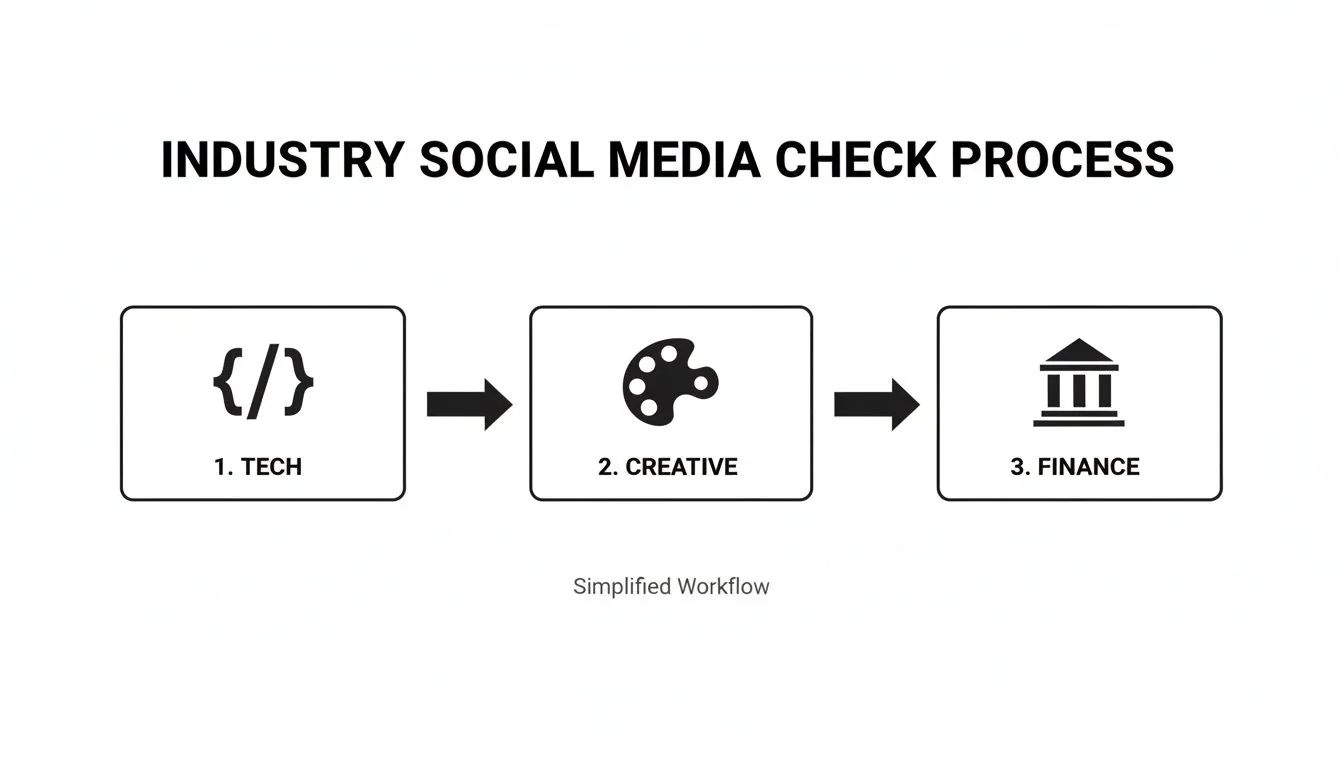
As this workflow shows, while every industry is looking for basic professionalism, fields like tech and finance have their own specific concerns, from public code projects to signs of poor judgment with sensitive information.
Building a Consistent Professional Brand
The final piece of the puzzle is building a positive, consistent narrative. Make sure your LinkedIn profile is complete, up-to-date, and tells the same story as your resume. If you’re in a creative field, your online portfolio should be polished and prominently linked. This kind of proactive brand management can turn what was once a potential liability into a genuine asset.
And remember, this isn't just a one-time thing for the job search. A recent survey found that over 78% of employers use some form of software to track employee activity, which means your digital conduct stays relevant long after you’ve got the job. Taking control of your online presence is a career-long commitment to reputation management.
Frequently Asked Questions About Social Media Checks
It's natural to have a lot of questions when you hear about social media screening. To clear things up and help you feel more confident, we've put together direct answers to the questions we hear most from job seekers about their digital privacy and job prospects.
Can Employers See My Private Social Media Accounts?
Officially, no. An employer can’t legally demand your password or force you to accept a friend request just so they can snoop around your private profile. That’s a clear line in the sand, designed to keep your personal space separate from professional scrutiny.
But let's be realistic: "private" isn't an ironclad guarantee. A friend could easily screenshot and share something, or your data could get caught up in a breach. The smartest way to operate is to assume that anything you post, no matter how tight your privacy settings are, could potentially see the light of day. Strong cybersecurity habits are essential.
How Far Back Do Employers Typically Look?
There’s no universal rule here, but most recruiters are looking for recent patterns of behavior. They care more about who you are now than a single misstep you made a decade ago. A quick scan of your most recent public posts is the standard approach.
That being said, a problematic post can still be a deal-breaker no matter how old it is. If it’s discovered, it can become a major issue. This is why a full audit of your online history is so important—it ensures there are no digital skeletons waiting to be found in your closet. This is a key part of identity theft prevention and reputation management.
Is Having No Social Media Presence a Bad Thing?
In some fields, it can be. It might seem like the safest move, but going offline can look like a red flag, especially for jobs in marketing, communications, or tech. It can make a candidate seem out of touch or, worse, make it difficult for an employer to verify who they are.
At a minimum, maintaining a professional and up-to-date LinkedIn profile is highly recommended. It confirms your identity and professional history, offering a controlled and positive digital footprint.
A polished LinkedIn profile provides that baseline of credibility employers are looking for. It’s your chance to control your professional story without having to open up your entire personal life for inspection.
Can a Social Media Post Get Me Fired From a Current Job?
Yes, without a doubt. Most companies have social media policies that spell out what’s considered acceptable online conduct for their employees. If you post content that violates those guidelines, you could be dismissed—even if it's from your personal account on your own time.
Common actions that can lead to termination include:
- Sharing confidential company information.
- Harassing or discriminating against coworkers.
- Damaging the company's public reputation.
This is exactly why managing your online reputation isn't just a one-time task for a job hunt; it's an ongoing part of your career. To get a clear picture of what's publicly visible about you, it's a good idea to periodically check your digital footprint. Staying proactive helps you maintain a professional image long-term.
Ready to take control of your online narrative? The first step is knowing what's out there. Digital Footprint Check provides a comprehensive and instant scan of your online presence, helping you with identity theft prevention and reputation management. Use our Free Checker to discover hidden accounts, exposed data, and risky posts before they impact your career.