· Digital Footprint Check · Content Marketing · 15 min read
Prevent Ebay Buyer Scams: Seller's Guide 2026
Protect your eBay sales from eBay buyer scams. Our 2026 guide covers spotting, preventing, & reporting return fraud & fake payments.

You just sold an item on eBay. Payment looks normal. The buyer's message is short. Still, something feels off.
That instinct matters. A lot of sellers talk themselves out of caution because they don't want to seem paranoid or lose a sale. In practice, the safer mindset is simple: if a transaction creates pressure, confusion, or unnecessary exceptions, treat it like a security event until it proves otherwise.
An eBay buyer scam usually doesn't start with obvious fraud. It starts with a “small favor.” Ship to a different address. Accept a partial refund request off-platform. Hurry the package out before payment clears. Those moves aren't random. They're designed to get you outside the protection of documented platform rules and into a messy dispute where your evidence is weak.
If you sell online long enough, buyer fraud stops feeling like a marketplace issue and starts looking like a digital identity issue. Scammers test your listing habits, your shipping process, your account security, and even how much of your personal information is visible online. That's why smart selling now overlaps with privacy, OSINT, reputation management, and identity theft prevention.
The Growing Threat of eBay Buyer Scams
A suspicious sale can feel personal, but the risk is broader than any one transaction. A detailed study found that approximately 1 in 5 sellers (20%) encountered fraudulent activity on eBay according to Avast's analysis of eBay scam patterns. That tells you something important right away. You're not overreacting when you double-check a buyer, pause before shipping, or document your packaging process.
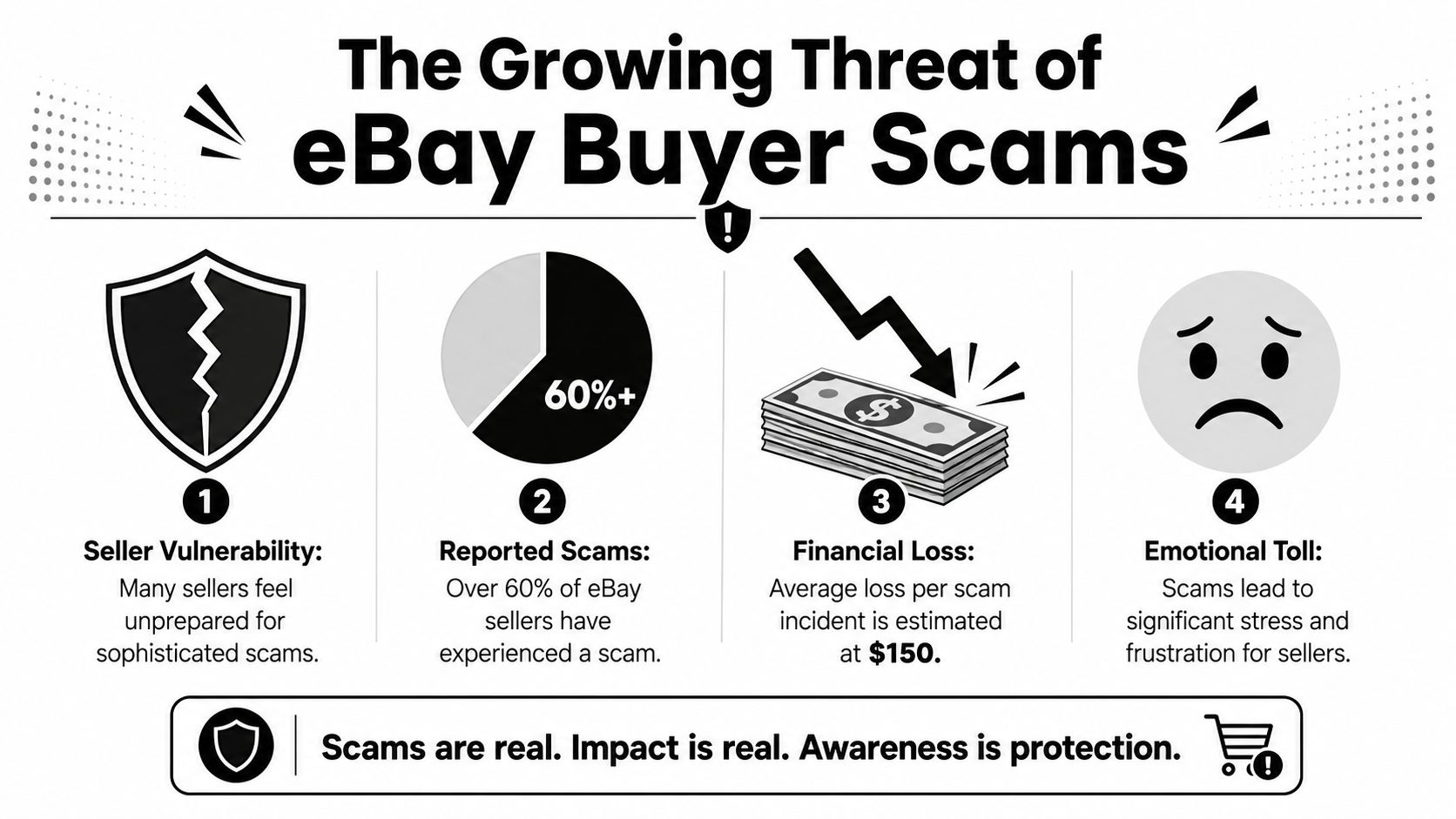
The pattern is familiar to experienced sellers. Fraudsters look for weak points in verification, rushed shipping, and accounts that haven't built strong defensive habits yet. They also take advantage of the fact that many sellers still think of scams as isolated payment problems, when they're often tied to bigger risks like account takeover, exposed personal data, or identity misuse. If you've ever wondered how these broader risks connect, this guide on how identity theft happens in everyday online activity is worth reviewing.
What seller risk looks like in practice
Buyer scams on eBay usually fall into a few repeat categories:
- False non-delivery claims where a buyer says the item never arrived
- Return fraud where the buyer sends back something different, damaged, or used
- Payment and phishing tricks that try to pull you off eBay
- Address manipulation where the buyer changes key details after purchase
The common thread is the upper hand. The scammer wants to create uncertainty around what was sold, what was shipped, where it went, or what was returned.
Practical rule: If a buyer asks you to change the normal process, slow down instead of speeding up.
Why reactive selling isn't enough
Many sellers rely on after-the-fact reporting. That helps, but it doesn't prevent the original loss. By the time a bad return lands on your doorstep or a chargeback appears, the scammer already has what they wanted.
A better approach starts before shipment. Check whether the buyer's behavior matches a normal transaction. Review messages for urgency and inconsistency. Keep every action documented inside eBay. Those habits don't eliminate risk, but they make it much harder for a scammer to control the narrative later.
Here's the shift that matters most:
| Reactive mindset | Proactive mindset |
|---|---|
| Ship first, handle problems later | Vet the transaction before shipping |
| Focus only on payment | Check messages, address changes, return risk, and profile behavior |
| Rely on memory in disputes | Build evidence as the order moves |
| Treat each issue as random | Recognize repeat scam patterns |
That change in mindset also helps in adjacent areas. The same awareness that protects an eBay listing can help with gaming account security, dating app verification, romance scam detection, and professional reputation management. Different platform, same principle: trust is easy to fake online, so verification has to become a habit.
Decoding Deception Common eBay Buyer Scams Explained
Most buyer scams don't look dramatic at first. They look like customer service.
A buyer writes politely. They thank you for shipping quickly. Then they open a return and claim the item is wrong, damaged, or not as described. Sellers who haven't seen the pattern often try to “be reasonable.” That's where the loss begins.
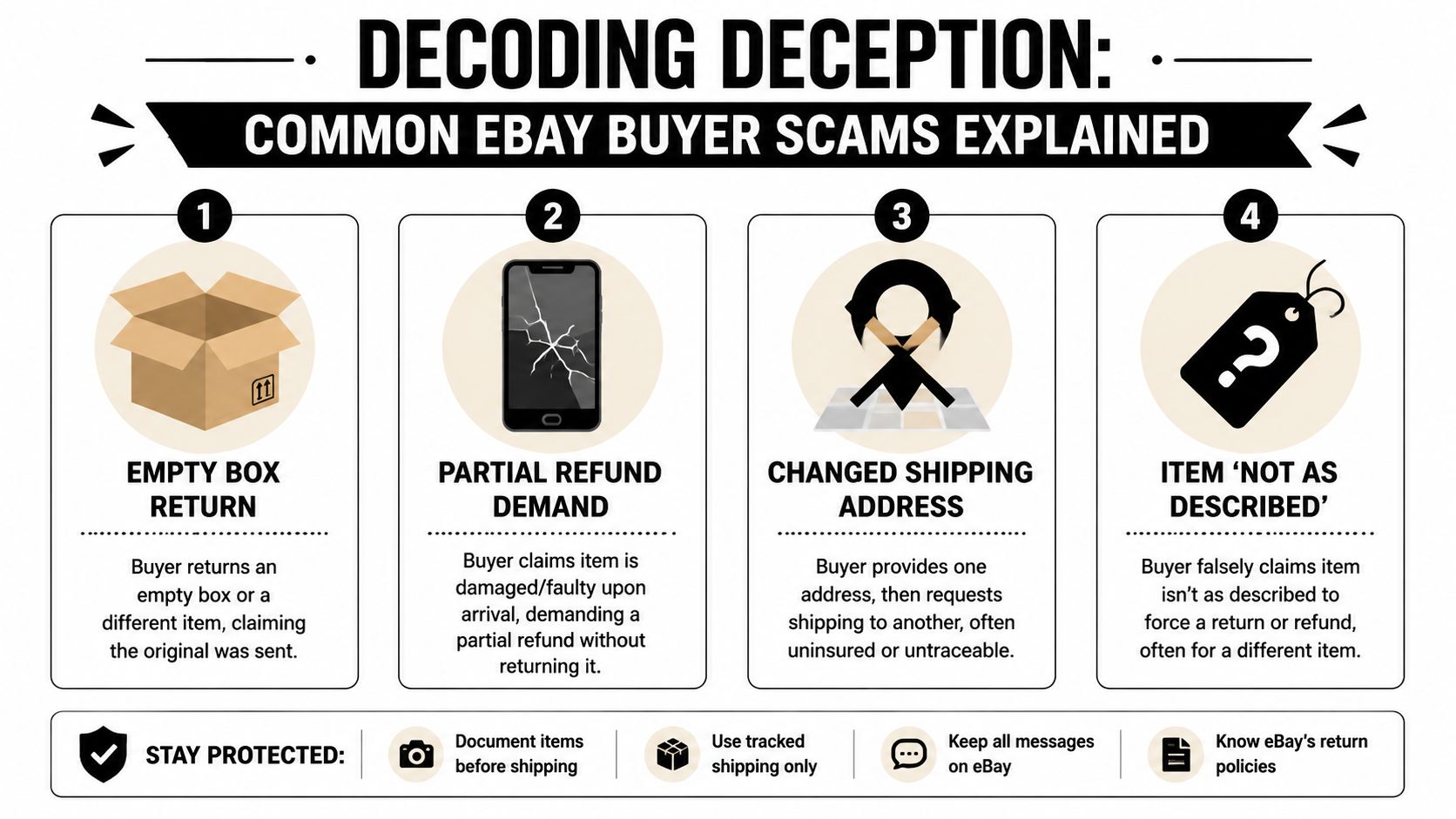
The empty box return
You ship a sealed new item. A few days later, the buyer says it wasn't what they expected and starts a return. The package comes back, but the weight feels wrong. Inside is packing material, a used version of the product, or some unrelated object.
This isn't a niche problem. According to eBay community discussions documenting buyer fraud reports, sellers have reported a verifiable and dramatic increase in return fraud where buyers ship back a used or different version of an item to claim a refund.
That's why pre-shipment photos matter. So do serial numbers, packaging images, and a clear record of item condition.
The partial refund squeeze
This one is common because it sounds practical. The buyer says the item arrived with a small issue. Maybe there's a scratch. Maybe an accessory is “missing.” They don't want to return it, they say. They just want a partial refund.
For honest buyers, that request can be legitimate. For scammers, it's a pressure tactic. They're betting you'd rather lose a smaller amount than risk a full dispute. If the complaint is real, the right move is to keep everything in eBay's system and use the platform's documented return workflow. If the buyer resists that and pushes for a side arrangement, treat it as a warning.
The changed address trap
A buyer completes checkout, then sends a message. They've moved. They're traveling. They need the package sent to a work address, cousin, freight forwarder, or pickup point instead.
That request matters because it can break the clean evidence chain between order details and delivery confirmation. If a dispute starts later, you may find that your tracking only proves delivery to an address the buyer asked for informally, not the address attached to the order.
Ship only to the address attached to the order record. Convenience today can become a lost case later.
A similar pattern shows up beyond marketplaces. Dating scammers, catfish accounts, and fake recruiters often create urgency around changed contact details too. The tactic is old. Shift the conversation, alter the destination, weaken the paper trail.
Here's a useful walkthrough before the next example:
The not as described claim
This scam exploits ambiguity. A buyer receives exactly what you listed but claims the description was misleading. Maybe they say the color is different. Maybe they claim wear was worse than shown. Maybe they swap the item and send back another unit.
Listing quality functions as security. Clear photos, exact condition notes, serial or identifying marks, and honest defect disclosure all reduce room for manipulation.
A simple comparison helps:
| Scam type | What the buyer says | What the scammer wants |
|---|---|---|
| Empty box return | “I returned the item” | Refund without returning the real product |
| Partial refund demand | “It's damaged, but I'll keep it” | Quick cash without formal review |
| Changed address | “Please send it somewhere else” | Delivery outside documented order details |
| Not as described | “This isn't what you listed” | Forced return, refund, or item swap |
The practical lesson is that each scam attacks one weak point. Packaging, communication, shipping records, or listing clarity. Strengthen those four areas and you'll recognize most bad transactions much earlier.
Spotting the Red Flags Before You Ship
The safest package is the one you never send to a bad buyer.
That sounds harsh, but experienced sellers learn it for a reason. Fraud prevention starts before the label is printed. Once the package is moving, your options narrow fast. Your greatest advantage is the decision to pause, verify, or cancel while the item is still in your possession.
Why new and low-history patterns matter
One verified pattern stands out. Accounts with fewer than 20 feedback reviews experience scams in approximately 30 to 40% of sales, while this drops to under 5% for sellers with over 100 feedback reviews according to seller-reported scam ratios discussed in the eBay seller advice community.
That data is about sellers, but the lesson applies to transaction maturity more broadly. Inexperienced accounts and inexperienced operators create easier openings for scammers. They're less likely to enforce rules, less likely to document properly, and more likely to accept “small exceptions.”
If you're a newer seller, assume you're being tested.
Behavioral red flags that matter more than words
A scammer's message often looks ordinary if you read it casually. Read it like an investigator and patterns emerge.
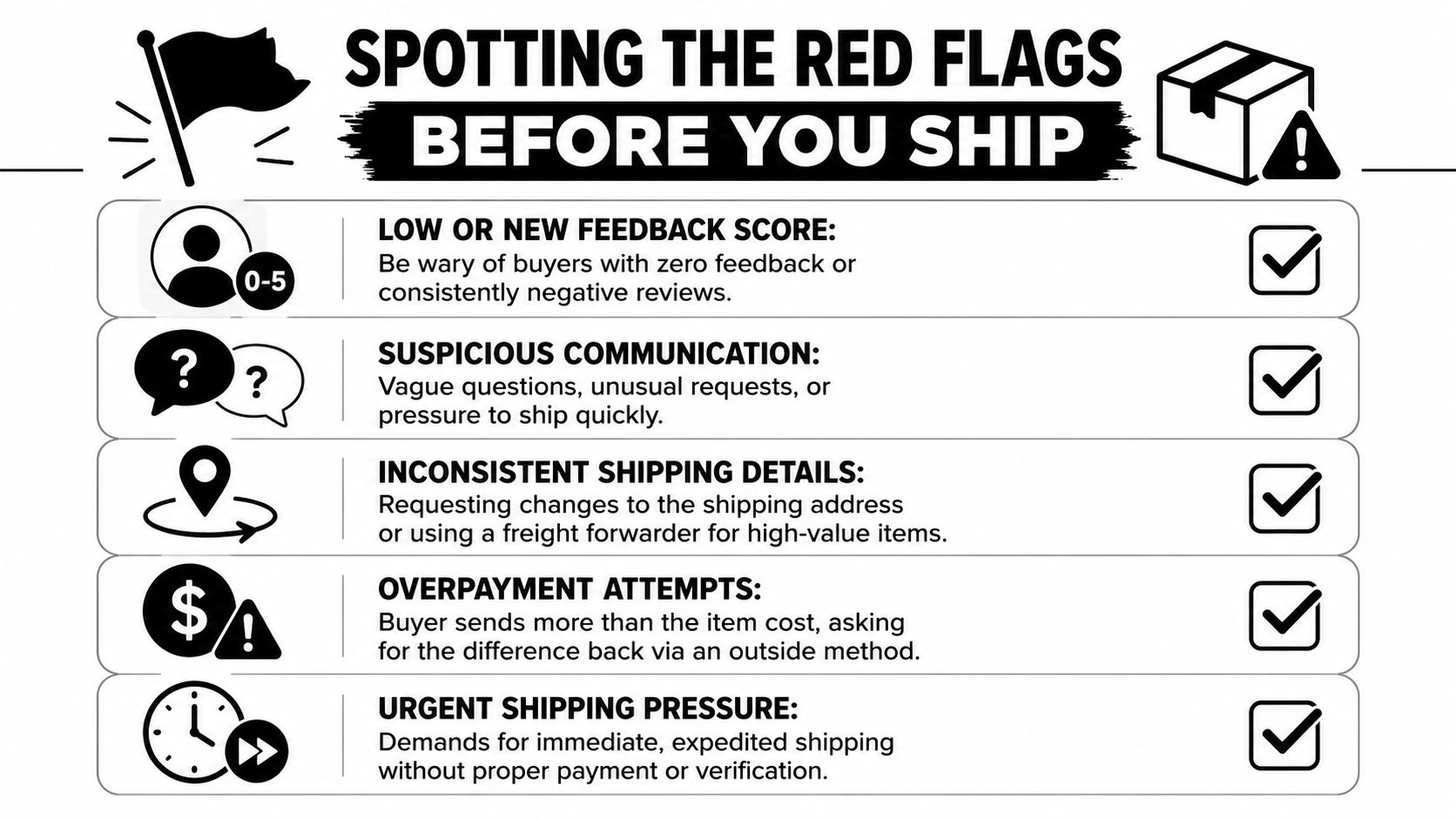
- Urgency without a good reason means the buyer wants you rushed, not informed.
- Vague product questions after purchase can signal they didn't care about the listing and may be planning a claim later.
- Requests to move off-platform are a direct attempt to weaken your evidence trail.
- Address changes after payment create shipping disputes and delivery ambiguity.
- Overpayment or odd refund requests try to turn you into the one sending money.
If you want a broader view of how criminals gather the details they use in these setups, this explainer on how scammers get your information from public and leaked sources connects the dots well.
A simple screening checklist
Use this quick decision table before shipping a higher-risk order:
| Buyer signal | Low concern | High concern |
|---|---|---|
| Feedback history | Established pattern of normal activity | Brand-new or sparse account tied to a high-risk request |
| Message style | Specific, relevant, easy to verify | Pushy, vague, inconsistent |
| Shipping details | Matches order record | Wants address changes or rerouting |
| Payment behavior | Normal checkout flow | Strange refund, overpayment, or outside-payment request |
| Item type | Everyday low-risk item | High-demand item with resale value |
If the buyer creates confusion before shipment, don't expect clarity after delivery.
What confuses sellers most
Many people get stuck on one question: “What if the buyer is just inexperienced and I cancel a good order?” That's possible. But protecting yourself doesn't require assuming bad intent. It requires enforcing clean process.
You don't need to accuse anyone. You can decline off-platform contact, ship only to the order address, require the proper payment flow, and cancel transactions that no longer match platform rules. Honest buyers usually adapt. Scammers usually escalate pressure.
That distinction matters outside eBay too. In online dating safety, gaming profile protection, and job-seeker reputation checks, the strongest signal often isn't one dramatic red flag. It's a cluster of small inconsistencies that keep asking you to ignore your normal process.
Your Defense Playbook Responding to a Suspected Scam
When a sale starts going sideways, the first job is to stop making it worse. Don't argue emotionally. Don't move the discussion to text or email. Don't improvise a custom deal to “make it go away.”
Treat the situation like incident response.
Lock the communication trail
Keep every message inside eBay. If a buyer calls, texts, or emails you directly, move the conversation back onto the platform and summarize what happened there. That gives you a usable record later.
Your written style matters too. Be brief, factual, and polite. Don't accuse the buyer of fraud unless you're making a formal report through the right channel. State what you can verify and what process you're following.
Build your evidence file
Many sellers collect evidence too late. Start as soon as the transaction feels abnormal.
Create a folder with:
- Listing records including title, description, photos, and item condition
- Order details showing the official buyer address and transaction timeline
- Message screenshots if you need quick reference, while preserving the on-platform originals
- Packaging proof such as photos of the item, accessories, label, and box before shipment
- Tracking records and delivery confirmation
- Return evidence including the received package condition, weight clues, and unboxing video if a return looks suspicious
For higher-risk items, signature confirmation and strong packaging records can make a major difference in a dispute because they narrow the room for false narratives.
Respond by scenario, not emotion
Different scam patterns need different moves.
If the buyer claims non-delivery, verify tracking first and answer through eBay with the delivery record. If they request an address change after purchase, decline and restate that you can only ship to the address on the order. If they ask for a partial refund outside the normal process, bring the discussion back to the official return path.
For returns that look fraudulent, document the unopened package before you touch it. Record the label, visible condition, and contents as you open it.
Field advice: Your goal isn't to win an argument with the buyer. Your goal is to give eBay and any payment reviewer a clean, documented timeline.
Escalate in the right order
Use a structured sequence:
- First, report the issue inside eBay and attach the relevant evidence.
- Next, respond to any dispute request with facts, dates, and documentation only.
- Then, preserve all records in case the issue expands into payment fraud or identity misuse.
- Finally, if the loss is serious and the fraud is clear, consider reporting it to the appropriate law enforcement or cybercrime channel in your area.
This is also the moment to think beyond the transaction. If a buyer has your name, shipping location, phone number, or other personal details, review your broader account exposure. Hardening your seller setup with stronger login habits and better monitoring is part of the fix. This guide to account takeover prevention for everyday online accounts is a useful checklist after any suspicious incident.
What to avoid during a live dispute
Sellers often hurt their own case by trying to be flexible.
Avoid these mistakes:
- Refunding outside the platform
- Accepting alternate return arrangements
- Editing the story mid-dispute
- Deleting messages or losing timestamps
- Threatening the buyer in writing
A calm seller with complete records usually looks more credible than an angry seller with a strong hunch and weak documentation. In fraud cases, credibility is part of your evidence.
Proactive Protection with OSINT and Digital Footprint Checks
Basic seller advice still sounds like it did years ago. Check feedback. Don't ship to a new address. Keep your messages on-platform.
That advice is still useful, but it's incomplete. A modern eBay buyer scam often connects to a broader online identity trail. Usernames, reused handles, exposed emails, old marketplace accounts, gaming profiles, dating app aliases, and public records can all reveal whether a buyer looks like a real person with a normal online history or a disposable profile built for one transaction.
Why passive protection falls short
One reported pattern captures the problem well. While 60% of sellers feel eBay's system favors buyers, most guides fail to mention that sellers can use OSINT to screen buyers proactively. The same discussion notes that 45% of scam attempts target new sellers according to this video discussion on seller-side screening and OSINT gaps.
Passive protection starts after the sale. OSINT starts before shipment.
That doesn't mean stalking buyers or crossing ethical lines. It means checking public signals that help you decide whether a transaction deserves extra caution. If a username appears tied to complaint threads, throwaway account patterns, or inconsistent digital history, that context matters. If the buyer's public footprint looks normal and stable, that matters too.
What ethical OSINT looks like for sellers
A practical OSINT check can include:
- Username review across public platforms to see whether the identity looks consistent
- Email exposure awareness if a known contact point appears in breach-related conversations or public reports
- Marketplace pattern checks for signs of disposable or complaint-linked activity
- Reputation context from public discussions, scam warnings, or suspicious alias reuse
This mindset is useful well beyond eBay. People use the same methods to check dating app matches for catfishing signs, audit gaming account exposure, review professional reputation before job applications, and reduce identity theft risk from overshared profiles. If you want a broader privacy baseline, reviewing your digital footprint across public sources is a practical starting point.
The same verification mindset applies across industries
Vehicle transactions are a good example. Sellers and buyers don't rely on appearance alone when significant value is involved. They verify ownership, history, and hidden issues before money changes hands. The same logic sits behind resources that help people understand trade HPI checks before a car deal. Marketplace sales deserve that same seriousness. Verify first, transact second.
Here's the key shift:
| Old approach | Smarter approach |
|---|---|
| Trust the profile at face value | Check public consistency and behavior signals |
| Wait for a dispute | Identify risk before shipping |
| Treat fraud as a one-off loss | Treat it as part of digital identity exposure |
| Focus only on eBay | Consider the buyer's broader online footprint |
The strongest sellers today aren't just good at listings and packing. They're good at verification. That's what separates routine online selling from disciplined online security.
Secure Your Sales and Protect Your Profile
Safe selling isn't about becoming suspicious of everyone. It's about creating a process that doesn't collapse when the wrong buyer shows up.
That process has three parts. First, recognize scam patterns early. Second, document everything that matters. Third, protect your wider digital identity so a bad transaction doesn't turn into account abuse, identity theft, or reputational damage.
The bigger lesson
An eBay buyer scam is rarely just about one refund request. It's often a stress test of your whole online setup. Weak passwords, exposed personal details, reused usernames, public oversharing, and inconsistent documentation all make sellers easier to target.
That's why digital privacy and seller protection belong together. The same habits that help with scam prevention also improve job prospects, protect gaming profiles, support safer online dating verification, and reduce the chance that strangers can piece together enough information to misuse your identity.
A seller's default standard
Use a simple operating rule set:
- Verify before shipping
- Keep communication documented
- Refuse off-platform shortcuts
- Package like you may need to prove what you sent
- Review your own exposure regularly
A secure sale starts before checkout and continues long after the package is delivered.
If you want one final habit that pays off across every platform you use, audit your own visibility. The less unnecessary information you leave exposed, the fewer tools a scammer has to work with. A practical next step is reviewing these personal cybersecurity best practices for reducing online exposure.
Online selling will always involve some risk. But it doesn't have to feel like a gamble when your process is tighter than the scammer's script.
Before the next sale feels questionable, check what's already visible about you online. Digital Footprint Check helps you review public exposure, spot identity risks, and understand how your digital footprint could affect scam prevention, privacy, job prospects, dating safety, and account security. If you want a quick starting point, try the free scan at www.digitalfootprintcheck.com/free-checker.