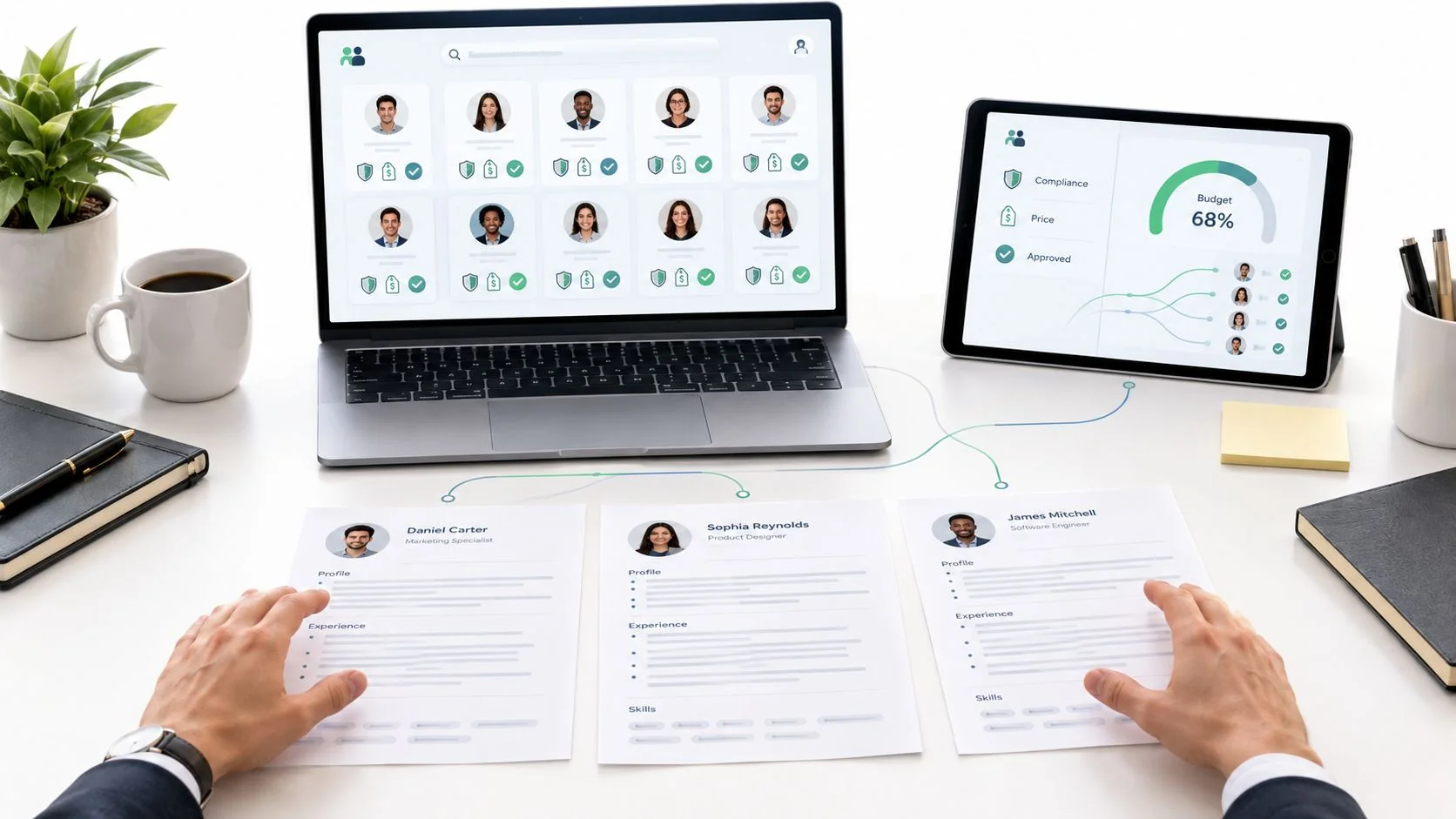
· Digital Footprint Check · Content Marketing · 21 min read
Understanding Background Check Pricing and Service Costs
Our complete guide to background check pricing breaks down costs, compares models, and reveals hidden fees to help you choose the right service for your needs.

Background check prices vary widely, from $20 for a basic scan to over $100 for a detailed report. There's no flat fee: cost depends on how deep the search goes, how many databases are queried, and whether the check must meet legal standards like FCRA compliance for hiring.
A quick criminal record check is the cheapest. A full screening — identity verification, education history, and a digital footprint analysis — costs more. With romance scams and catfishing widespread, verifying an online identity has become a key step for personal safety.
Why Background Check Pricing Is So Complex
Pricing feels confusing because you're buying more than one thing: access, collection, and analysis of data from many disconnected sources. Every layer adds to the bill, turning a simple request into a multi-step process. The price reflects the labor, access fees, and legal steps behind accurate information.
Demand is growing. The global background check market hit USD 15.54 billion in 2024 and is on track for USD 39.60 billion by 2032 — not just job screening, but a broader need for trust: verifying a date's identity, protecting gaming accounts, and keeping online interactions safe.
Core Factors Driving Costs
A few key elements determine what you'll pay — fundamental to the quality and legality of the report.
- Scope of Search: A county criminal search is cheap because it hits one database. A nationwide or federal check costs more because it queries far more sources.
- Data Access Fees: Courthouses, DMVs, and universities often charge "pass-through" fees to access their records, added directly to your bill.
- Compliance Requirements: Following regulations like the Fair Credit Reporting Act (FCRA) is required for employment or housing checks. These legally mandated steps add cost but keep the report fair and lawful. For context, see pre-employment screening.
- Turnaround Time: Need results fast? Expedited processing costs more.
- OSINT and Digital Footprint Analysis: Modern checks go beyond public records, using Open Source Intelligence (OSINT) to scan social media, gaming profiles, forums, and breach data for a fuller picture.
The industry is shifting from slow, expensive traditional services to agile, tech-driven platforms. Digital Footprint Check gives affordable insight into your own public data, so you can manage your reputation without corporate pricing. Get an instant look with our Free Profile Checker.
Breaking Down Check Types and Typical Price Ranges
Not all background checks are equal, and pricing reflects the depth and complexity of what you're after. The final cost blends database access fees, court runner costs, manual verification, and the technology used. Once you understand each type, it's clear why a simple query costs far less than a full investigation.
Think of it like building a house. A basic criminal check is the foundation — essential but limited. Employment and education verification adds the walls. A digital footprint analysis is the wiring and plumbing, revealing the hidden networks behind your job prospects and online dating safety.
Traditional Checks and Their Costs
For decades, background checks focused on a few core areas, mainly pulling from official government and institutional records. These are still fundamental for many screening situations, like pre-employment and tenant checks, but their pricing can swing wildly based on how much legwork it takes to get the data.
- Criminal History Searches ($20 - $100+): This is what most people picture. A basic instant search might scan a nationwide criminal database for $20 to $40, but these can be notoriously incomplete. For real accuracy, most employers opt for direct county-level courthouse searches, which can tack on another $10 to $25 per county. A separate federal criminal check adds another $15 to $30.
- Employment & Education Verification ($25 - $75 per verification): This isn't just a database ping. It often requires a real person to pick up the phone and contact past employers or university registrars to confirm dates, titles, and degrees. The cost reflects this manual labor, especially if an organization is slow to respond or uses a third-party verification service that charges its own fees. For a deeper look, our guide on how to verify employment history breaks it down.
- Identity & Credit Reports ($20 - $50): Verifying someone's identity through a Social Security Number trace is a standard and usually inexpensive first step. A full credit report, often reserved for financial or executive roles, costs more because of the strict FCRA compliance rules and the highly sensitive data involved.
As you can see, the prices for these traditional checks stack up quickly. A candidate who has lived in three different counties and held two previous jobs could easily run up a bill well over $150 for a standard pre-employment screen.
The Modern OSINT and Digital Footprint Check
Today, a person's identity extends far beyond official paperwork. Their digital footprint—public social media activity, forum comments, gaming profiles, and exposure in data breaches—paints a much more current and often more revealing picture of their character and potential risks. This is where Open Source Intelligence (OSINT) tools come into play.
An OSINT or digital footprint check systematically scans hundreds of online sources to build a holistic view of an individual's public-facing life. This kind of analysis is invaluable for anyone wanting to manage their online reputation, from job seekers preparing for an interview to individuals trying to vet an online date and avoid romance scams.
A digital footprint check isn’t just about digging up dirt. It’s about understanding the complete public narrative. It can just as easily reveal professional achievements shared on niche forums or highlight a consistent pattern of responsible online behavior as it can uncover red flags for catfishing.
This modern approach delivers immense value, often at a more transparent and predictable price point than bundling multiple traditional checks.
What a Digital Footprint Check Uncovers:
- Public Social Media Profiles: Goes far beyond the big names to find accounts on forums, blogs, and other niche platforms.
- Gaming and Online Handles: Connects usernames across various gaming and community sites to see how a person interacts online, which is crucial for gaming account security.
- Data Breach Exposure: Checks if emails or usernames have appeared in known data breaches, a critical indicator of potential identity theft risk.
- Publicly Shared Content: Finds photos, comments, and posts that contribute to an individual’s online persona and reputation.
For example, a job applicant could use a service like Digital Footprint Check to see exactly what a recruiter will find when they inevitably search their name online. They might discover an old, unprofessional forum account they forgot about and get a chance to clean it up before it costs them a job.
Similarly, someone using a dating app can run a check on a potential partner's username or email to verify their story and check for inconsistencies or alarming online behavior, adding a crucial layer of personal safety. The background check pricing for this type of modern, automated scan is often more predictable because it leans on powerful technology rather than costly, piecemeal record retrieval. Take control of your online presence by scanning your profile at www.digitalfootprintcheck.com/free-checker.
Comparing the Most Common Pricing Models
Once you know what goes into a background check, the next puzzle is figuring out how you'll pay for it. The world of background check pricing really boils down to a few key models, each designed for a different type of user and a specific need. Picking the right one is the key to avoiding overspending while getting the exact information you need—nothing more, nothing less.
Some models are built for one-off searches, which are perfect for a landlord or an individual checking up on a new acquaintance. Others are structured for high-volume corporate needs, offering scaled pricing for companies running hundreds or thousands of checks a year. The model you choose will directly shape your total cost.
This breakdown shows the essential categories of checks, from the traditional criminal and employment verifications to the more modern digital footprint analysis.

As you can see, the industry has evolved. It's moved beyond simple record-based checks to a more complete view that includes a person's online life.
Pay-Per-Search Model
The simplest, most straightforward option is the Pay-Per-Search or Pay-As-You-Go model. It’s exactly what it sounds like: you select the specific searches you need—like a county criminal check or an education verification—and pay for each one individually.
This à la carte approach gives you maximum flexibility and is ideal for anyone with infrequent or highly specific needs. There are no contracts, no subscriptions, and no upfront commitments.
- Best For: Individuals running a check on themselves, landlords screening a single tenant, or small businesses hiring their first employee.
- Real-World Scenario: A freelance graphic designer wants to vet a new, high-value client before signing a big contract. They use a pay-per-search service to run a quick civil records check for any past business disputes, paying a one-time fee of around $40.
Subscription Plans
For anyone with ongoing needs, Subscription Plans are a popular choice. With this model, you pay a recurring monthly or annual fee for a set number of checks or, increasingly, for continuous monitoring services.
It's a great fit for individuals who want to keep tabs on their own digital footprint or for businesses with consistent, low-volume screening needs. Over time, it often delivers better value than paying for individual checks one by one.
Subscription models are shifting the focus from one-time vetting to continuous monitoring. For personal reputation management, this means getting real-time alerts about new public information or data breach exposures, allowing for proactive defense against identity theft and reputational damage.
Services like Digital Footprint Check use a similar model, offering ongoing monitoring to help you stay ahead of potential online privacy risks.
Tiered Report Bundles
Many background check companies offer Tiered Report Bundles, which package several common searches together at different price points. For instance, a "Basic" tier might include an SSN trace and a national criminal database search. A "Premium" tier could add county criminal searches, employment verification, and a credit report.
This is the most common model for HR departments and businesses that need to run different levels of checks for various roles. An entry-level position might only require the Basic bundle, while an executive role would justify the Premium package.
The dynamic pricing of background checks is highlighted by different market forecasts. North America commands over 40% of the market, driven by mature regulations where checks can range from $25 for basic searches to over $150 for comprehensive executive packages. Meanwhile, the Asia-Pacific market is the fastest-growing, with pricing as low as $10-40 for high-volume screenings powered by cloud platforms. You can dive deeper into these global background check market trends.
Enterprise Licensing
For large corporations with high-volume, continuous screening requirements, Enterprise Licensing is the standard. This involves a custom-negotiated contract that provides full access to the provider’s platform, often with heavily discounted rates based on the sheer volume of checks performed annually.
These plans typically come with dedicated account managers, integrations with Applicant Tracking Systems (ATS), and advanced compliance management tools. The pricing is highly customized and almost never listed publicly.
To help you decide which model fits your situation, here's a quick comparison.
Comparison of Background Check Pricing Models
A comparative analysis of the most common pricing structures to help individuals and businesses choose the best model for their specific needs and budget.
| Pricing Model | Best For | Pros | Cons |
|---|---|---|---|
| Pay-Per-Search | Individuals, small businesses with infrequent needs, or one-off checks (e.g., online dating verification). | Maximum flexibility; no commitment; pay only for what you need. | Can be expensive for multiple checks; lacks volume discounts. |
| Subscription | Individuals wanting ongoing digital privacy monitoring; businesses with predictable screening needs. | Cost-effective for regular use; enables continuous monitoring; predictable monthly costs. | Can be wasteful if unused; may have limits on the number of checks per month. |
| Tiered Reports | HR departments, businesses hiring for various roles with different screening requirements. | Bundled pricing offers good value; simplifies ordering; tiers match job risk levels. | May include services you don't need in a bundle; less flexible than à la carte. |
| Enterprise Licensing | Large corporations with high-volume, ongoing screening needs (1000+ checks/year). | Lowest cost-per-check at scale; custom integrations (ATS); dedicated support. | Requires a long-term contract; high upfront cost; not suitable for small volumes. |
Ultimately, the best model depends entirely on your specific situation. For anyone just looking to understand their own public data without committing to a costly plan, modern tools offer a flexible alternative. You can explore the different options available by reviewing our transparent background check pricing. This approach lets you see what’s out there first, empowering you to make a more informed decision.
Uncovering Hidden Costs and Compliance Fees

The price you see on the sticker isn't always the price you pay. It's a frustratingly common story: you find what looks like an affordable background check, only to get an invoice loaded with extra charges you never saw coming.
These hidden costs can quickly turn a budget-friendly search into a major expense. Understanding where these fees come from is the key to getting a realistic handle on your total background check pricing. Legacy providers, especially, have a knack for itemizing every little charge, which creates a lot of complexity and sticker shock.
Third-Party Data Access Charges
One of the biggest culprits behind surprise fees are third-party data access charges. You'll often hear them called "pass-through" costs. These aren't sneaky markups from the background check company; they're the direct fees charged by the institutions that actually hold the records.
- Courthouse Retrieval Fees: Most county and state courts charge a fee to pull their criminal or civil records. This can be just a few dollars or upwards of $25 per search, and the prices are all over the map depending on the jurisdiction.
- Academic Verification Fees: Many universities use third-party clearinghouses to manage degree verifications. Those services charge a fee, and that fee gets passed directly to you.
- DMV Fees: Getting your hands on driving records almost always involves a state-mandated fee.
If your candidate has lived in a few different counties or attended multiple colleges, these small charges can add up in a hurry.
Platform and Administrative Fees
On top of the raw data costs, many providers tack on their own administrative or platform fees. These are meant to cover their operational overhead, but if they aren't disclosed upfront, it can feel like you're being nickel-and-dimed.
You might run into things like:
- Account Setup Fees: Some services, particularly for business clients, will charge a one-time fee just to open an account with them.
- International Surcharges: If a search needs to cross borders, you can bet there will be hefty surcharges to cover the hassle of accessing international records.
- Rush Fees: Need the results yesterday? Expedited processing is almost always an option, but it will cost you.
These are the kinds of fees that make it clear why understanding the full employee background check cost is about more than the advertised price.
The High Cost of Compliance
This is the big one. The most critical—and most underestimated—expense is wrapped up in legal compliance. Following regulations like the Fair Credit Reporting Act (FCRA) in the U.S. or the General Data Protection Regulation (GDPR) in Europe isn't just a good idea for employment screening; it's the law.
Non-compliance isn't just a risk; it's a direct financial threat. Fines for violating regulations like the FCRA can run into the thousands of dollars per violation, turning a cheap, non-compliant background check into a massive liability.
Running a compliant check involves very specific legal steps, secure data handling, and proper authorization from the candidate. All of this contributes to the real cost of a background check, but it's a necessary expense that protects both you and the person you're screening.
This is where modern platforms like Digital Footprint Check really simplify things. Many of these variable fees are often bundled into a single, transparent price. This approach helps you dodge the surprise of a dozen little charges, giving you an honest and predictable picture of what you'll actually be paying.
Real-World Scenarios for Different Budgets
Theory is one thing, but seeing how background check pricing works in real life makes it all click. Different goals and budgets call for different tools. By looking at a few common situations, you can see how people get the answers they need without breaking the bank.
These stories show that a smart approach isn't about buying the most expensive report. It’s about choosing the right tool for the job.
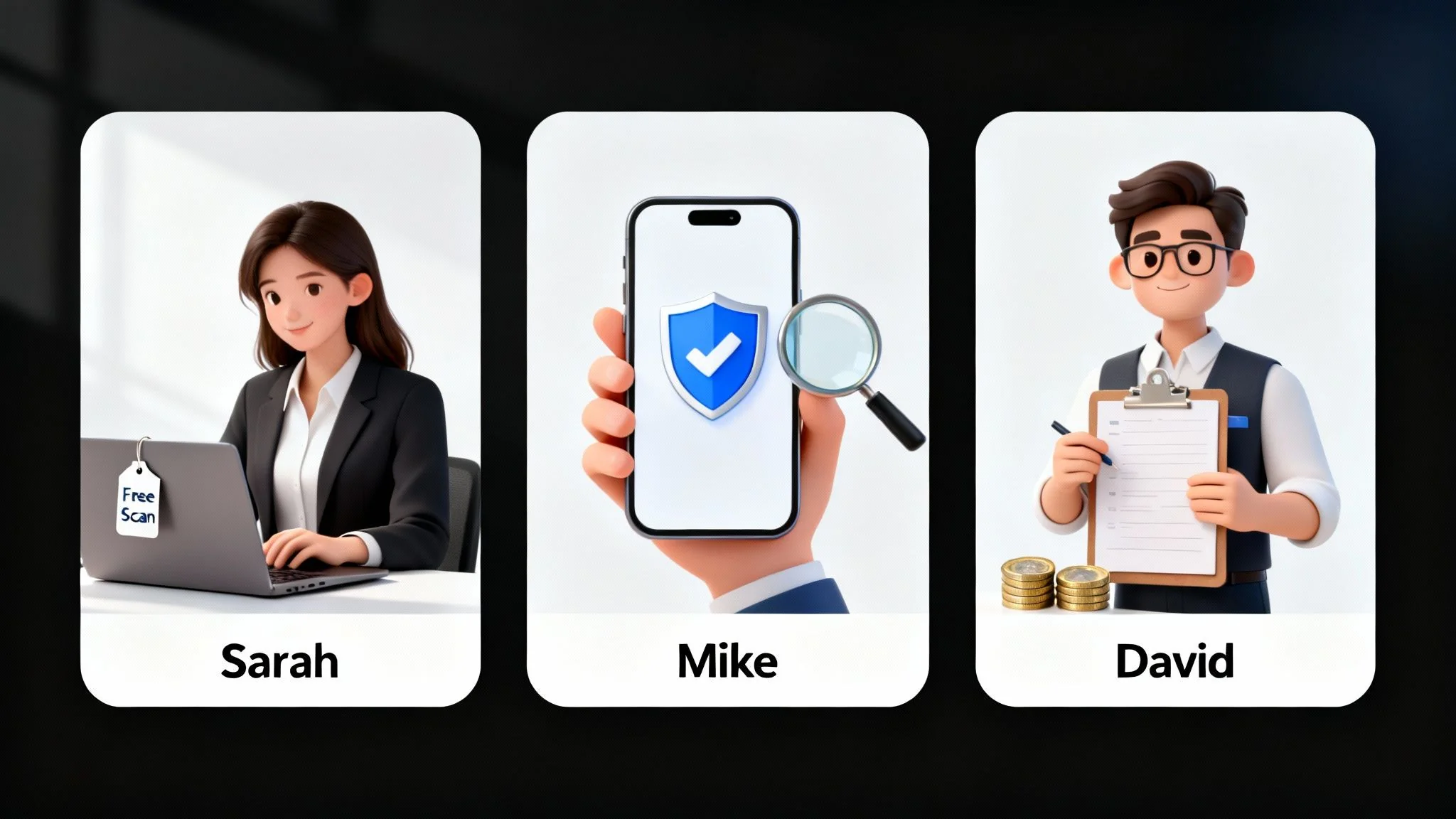
Sarah The Proactive Job Applicant
Sarah is deep in the job hunt and knows recruiters will be Googling her name. She’s worried about an old, unprofessional forum account from her college days and wants to see her digital footprint exactly as a hiring manager would. The high price tag of traditional background checks feels like overkill for her reputation management needs.
Her solution? She starts with a free scan from Digital Footprint Check. The initial search immediately flags her public social media profiles and confirms that the forgotten forum account is still visible. For zero cost, she has a clear action plan to clean up her online presence and improve her job prospects.
Mike The Cautious Online Dater
Mike has been chatting with someone new on a dating app for a few weeks. Before they meet in person, he wants to do some basic verification for his own safety. He’s concerned about romance scams and catfishing. He doesn’t need a formal, FCRA-compliant criminal check, which would be both wildly inappropriate and expensive for personal use.
Instead, Mike turns to a combination of OSINT tools and a digital footprint analysis. He runs the person's username and email through a specialized search, which uncovers social media accounts on platforms they never mentioned. This lets him look for red flags or inconsistencies in their stories—all without the cost or legal complexity of a traditional screening service.
David The Small Business Owner
David is hiring the first full-time employee for his growing e-commerce shop and needs a reliable, affordable way to vet his top candidate. A traditional provider quotes him around $75 for a pay-per-search criminal and employment verification check. But he's also worried about the candidate's professionalism and judgment, things a standard criminal check won't show.
He decides to supplement a basic criminal check with a comprehensive digital footprint analysis. This gives him a much more complete picture of the candidate's public behavior and character. Understanding the full pre-employment screening process helps David make an informed decision that balances cost with real-world insight.
These scenarios highlight a critical shift in how we approach verification. It's no longer just about official records; it's about understanding the complete public persona, which often requires a more modern, tech-driven solution for effective online identity protection.
The market for these services is heavily influenced by where you are. North America, which holds a significant 35-40% of the global market share, sees higher prices driven by strict FCRA compliance and widespread employer adoption. Here, a basic check can run $20-50, while comprehensive reports with OSINT can easily top $100. The market is booming, partly due to rising fraud which cost U.S. businesses a staggering $5.8 billion in 2024 alone. You can dive deeper into these background check market dynamics to see the trends for yourself.
How to Choose the Right Service for Your Needs
Trying to navigate the world of background check pricing can feel like a maze. But picking the right provider isn't about finding the absolute lowest price—it's about asking the right questions to find the best value for your specific situation, whether you're focused on cybersecurity, online dating safety, or professional reputation management.
A smart decision protects you from hidden fees, bad data, and even legal trouble down the road. By using a clear framework, you can filter the noise and pick a service that actually delivers what it promises.
Your Decision-Making Checklist
Before you hand over your credit card, run any potential service through this quick checklist. These four pillars will help you separate the useful providers from the ones just trying to make a quick buck.
-
Pricing Transparency: Is the cost structure actually clear? A reputable provider won’t bury fees in the fine print. Look for simple, all-inclusive pricing instead of a tempting low base rate that balloons with "courthouse fees," "administrative charges," and other pass-through costs.
-
Scope of Search: Does the check go beyond dusty old public records? A modern background check has to include a deep dive into an individual's digital footprint. Make sure the service uses OSINT tools to scan social media, online forums, gaming profiles, and data breach records to give you a full picture of their public online life.
-
Compliance and Ethics: Does the provider play by the rules? This is non-negotiable. If you're screening for a job or housing, the service must be FCRA compliant. For personal use, they should be using ethical OSINT (Open Source Intelligence) methods that stay within legal and digital privacy boundaries.
-
User Experience: How painful is it to actually use the platform? A clunky interface and slow reports are major red flags. The best services have a dead-simple ordering process, fast turnaround times, and reports that are easy to read and give you clear, actionable information.
Choosing a service isn't just about the data you get back. It's about the quality and legality of that data. A cheap, non-compliant check can end up costing you far more in the long run than a slightly more expensive one that does things the right way.
The Smart First Step
Running providers through this checklist will give you a much clearer sense of what you're actually paying for. To get a feel for the entire process, it's worth reading our guide on how to conduct background checks to understand what's involved from start to finish.
If you want to see what's out there about your own online identity without spending a dime, the most logical first step is a preliminary scan. It's a risk-free way to get immediate insight into what's publicly visible about you online.
This is invaluable for managing your own reputation and ensuring your personal safety. Start by finding out what your own digital footprint looks like today. Scan your profile for free at www.digitalfootprintcheck.com/free-checker and start taking control of your online identity.
Common Questions About Background Check Costs
Figuring out the price of a background check can feel a bit like navigating a maze. Let's clear up some of the most common questions people have about the costs and what you actually get for your money.
How Much Does a Basic Individual Check Cost?
For a simple, personal background check on one person, you're typically looking at a range of $25 to $75. This usually gets you a basic criminal history search, a check on past addresses, and a scan of the sex offender registry.
If you need a more detailed report—say, one that includes verifying past jobs, confirming a college degree, or digging into someone's online activity and digital privacy risks—the price will climb. The final cost really just depends on how many different sources need to be checked and how complex that process is.
Are Instant Online Background Checks Accurate?
Those "instant" online checks are fast, but that speed often comes at the cost of accuracy. They usually just scan a handful of public databases that might be outdated, which can lead to missing information or, worse, flat-out wrong details. This can be dangerous when trying to detect catfishing or verify a person's identity for online dating safety.
Truly reliable checks, especially the kind used for hiring, often require someone to manually verify the information at the source, like calling a county courthouse or contacting a university registrar. It takes more time, but it's the only way to be sure the data you're getting is verified and trustworthy.
Think of an instant search as a good first look, but never the final word. Real accuracy comes from a more patient approach that uses technology to find leads and human verification to confirm the facts.
FCRA Checks vs. Digital Footprint Scans
It's critical to know the legal difference here. An FCRA-compliant background check is the official, formal screening process used for things like hiring, renting an apartment, or getting a loan. These checks are governed by strict federal laws to protect the person being screened.
A personal digital footprint scan, on the other hand, is for your own informational and safety purposes. It uses Open Source Intelligence (OSINT) tools to map out what's publicly available about you online. This is perfect for managing your personal reputation, staying safe in online dating, or spotting the signs of identity theft.
Can I Run a Background Check on Myself?
Absolutely—and it’s one of the smartest things you can do for your online reputation. Running a check on yourself is the best way to see what potential employers, new acquaintances, or anyone else might find when they search your name. It gives you the chance to spot and deal with old accounts or unflattering information before it negatively impacts your job prospects or personal safety.
The best way to start is by seeing your own digital footprint. Digital Footprint Check gives you a free, no-strings-attached look at what your public profile really says about you.
Find out what's out there today with our Free Profile Checker.