· Digital Footprint Check · Content Marketing · 14 min read
How Secure Is Cash App? a 2026 Security Guide
Wondering how secure is Cash App? Our 2026 guide gives a balanced look at its encryption, fraud protection, scams to avoid, and how to protect your account.

You open Cash App, type a friend’s $Cashtag, enter the amount, and hover over Pay for a second longer than usual. That pause is normal. Sending money is easy. Trusting that the money will land safely, and that your account won’t become someone else’s target, is the harder question.
The short answer is that Cash App is reasonably secure as a platform, but that doesn’t mean every Cash App transaction is safe. Those are different things. The app has real technical protections, yet most losses happen when scammers trick the user, not when they break the app’s encryption.
That distinction matters if you’re trying to figure out how secure is cash app in real life, not in marketing copy. The actual risk often sits at the intersection of app security, your phone security, your email security, and your broader digital footprint. If your personal information is already floating around from old breaches, public profiles, or reused usernames, a scammer can use that context to make a fake Cash App message look convincing. If you want a good primer on the bigger identity-protection side of that problem, this explanation of identity theft protection basics helps connect the dots.
That’s also why Cash App questions increasingly overlap with crypto curiosity. Many people move between payment apps, exchanges, and token research, and that creates more chances for social engineering. If that’s part of your world, CoinStats has a comprehensive guide on Cash 4 crypto that’s useful for understanding how payment-related digital assets are presented and tracked.
The Billion-Dollar Question Is Your Money Safe on Cash App
Cash App feels safe because it is simple. Simplicity benefits usability, but it can also obscure where actual danger lies. Users often imagine a criminal hacking into the app. In practice, a lot of harm comes from much less dramatic situations: sending money to the wrong $Cashtag, trusting a fake support account, approving a payment under pressure, or logging in through a fake page.
What people usually mean by safe
When someone asks whether their money is safe on Cash App, they usually mean one of three things:
| Question | What it really asks | Practical answer |
|---|---|---|
| Can outsiders break into the app? | Is the platform technically protected? | Cash App uses layered security controls. |
| Can someone steal from my account? | Can a criminal take over my access or trick me? | Yes, especially if they compromise your phone, email, or verification path. |
| Can I get my money back? | What happens after a bad payment? | Recovery may be limited because peer-to-peer payments are often hard to reverse. |
That last point is the one many users miss. A payment app can be well-defended and still leave a user exposed if the user authorizes the payment.
Core idea: In peer-to-peer apps, the biggest security question often isn’t “Can someone break in?” It’s “Can someone persuade me to let them in or send the money myself?”
Safe enough for the right use case
Cash App works best when you use it for what it’s built for: quick payments with people you know and trust. It’s a weaker fit for strangers selling concert tickets, supposed giveaway hosts, “investment mentors,” or anyone who says urgency matters more than verification.
That’s why the right answer is balanced. Cash App isn’t reckless by design, and it isn’t magically safe just because it’s popular. The platform functions a lot like a car with working brakes, airbags, and seatbelts. Those features matter. But they don’t protect you if someone talks you into driving into the wrong lane.
How Cash App Security Is Designed to Protect You
Cash App’s security setup makes more sense if you view it as a building with several barriers instead of one giant vault door. One layer protects stored information. Another watches for suspicious behavior. Another sends alerts so the user can react fast.
The layers that matter most
According to Cash App, customer data is encrypted, it uses 24/7 fraud monitoring, and it sends real-time security alerts for suspicious behavior. Cash App also says it has helped prevent up to $2 billion in potential scams since 2020 on its Cash App security page. That combination tells you the app isn’t relying on one defense. It’s trying to make theft harder, spot unusual activity quickly, and warn the user before damage spreads.
Here’s how those layers work in plain language:
- Encryption protects data: If information is encrypted, it’s scrambled into a form that isn’t readable in a normal way.
- Fraud monitoring watches behavior: Systems can flag payments or actions that look unusual for that account.
- Security alerts involve the user: A warning can help you catch a bad login or suspicious transfer before it turns into a larger problem.
Why this still doesn’t guarantee recovery
Strong security design doesn’t change the nature of peer-to-peer payments. If you send money to a scammer because they convinced you they were your landlord, a customer support agent, or a friend in trouble, the system may treat that payment as authorized.
That’s why prevention matters more than cleanup on Cash App. With some traditional card transactions, there may be stronger dispute paths. With peer-to-peer transfers, the app may not be able to unwind what you willingly approved.
A secure app can reduce fraud risk. It can’t fully protect a user from a payment they deliberately confirmed.
The overlooked weak point
Many users focus only on the Cash App account itself. A smarter view is to ask what protects the things around it:
- your phone lock
- your email account
- your mobile number
- your app notification access
If someone compromises your email or intercepts your phone number, they may not need to “hack Cash App” directly. That’s why good password manager best practices matter even for accounts that don’t feel like classic password-based banking.
The Real Risks Common Scams That Bypass Platform Security
Most Cash App horror stories don’t start with broken encryption. They start with a message. A fake warning. A rushed decision. A believable lie.
Phishing and fake support
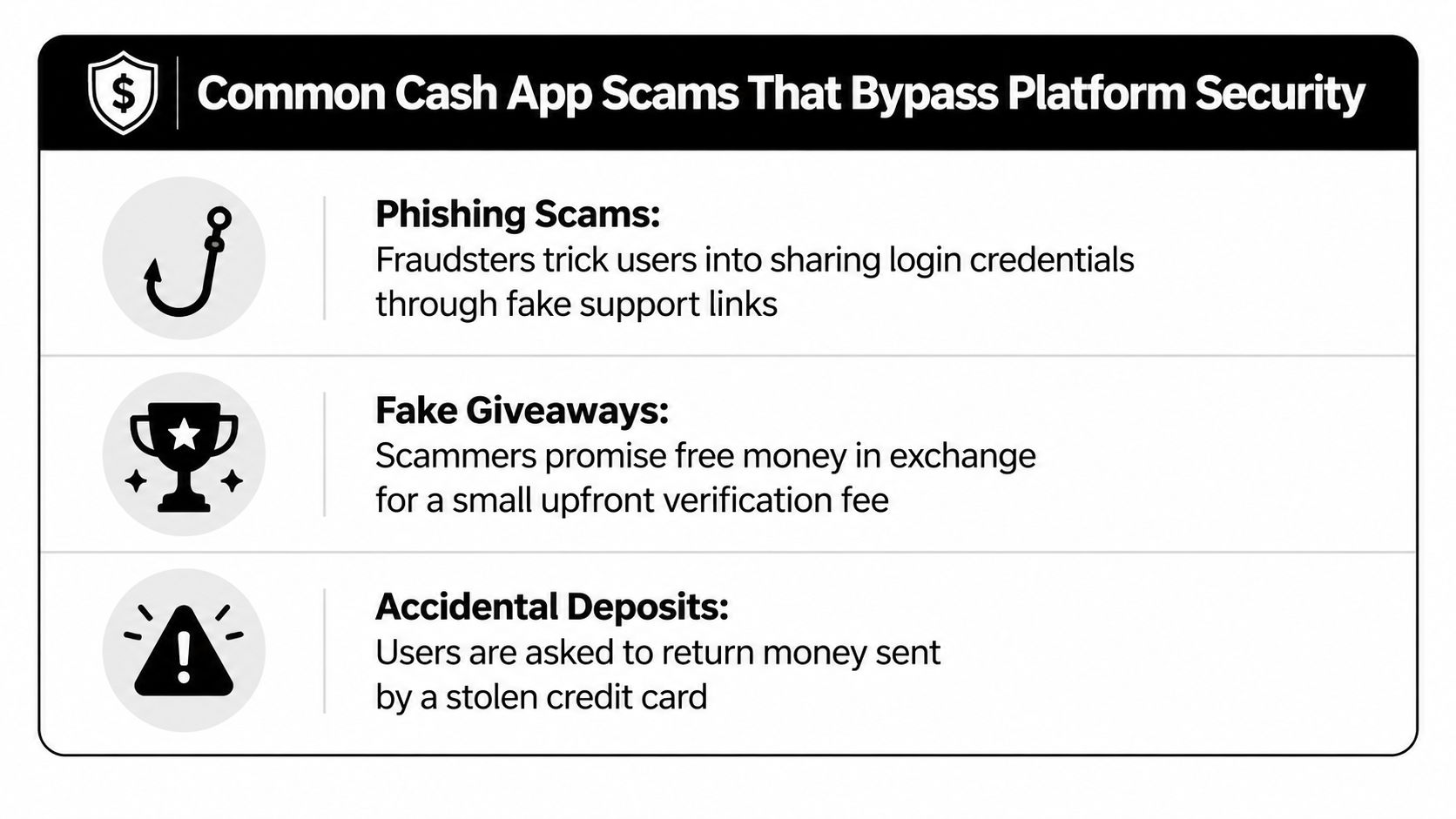
You get a text stating that your account is locked. The message includes a link and a deadline. You tap it because the timing feels urgent. The page looks close enough to the actual thing, so you enter your details.
That’s a classic phishing setup.
A variation is the fake customer support scam. You search online for Cash App support, find a phone number or social profile posted by a scammer, and contact them first. They don’t need to break through Cash App’s systems if they can convince you to hand over verification codes or remote access.
Red flags include:
- Pressure to act fast: “Your account will be closed today.”
- Requests for codes: No real support agent should need you to hand over one-time verification codes casually.
- Off-platform contact: A stranger moving you to text, direct message, or a random phone line is a warning sign.
For account takeover scams, phone-number abuse is part of the danger. If you’ve never looked into how number hijacking works, this guide on SIM cloning and related mobile account risks is helpful context.
A quick walkthrough can make these patterns easier to spot:
Fake giveaways and accidental payment tricks
Another common play is the “free money” scam. A social account promises to bless followers with cash, but first you need to send a small “verification” payment. Once you send it, the account disappears or demands more.
Then there’s the accidental payment story. Someone says they sent you money by mistake and begs for it back. The emotional pressure is the point. If the original payment came from a stolen card or compromised account, you may end up out the money you returned.
Practical rule: Never treat urgency as proof. Treat it as a reason to slow down.
Small stories, same psychology
These scams look different on the surface, but they rely on the same triggers:
| Scam type | What the scammer wants | Emotional trigger |
|---|---|---|
| Fake support | Login access or verification code | Fear |
| Giveaway scam | Upfront payment | Greed or hope |
| Accidental deposit story | Return payment | Guilt |
| Fake investment opportunity | Repeated transfers | Excitement and trust |
The app’s technical protections can’t fully stop this category of threat because you are the target, not just the software.
Major Security Incidents and What We Learned
Cash App’s most important publicly documented security event wasn’t a dramatic password-theft story. It was an internal access control failure.
According to Security.org’s reporting on the Cash App breach history, the biggest publicly documented exposure involved a 2021 breach in which a former employee retained access to customer reports after termination. The incident affected about 8.2 million current and former U.S. users, and it later contributed to a $15 million class-action settlement. The same reporting says the exposed information did not include usernames, passwords, Social Security numbers, dates of birth, payment card data, bank account numbers, or addresses.
Why this matters more than it first appears
A lot of readers hear “no passwords were exposed” and assume the event wasn’t serious. That misses the bigger lesson.
Security isn’t only about keeping outsiders out. It’s also about controlling what insiders and former insiders can access, when they can access it, and how quickly that access disappears after a role changes or employment ends.
This incident matters because it shows that a payment app can avoid one familiar risk and still face another. In other words, “nobody hacked my password” doesn’t mean “my information was never exposed.”
The practical lesson for users
The breach changed how many people think about the question how secure is cash app. The answer isn’t just about encryption or scam texts. It also includes the company’s internal governance, access management, and data handling practices.
Here’s the takeaway in plain terms:
- A hack and a data exposure aren’t the same thing
- No password exposure doesn’t mean no user impact
- Internal controls matter as much as external defenses
Security failures can come from the inside. Users should evaluate payment apps with that possibility in mind, not only the image of an outside hacker.
If you want to understand the broader concept behind incidents like this, it helps to know what security professionals mean by a data breach and how it affects exposed users.
Your Personal Security Checklist for a Hardened Cash App Account
You can’t control Cash App’s internal systems, but you can reduce the odds that someone misuses your account. Most of the best defenses are simple. They just require consistency.

Start with in-app habits
Use this as a working checklist, not a one-time project:
- Turn on payment confirmation protections: If the app offers a security lock or payment confirmation step, use it. Requiring a passcode or biometric check adds friction in exactly the place where mistakes happen.
- Review notifications carefully: Alerts don’t help if they’re muted, buried, or ignored.
- Check linked devices and sessions: If something looks unfamiliar, treat it seriously.
Tighten the accounts around Cash App
Your Cash App account depends on other systems. If those systems are weak, your payment security is weak too.
| Account or setting | Why it matters | Better practice |
|---|---|---|
| Email account | Often used for verification and recovery | Use a unique email address for financial accounts if possible |
| Phone number | Can be used in login and alerts | Protect your mobile account and watch for unusual carrier activity |
| Device lock | Prevents local access if phone is lost | Use a strong PIN or biometrics |
| Linked payment method | Affects downstream exposure | Review what cards or bank accounts you’ve connected |
A lot of account-sharing and device-sharing mistakes happen at home, too. Families, partners, and roommates often normalize loose phone security. This resource on safeguarding applications for shared account users is a useful reminder that convenience can erode app security.
Transaction habits that prevent regret
When people lose money on Cash App, they often say the same thing afterward: “I was in a rush.”
Slow yourself down with a repeatable routine:
- Check the $Cashtag twice. Similar names are easy to misread.
- Confirm the reason for the payment outside the app. If a friend asks for money through message only, call them.
- Avoid paying strangers for high-pressure deals. Tickets, deposits, collectibles, and “investment opportunities” are common traps.
- Separate financial email from casual email when possible. Good email security best practices make phishing and account recovery attacks harder.
The best Cash App setting is still a pause button in your own head. Ten extra seconds can stop a permanent mistake.
How Your Broader Digital Footprint Creates Cash App Risks
A scammer doesn’t need your full bank file to target you. Sometimes your public crumbs are enough.

Why unrelated exposure still matters
Say your email address shows up in an old gaming forum leak. Your phone number appears on a forgotten business listing. Your Instagram reveals your city, your college, and the fact that you use Cash App because your bio includes a payment handle.
None of those details alone feels catastrophic. Together, they give a scammer material for a customized message:
- your real first name
- a city you recognize
- a recent interest
- a believable payment context
That’s how a fake alert becomes persuasive. It doesn’t look random anymore. It looks like it came from a system that “knows” you.
The digital footprint to fraud pipeline
This is the part many people miss. Cash App risk often begins outside Cash App.
| Exposed information elsewhere | How a scammer might use it against a Cash App user |
|---|---|
| Email address from an old breach | Send a realistic phishing message |
| Phone number from public listings | Text fake security alerts |
| Username reused across platforms | Link identities and build trust |
| Public social posts | Personalize stories and timing |
| Public payment handle | Target you directly with impersonation or bait |
That’s why people with visible online footprints often face more convincing fraud attempts, not just more spam.
Why breach fallout lasts
A data breach doesn’t end when the news cycle ends. Exposed details can keep circulating, getting copied into lists, mixed with public data, and reused months or years later. That’s one reason legal and financial fallout around breaches can continue well after the original incident. For readers who want the consumer-rights angle, this overview of protecting investor rights after a breach shows why post-breach consequences often extend beyond the initial event.
Your Cash App security is connected to your whole online identity. If an attacker can impersonate someone you trust, predict your interests, or reach the inbox and phone number tied to your account, the app’s internal safeguards have a much harder job.
Proactively Monitor Your Data to Prevent Financial Fraud
Locking down settings is defensive. It helps. But it doesn’t answer a more uncomfortable question: What does a scammer already know about you?
That’s where proactive monitoring changes the game. Instead of waiting for a suspicious transfer or fake support text, you look for exposure first. You check whether your email addresses, usernames, or phone numbers have appeared in breaches or public records. If they have, you treat related accounts as higher risk.
Why monitoring matters
A lot of financial fraud becomes possible because the attacker has context. They know your name, your email, maybe an old username, and enough about your habits to sound credible. If you identify that exposure early, you can:
- Change weak or reused credentials
- Harden the email account tied to payment apps
- Watch for targeted phishing instead of generic spam
- Retire old usernames that connect your identities too neatly
This is also where OSINT tools are useful for ordinary people, not just investigators. They help you see the public and breached pieces of your digital identity from the attacker’s perspective.
One option is Digital Footprint Check, which lets users inspect exposed online identity details across platforms and breach-related sources. Used correctly, tools like that don’t replace app security settings. They complement them by revealing what personal data may already be available for social engineering.
The stronger approach
Think of your security in two parts:
- Harden the account
- Reduce the information attackers can use against you
If you do only the first, you’re still playing defense after the scammer has picked the target and written the script. If you do both, you make yourself harder to profile, harder to impersonate, and harder to fool.
If you’re worried about identity theft, phishing, or how exposed information from other sites could increase your Cash App risk, run a free scan with Digital Footprint Check. It can help you spot exposed emails, usernames, and other digital breadcrumbs before scammers turn them into financial fraud.