· Digital Footprint Check · Content Marketing · 15 min read
How to See Your Digital Footprint: a Practical Guide to
how to see your digital footprint: Learn to audit, monitor, and protect your online presence with actionable steps.

Ever stopped to wonder what story the internet is telling about you? From your job prospects and personal safety to your gaming reputation and dating life, that story—your digital footprint—has a massive impact. It’s the collection of every click, post, share, and login you’ve ever made, and it’s being reviewed by employers, potential partners, and even scammers.
Think of it as your digital resume, one that’s constantly being updated without your direct oversight. A careless comment on a gaming forum from a decade ago could be misinterpreted by a hiring manager. A public location check-in on a dating app could expose you to real-world risks. In an era where your online identity is your real-world identity, understanding what’s out there is the first step toward protecting yourself.
Active vs. Passive Digital Footprint Examples
Your footprint is created in two ways: actively, through the information you deliberately share, and passively, through data collected in the background. Understanding this distinction is crucial for effective online reputation management.
Here’s a quick summary to help you grasp the concept right away:
| Footprint Type | How It’s Created | Common Examples |
|---|---|---|
| Active | You intentionally share information or data online. | ∙ Social media posts ∙ Blog comments ∙ Filling out online forms ∙ Sending emails ∙ Creating a dating or gaming profile |
| Passive | Data is collected about you without your direct, conscious action. | ∙ Websites using cookies to track you ∙ Apps collecting location data ∙ IP address logging ∙ Browser history ∙ Ad trackers building a profile of your interests |
While you have direct control over your active footprint, managing your passive one requires a more strategic approach to privacy settings and the tools you use.
The Real-World Impact of Your Online Trail
Think about this: by the start of 2025, an estimated 6.04 billion people were using the internet, making up more than 73.2% of the world’s population. You can check out more global internet usage trends over at datareportal.com.
Every action you take online contributes to a vast, interconnected profile that can have tangible consequences:
- Job Prospects: A survey by The Harris Poll revealed that 70% of employers use social media to screen candidates before hiring, and more than half have found content that caused them to reject a candidate. An old, unprofessional photo or a controversial post could cost you a job opportunity.
- Personal Safety: Sharing your location on a dating app or in a public social media post can expose your daily routines to stalkers or identity thieves. Romance scammers often mine public profiles for personal details to make their catfishing attempts more believable.
- Gaming and Online Communities: Your username, chat logs, and forum posts create a reputation. In gaming, a toxic history can lead to account bans or social exclusion. This history is often searchable and can be linked back to your real identity.
- Identity Theft: Small, seemingly harmless pieces of information—like your pet’s name, hometown, or date of birth—are often used as answers to security questions. Scammers piece these details together from public profiles to gain access to your accounts.
Your digital footprint isn’t just a record of your past; it’s a key factor in your future opportunities. Understanding what it contains is the first critical step toward managing your online identity effectively.
The first step to managing this trail is simply knowing what it looks like. If you want to go deeper on the fundamentals, we have a complete guide that explores what is a digital footprint and how it’s formed. After all, protecting your reputation and your security starts with awareness.
Performing Your Own Digital Footprint Audit
Ready to see what’s out there about you? The good news is, you can uncover a surprising amount of information all on your own, without any special software. This first pass is the perfect starting point to understand your public-facing persona.
Think of yourself as an OSINT (Open-Source Intelligence) analyst investigating your own identity. Your first—and most powerful—tool is a simple search engine. By getting clever with advanced search operators, you can pinpoint specific information tied to your name, email, or phone number with a shocking degree of accuracy. This is how you start to see your digital footprint through the eyes of a stranger.
Use Search Operators to Find Yourself
Start by wrapping your full name in quotes (e.g., “Jane Doe”) to pull up exact matches. Then, start combining it with other search terms to narrow the results.
I recommend trying a few of these variations to see what pops up:
"Jane Doe" site:facebook.com– This command will only show results for “Jane Doe” that appear on Facebook. Swap outfacebook.comfor any other site like Instagram, Reddit, or LinkedIn."JaneDoe123" OR "JDoe2024"– Perfect for searching common usernames you’ve used across different platforms over the years, from gaming accounts to old forums.filetype:pdf "Jane Doe"– This one is a real eye-opener. It can uncover old résumés, academic papers, or documents you uploaded long ago and forgot about."Jane Doe" "New York"– Combine your name with a city, former employer, or school to uncover location-specific or career-related information.
The process of how your active posts and more passive data collection come together is what creates that lasting digital footprint.
This visual really breaks it down: your intentional actions (active) become background data (passive), and all of it shapes your professional and personal reputation (impact).
If you find something you don’t like, you’re not alone. In fact, a recent survey found that a staggering 60% of Americans have online content they regret and wish they could remove. It just goes to show how permanent our digital lives can feel. You can check out more insights from that data privacy survey on allaboutcookies.org.
Your goal here is to establish a baseline. What can someone find with just a few minutes of searching? This foundational knowledge is crucial before you start digging deeper with more advanced tools.
While manual searches are a great start, there are also dedicated tools that can help. When you’re ready to automate some of this work, check out our guide on the best free digital footprint checkers to manage your online identity.
Uncovering Hidden Data with Free Tools

While a good old-fashioned Google search is a great start, it really only scratches the surface. If you want to understand how to see your digital footprint, you need to dig deeper than the first few search pages. It’s time to move past a casual look and start investigating like a pro.
This is where free, automated tools come into play. They can scan the corners of the internet that you’d likely never find on your own. Think of them as your personal data detectives, sifting through massive databases to find mentions of your name, email, or username on public forums, obscure blogs, and data broker lists you never even knew existed.
Expanding Your Search with Automated Tools
These tools are like a searchlight, cutting through the internet’s noise to pinpoint specific pieces of your identity. They’re especially good at uncovering your passive digital footprint—all that information collected about you without you actively sharing it.
A free digital footprint checker is the perfect place to begin. These services automate the grunt work, scanning hundreds of sources to give you a bird’s-eye view of your public exposure. You might be surprised by what they find:
- Old Forum Posts: That comment you left on a gaming forum a decade ago? It’s probably still out there, linked to a username that could be traced back to you.
- Data Broker Profiles: Companies you’ve never heard of build and sell profiles on you for marketing, often pulling data from public records, social media, and purchase histories.
- Public Records: Information from government sources, like property records or court filings, can easily end up online and be aggregated by data brokers.
Using these tools gives you a much more structured and complete picture than you could ever get by just searching for yourself. It’s the difference between looking for a needle in a haystack and using a powerful magnet to pull it right out.
Checking for Data Breach Exposure
One of the most critical—and often overlooked—parts of your footprint is your exposure in data breaches. When a service you use gets hacked, your personal info (emails, passwords, maybe even your address) can get stolen and leaked onto the web. This is a rich source for identity thieves and scammers.
Services like ‘Have I Been Pwned?’ are essential. You can pop in your email address and see instantly if it has shown up in any known data breaches. Finding your email on one of these lists is a huge red flag that your credentials have been compromised. If you reuse passwords, a single breach could give a cybercriminal access to your email, bank account, and gaming profiles.
If you’re interested in the more advanced techniques used to find and link information online, have a look at our complete guide on OSINT tools for beginners. And for a peek into the highly technical ways you can be identified online, learning about What is TLS Fingerprinting offers some fascinating, if slightly scary, insights.
How to Interpret Your Digital Footprint
Okay, so you’ve started to gather the data. That’s the easy part. The real work begins when you have to figure out what it all means through the eyes of someone else—a hiring manager, a new date, or even a scammer looking for an easy mark.
This isn’t just a list of links and old profiles. It’s the story of you that the internet tells, and you need to be the one in control of the narrative.
That silly, unprofessional photo from a ten-year-old social media account might feel harmless to you. But to a potential employer? It could plant a seed of doubt about your judgment. Likewise, all those public check-ins and location tags might seem fun, but to a romance scammer, it’s a roadmap to your daily life and a source of personal details to exploit for catfishing.
Sorting Out the Noise
To really get a handle on what you’ve found, you need to organize it. I find it helps to sort everything into three simple buckets. This little framework makes it much easier to see the real-world impact of each piece of your digital puzzle.
- The Professional You: This is your LinkedIn profile, any articles you’ve written, or positive mentions tied to your career. Look at it critically—does it paint a picture of a capable and credible professional? Is the information consistent and up-to-date?
- The Personal You: Here’s where your social media posts, photos, and declared hobbies land. This includes your dating profiles and gaming community interactions. Does this stuff align with the image you want to project, or are there some cringey or over-the-top details you’d rather keep private?
- The Risky Stuff: This category is for anything that could be used against you. Think exposed passwords from data breaches, controversial public comments you forgot you made, or sensitive personal information like your phone number or home address that’s just floating around out there. This is the data that fuels identity theft and scams.
Categorizing is critical because, make no mistake, people are looking. Research shows that around 97% of consumers will check out a company’s or person’s online presence before they decide to engage. Your digital footprint is actively shaping people’s decisions about you every day. You can see more on these digital marketing statistics on seo.com.
By building a narrative from your data, you can finally grasp the real-world implications of your online persona and start taking control.
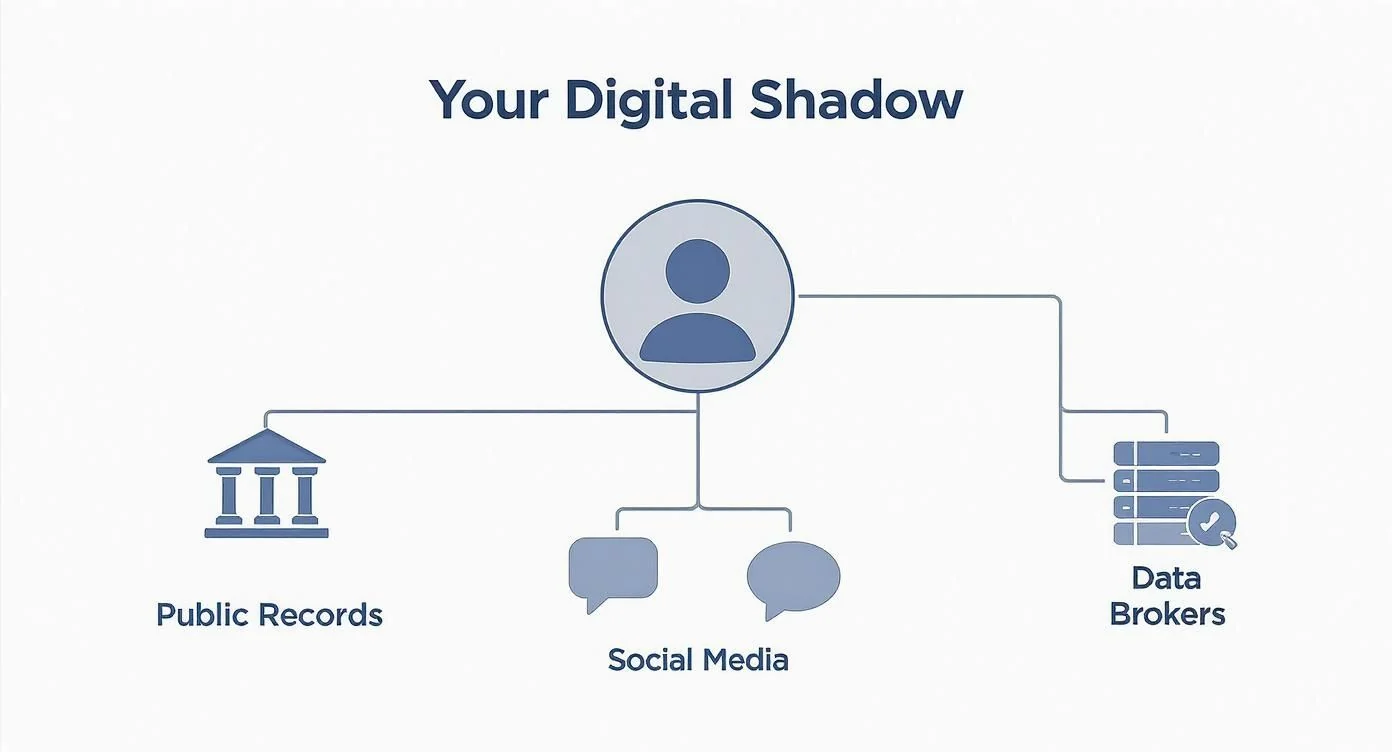
Getting a clear picture of your online presence isn’t just about privacy; it’s about active reputation management. For an instant, automated analysis of your publicly available data, get a free, comprehensive report at www.digitalfootprintcheck.com/free-checker. For a more in-depth guide, check out our post on decoding your digital shadow.
Taking Back Control of Your Digital Identity
Alright, so you’ve seen what the internet has to say about you. Now what? It’s time to shift from just looking to actively taking control. Think of this less as a one-and-done cleanup and more as ongoing maintenance for your online life—tidying up the past while building a more secure future.
The best place to start is with removal and reduction. Go after the low-hanging fruit first: delete those old, forgotten accounts on social media, forums, or shopping sites you haven’t touched in years. Then, head over to platforms like Facebook and Instagram and untag yourself from any unflattering or unprofessional photos.
If you’ve found more sensitive data floating around, like your home address or phone number on data broker sites, you can submit removal requests. You can also use Google’s “Results about you” tool. This feature lets you request the removal of personal identifying information from search results, which is a huge step in preventing identity theft or other safety risks.
Fortifying Your Online Defenses
Once you’ve done some initial cleanup, the goal is to be more proactive. This is all about tightening up your digital security and just being more deliberate about what you share online. A few small tweaks here can make a world of difference.
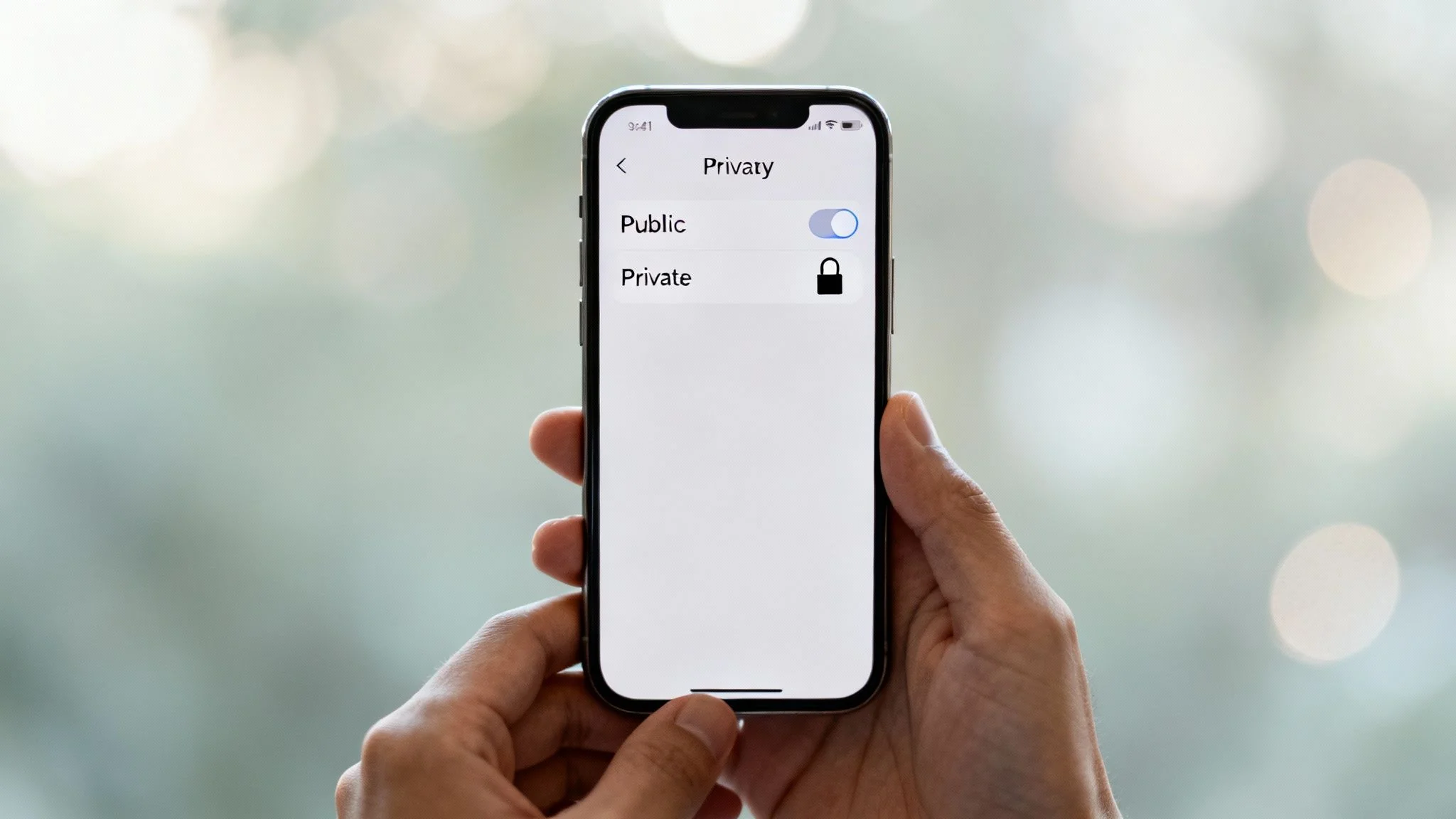
- Audit Your Privacy Settings: Make it a habit to regularly check the privacy settings on every account you use, from social media to your gaming profiles. Lock things down to “private” or “friends only” to minimize what the public can see. On dating apps, consider disabling location features when not actively using them.
- Strengthen Your Passwords: Seriously, use a unique, complex password for every account. A good password manager makes this easy and stops one data breach from wrecking your entire digital life. Enable two-factor authentication (2FA) wherever possible for an extra layer of security.
- Think Before You Post: Pause and ask yourself if what you’re about to share could be taken out of context by an employer or used against you by a scammer. This applies everywhere—dating apps, gaming chats, and public forums included. Avoid sharing details that could answer common security questions.
Taking control of your digital footprint really just boils down to making conscious choices. Treat your personal data with the same care you’d give your wallet or your house keys, and make sure it doesn’t end up in the wrong hands.
And don’t forget about old hardware. When you get rid of a phone or laptop, you need to be sure no data gets left behind. A crucial part of this is understanding data sanitization to permanently wipe your information. For a detailed walkthrough on getting your personal details offline, check out our complete data removal guide for more actionable steps.
Your Digital Footprint: The Questions Everyone Asks
Diving into the world of online privacy definitely brings up a lot of questions. As you start to get a handle on what your digital footprint looks like, it’s normal to wonder about the limits—and possibilities—of managing your online self. Let’s clear up a few things I hear all the time.
Can You Completely Erase Your Digital Footprint?
This is probably the biggest one. The honest answer? No, not really. While you can delete old accounts and get rid of a huge amount of data, some information just sticks around. Think about data backed up on company servers, pages saved in internet archives, or even simple screenshots someone else saved. A determined individual using OSINT tools can often find remnants you thought were gone.
The goal isn’t total erasure, because that’s just not realistic. It’s about proactive management and shrinking that footprint down to something you’re comfortable with and that accurately represents who you are today.
How Often Should You Check Your Online Presence?
Another great question. For a deep dive, a good rule of thumb is to perform a full audit every three to six months. Think of it like a seasonal check-up. This helps you catch any new information that has surfaced, like a recent data breach or a new profile created by a data broker.
But, if you’re in a specific situation—like actively searching for a new job, using dating apps, or you’re worried about a particular security issue like identity theft—bumping that up to a monthly check-in is a really smart move.
Does a VPN Hide My Footprint?
Using a VPN is an excellent security measure, but it’s not an invisibility cloak. A VPN is fantastic for hiding your IP address and encrypting your internet traffic, which protects you from anyone snooping on your network and helps obscure your passive footprint.
However, it doesn’t stop websites from using cookies to track you across the web, and it certainly doesn’t prevent you from leaving active traces when you log into your accounts. For example, if you log into your Google account while using a VPN, Google still knows it’s you. A VPN is a powerful tool for privacy, but it’s just one piece of the puzzle.
Your digital footprint is a living record of your online life. The best strategies for keeping it clean and secure are consistent monitoring and just being mindful of what you do online.
Ready to stop guessing and get a clear, actionable overview of your online presence? The expert tools at Digital Footprint Check can help you see exactly what’s out there, from exposed personal data to old accounts you forgot existed. Get your free, comprehensive report today and start building a safer digital future.
Start Your Free Scan at www.digitalfootprintcheck.com/free-checker