
· Digital Footprint Check · Content Marketing · 17 min read
Online Reputation Management Tools: 10 Compared for 2026
Compare 10 online reputation management tools for monitoring search results, breaches, and reviews, with honest limits and best-fit use cases.

A recruiter searches your name, finds a ten-year-old forum thread started by someone using a near-identical handle, and moves on to the next candidate. You never hear about it. That's the part of reputation work that is easy to miss: the damage rarely announces itself.
Almost one-third of active U.S. job seekers have found something online about themselves they didn't want others to see, compared with about one-fifth of people not job hunting, according to survey reporting from Digital Information World. The same search a recruiter runs takes thirty seconds. Cleaning up what it surfaces takes weeks.
That's why a quick name search isn't enough. Reputation work starts with knowing what appears, which platform it came from, who controls it, and whether a tool can help you remove it or only help you watch it. Most bad purchases in this category happen because someone bought a listening platform when they needed a removal service, or a removal service when they needed monitoring. The ten tools below are grouped by the job they do, so you can find your problem first and the product second.
1. Digital Footprint Check
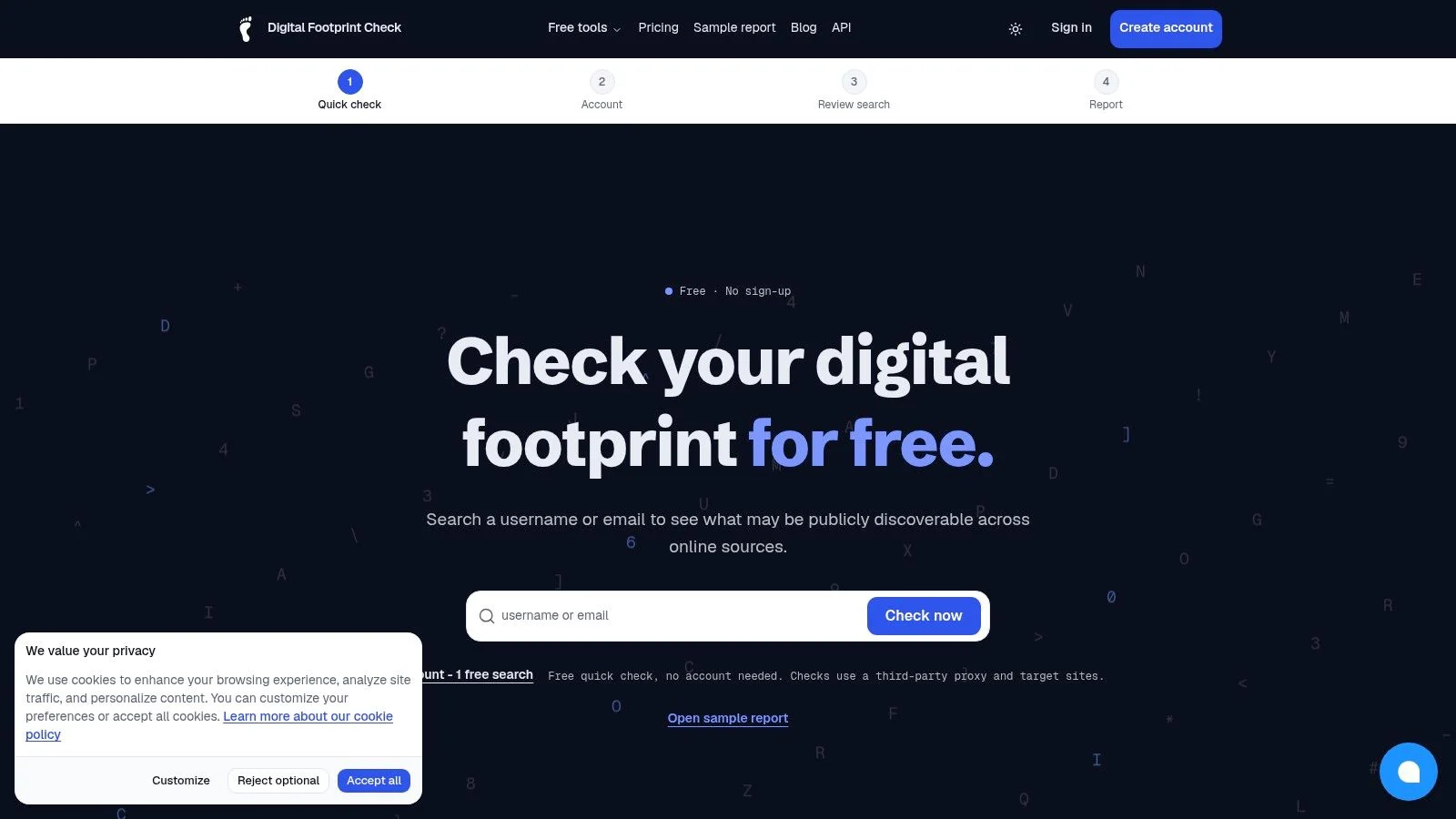
Digital Footprint Check is a discovery and reporting tool. You search a username or email, review the potential matches, then use step-by-step guides if you want a site to change something. The scan looks across more than 500 sources: social and professional profiles, gaming identities, breach databases, data broker listings, forum activity, public records, email appearances, and dark web mentions.
Free tools are a Profile Checker, a Username Search, a Data Breach Checker, and a Reverse Email Search. The breach checker looks up an email for known breach exposure. After the free search you get a preview with limited features. Paid plans add more searches and the fuller checks, including phone and social network checks, gaming profile detection, and web reports. The platform has generated 50,000+ reports.
A monitoring subscription only watches accounts you already know about. This search is the pass that can surface the broker listing or the password dump tied to an old email. The FBI's 2024 Internet Crime Report logged 859,532 complaints of suspected internet crime and losses above $16 billion, a 33% rise from 2023, with phishing and spoofing, extortion, and personal data breaches as the three most-reported categories. Reused credentials and exposed contact details are the raw material for those complaints. A check that stops at current social profiles misses both.
What the report gives you, and what it doesn't
A report can surface public profiles, breach exposure, data broker listings, social platforms, gaming identities, and public records. Similar details do not always mean the same person. No search covers every site.
The line most vendors blur: discovery is not removal. Digital Footprint Check shows what is visible and gives guides for contacting a site or requesting a change yourself. It does not file that request for you.
The limit matters when a hiring team treats a match as a decision. Under the Fair Credit Reporting Act, when a third party compiles information about a candidate for employment purposes, the resulting report can qualify as a consumer report, which triggers disclosure, written authorization, accuracy, pre-adverse-action, and dispute obligations, as AMS Inform's compliance review sets out. Treat the results as leads to verify, not verdicts.
Pros
- Broad source coverage: social, gaming, breach, data broker, forum, dark web, and public record checks in one search across 500+ sources.
- Free entry point: Profile Checker, Username Search, Data Breach Checker, and Reverse Email Search, then a limited preview.
- Next-step guides: instructions for contacting the site yourself.
Cons
- No takedown service: you make the removal requests.
- Coverage depends on inputs: results change with the username or email you enter and with what those 500+ sources have indexed.
In U.S. News's 2025 data privacy survey, 91% of U.S. adults said they were concerned about their digital footprint and the information available about them online. Concern does not tell you which record is yours. The search does, only as far as the sources it reaches.
2. BrandYourself
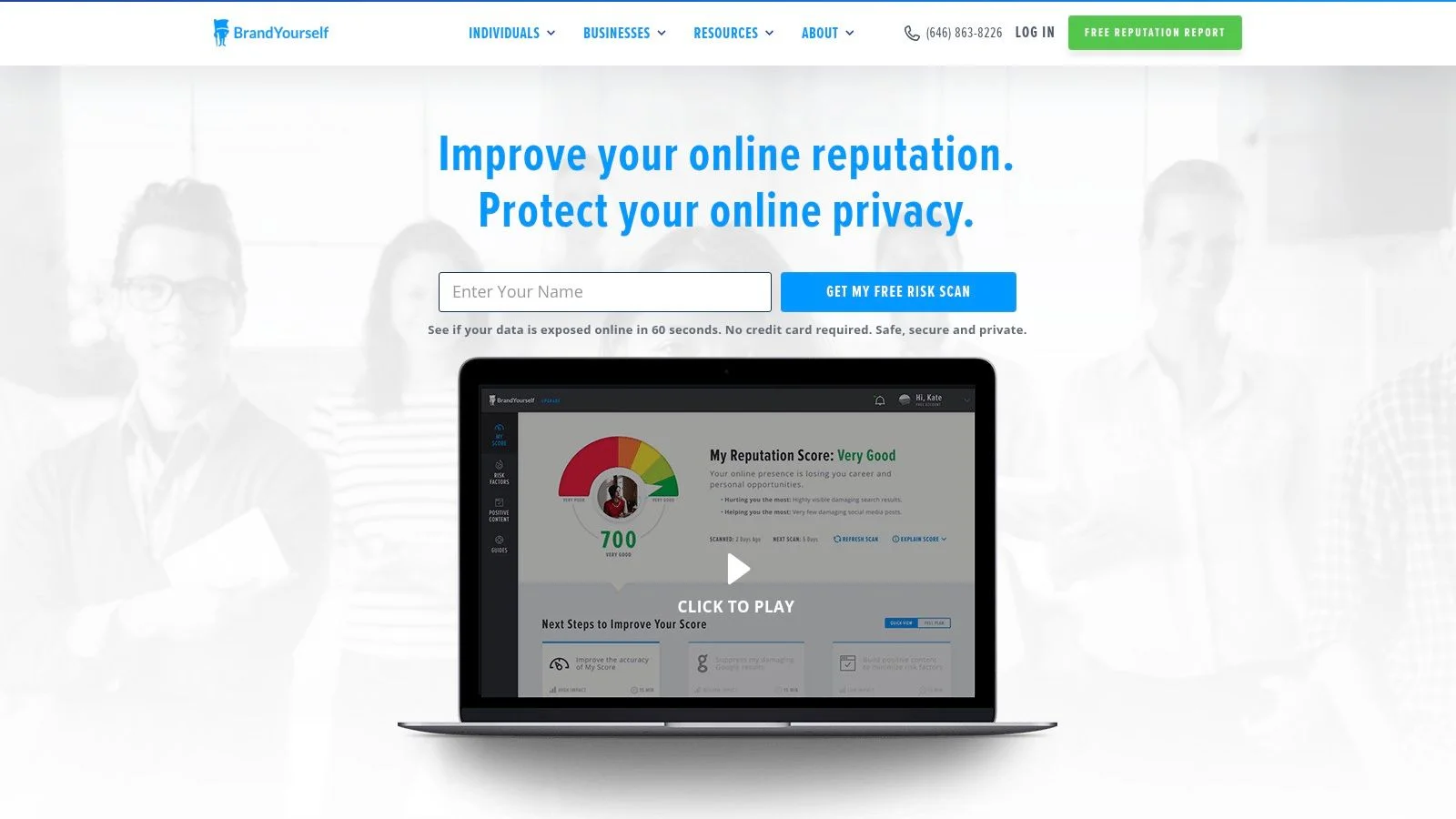
BrandYourself is built around a personal name search rather than a brand's mentions. A free assessment scores the risk factors and positive signals on a page of results for your name, then paid DIY tools walk you through building profiles and content that can rank. For a job seeker whose first page is a 2016 petition signature and a dead social network, that's a sensible place to start.
The demand holds even as trust has thinned. BrightLocal's 2025 Local Consumer Review Survey, run among 1,026 U.S. adults, found 42% trusted online reviews as much as personal recommendations, down from 79% in the survey's 2020 report. People still look, though: 83% used Google to find reviews. A recruiter behaves the same way, and page one sets the frame.
Where it stops
Concierge support exists for messier situations, and it costs considerably more than the software tier. What no version of the product does is guarantee that a search result or a third-party page gets removed. If your problem is a breach record, a hidden gaming account, or a data broker listing, this is the wrong category of tool, because it isn't a broad records or breach discovery platform.
Managing a professional reputation covers the content side in more depth.
3. ReputationDefender
Say an outdated article about a settled lawsuit sits at position three for your name and every attempt to bury it has failed. That's a job for people, not dashboards. ReputationDefender has handled search-result problems since 2006, according to its website, and pairs that with personal-information privacy work, including a separate people-search-site removal service.
Two things it does well: it gives you a named human when the situation doesn't fit a template, and it treats search suppression and data exposure as related problems, because they usually are. A data broker profile carrying your home address feeds the same anxiety as the article about your business.
The limits worth knowing before the call
Removal from people-search sites is not removal from the web. Aggregators re-list, scraped copies persist, and nothing about the work guarantees an outcome. Most engagements begin with a consultation, and prices aren't published for every service, so budget for a conversation rather than a checkout page.
If a screening result or a public post ever feeds a hiring decision, the compliance layer sits with the employer. The FTC's guidance on background checks states that employers must comply with laws protecting applicants from discrimination regardless of how the information was obtained, and that a consumer report used for employment requires standalone written notice and the applicant's written permission. A post a vendor found doesn't become a verified fact because a vendor found it.
Removing negative search results walks through the request process step by step.
4. Google Alerts
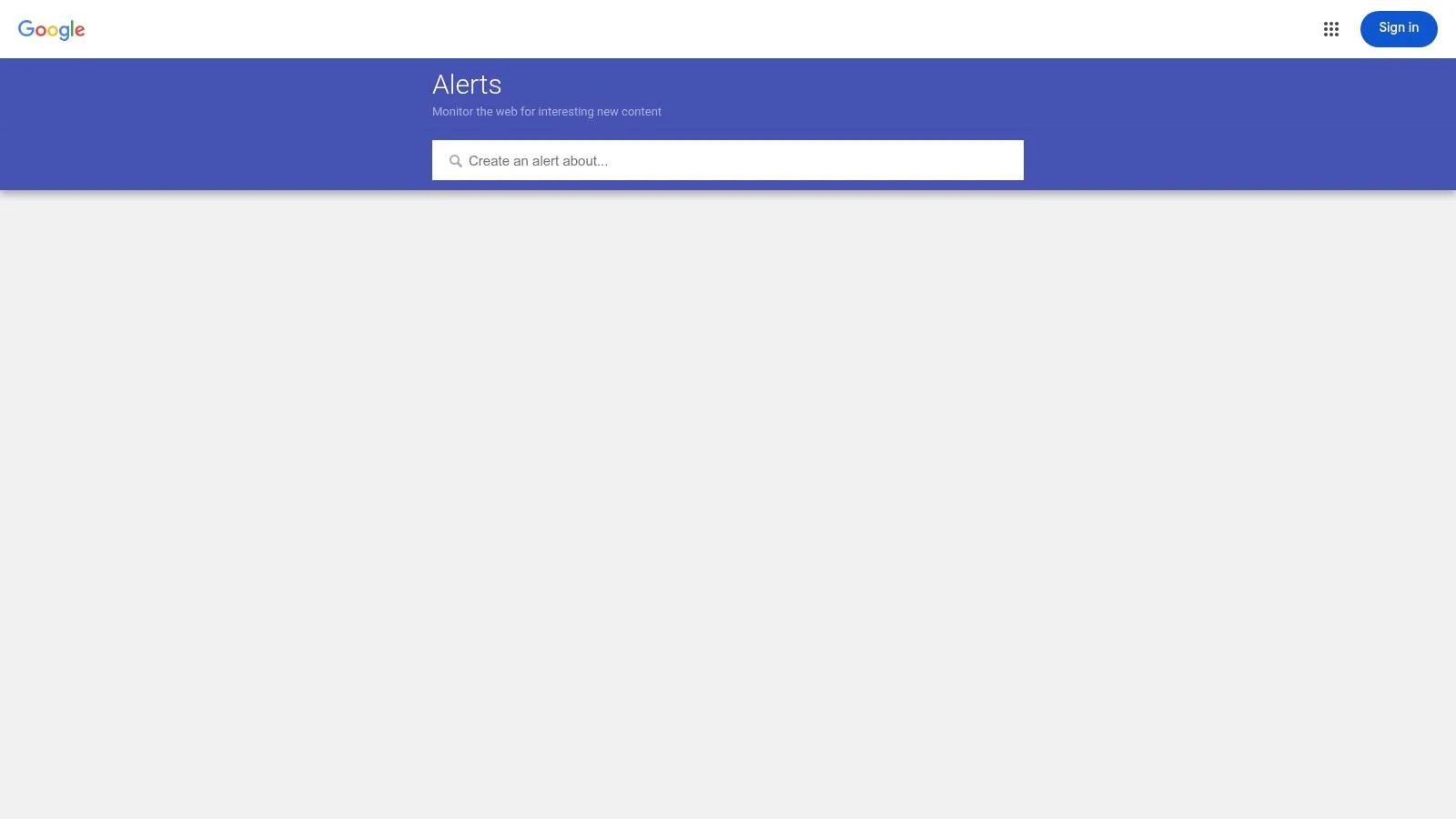
Start free. Google Alerts emails you when Google indexes new results matching a phrase, and it takes about two minutes to set up for your name, your business name, and the common misspellings of both. You can set frequency, source type, language, and region, which gives you a rough tripwire for newly published pages.
It's a first layer, not a platform. Coverage stops at what Google crawls and chooses to surface. There's no sentiment analysis, no review-response workflow, no share-of-voice chart, and no way to see a Reddit thread that never ranks. For a common name like Sarah Chen, you'll spend more time deleting irrelevant alerts than reading useful ones.
Add the high-intent variants as separate alerts: "your name + review," "your name + scam," and "your business + your city." One alert on a bare name catches press releases and little else.
Three habits make free alerts worth keeping:
- Use exact phrases: wrap the name or phrase in quotation marks so Google doesn't split it into loose words.
- Add a second term: a city, employer, or profession cuts the noise dramatically on common names.
- Assign an owner: one person opens the digest each morning, or the emails sit unread for a month.
5. Brand24
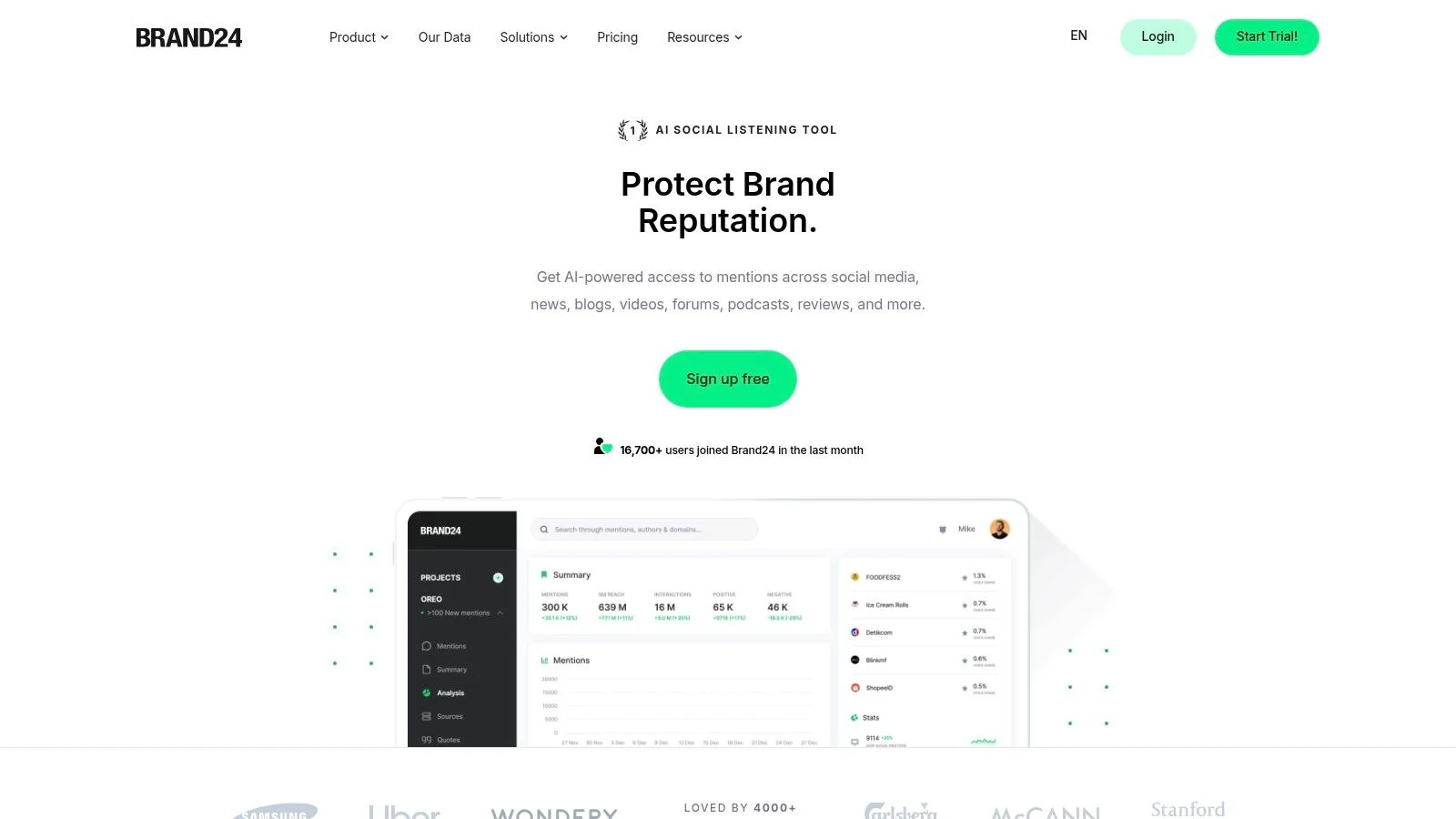
Brand24 is the step up from alerts. It monitors chosen keywords across social networks, news sites, blogs, forums, and other public sources, then attaches sentiment, mention volume, and reach estimates to what it finds. Campaign spikes and competitor comparisons are where it earns its keep, and a 14-day trial lets you test that before committing.
The price ladder isn't arbitrary. Reputation software is a mature enterprise purchase. Mordor Intelligence's market analysis valued the global online reputation management market at about USD 6.88 billion in 2025, projected to reach USD 14.01 billion by 2031 at a 12.59% compound annual growth rate, with large enterprises accounting for 56.10% of revenue in 2025 and the small business segment forecast to grow faster at 16.68%. Vendors price for the buyer that already exists.
What it won't do
Entry pricing is high for one person watching three terms. Plans cap tracked keywords and monthly mentions, so a busy brand hits the ceiling mid-quarter. Automated sentiment also needs a human pass: sarcasm, quoted complaints, and coverage of a competitor's outage all get mislabeled.
For the wider comparison in this category, see the guide to an online reputation management platform.
6. Awario
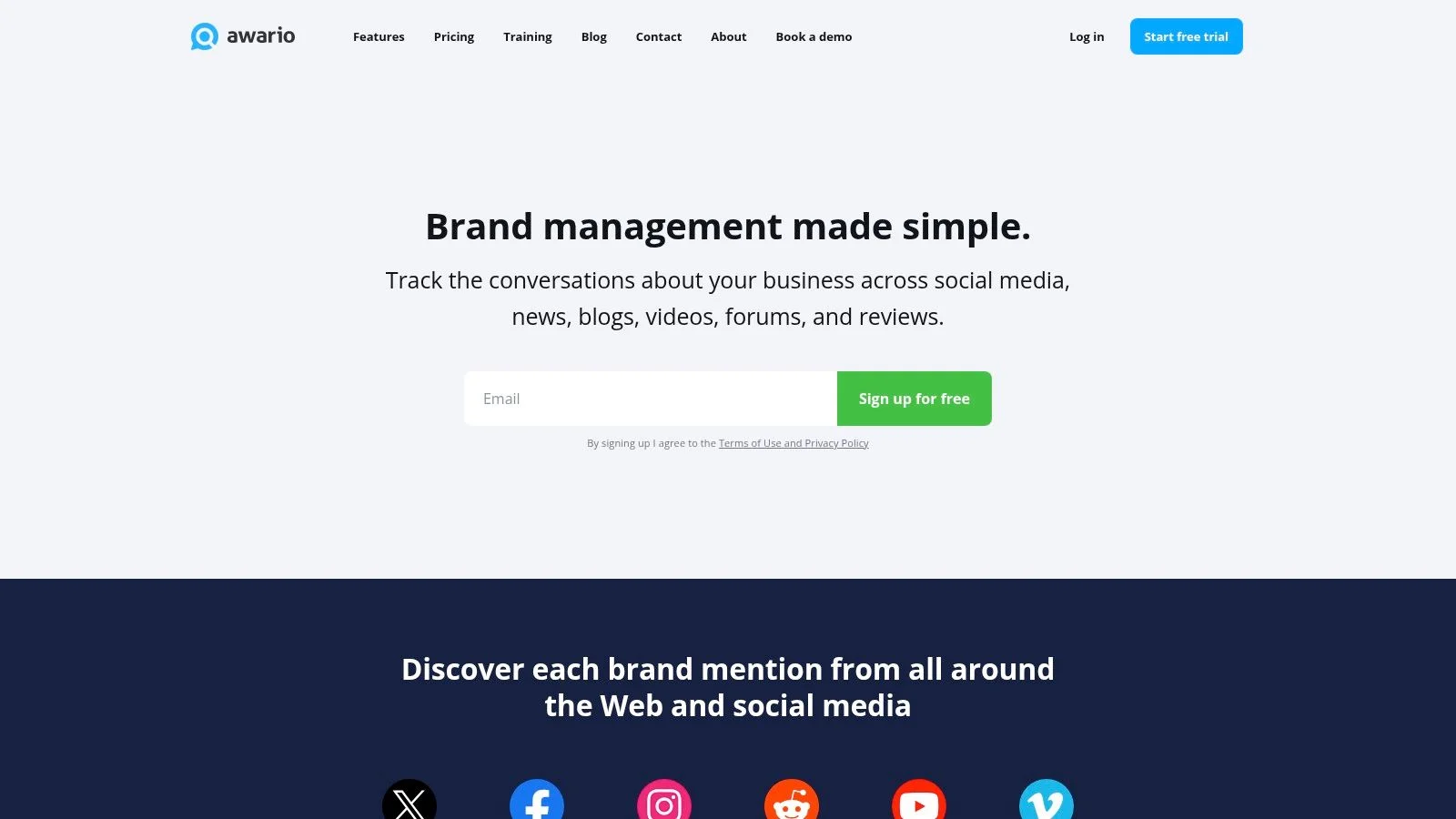
Awario does one job at a lower entry price than the platforms above: mention tracking. Set a topic, brand, or competitor, and it watches social media and the wider web for new hits. Boolean operators let you exclude noise, which matters when your brand name is also a common noun.
That search syntax is the selling point. A query like ("Northwind Bakery" OR "NorthwindBakes") AND (delivery OR catering) -recipe cuts a flood of irrelevant posts down to the ones worth answering. Alerts arrive as mentions are found, and paid plans add exports, PDF reports, and API access.
Where it gets thin
Monthly mention caps and limited history constrain heavier monitoring, and nothing here generates reviews or removes personal data. It watches. If your problem is a review score or a leaked address, you need a different category of tool entirely. The free trial requires no credit card, so test your real query set before paying.
Buyer's test: run your own Boolean query for a week. If the results still need manual filtering, the problem is the query, not the tool.
7. Mentionlytics
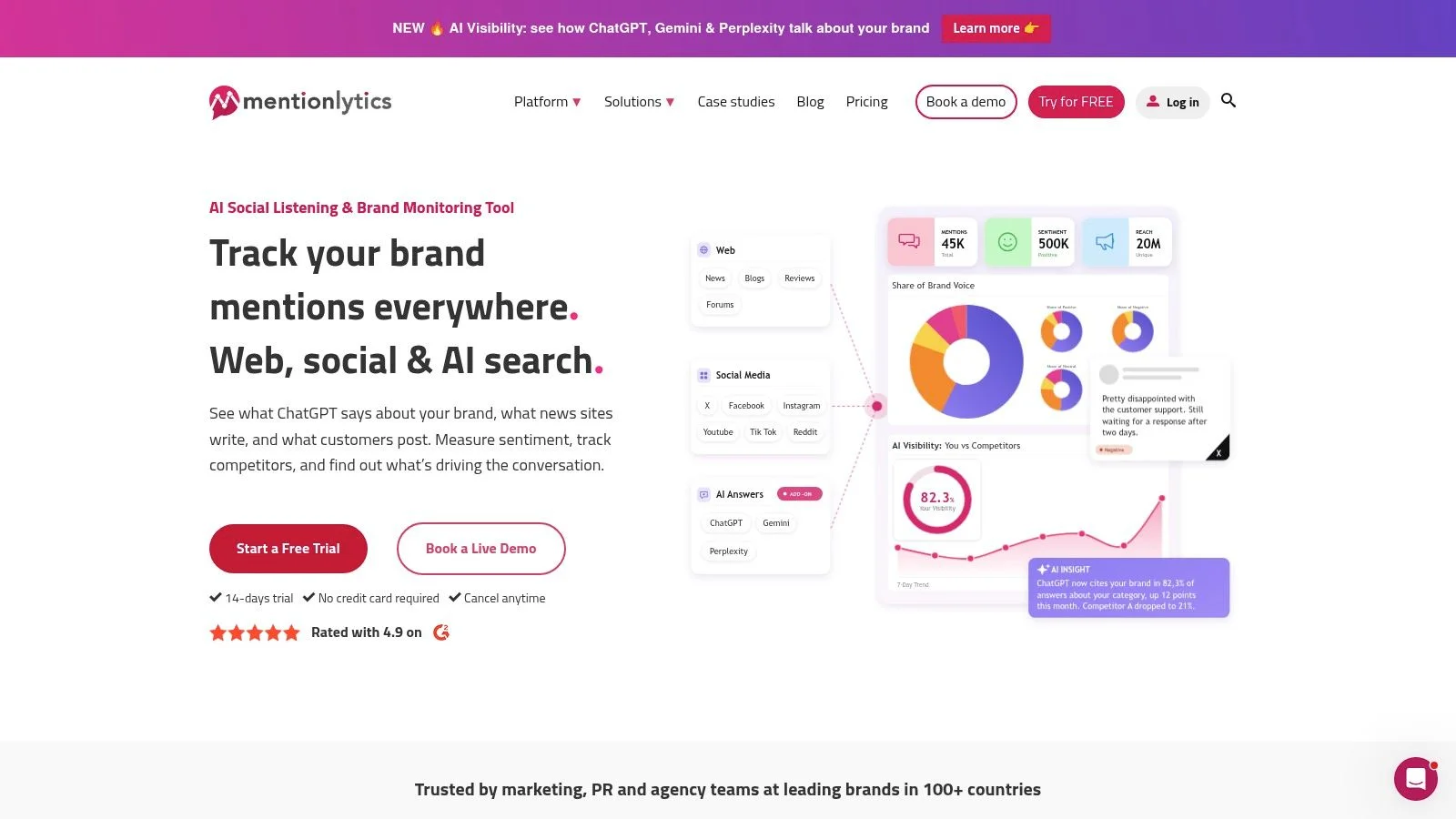
Mentionlytics tracks configured keywords across social platforms and public web sources including news, blogs, and forums, then reports mentions, sentiment, and share of voice. It's a listening and reporting tool with public pricing, which makes it easier to compare against Brand24 and Awario before you talk to a salesperson.
Two details change the math. Review-site monitoring is an add-on rather than standard, so confirm which sources your plan includes before signing. There's also an optional AI Visibility add-on for tracking how a brand appears in AI-generated answers, which is where a growing share of first impressions form.
Noise is the real limitation
Plans impose keyword, mention, and user limits, and higher-tier features cost extra. The bigger issue is authenticity. Listening tools count what they're pointed at, and fake accounts inflate those counts. Audiences aren't reliably better at spotting them either: Jumio's 2025 online identity study found 37% of global consumers said they more strongly believed most social-media accounts were authentic. A mention spike from twenty new accounts deserves a manual look before it becomes a board slide.
8. Reputation

Reputation (formerly Reputation.com) is a business platform, and it's the one to weigh when you run locations rather than a single storefront. Reviews, business listings, surveys, and location-level reporting sit in one dashboard, so a regional manager can compare ten branches without ten logins.
The case for replying is well documented. A global survey of more than 4,000 consumers across the United States, United Kingdom, Australia, and Germany, published in London Research's State of Online Reputation Management report, found 47% said a company response to feedback produced a major increase in satisfaction, while 64% said responding to a negative review made them less likely to abandon a purchase. The same study found only 27% of surveyed companies had allocated dedicated resources to monitoring and managing online reputation.
The cost structure
Per-location pricing adds up for multi-site organizations, and some plans require a sales call rather than a checkout. If you're an individual or a single small business that only needs mention alerts, this is more platform than you'll use. The best online reputation management software comparison covers where these tiers diverge.
9. Birdeye
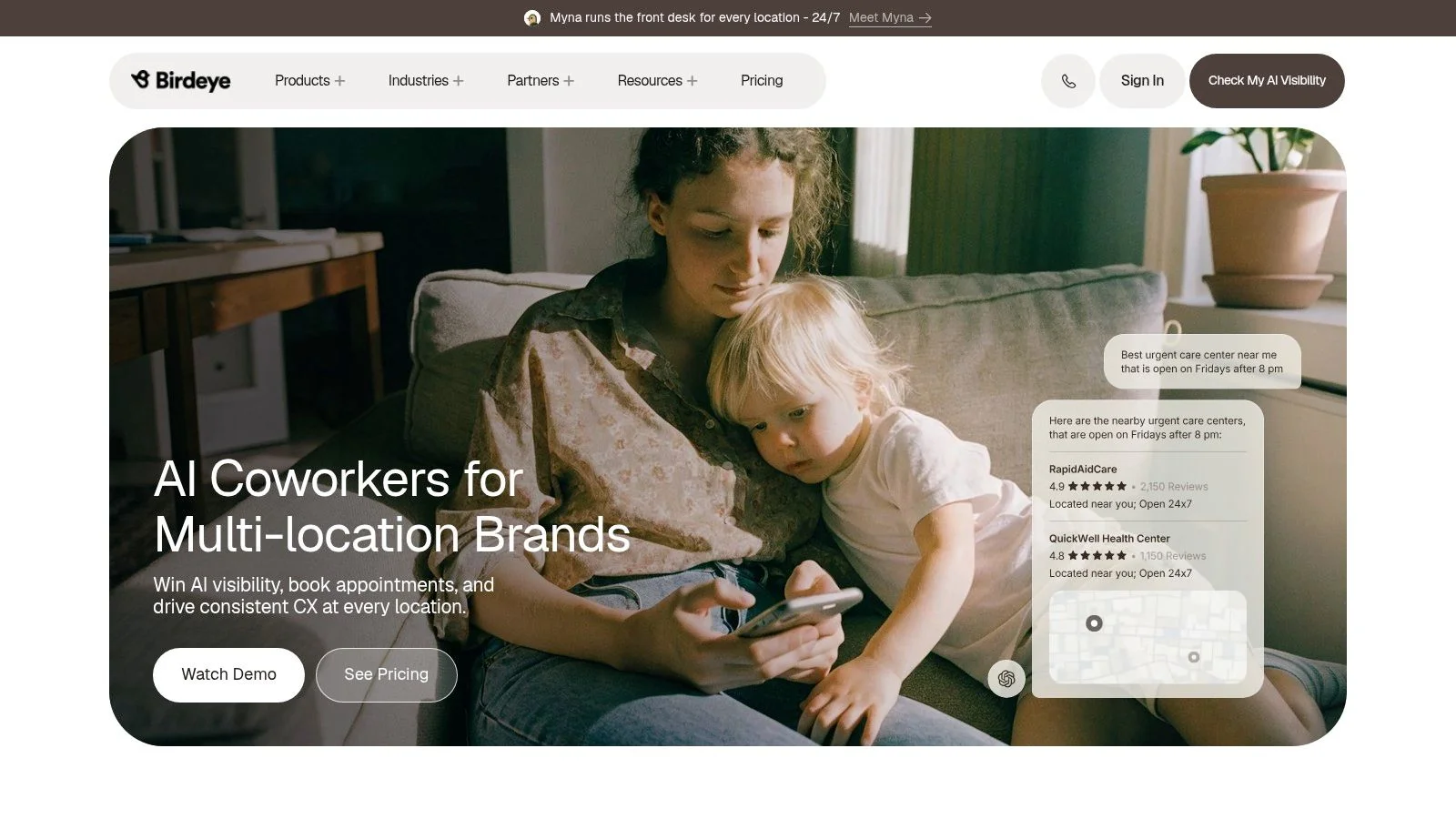
For a dental group or a franchise with dozens of locations, Birdeye consolidates the customer-experience stack: review requests, responses, listings, messaging, and feedback analytics. Its help documentation states it aggregates reviews from more than 150 review sites, which is usually the reason teams pick it over a single-platform tool.
Fragmentation is the problem it solves. BrightLocal's 2024 Local Consumer Review Survey, based on a panel of 1,141 U.S. consumers, found 75% always or regularly read online reviews when researching local businesses, 77% used at least two review platforms, and 41% used three or more. Watching one site is a partial view by definition. Freshness matters too, with 27% of consumers expecting reviews to be as recent as two weeks.
What to expect in the contract
Custom pricing means you need a quote to know the actual cost, and the feature breadth that justifies it also means substantial onboarding time. User-review summaries commonly praise the centralized review workflow and also flag integration, reporting, and contract concerns, so read the renewal terms before you commit for a year. The roundup of online reputation management services explains how these engagements are typically structured.
10. Trustpilot Business
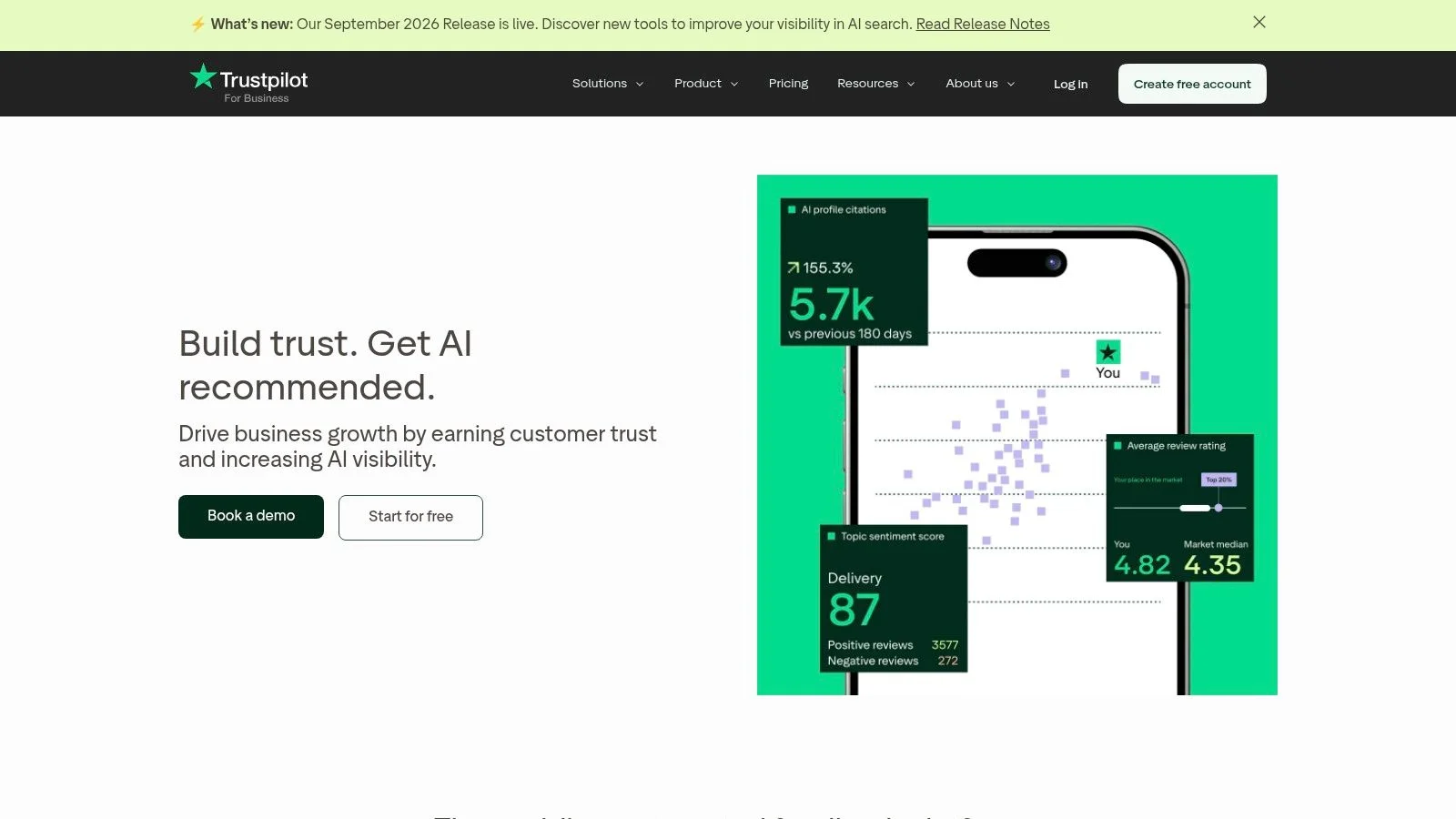
Trustpilot Business does one job: review management on Trustpilot itself. You claim a profile, reply in public, send automated invitations inside monthly plan limits, and show ratings through widgets and marketing assets. A free plan covers getting started. Paid tiers add invitations, integrations, and analytics.
Ecommerce and software brands feel the weight of that profile, because buyers already treat reviews as a buying input. In a 2024 survey of 2,000 U.S. consumers by Prodege, Reputation's published findings reported that 54% named online reviews as their primary source of trust when making a purchase, ahead of friends and family at 24%.
The limit the vendor would not lead with
The product stays on Trustpilot. Reddit threads, a competitor's forum, and your name anywhere else stay outside it, so this is not a listening tool for the wider web. Paid plans are priced per domain and usually run on annual terms, so check the contract length before you commit. Platform rules apply to free and paid businesses alike. No plan guarantees a higher rating. An invitation campaign that only chases five stars looks staged to the readers you are trying to convince.
How the 10 Tools Compare on Price, Entry Point, and Core Limits
A free name alert and a per-location review suite are not the same purchase. Sort the ten by the job first: personal search visibility, brand listening, review management, or removal help. Then read the price. A low entry point that cannot do the job still costs you the time.
| Item | Best For | Free Entry Point | Pricing Visibility | Key Limitation |
|---|---|---|---|---|
| Digital Footprint Check | Checking what is already public about a person or brand | Free plan at $0 with one free search of a username or email | Free plan at $0 with one free search; PRO Annual at $93 per year for 30 searches per month | Finds exposure and explains next steps; it does not remove listings for you, and a scan can still miss sources |
| BrandYourself | Improving how a personal or professional name ranks in search | Free assessment software | Paid tools and concierge support, quoted after the assessment | Cannot guarantee removal of search results or third-party content |
| ReputationDefender | Tailored reputation and privacy support for individuals, families, and executives | Free report card and confidential consultation | Quote-based; not every service has a public rate | Removal or suppression is not guaranteed |
| Google Alerts | Free alerts for newly indexed web results | Free with a Google account | Free | Limited to results Google finds; may miss mentions or show irrelevant matches |
| Brand24 | Business and communications teams monitoring online conversations | 14-day free trial | Paid subscriptions after the trial; tiers are set by keyword and mention caps | Plans limit tracked keywords and monthly mentions |
| Awario | Smaller teams monitoring topics and mentions | Free trial without a credit card | Public pricing available | Mention and history limits can constrain heavier monitoring |
| Mentionlytics | Teams needing web and social monitoring analytics | 14-day free trial | Public pricing and plan limits available | Some review monitoring and AI visibility features cost extra |
| Reputation | Multi-location businesses managing reviews and local visibility | No free entry point stated | Public pricing for several plans; some require contacting sales | Per-location pricing can add up |
| Birdeye | Local and multi-location businesses managing customer experience | No free entry point stated | Custom pricing requires a quote | Broad feature set may require more onboarding and setup |
| Trustpilot Business | Companies collecting and showcasing Trustpilot reviews | Free plan available | Free plan, then paid plans priced per domain | Focused on Trustpilot, not broad web or social monitoring |
List prices on Google Alerts, Awario, Mentionlytics, parts of Reputation, and Digital Footprint Check let you budget before a call. BrandYourself, ReputationDefender, and Birdeye price the work after someone scopes it. Listening plans break when the keyword or mention cap is too small. Review platforms stop at their own site. A discovery report shows the footprint and stops there. You still file the opt-out, the takedown, or the password reset yourself.
Matching the Tool to the Problem Before It Escalates
Work in sequence, not in parallel. Step one is discovery: check your name, email addresses, and usernames to see what's visible across social profiles, gaming accounts, breach databases, data broker listings, and public records. You can't prioritize what you haven't found, and the surprises are rarely on page one of Google.
Step two is cheap monitoring. Set alerts for your name, your business, and the high-intent variants before you pay anyone. A free alert that catches a new review the day it lands beats an expensive dashboard nobody logs into.
Step three is a paid platform, and only when the risk is business-facing. Multi-location review management, share-of-voice reporting, and response workflows justify the subscription. A personal name problem usually doesn't.
The step many skip is the follow-up. Discovery tools reveal exposure; they don't remove it. Every finding needs an owner and a next action, whether that's an opt-out form on a data broker, a removal request to a platform, a password reset after a breach, or a documented complaint to a review site.
A few rules that hold up in practice:
- Fix credentials first: a breached password on a recovery email outranks a stale photo.
- Log what you find: date, URL, screenshot. Removal requests go better with evidence attached.
- Recheck quarterly: brokers re-list and new pages get indexed between checks.
- Separate screening from judging: public information used in hiring needs verification and consistent handling.
People who do this daily tend to converge on the same stack rather than a single product: one discovery tool, one alerting layer, one review platform if the business needs it, and a documented process for takedowns. Carlos Albamedia's ex-journalist PR team's tool recommendations make a similar point from the communications side, where speed of response matters more than maximum data collection.
The order protects your budget. Discovery first tells you whether you have a visibility problem, a safety problem, or a customer-service problem. Then the tool choice is obvious, and you haven't bought a listening seat to solve a leaked password.
Digital Footprint Check scans more than 500 sources, including social networks, gaming profiles, data broker listings, breach databases, and public records, so you can see what a recruiter, a date, or a customer would find before they do. Start with a free username or email search, review the potential matches against yourself, then follow the step-by-step guides to request changes where they're needed. Run the Digital Footprint Check free check today and work from evidence instead of guesswork.