· Digital Footprint Check · Content Marketing · 14 min read
Online Reputation Management Platform: Compare and Choose
Compare the best online reputation management platform options for individuals, HR, and security teams. Features, pricing, integrations, and real-world use

You search your name before a job interview and find an old forum profile, a stale social account, and a review that confuses you with someone else. A hiring manager sees the same results, while an AI assistant summarizes the wrong person as if the information were established fact. A dating match, client, or security team may make a decision before you get the chance to explain.
That’s why an online reputation management platform is no longer just a marketing dashboard for tracking reviews. It’s a practical tool for auditing identity, monitoring exposure, managing public responses, and checking whether search systems and AI assistants represent you accurately. The right choice depends on the job you need done, not on the longest feature list.
Why Choosing the Right Platform Matters Now
A professional named Daniel found an outdated profile under his name shortly before a final interview. The profile included an old username and comments he no longer remembered posting. It wasn’t illegal or especially damaging, but it looked careless beside a polished résumé. The employer didn’t reject him outright, yet the hiring process slowed while the team tried to determine whether the account was really his.
That problem becomes more complicated when a stale review, exposed username, or AI-generated summary combines information from several people. A reputation platform must distinguish identity matches from false positives, show the evidence behind each finding, and give the user a sensible next action. A dashboard that labels everything “negative” creates anxiety, not intelligence.
For businesses, the stakes are equally concrete. Online reviews influence purchasing decisions at scale, and a 2022 academic study found that approximately 70% of consumers consult online reviews before completing a purchase, while 63% are more likely to buy products with favorable ratings and positive feedback (academic research on online reviews and purchase decisions). For individuals, employers also search public profiles. A CareerBuilder survey of 2,380 U.S. hiring managers and human-resources professionals found that 70% of employers used social media to screen candidates (CareerBuilder survey reported by PR Newswire).
Practical rule: Choose a platform based on the decision you need to make, such as “Can I apply for this job safely?” or “Which locations need a response workflow?” Don’t buy a general monitoring product and hope it answers a specific question.
Search, social profiles, public records, breach exposure, reviews, and generative-AI assistants now overlap. The FBI’s 2024 Internet Crime Complaint Center report documented 859,532 suspected internet-crime complaints and more than $16.6 billion in reported losses, a 33% increase from 2023 (FBI 2024 IC3 report). That doesn’t mean every reputation issue is a cybercrime issue, but it does show why identity protection and reputation work increasingly belong in the same operating picture.
Before choosing a vendor, read this explanation of why online reputation management is important, then decide whether your priority is review operations, personal privacy, lawful screening, breach response, or identity research. Even presentation details matter. A consistent professional photograph can reinforce identity clarity across profiles, and this guide to why your headshot matters for business explains the branding side of that problem.
Core Capabilities Every Modern Platform Should Offer
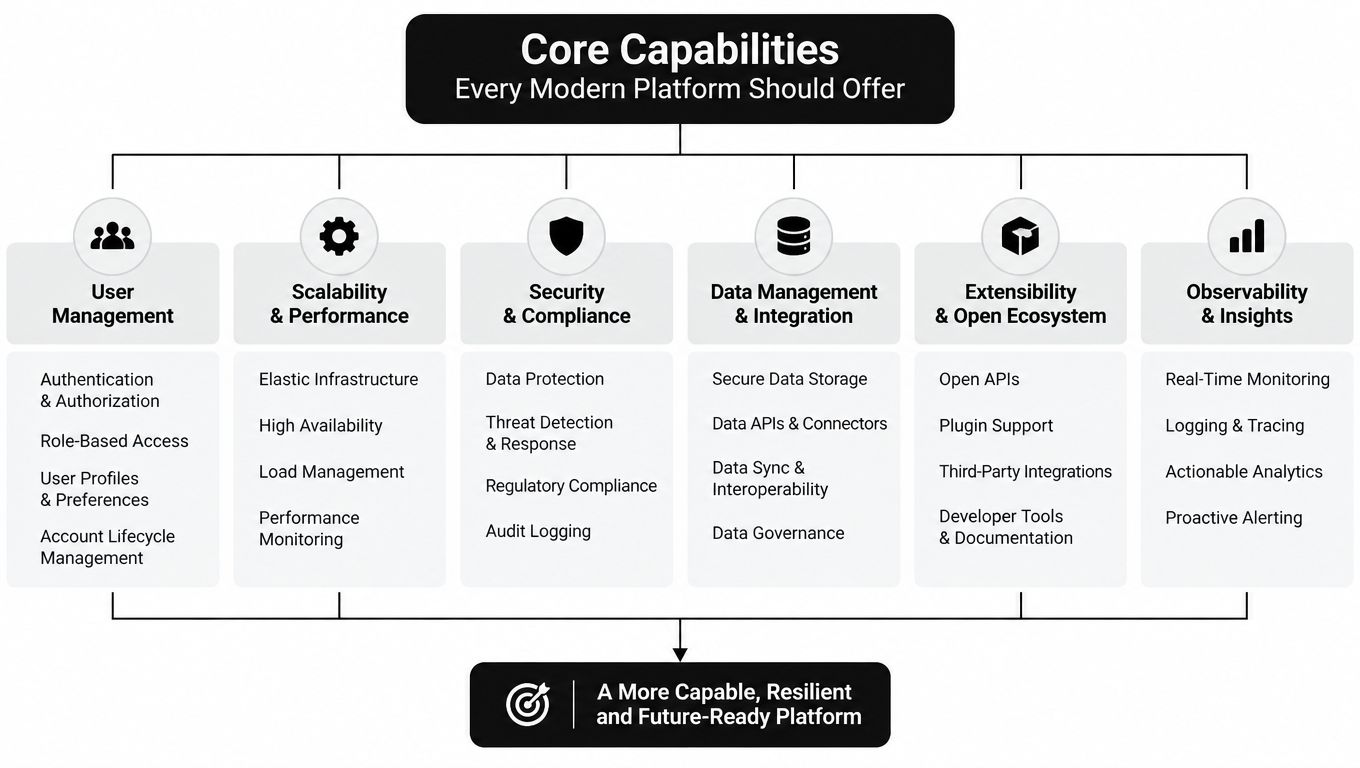
A credible platform should connect discovery to action. It should tell you where a name, email address, phone number, username, review, or image appears, whether the result probably belongs to the right person, and what to do next.
Discovery must come before interpretation
Start with broad footprint discovery across social networks, professional profiles, review pages, gaming communities, public records, news sites, and breach databases. A platform that searches 500+ sources can reveal connections that a simple Google query misses, but source count alone proves little. The important questions are whether the platform explains its coverage, records when a result was found, and lets you inspect the original public page.
A mature alert includes:
- Evidence: The source URL, visible identifier, discovery date, and relevant excerpt.
- Identity confidence: The signals connecting the result to the person or organization.
- Risk context: Whether the item affects employment, account security, privacy, or public trust.
- Recommended action: Review, document, correct, secure, report, or ignore.
A false positive might be a gaming profile that shares a common username but has a different location, age context, or associated email. A weak system counts the match. A useful one lets you reject it and improves future triage.
Monitoring should reflect the real workflow
Social and review monitoring matters for brands, but it shouldn’t dominate every product. Review teams need unified ingestion, assignments, approval controls, and response publishing. Individuals need alerts for new mentions, exposed accounts, impersonation signals, and changes in public profiles. HR teams need controlled searches, documentation, and privacy safeguards.
Review response deserves its own metrics. Track coverage, rating movement, review-volume change, and response latency separately. Sentiment is useful for spotting themes, but it shouldn’t become the only KPI.
AI representation is now part of reputation
Traditional search monitoring asks what ranks for a name. A modern audit also asks what an AI assistant infers from that name, employer, username, or breach history. The platform should preserve source-level evidence, identify stale or conflicting records, distinguish similarly named people, and show how an AI-generated representation changes over time.
Use this practical guide to tools for monitoring your digital footprint and keeping your data safe as a useful benchmark. The right platform won’t promise to delete every result or control every AI answer. It will show you which public sources support an inaccurate association and which correction is ethical and realistic.
Comparing the Leading Platform Categories
The market makes more sense when you stop comparing every vendor against every other vendor. Most products fall into four categories, and each category solves a different operational problem.
| Category | Primary User | Core Strength | Pricing Model |
|---|---|---|---|
| Enterprise review suites | Multi-location brands and customer-experience teams | Review ingestion, response workflows, location reporting, and operational assignments | Usually per location, account, or usage tier |
| PR and executive protection firms | Public companies, executives, and crisis-sensitive organizations | Managed response, media relations, content strategy, and escalation support | Managed retainers or custom contracts |
| Individual privacy and OSINT scanners | Individuals, families, professionals, gamers, and small teams | Footprint discovery, identity matching, exposed-account research, and reputation audits | Free checks, subscriptions, or report-based plans |
| Security or HR background platforms | Security teams, recruiters, compliance teams, and investigators | Structured screening, monitoring, documentation, and workflow controls | Per user, query, report, or enterprise contract |
An enterprise review suite is the correct tool when one brand manages many locations and needs local managers to answer reviews without losing central oversight. It’s the wrong tool for a job seeker who wants to find old usernames or determine whether an AI assistant has mixed their identity with someone else.
A PR and executive protection firm brings human judgment and crisis experience. That can be valuable during a serious public incident, but a retainer is excessive for a person conducting a personal privacy audit. These firms also may not offer deep account discovery or breach correlation.
An individual OSINT scanner is usually the practical starting point for a job seeker, parent, gamer, or small business owner. It should search broad public sources, expose relationships between identifiers, and make uncertainty visible. Its limitation is that it won’t replace a crisis communications team or a large-scale review-response operation.
Security and HR platforms are built around repeatable searches and audit trails. They can help teams document lawful procedures, but buyers must examine consent, retention, access controls, and the handling of sensitive personal information. A tool that makes indiscriminate searching easy can create compliance problems faster than it solves them.
For local businesses deciding between a dashboard and a managed workflow, these tools for improving local reviews provide useful context. Don’t confuse review optimization with full identity protection. They overlap, but they aren’t the same job.
Pricing, Integrations, and Hidden Costs Worth Watching
The cheapest plan is often the one with the narrowest definition of coverage. A platform may advertise monitoring, then charge separately for additional locations, users, data sources, API calls, historical retention, or high-volume response activity.
Understand the billing unit
Most vendors use one of five models:
- Per location: Suitable for brands managing separate business profiles, but expensive when location count grows.
- Per seat: Predictable for small teams, less attractive when many people need occasional access.
- Per user or subject: Common in HR, investigation, and employee-monitoring workflows.
- Per query or report: Useful for occasional research, but costs can rise with repeated audits.
- Managed-service retainer: Pays for human execution, escalation, content, and response management rather than software access alone.
Integrations create another cost layer. Confirm whether the quoted plan includes Google Business Profile, review aggregators, social networks, ticketing systems, HRIS tools, exports, and historical data. If a platform can ingest information but can’t assign a case, preserve evidence, or send the result into your existing workflow, you’re buying a dashboard rather than an operating system.
A study of 2,251 Texas hotels found that adopting management responses was associated with an average 0.12-star increase in ratings, a 12% increase in review volume, and approximately a 7% increase in the probability of receiving a five-star review (study of management responses to hotel reviews). Those findings support funding response operations, but they’re observational, not a universal guarantee. Ask whether a vendor measures control periods and location-level baselines before claiming that automation caused improvement.
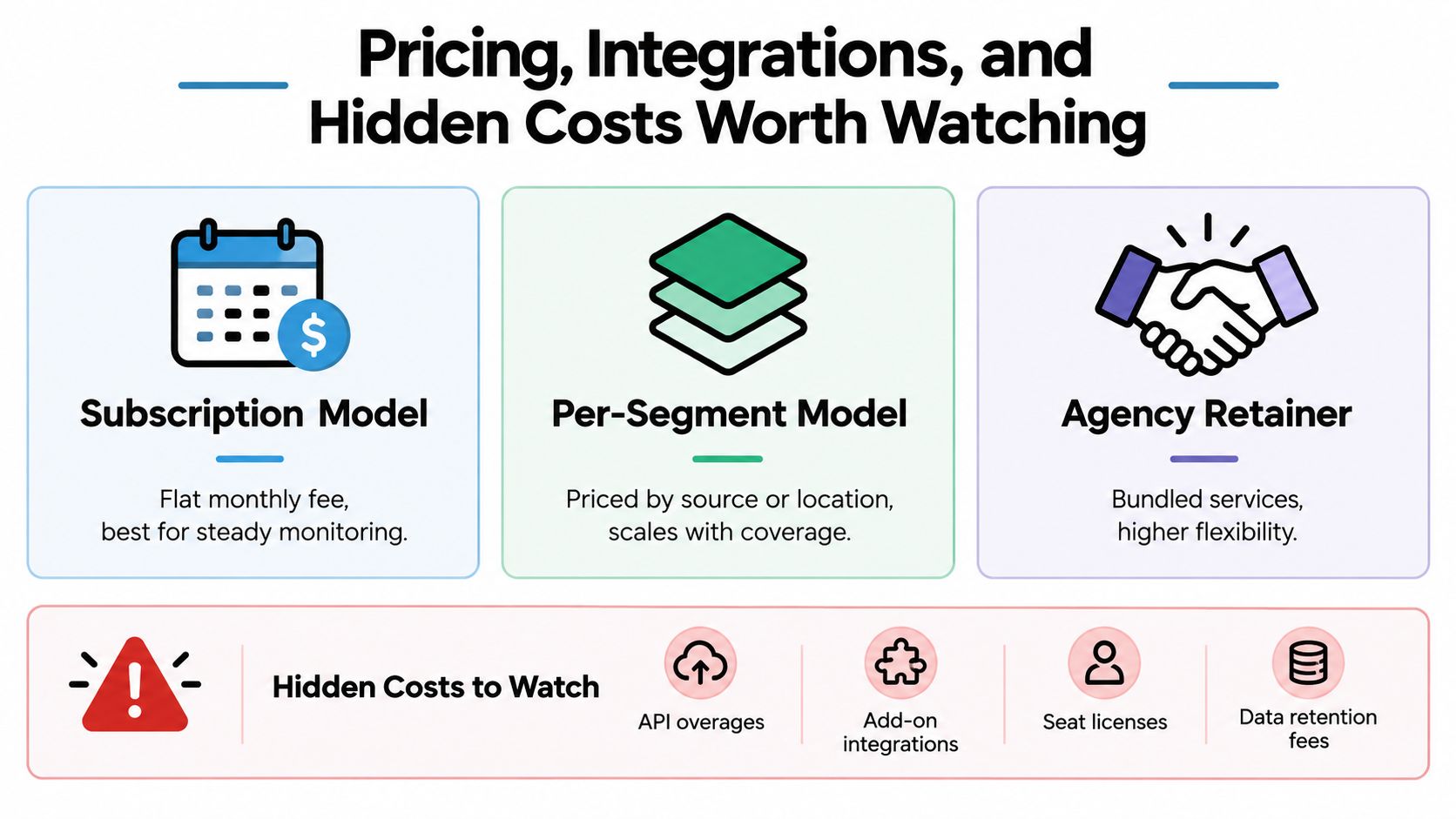
A practical budget comparison should use your own scale rather than invented market averages. A single professional conducting a personal audit might choose a report-based or subscription tool. A local operator with several locations may prefer per-location software if response ownership stays internal. A larger organization may combine review software with a managed service, but should price staff time, approval delays, integration work, and data retention before signing.
For a deeper cost framework, use this guide to how much online reputation management costs. The important question isn’t “What’s the monthly fee?” It’s “What will I pay to find, verify, act on, and preserve each meaningful finding?”
Matching Platforms to Real User Scenarios
The right platform changes with the user. A recruiter, gamer, parent, and hotel group can search the same internet and still need completely different controls.
The job seeker
Choose an individual privacy and OSINT scanner first. Search your name, old usernames, email addresses, professional profiles, photos, public posts, and review pages. The useful capability is identity resolution, because an outdated account may be yours, may belong to someone else, or may require context before you decide whether to remove or update it.
The common mistake is paying for a review-management suite when the actual problem is an unmanaged personal footprint. An audit should produce a cleanup list, not just a sentiment score.
The HR team
Choose a background or screening platform with documented procedures, consent controls, access restrictions, and evidence preservation. A public search can expose protected or irrelevant information, so HR should separate job-relevant findings from personal details and avoid making decisions from unverified matches.
The platform must support lawful screening, not just make more data searchable. A human reviewer should verify identity and record why a finding matters to the role.
The parent or partner
Use a privacy and exposure scanner for your own account or for searches conducted with proper consent. Focus on old profiles, exposed contact details, reused usernames, public photographs, and breach-linked accounts. Don’t treat a search result as proof of misconduct or identity.
The mistake here is confusing discovery with surveillance. A responsible tool helps someone secure their own exposure and understand risk. It shouldn’t encourage invasive searches into another person’s private life.
The gamer
An OSINT scanner with username correlation and breach monitoring is more useful than a standard brand-reputation product. Audit gaming profiles, alternate handles, old forum accounts, and credential reuse. Secure important accounts with unique passwords and multifactor authentication when exposure appears.
The common failure is assuming a gaming alias is separate from professional identity forever. Reused usernames, profile images, or contact details can connect communities that the user intended to keep separate.
The security researcher or small business owner
Choose a platform that maps the external attack surface through public information, identifies impersonation and exposed credentials, and preserves evidence. A review suite may track customer complaints, but it won’t answer which old account or public identifier creates the greatest security risk.
A 2026 industry study found that 72% of buyers recognize that AI assistants affect reputation, while only 22% said their current service actively addresses that issue (State of ORM 2026 industry study). That gap matters for every profile above. You need a tool that can show what an assistant may infer and which sources shaped the inference, not one that only reports traditional search rankings.
For organizations that need broader support, compare the capabilities of online reputation management services against the exact user scenario before committing to a managed contract.
A Risk-Based Approach Instead of More Monitoring
More alerts don’t automatically create more protection. They can produce breach fatigue, duplicate findings, false positives, and unnecessary exposure to sensitive information. If users stop reading alerts because every result looks urgent, the monitoring system has failed operationally.
The Identity Theft Resource Center reported 3,322 U.S. data compromises in 2025. In its survey of 1,040 consumers, 80% received at least one breach notice during the prior year and 40% received three to five. Among notified consumers, 88% reported a negative consequence (Identity Theft Resource Center 2025 data breach report).
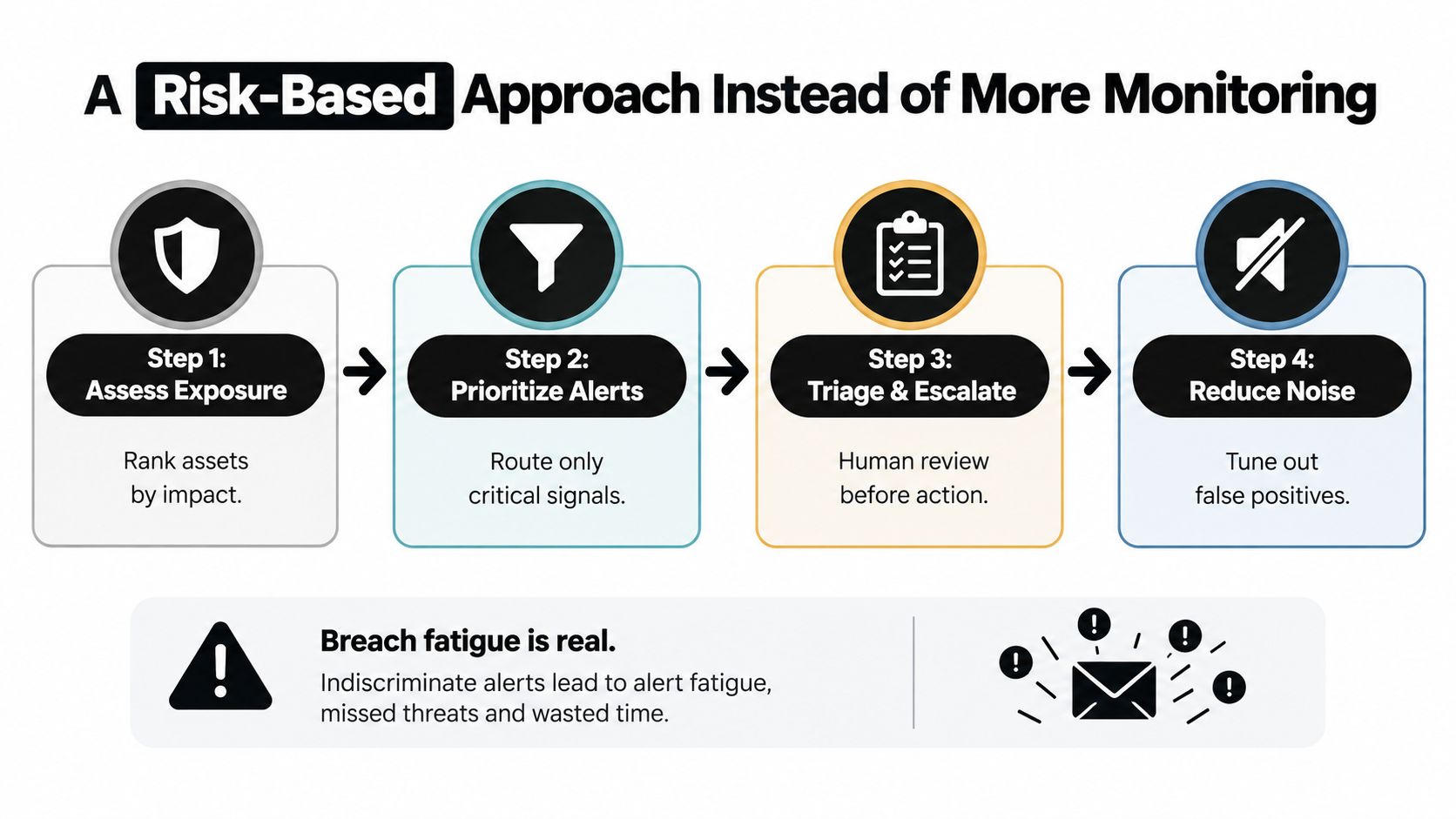
Use four decisions for every finding:
- Verify the match: Confirm that the account, record, or credential belongs to the right person or organization.
- Rank the impact: Prioritize current accounts, financial access, workplace identities, public-facing profiles, and information that enables impersonation.
- Take the smallest effective action: Reset a password, enable multifactor authentication, correct a public profile, report an impersonation, or request removal where appropriate.
- Document and close the loop: Preserve evidence, record the action, and suppress duplicate alerts once the issue is handled.
A risk-based platform separates legitimate public information from material that should be removed or restricted. It also avoids displaying sensitive details unnecessarily. Search volume is not the outcome. Reduced exposure, verified identity, and clear remediation are the outcomes.
Evaluation Checklist and Final Recommendation
Run every shortlisted platform through this checklist before you buy:
- Coverage breadth: Does it search the sources your users care about, including social, professional, review, gaming, public-record, and breach-related sources?
- Identity resolution: Can it distinguish a genuine match from a common-name or reused-username false positive?
- AI-assistant audit: Does it show how generative systems represent a person or organization and which public sources support that representation?
- Breach correlation: Can it connect an exposed identifier to the correct account without turning every notice into an emergency?
- Workflow controls: Can users assign, review, escalate, document, and close findings?
- Review operations: For brands, does it separate response coverage, rating movement, review volume, and latency?
- Integration clarity: Are Google Business Profile, review aggregators, social platforms, ticketing tools, HRIS connections, exports, and retention included?
- Pricing transparency: Is billing based on locations, seats, users, queries, reports, or managed services?
- Ethical handling: Does the product support consent, lawful screening, privacy protection, source transparency, and correction rather than indiscriminate surveillance?
The FTC’s Consumer Sentinel Network recorded more than 6.47 million consumer reports in 2024, including 449,032 identity-theft reports involving misuse of an existing credit card or applications for a new credit card (FTC Consumer Sentinel Network 2024 data book). That scale reinforces the need to connect reputation work with identity protection, but it doesn’t justify collecting every available detail. A platform should help you decide what matters and what action is proportionate.
Individuals and small teams should start with a self-serve OSINT platform that combines a free initial check with paid reports or monitoring when the findings justify continued coverage. Larger organizations should add review suites when they manage multiple locations, and bring in managed PR or executive protection services when the incident requires human crisis judgment. HR and security teams should prioritize documented workflows and privacy controls over flashy sentiment charts.
Use this digital cleanse guide for conducting a personal online audit to establish your baseline. Then test the platform against real identifiers, real false positives, and real remediation decisions. The right online reputation management platform isn’t the one with the loudest dashboard. It’s the one that turns a finding into a verified next step.
Digital Footprint Check scans public sources across social media, professional networks, gaming profiles, breach databases, review pages, and other parts of the web to help you understand your digital footprint. Start with the free check at Digital Footprint Check, review what appears under your identifiers, and use the findings to prioritize privacy, reputation, and account-security actions.