· Digital Footprint Check · Content Marketing · 14 min read
Burner Phone Number: Privacy Tool or False Security?
Discover if a burner phone number truly protects your privacy or gives a false sense of security in 2026.
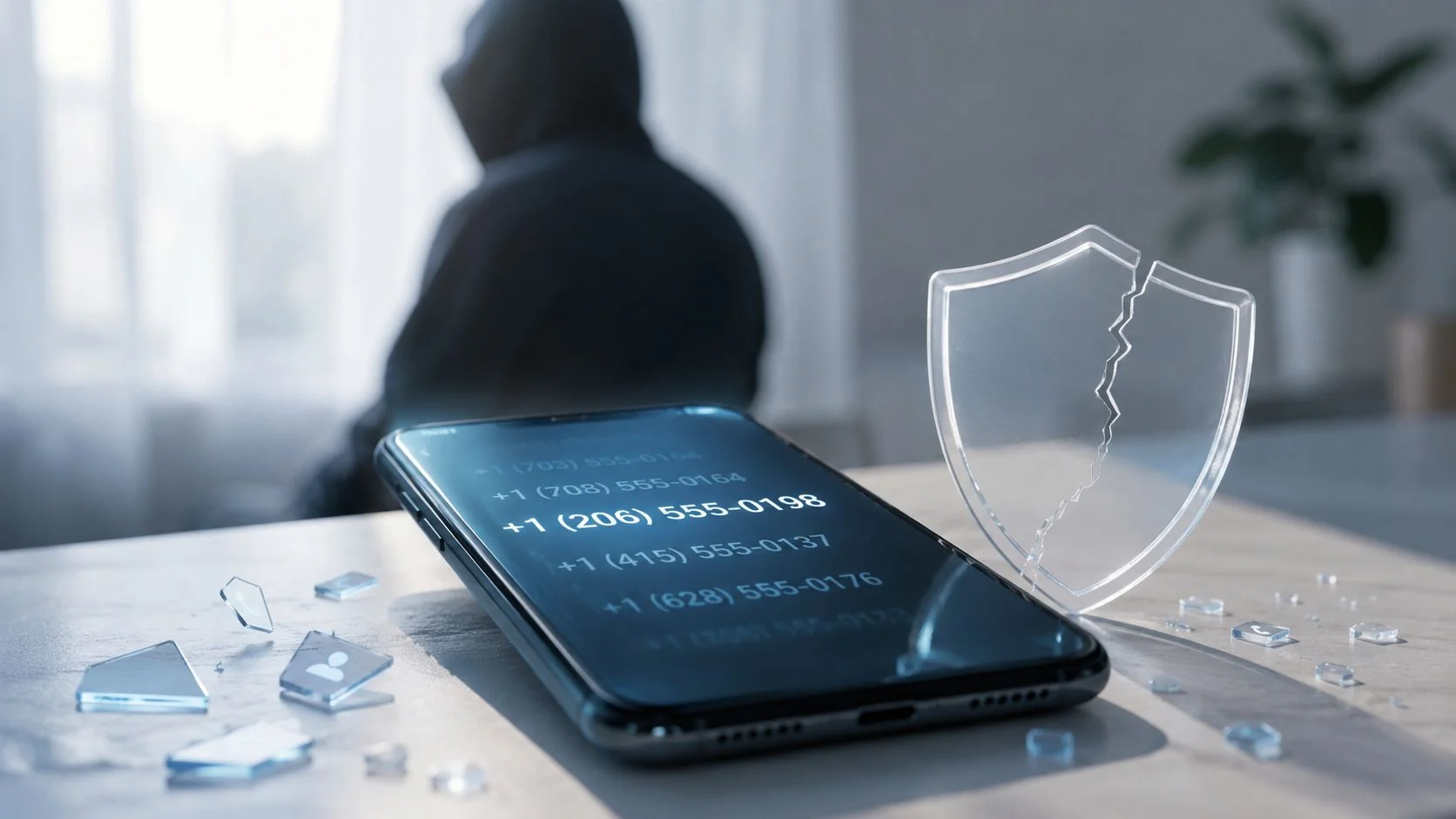
The most popular advice about a burner phone number is also the most misleading: get one, and you become anonymous. You don’t. A temporary number can keep your primary line away from strangers, marketers, sellers, dates, or public-facing accounts, but it can’t erase the records created by the app, carrier, device, network, or payment method.
That distinction matters for more than personal privacy. A number can influence dating-app verification, marketplace safety, gaming account recovery, professional reputation, and scam exposure. Phone numbers have become powerful identity markers, and Burner says a number may reveal a person’s name, education or career history, current address, contacts, past addresses, and family photos through connected data sources. (Why your phone number reveals more than you think)
A burner number is best understood as compartmentalization, not invisibility. It reduces casual exposure, while digital footprint management helps you understand what can still be connected to you.
Why Burner Phone Numbers Are Not the Privacy Shield You Think
A burner number won’t make you disappear from the internet. It gives you a separate contact point, which is useful when you don’t want a stranger from an online marketplace, dating app, job listing, or gaming community to have your primary number. If that separate number starts attracting spam, you can stop using it without exposing your everyday line.
That protection has a clear boundary. The service may retain routing information, and activity can remain connected through timestamps, IP addresses, device identifiers, payment details, signup information, and repeated usage patterns. Burner’s support material explains that users can delete a created number, but deleted texts, calls, and voicemails can’t be recovered. Deletion removes access to the number’s content inside the service, not necessarily every surrounding record created during use. (Burner’s explanation of real-number protection)
Exposure reduction is different from anonymity
Suppose you’re selling a camera through a classifieds platform. A buyer sees your burner caller ID instead of your personal number. That limits what the buyer can discover through casual reverse lookup. It doesn’t prevent the provider from knowing which account used the number, which device connected to it, or where the app session originated.
The same problem appears when someone uses the number for several unrelated services. A repeated alias can become a durable identifier. If it appears beside a consistent username, identifiable email address, familiar writing style, or known device, an investigator may not need the subscriber’s name displayed beside the number.
Privacy rule: A burner number can reduce direct exposure to another person. It can’t guarantee that the activity surrounding the number is unlinked.
The distinction is especially important as temporary numbers become more common. Industry coverage in 2025 projected that more than 45 million people worldwide would use temporary phone numbers during that year, a 30% increase from 2024. (2025 temporary-number market coverage) Wider adoption makes the tool more ordinary, but it also gives platforms more reason to classify and scrutinize temporary or virtual lines.
whether someone can track you by your phone number Tracking depends on the surrounding evidence. A burner may block a casual lookup, while provider records, account links, and device context can still connect the activity to a real person.
How Burner Phone Numbers Actually Work
The phrase “burner phone” covers two related technologies. The older model is a prepaid mobile device, usually purchased without a contract and sometimes without showing identification. The modern model is often an app-based VoIP alias, where software assigns a separate number and routes calls or texts through the user’s primary smartphone.
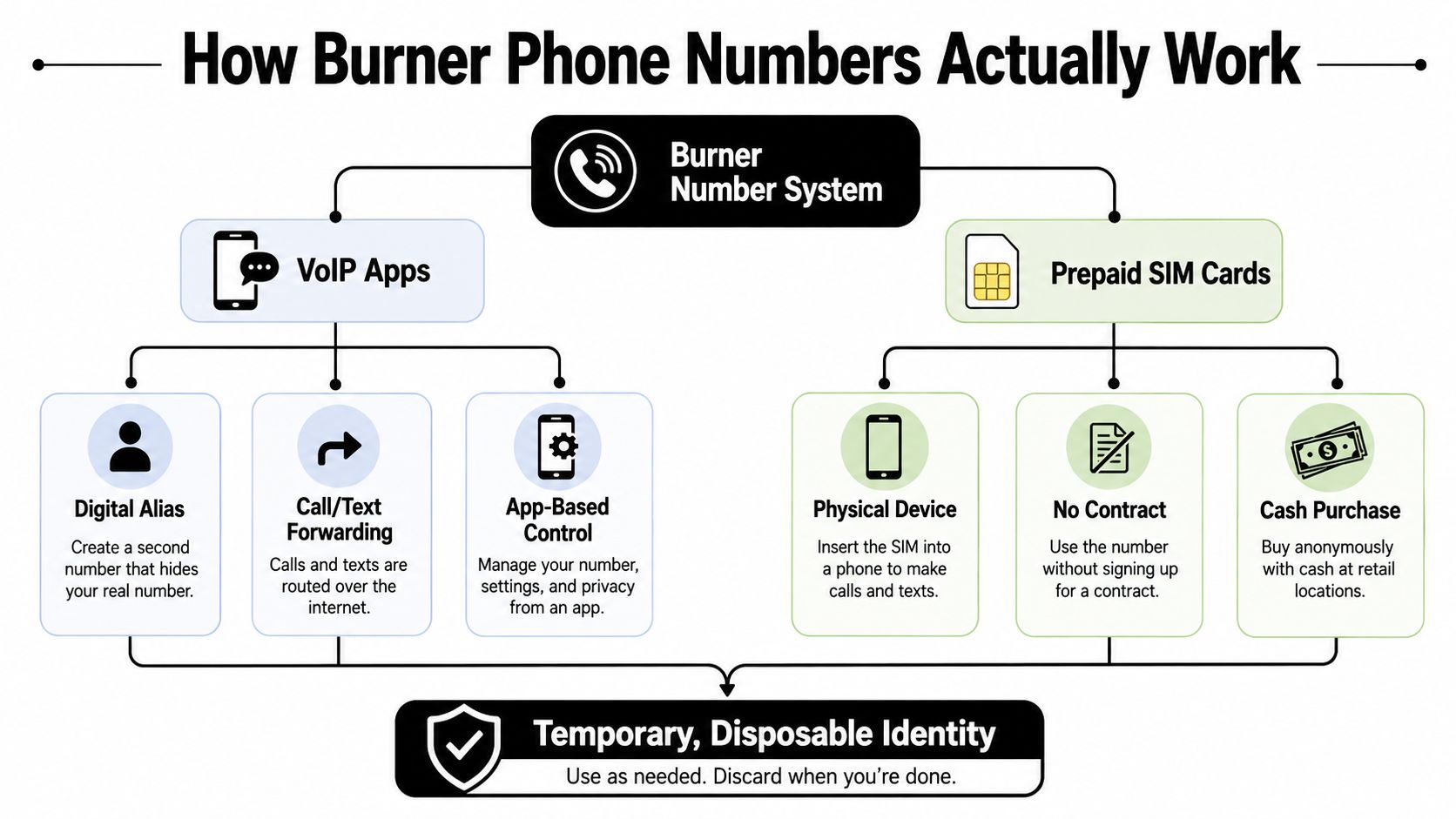
VoIP apps create a second identity layer
With an app, the recipient sees the burner caller ID while the mobile number stays hidden. The user can often manage calls, messages, voicemail, and number deletion from the app, rather than carrying a second physical handset.
The convenience is substantial. You can keep one line for family and established contacts, then use another for a low-trust interaction. A landlord inquiry, dating conversation, sale listing, or public registration doesn’t need to expose the number attached to your everyday accounts.
The privacy boundary sits behind the interface. The provider still has to route the communication, authenticate the account, and protect the service from abuse. That process can generate records involving connection times, network details, device information, and billing or signup data. A recipient may not see your primary number, but the service isn’t operating without an administrative trail.
Prepaid SIM cards separate the handset or carrier line
A prepaid SIM gives a device access to a mobile network without a conventional long-term contract. Users may choose a basic handset, a spare smartphone, or another compatible device. This setup can feel more independent than an app because calls and texts travel through the cellular network rather than a VoIP interface.
It still isn’t automatically untraceable. Police investigations can use stored messages and call records, call-detail records, location information, cell-tower data, GPS, provider subpoenas, and device identifiers such as an IMEI to establish connections. (Technical and investigative limits of burner phones)
A second handset can also reveal more than its owner expects. Connecting it to a familiar Wi-Fi network, carrying it alongside a personal phone, or using the same accounts across both devices creates an association. The technology changes the visible phone number, not necessarily the identity of the person operating it.
If you’re researching physical SIM risks, a separate explanation of how a SIM card can be cloned can help distinguish number separation from protection against account takeover. A burner number doesn’t prevent criminals from targeting the underlying device, account, or carrier relationship.
Legitimate and Malicious Uses of Burner Numbers
A burner phone number isn’t suspicious by nature. Privacy-conscious people use one because they need a boundary, not because they intend harm. The same feature that protects a survivor from exposing a personal line can also help a scammer hide a contact trail. The deciding factor is the purpose, conduct, and platform rules.
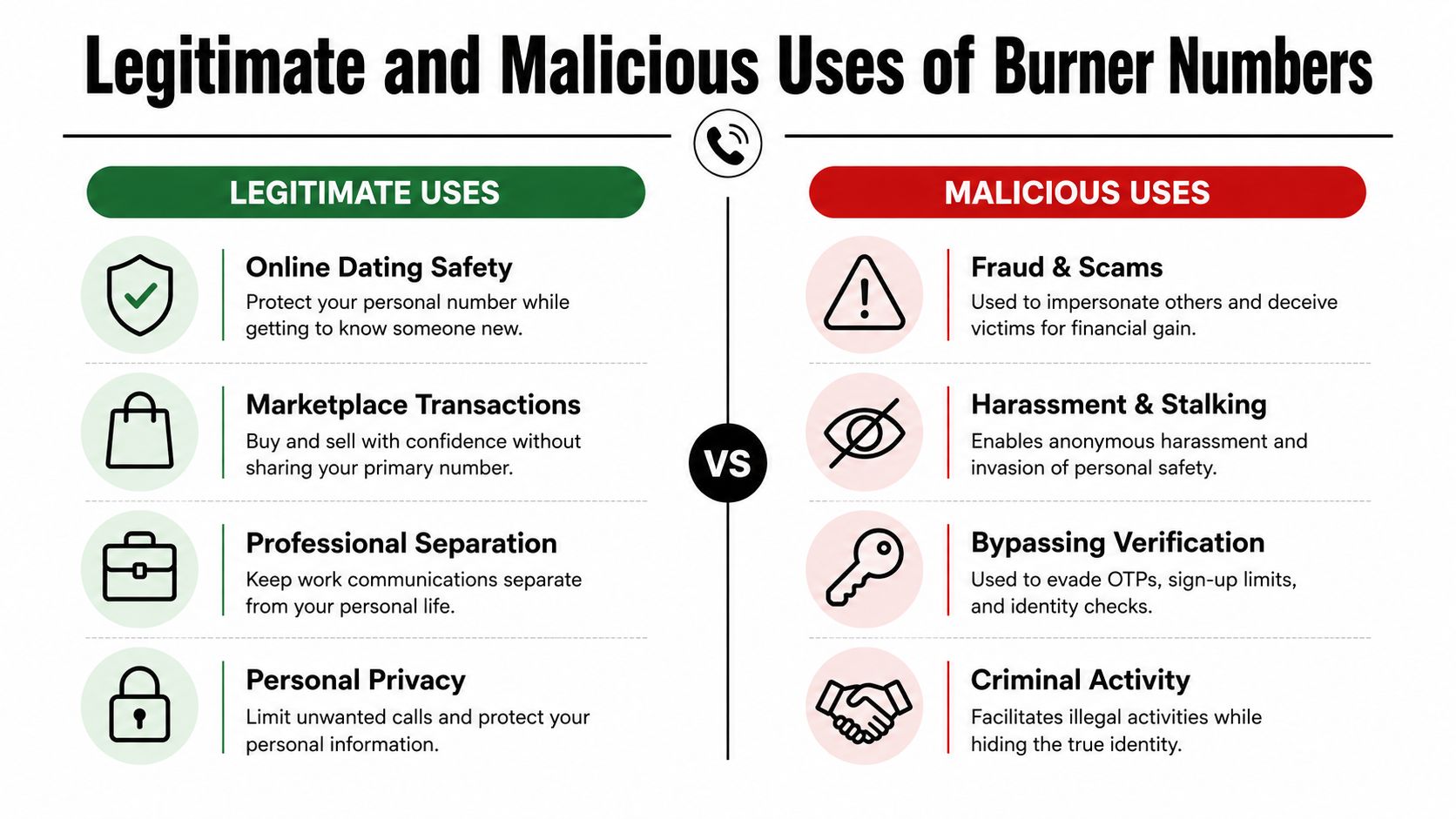
Legitimate privacy uses
A separate number makes sense when the other party has no established reason to possess your primary contact details.
- Online dating safety: Keep early conversations separate until you’ve verified the person and agreed to move communication elsewhere. Don’t treat the number as a substitute for meeting in a public place or telling a trusted contact where you’re going.
- Marketplace transactions: Use a temporary line while arranging a sale or purchase. You can coordinate pickup without placing your everyday number in a stranger’s contacts or marketing database.
- Professional separation: Freelancers, recruiters, contractors, and small-business owners may want a public-facing line that doesn’t merge with family communications.
- Personal privacy: A public registration, community listing, or low-trust service may need a reachable number, but not necessarily your primary one.
The tool can also help people manage reputational boundaries. A gaming profile, dating account, or public professional listing may circulate farther than expected. Keeping contact channels separate reduces the chance that one exposed number connects every part of your life.
Harmful and unlawful uses
The same separation can support fraud, impersonation, harassment, stalking, or attempts to bypass lawful monitoring. A burner doesn’t make those actions legal, and it doesn’t make evidence disappear. Legal guidance warns that using burner phones to conceal fraud, harassment, stalking, or evasion of lawful surveillance can create criminal liability, while investigators may rely on call logs, IMEI tracing, warrants, and carrier records. (Legal risks of using burner phones)
A privacy tool protects a boundary. It doesn’t provide permission to cross someone else’s.
Platforms may also view repeated temporary-number activity as a fraud signal. That can affect account creation, dating-app verification, marketplace messaging, or recovery attempts. If someone contacts you from a burner and pressures you to send money, share a verification code, move to an unfamiliar payment method, or avoid normal identity checks, focus on the behavior rather than the phone technology.
For a broader view of phone-number abuse, review what hackers can do with your phone number. The risk often comes from the accounts and information connected to the number, not from the number alone.
Acquiring Burner Numbers and Verification Success Rates
Choosing a burner number starts with the job you need it to perform. A number for a one-time marketplace conversation has different requirements from a number used for account recovery, banking, gaming, or a service that demands a mobile line.
Common options include app-based numbers, standalone virtual SMS services, prepaid SIMs, and prepaid handsets. Their reliability differs because platforms can inspect line type and carrier reputation during verification.
What platforms check
Lookup systems can normalize a number into E.164 format and return the current operator, portability status, and line classification, such as mobile, wireless, landline, or VoIP. (Carrier and line-type lookup information) A platform may therefore reject a number before sending a code, or accept the number but filter the message later.
Temporary and virtual numbers often fail because services block numbers that appear heavily reused, virtual, or VoIP-based. Delivery may be delayed, filtered, blocked, rate-limited, or never sent when abuse controls or cooldowns activate. (Temporary-number verification limitations)
| Method | Cost | Verification success | Privacy level | Best for |
|---|---|---|---|---|
| App-based VoIP number | Service-dependent | Variable, often weaker for high-friction services | Separates the visible number from your primary line | Dating, classifieds, public contact |
| Virtual SMS number | Service-dependent | Inconsistent where reuse detection is strict | Provides a temporary contact channel | Low-trust sign-ups where permitted |
| Prepaid SIM | Service-dependent | Often more compatible with mobile-only checks | Separates the cellular line from the primary number | Short-term mobile communication |
| Prepaid handset | Service-dependent | Depends on carrier and platform checks | Adds physical separation | Situations requiring a separate device |
Don’t use a temporary number for an account you may need to recover years later unless the service provides another dependable recovery method. Number recycling, expiration, or deletion can leave you locked out. For an iPhone that isn’t receiving codes, this guide to not receiving SMS messages on iPhone can help separate a device-delivery problem from a rejected or filtered number.
Match the method to the risk
For a dating conversation, an app-based line may provide enough separation. For a marketplace sale, the key benefit is limiting direct exposure while arranging logistics. For a bank, identity provider, or sensitive account, platform terms and recovery requirements matter more than convenience. Don’t assume a number that receives an ordinary text will pass every verification workflow.
OSINT Techniques for Tracing Burner Phone Numbers
Open Source Intelligence, or OSINT, rarely depends on one dramatic discovery. Investigators assemble small connections. A burner number may appear private in isolation, yet surrounding identifiers can reveal the person behind it.
A reverse phone search might identify public profiles, usernames, messaging accounts, marketplace listings, or breach-related records associated with the number. The result depends on what has been published, indexed, leaked, or voluntarily connected. It also depends on whether the same number was reused after the user believed it was disposable.
The surrounding data matters most
A phone number becomes easier to connect when it appears beside a stable email address, a familiar username, a personal photograph, or a profile with recognizable location details. The same device can add another link. Logging into the burner app from identifiable Wi-Fi, carrying the burner and personal phone together, or making back-to-back calls can create a pattern that doesn’t require the burner account to display a legal name.
Payment trails create another association. Buying service with a traceable card, purchasing a handset at a camera-monitored store, or using a billing identity that already appears elsewhere can undermine the separation. (How surrounding data can link a burner to a person)
A defensive OSINT audit
If you’re checking your own exposure, work from identifiers you control:
- Search the number in multiple formats. Include country code and local formatting, because listings may store them differently.
- Review messaging profiles. Save the number temporarily and check whether permitted profile details appear in services such as WhatsApp, Telegram, or Signal. Don’t contact or impersonate anyone.
- Compare usernames and images. Reused handles, avatars, bios, and writing patterns can connect accounts that use different phone numbers.
- Inspect breach and public-record exposure. A number can coexist with email addresses, addresses, or account data in records unrelated to the burner service.
- Map timing and context. A cluster of activity around one location, device, or account may be more revealing than the number itself.
Digital Footprint Check describes a search across 500+ platforms, including social networks, breach databases, gaming profiles, professional networks, and public records. Its reverse international phone number search can be one input in a broader, ethical audit of your own number or information you have permission to review.
Use OSINT defensively. Don’t stalk a private individual, bypass account protections, or publish personal information. The goal is to reduce exposure and spot identity-linking paths before criminals, abusive contacts, or opportunistic data brokers find them.
Building Real Privacy Through Digital Footprint Management
A burner number hides one contact point. It does not erase the identity trail around it. Social accounts, old usernames, gaming profiles, professional listings, breach records, public documents, app permissions, and data-broker pages can still connect activity to you. Metadata, VoIP detection, and open-source intelligence techniques may reveal those links even when the displayed number changes.
Phone verification is part of a broad identity economy. Platforms use line-type checks, reuse controls, and account signals to distinguish ordinary subscribers from temporary or virtual numbers. That makes a burner one layer of separation, not a guarantee of anonymity. Treat it like a privacy screen on a window. It blocks a direct view, while other angles may still expose what is inside.
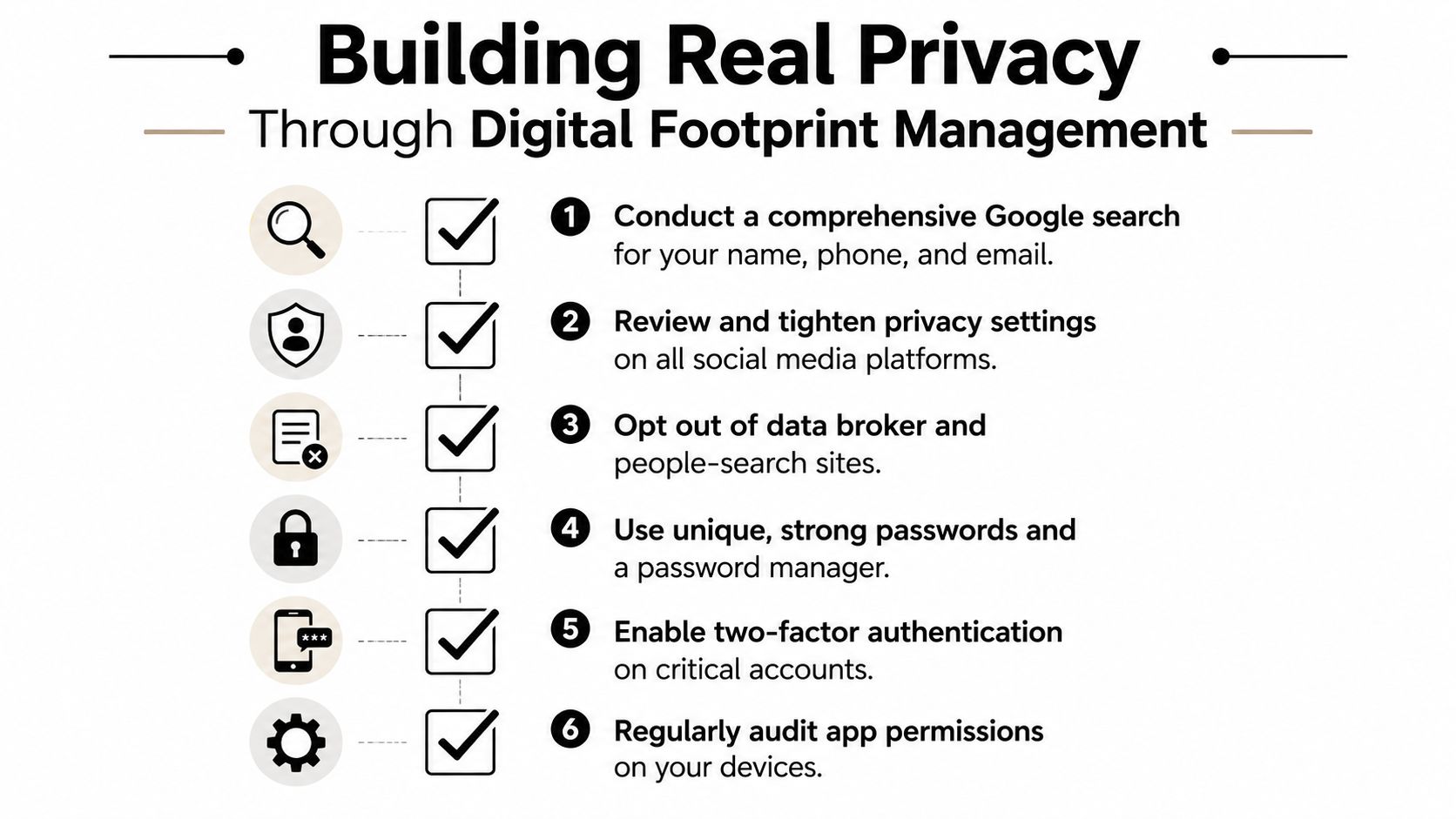
Audit the identity connections
Start with a controlled review of your name, phone numbers, email addresses, usernames, and old aliases. Check search results, social platforms, gaming communities, professional networks, public records, and breach notifications. A job seeker should review what a recruiter can see. A gamer should check whether an old profile exposes a birth year, location, school, or recovery address.
Then reduce the connections you find:
- Tighten social privacy settings. Remove public contact details and limit discovery by phone or email where the platform permits it.
- Request data-broker removal. People-search pages can expose information that changing a phone number will not remove.
- Use unique passwords and a password manager. Separate credentials prevent one reused password from connecting a private account to a public identity.
- Protect critical accounts with two-factor authentication. Use an authenticator or security key where supported, particularly for email and financial accounts.
- Review app permissions. Remove access to contacts, location, microphones, and files when an app has no clear need for them.
- Monitor breaches and recovery paths. A hidden recovery email or reused number can expose an account after the visible contact line changes.
People assessing a privacy-focused service should review our commitment to user privacy. Clear information about collection and use matters because any privacy tool also becomes part of your digital footprint.
The practical lesson is simple. Reduce the number of identity links, not only the number shown to a caller. A burner can separate a contact channel, while account hygiene, removal requests, strong authentication, and regular monitoring address the metadata and OSINT paths that can reconnect it to you.
Practical Privacy Strategies Beyond Burner Numbers
A person using a dating app might create a separate number, use a dedicated email, avoid sharing a home address, and arrange a public meeting. A freelancer might publish a business line while keeping personal voicemail and recovery details private. A gamer might separate a public handle from an email used for account recovery. Each scenario needs layers, not one supposedly anonymous number.
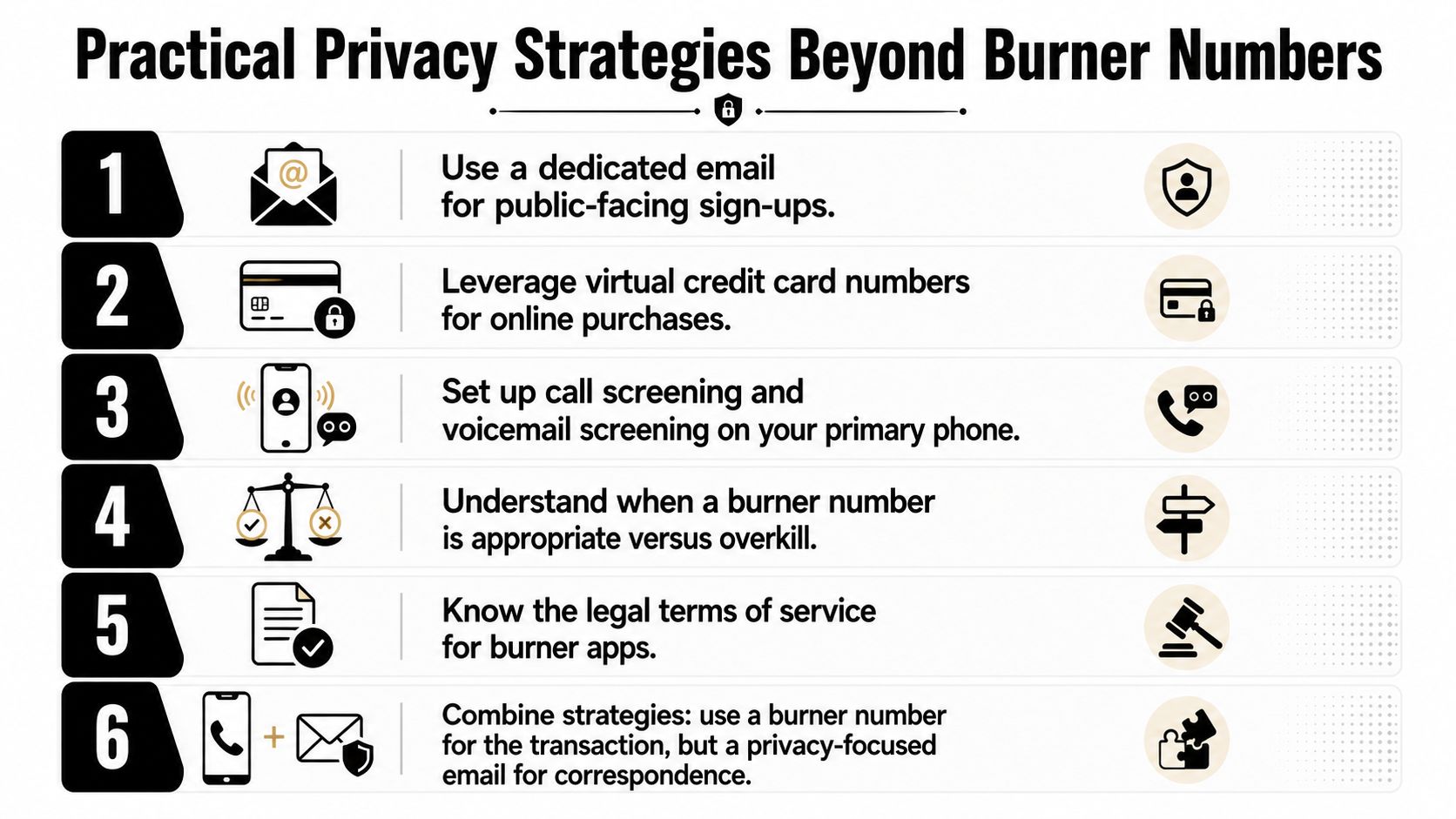
Use these principles immediately:
- Create a dedicated email for public-facing sign-ups. Keep it separate from banking, employment, and primary recovery accounts.
- Consider virtual card numbers for online purchases. They can limit merchant access to your main card details, subject to your provider’s terms.
- Turn on call and voicemail screening. Filter unknown callers before they reach your primary line.
- Decide whether a burner is proportionate. It makes sense for low-trust contact, but it may be unnecessary for a service that requires durable identity verification.
- Read the app’s terms. Understand deletion, number expiration, data retention, and prohibited uses before relying on the service.
- Combine layers. Use a burner for the transaction and a privacy-focused email for correspondence, rather than reusing one identity across every channel.
For situations involving personal safety, compare best safety app options for review alongside basic communication boundaries. A safety app can’t replace judgment, emergency support, or a trusted contact, but it may complement a broader plan.
Digital Footprint Check helps you search for exposed profiles, phone-linked accounts, breach data, gaming identities, professional listings, and other public information across the web. Start with the Digital Footprint Check free checker to see which identity links may still connect your burner number to your real digital footprint, then prioritize the records and accounts that need attention.