· Digital Footprint Check · Content Marketing · 16 min read
Are Prepaid Phones Traceable? What Carriers Can See
Are prepaid phones traceable? Learn how carriers use IMEI, SIM, and cell data to link a burner phone, and what privacy steps still matter.
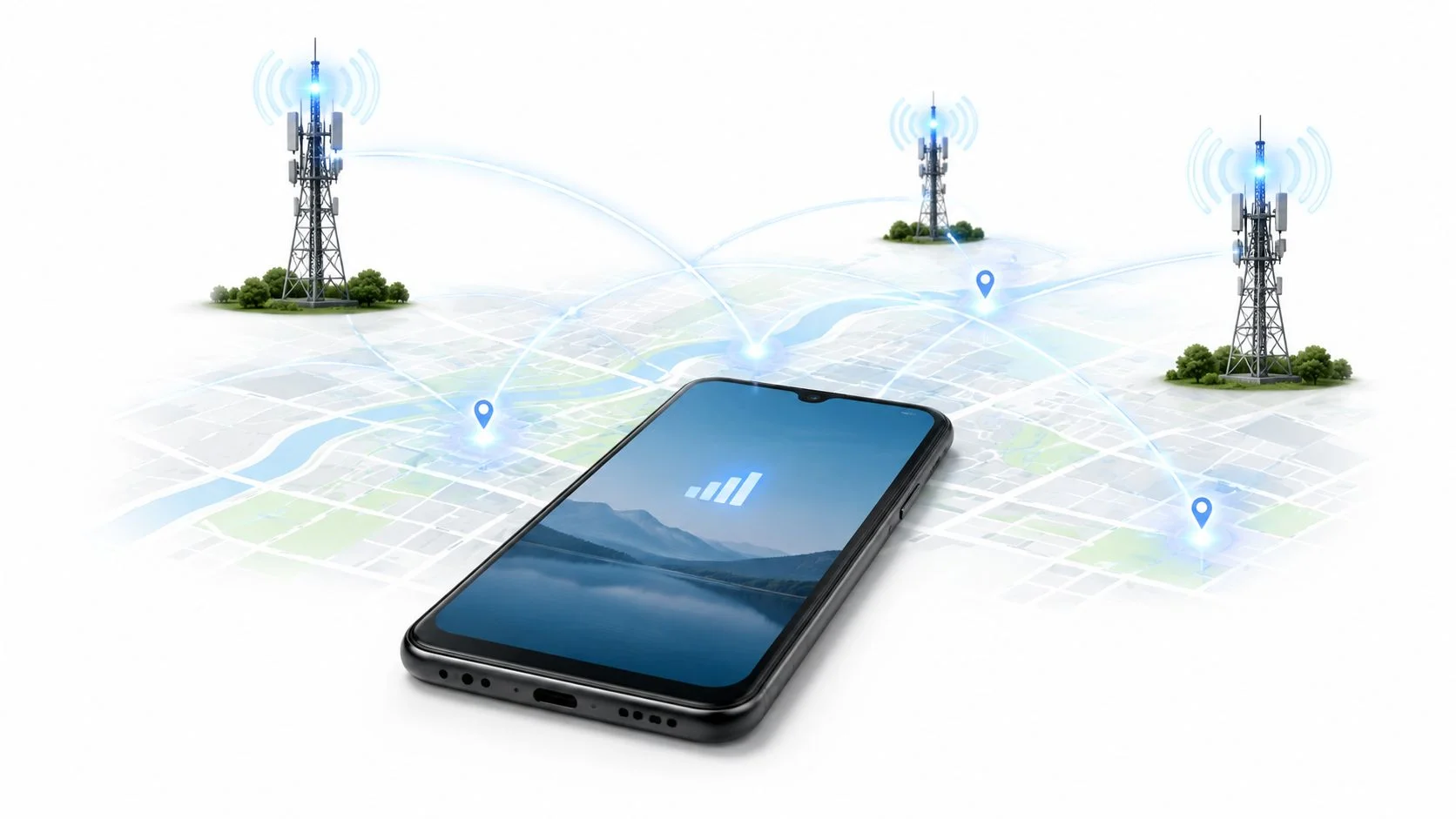
Yes, prepaid phones are generally traceable through the mobile network, even when you buy one for cash without a contract or identification. Prepaid describes how you pay, not an absence of records, so a cash purchase may delay attaching a legal name but doesn't stop the carrier from logging the SIM, the handset, calls, and location.
That's the part most burner phone advice gets backwards. It treats a plain wrapper, a gift card, or a clerk who didn't ask for ID as proof that nobody can follow the line. In real life, that phone still has to ask a network for service, and the network has to know which device to connect. If you're buying a second number after a romance scam, during a messy breakup, or while you job hunt and don't want recruiters calling your personal line, that difference matters for your safety and your reputation.
Are Prepaid Phones Traceable in Practice
Maya buys a prepaid phone with cash after a dating app match turns threatening. She doesn't sign a contract. She doesn't give her name. She assumes the new number can't lead back to her.
That assumption mixes up two separate questions. Can the carrier see the phone on its network? Yes, while it's powered on and connected. Can someone immediately attach a legal name to it? That depends on what was collected at signup and what she does with the phone afterward.
What prepaid actually changes
Prepaid means you pay in advance instead of receiving a monthly bill under a contract. It doesn't mean the carrier creates no records. It works much like paying cash for a bus pass. The driver may not know your name, but the bus still follows a route, opens its doors at set stops, and records that a pass was used.
In the United States, an active mobile device's location, the phone numbers it contacts, and the frequency, duration, and timing of calls count as customer proprietary network information, often shortened to CPNI (the carrier's private record of how a line is used). The FCC's guidance on protecting personal data explains that carriers must protect that information, but they may disclose or provide access to it when legally required, with customer approval, while delivering the service, or to emergency services receiving a 911 caller's location.
So traceable doesn't mean anyone on the internet can type in a number and watch a dot move. It means:
- The carrier holds network records: The phone announces itself so calls, texts, and data can reach it.
- Access is limited, not nonexistent: Privacy rules restrict disclosure, but lawful requests, your own approval, service delivery, and emergency calls are exceptions.
- A missing name isn't a missing trail: Usage patterns, contacted numbers, and account activity can still point investigators toward a person.
A prepaid line is pseudonymous, not anonymous. It may start without your name attached, but it still builds a history under technical labels.
Why this matters outside crime shows
For most readers, the risk isn't dramatic. It's ordinary. An ex recognizes the new number because it appears in a messaging app with your old profile photo. A recruiter searches the number you put on applications and finds a gaming profile you forgot. A scammer you've blocked finds the same number reused on a public listing.
That's why asking whether someone can track you by your phone number is more useful than asking if a burner is magic. When people ask, are prepaid phones traceable, the practical answer is yes on the network, and often yes through everyday links you create later. The phone's nickname at the store doesn't control either layer.
How Carriers Identify a Prepaid Phone
A carrier doesn't need your name to tell one phone from another. It uses two labels that travel with every connection.
Use a travel analogy. Your SIM (Subscriber Identity Module, the small card or built in chip that holds your mobile subscription) works like a luggage tag tied to your account. Your handset works more like the suitcase itself. The tag says which subscription should get service. The suitcase has its own serial identity no matter which tag you attach.
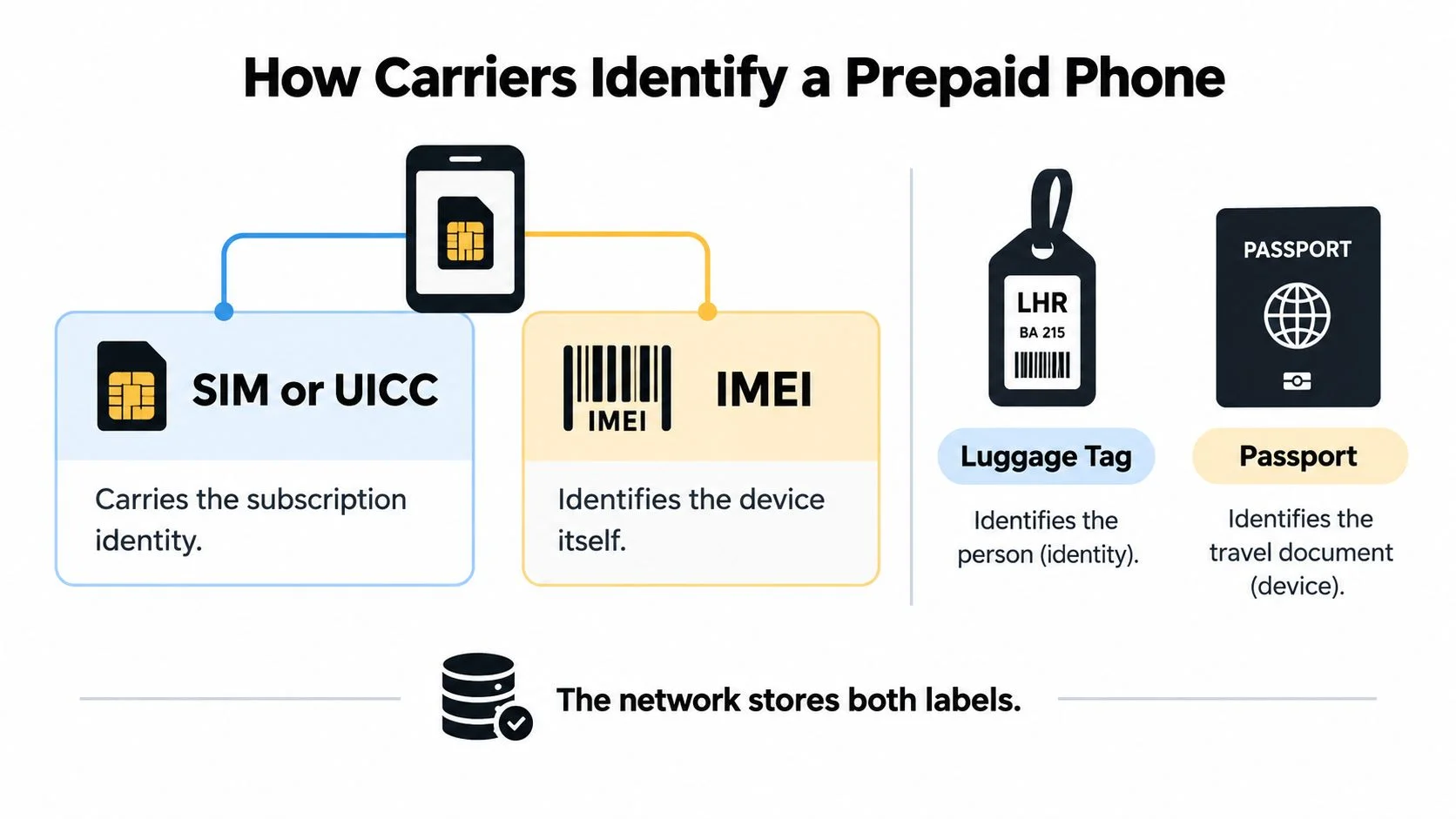
The two labels the network stores
Networks distinguish the subscriber identity stored on the SIM or UICC (Universal Integrated Circuit Card, the physical smart card platform that can hold the SIM application) from the handset's equipment identity. NIST's guide to LTE network security explains both identifiers in detail.
- IMSI: The International Mobile Subscriber Identity is typically stored on the SIM. It identifies the cellular subscription, not the glass and metal in your hand.
- IMEI: The International Mobile Equipment Identity identifies the physical device itself. Change the SIM and the handset still carries this label.
Both are unique identifiers. When your phone attaches to the network, often just by being powered on in coverage, the carrier can record those identifiers with serving cell information (which tower site and sector are handling you), timestamps, and communications metadata (data about a call or message, such as timing and destination, rather than the words spoken).
Prepaid status changes how the account is funded and what customer information may be collected at purchase. It doesn't remove either label, because the network can't reliably deliver a call to an unlabeled device.
Swapping parts creates links
Readers often assume moving a SIM into a different phone wipes the slate. It usually does the opposite.
If one SIM appears in two handsets, that creates a link between both devices and one subscription. If three SIMs appear in one handset, the shared IMEI can link those subscriptions to the same physical phone. Operators may store an IMEI together with a customer's SIM number, so the pairing itself becomes a record.
Treat a prepaid number as pseudonymous rather than anonymous. The carrier may not know your legal name on day one, but it knows exactly which subscription and handset it's serving.
That distinction protects you from a common mistake. You keep your main phone for banking and family, then move its SIM into a cheap prepaid handset for a weekend. You haven't created a clean break. You've taught the network that those devices and subscriptions belong in the same story.
How Location Tracking Works Without GPS
Turning off GPS feels decisive. The map app stops pinpointing you, so it's easy to believe the phone has gone quiet. It hasn't, because GPS is only one way to estimate place.
GPS (Global Positioning System) uses satellites to help the phone calculate its own position. Cellular service works differently. Your phone talks to nearby towers so the network knows where to send incoming calls. That conversation itself reveals a rough location.
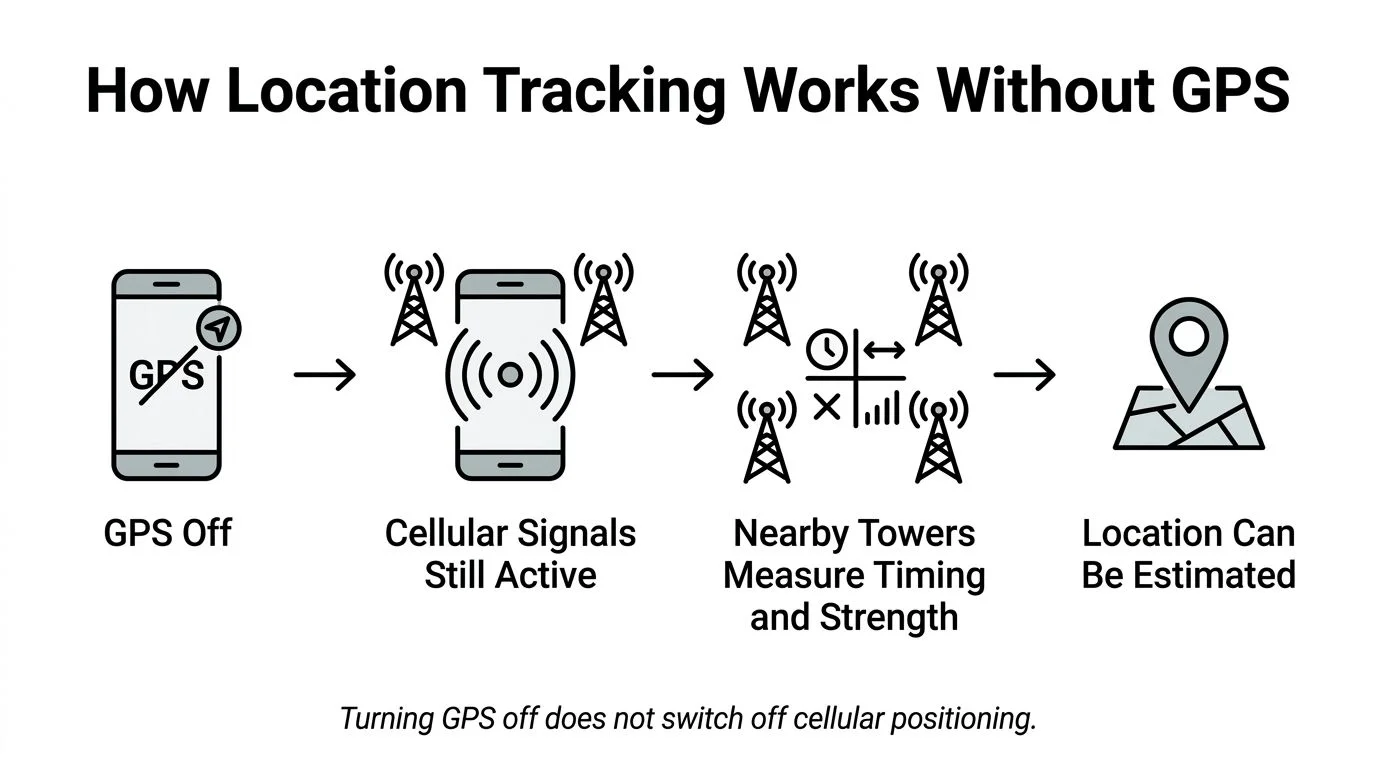
Three location methods that aren't GPS
NIST's mobile device security guidance identifies cellular positioning, Wi-Fi assisted positioning, and IP address geolocation as separate location methods, and notes that IMEI and IMSI can indicate both device ownership and physical location.
- Cellular positioning: The network estimates location from the cell site and sector serving the phone. In a dense city, small cells narrow the area. In rural coverage, one site may cover a wide patch, so the estimate stays broad.
- Wi-Fi assisted positioning: Nearby Wi-Fi networks can help a device or service estimate where it is, even if you aren't thinking about location at that moment.
- IP address geolocation: An IP address (Internet Protocol address, the network address assigned for an internet session) can give a general geographic clue. It's usually coarser than cellular positioning, but it's still a separate trail.
None of these need your permission for a satellite fix. They grow out of staying connected.
What 5G changes and what it doesn't
Modern 5G (fifth generation mobile network technology) reduces routine exposure of the permanent subscriber identifier by using a temporary 5G-GUTI (5G Globally Unique Temporary Identity, a temporary label assigned after registration) and reallocating it frequently when correctly implemented. That makes casual movement tracking harder.
It doesn't make the phone invisible to its own carrier. The network still maintains the mapping between that temporary identity, the subscription's permanent record, and the device's radio activity. Otherwise it couldn't manage the session or bill the right prepaid balance.
Ordinary actions create network events. Powering on, calling, texting, using mobile data, and contacting emergency services can all leave timestamps and serving cell records. Airplane mode or powering down limits ordinary radio based tracking while they're in effect, but apps, Wi-Fi connections, and the next network registration can create separate records later. If you're reviewing device settings, practical steps for turning off location sharing help with app level exposure, but they don't erase carrier positioning. A hidden caller ID hides your number from the person you call. It doesn't hide the phone from the network carrying that call.
Why Country Rules Change Prepaid Anonymity
American burner phone advice travels badly. In many countries, the shop clerk isn't being nosy when they ask for a passport or national ID. The law requires registration before the SIM will work.
By the end of 2020, 72% of mobile subscriptions worldwide were prepaid and approximately 150 governments had mandated prepaid SIM registration, usually requiring identifying information before activation, according to the GSMA's policy handbook on mandatory prepaid SIM registration. The United States and United Kingdom were among the countries that had not mandated universal prepaid SIM registration, so some customers there could activate service without proof of identity.
Registration changes the name layer
| Layer | Where registration is mandatory | Where a no-ID prepaid signup is allowed | Still traceable? |
|---|---|---|---|
| Legal name at signup | Passport, national ID, address, or similar details tied to the SIM | Little or no identity collected at purchase | Name may be absent in no-ID markets |
| Network connection records | Phone still attaches with subscription and handset identifiers | Same network attachment happens | Yes |
| Call, text, and data metadata | Carrier records service use under the registered account | Carrier records use under technical identifiers | Yes |
| Location related records | Serving cell and session records exist | Same records exist without a registered name | Yes |
| Later linkage | Top ups, apps, contacts, and profiles add more ties | Same habits can supply the missing name | Yes |
Registration affects how easily activity is tied to a legal name. It doesn't determine whether the phone generates traceable technical records.
Europe shows why you can't rely on one rule. EU member states don't follow a single harmonized approach, since some require personal details for prepaid SIMs and others don't impose the same requirement. A traveler who buys a local SIM for cheap data may face in person ID checks in one country and a quick no ID sale across a border. If you're comparing signup models, Simsima's no-KYC privacy guide is useful background on what no KYC means in that provider's context, but it doesn't override the registration law where a physical SIM is sold and activated.
Ask a sharper question: Which entities can connect this phone to me, under what conditions, and for how long in the country where I'll actually use it?
Rules and retention practices change, so old forum advice can go stale. A prepaid line in a registration country may still save money or avoid a contract. It offers little signup anonymity. In a no ID market, the name may be missing at first, but the device remains visible every time it connects.
How Everyday Use Still Links a Burner
Most prepaid phones aren't linked by a dramatic hack. They're linked by Tuesday.
You buy the phone for cash on Friday. On Tuesday the balance runs low, so you top up with the debit card in your wallet because it's faster. On Wednesday you add your regular email for balance alerts so you don't lose service before a job interview. By Thursday, the no name phone has a payment card and an inbox attached.
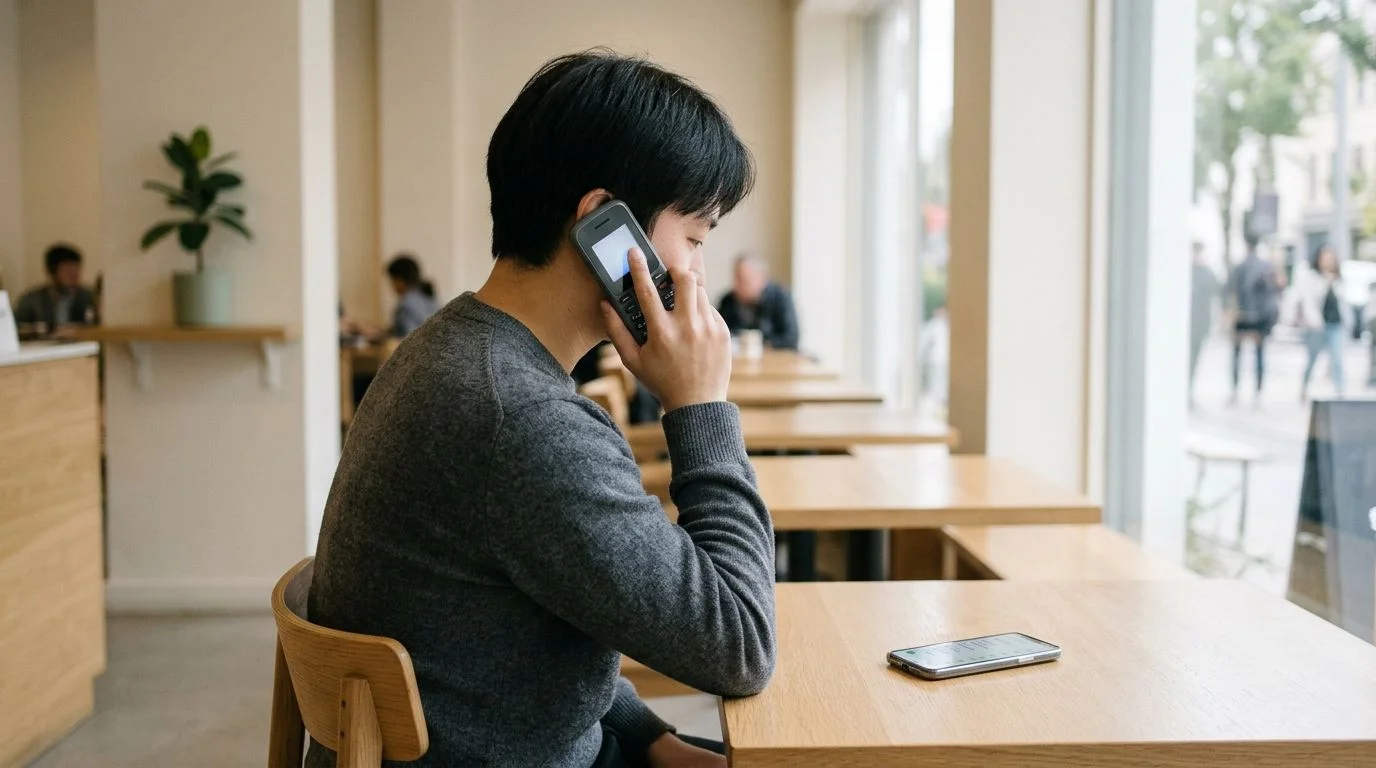
Small habits that attach a person
Network providers maintain call detail records (carrier logs of communications metadata) for pay as you go phones in the same general way they maintain records for contract subscriptions, and a phone bought anonymously may become associated with identifying information if the user supplies an email for notifications or uses a payment card for airtime, according to NIST's mobile device forensics guidance.
Watch for these ordinary chains:
- Payment card top ups: The card connects the prepaid balance to a named bank account.
- Notification email or account recovery: An email you've used for work, shopping, or social media becomes a bridge to the new number.
- Repeated places: The phone connects near home at night, near the same café in the morning, and near one office on weekdays. Even without GPS, routine narrows the field.
- Known contacts: The prepaid line texts your partner, your child's school, a recruiter, and one gaming friend. Those relationships form a pattern that looks like your life because it is.
A dating example shows the stakes. You give matches the prepaid number to stay safe, which is sensible, but you reuse your main profile photo and username in the messaging app tied to that number. A catfish or an angry match doesn't need carrier records. They recognize the public pieces you've reused.
The job version is quieter. You list the prepaid number on applications while keeping your personal line private. Then you use the same number on a public résumé site, a marketplace profile, and a gaming account. A recruiter, a scammer, or a data broker can connect those listings. Learning how data broker sites collect and resell personal details helps you see why one reused number can spread.
Trying to obstruct a lawful investigation isn't a privacy tactic. Assume investigators with proper authority can follow carrier records, calling patterns, and links to known associates. Your goal as a legitimate user is simpler. Don't accidentally bolt your name, card, inbox, home routine, and social circle onto a line you chose to keep separate.
Checking Where a Prepaid Number Appears Online
You can't log in and read the carrier's private location file for your prepaid line. You can audit the public layer, which is often the layer an ex, employer, scammer, or curious gaming rival relies on.
A number becomes easier to attribute once it's saved in a dating app, posted on a job board, tied to a gaming profile, used for a messaging account, printed in a professional listing, or exposed in breach data. At that point, are prepaid phones traceable stops being only a carrier question. Search results and profiles start answering it.
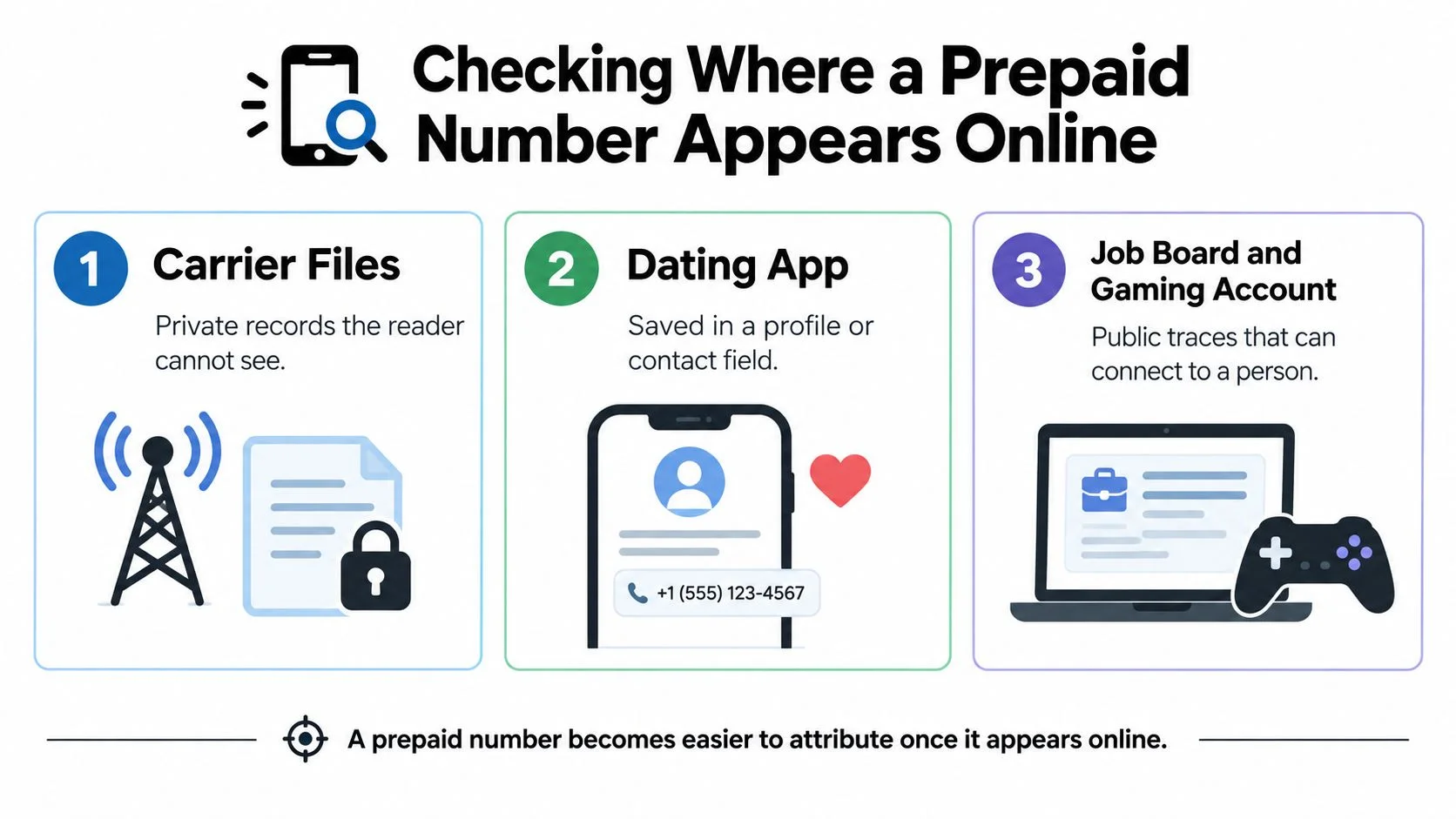
Three ways to check public exposure
Search by hand first. Put the number in quotes (enclosed search terms that force an exact match) in a search engine, then try it with your name, username, and city. Search the number with and without spaces or a country code, because listings format numbers differently. This is free and fast, but it misses profiles that search engines don't index well.
Review what each app shows strangers. Log out or use a private browser window and view your dating, gaming, marketplace, and professional profiles as an outsider. Check whether the app suggests contacts from your address book, shows your photo to anyone with your number, or lets people find you by phone. The guide to finding social media profiles linked to a phone number explains why contact discovery settings deserve close attention.
Use one broad public records check. Manual searching platform by platform takes time and still leaves gaps. Digital Footprint Check searches 500+ platforms, including social networks, breach data, gaming profiles, professional networks, and public records, then reports exposed personal data, hidden accounts tied to an email, phone number, or username, and reputation issues that can affect work, dating safety, and scam risk. That's OSINT (Open Source Intelligence, research using publicly available sources), not access to private carrier logs.
Carrier files and public traces answer different questions. One shows network activity to the carrier and lawful requesters. The other shows what strangers can connect to you today.
Some people consider temporary numbers for SMS verification for one time signups instead of giving a dating or gaming service a number they'll keep. That choice can reduce how often your prepaid number lands in new databases, but it doesn't clean up places where the number already appears. Job seekers should check old résumé postings. Parents should check numbers shared in school or team listings. Daters should check whether a messaging profile reveals a name or photo. Gamers should check whether a username tied to the number appears across forums.
Privacy Steps That Still Matter
A separate prepaid number can still be useful. It can keep marketplace buyers off your personal line, give you a travel number, or let you date without handing strangers the number your bank uses. The goal isn't invisibility. It's limiting easy linkage.
Habits that reduce public connection
- Keep account worlds apart: Don't register the prepaid line on accounts that already hold your legal name, home address, main email, and family contacts if separation is the point.
- Think before topping up: A payment card or notification email is convenient, but it can attach named records to a line bought without them. Review the carrier's retention and lawful disclosure policies before you rely on any signup promise.
- Control radios and permissions: Turn off Wi-Fi and Bluetooth when you don't need them, and review which apps can use location or contacts. A periodic review using clear app permission management practices reduces records created by apps on top of carrier records.
- Power down when location history is the concern: A powered off phone limits ordinary live radio contact, but it doesn't delete records already created or stop new ones when you switch it back on.
Be clear about the limits. These steps don't erase carrier metadata, defeat a warrant, or make fraud, harassment, or threats untraceable. If someone's safety is at risk, contact local emergency services or law enforcement rather than relying on a prepaid phone as a shield.
The reputation side lasts longer than the SIM. An old prepaid number left on a public profile can affect job screening if a recruiter finds an abandoned gaming account, a marketplace dispute, or a dating profile tied to the same number. It can affect catfish checks when a new partner searches the number and finds accounts under a different name. It can affect personal safety when a discarded number is recycled and a stranger starts receiving your account recovery codes or calls meant for you.
Start with one bounded audit. Run your prepaid number, main email, and regular usernames through www.digitalfootprintcheck.com/free-checker, then remove, rename, or lock down the public listings that connect them. Change recovery numbers on important accounts before you discard a SIM. Delete profiles you no longer use. You'll still have a carrier visible device, because that's how mobile service works, but you'll have fewer public bridges between that device and your name, your job search, your dating life, and your gaming identity.
Before you trust a prepaid number to keep your dating life, job hunt, or gaming accounts separate, check what that number already reveals in public profiles, breach data, and professional listings. Digital Footprint Check searches public sources tied to your phone number, email, and usernames so you can find exposed accounts and lock them down. Run your free check today and remove the public links that make a supposedly private number easy to attribute.