· Digital Footprint Check · Content Marketing · 11 min read
1000 Walmart Gift Card Text Message
Received a $1000 Walmart gift card text message? Learn what to do and avoid scams in 2026. Protect your information and find out if it's real.

You’re probably here because your phone lit up with a message saying you’ve won a $1000 Walmart gift card, and your first thought was, “This feels off.”
That instinct is correct.
These texts are built to make you react before you think. They borrow Walmart’s name, dangle a big reward, and push you toward a link that has nothing to do with a real promotion. The danger isn’t only the fake prize. The bigger risk is what happens after you engage, especially if the message gets you to hand over contact details or click into a shady page.
A lot of people still treat this as a minor nuisance. It isn’t. A scam text can become the starting point for broader privacy problems, repeated phishing attempts, and a much larger exposure of your personal data than is commonly understood.
That $1000 Walmart Gift Card Text Is a Trap
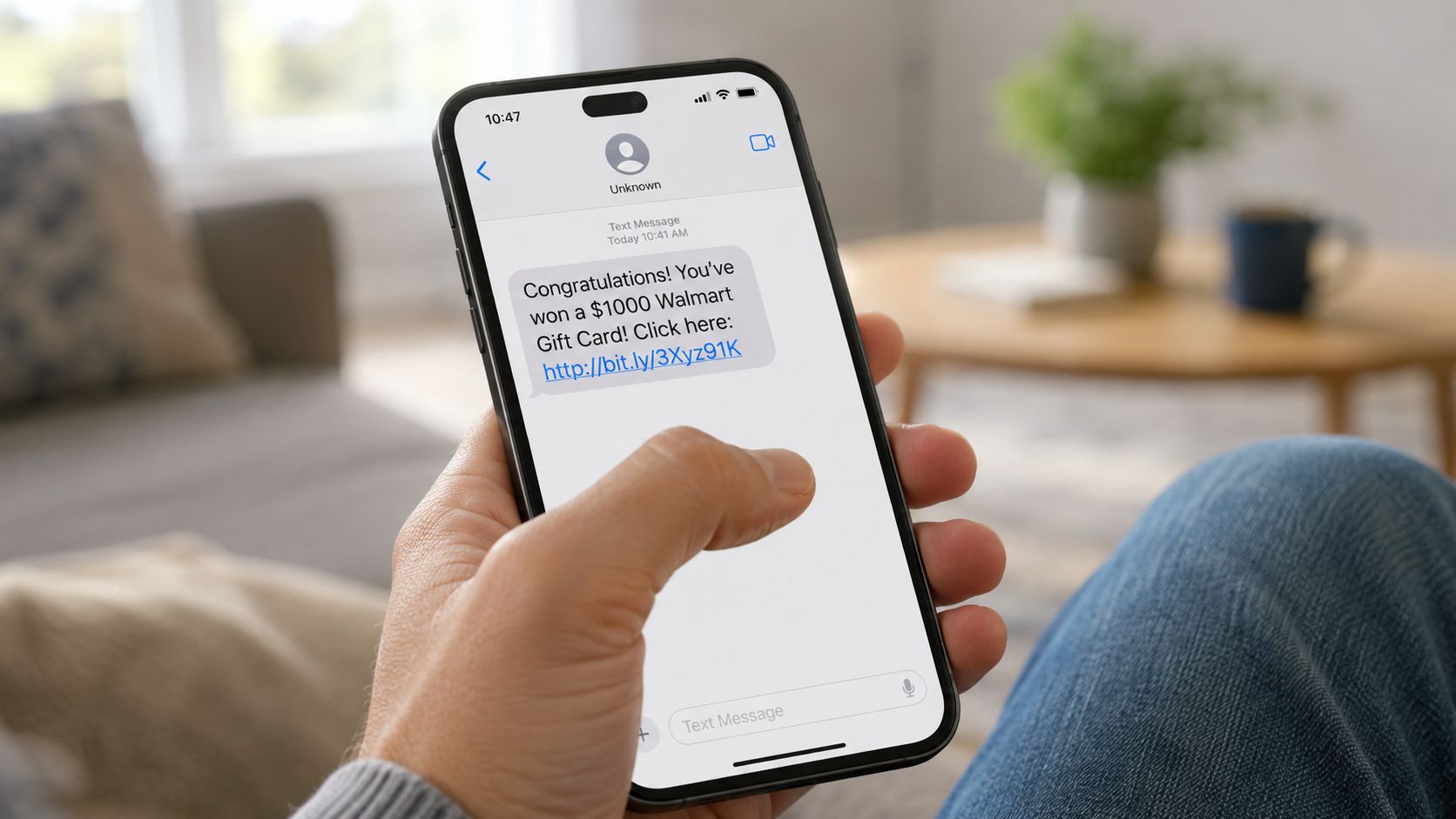
The text usually arrives out of nowhere. No purchase. No receipt. No reason Walmart would contact you. Yet the message says you’ve been selected, chosen, or awarded a $1000 Walmart gift card, often with a link and some pressure to act quickly.
That pattern has a name. It’s smishing, which means SMS phishing. Instead of using email, scammers use text messages to get you to click, reply, or submit private information.
Why this specific scam keeps coming back
This isn’t a new trick. Consumer advisories have documented the same basic Walmart gift card lure for years, including early examples that used lookalike domains such as walmartgift.mobi instead of a real Walmart site, according to the Identity Theft Resource Center’s warning on Walmart gift card text scams.
That history matters. It tells you this scam works often enough that fraudsters keep reviving it with new wording, fresh links, and slightly different formatting. They don’t need a complex hack. They need curiosity, speed, and a trusted brand name.
What the attacker wants from you
The message is designed to move you from interest to disclosure. Once you click, the site may ask for personal information such as your name, phone number, email, payment details, or even more sensitive identifiers. The prize is bait. The actual objective is your data.
Practical rule: If a retailer says you won a high-value prize by text when you never entered anything, treat it as a scam immediately.
This is also why phone number exposure matters. Once scammers have your number, they can pair it with other publicly available details and build more convincing follow-up attacks. If you want to understand that risk in plain terms, this guide on what hackers can do with your phone number is worth reading.
Decoding the Scam Red Flags to Spot Instantly
A fake Walmart gift card text usually gives itself away fast once you know what to inspect. The message depends on speed. Your defense is slowing down for a few seconds and checking the mechanics.
The red flags that matter most
Start with the obvious problem. You didn’t ask for this. Legitimate promotions don’t usually begin with a random text announcing a prize you never entered to win.
Then look at the message structure:
- Unsolicited contact: A surprise prize text is already a bad sign.
- Pressure language: “Claim now,” “limited time,” or “final notice” pushes you to act before checking.
- Suspicious link: If the destination isn’t clearly part of Walmart’s official ecosystem, don’t trust it.
- Brand impersonation: Scammers copy names, logos, and retail language because familiarity lowers your guard.
Retail impersonation works because people recognize the brand and fill in the trust themselves.
Scam text versus real Walmart process
Walmart’s own sweepstakes rules are very different from what these scam texts describe. Legitimate $1,000 gift-card promotions use a receipt-based survey flow. After a purchase, the entrant receives a survey invitation on the cash register receipt, must go online within one week, and must enter a unique receipt code. Walmart also provides a no-purchase mail-in entry method, with a hard cap of 78 total entries per entrant during the promotional period, as shown in Walmart’s customer satisfaction sweepstakes rules.
| Characteristic | Scam Text Message | Legitimate Walmart Promotion |
|---|---|---|
| How it starts | Random SMS saying you won | Receipt-based survey invitation |
| Entry method | Tap a direct link in the text | Go online with a unique receipt code |
| Timing | Immediate pressure to claim | Must enter within one week of receipt invitation |
| Purchase connection | No clear transaction history | Linked to an actual store receipt |
| Verification style | Personal data request through a text-driven funnel | Structured sweepstakes rules and documented entry process |
A simple test that works
Ask one question: Does this match how a real company would run the promotion?
In this case, the answer is no. A genuine Walmart sweepstakes follows rules, receipts, and a defined entry path. A scam message wants impulse and silence. It doesn’t want scrutiny.
If you’re ever unsure about a destination page, pause before tapping and use practical checks like the ones in this guide on how to check if a website is safe. That habit will stop far more than this one scam.
Your Immediate Response Plan Dont Click That Link
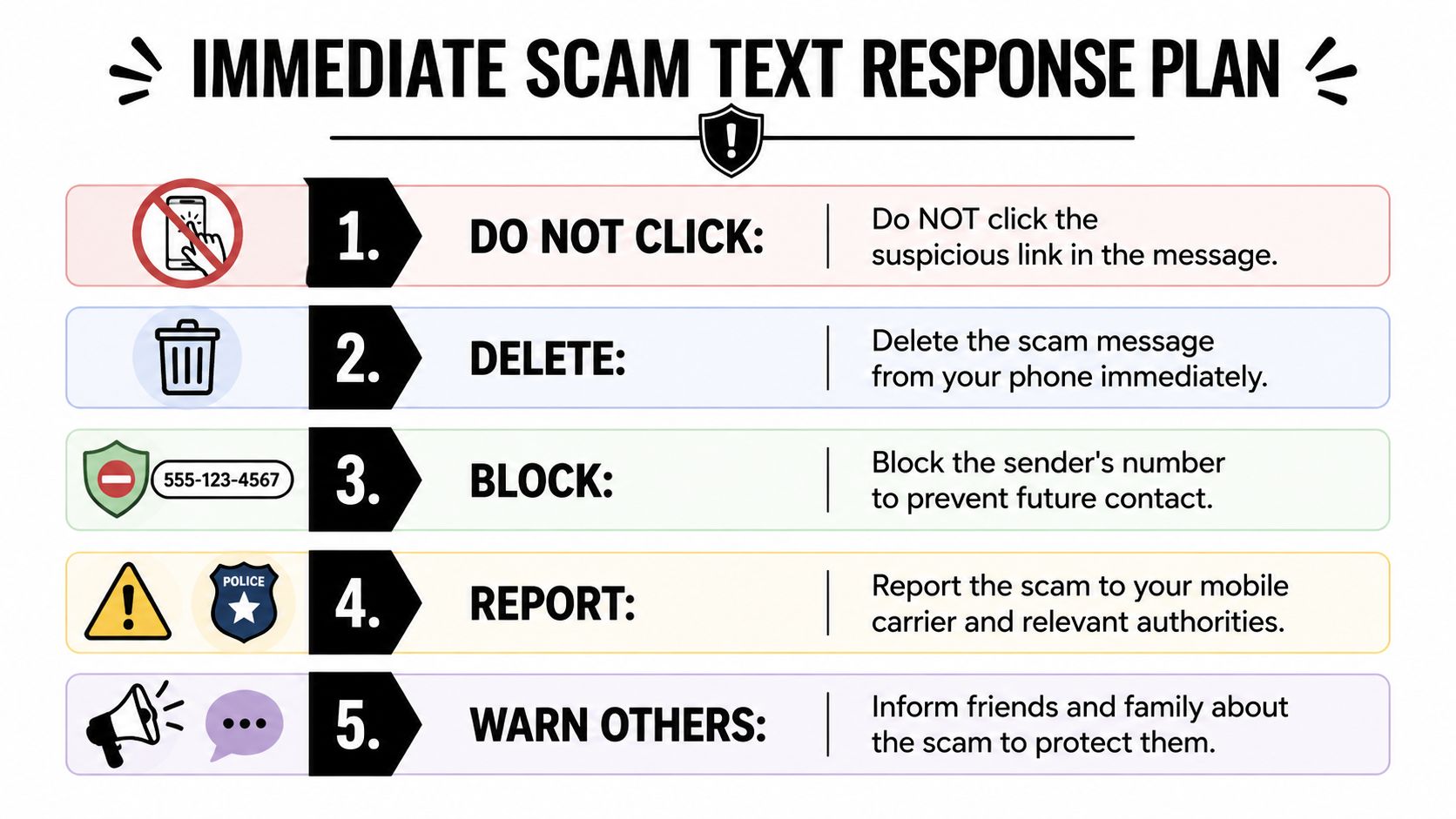
The safest response is simple. Don’t click, don’t reply, and don’t test the link “just to see.”
That advice isn’t overcautious. Independent consumer reporting has noted that these messages can route people to pages asking for personal information that Walmart doesn’t request this way, and warned that clicking can expose devices to malware or credential theft. That’s why Walmart and the BBB have advised people to delete the message rather than interact with it, as explained in this Consumer Reports write-up on the Walmart gift card text scam.
What to do right now
Delete the message.
Leaving it in your inbox creates a second chance to click when you’re distracted.Block the sender.
This won’t stop all scam texts, but it reduces repeat contact from the same source.Don’t reply with “STOP” or anything else.
With legitimate marketing, that can work. With scammers, a reply may only confirm your number is active.Warn anyone who might be more likely to trust it.
Family members often click because the message looks routine, not because they’re careless.
Before you move on, this short explainer reinforces the same response pattern in a visual format.
If you already clicked
Don’t panic, but act quickly.
- Close the page immediately: Don’t fill anything out, download anything, or allow notifications.
- Change exposed passwords: If you entered login credentials anywhere, update them from the official site or app, not from the text link.
- Review your phone for odd behavior: Unexpected pop-ups, browser redirects, or new prompts deserve attention.
- Tighten account security: Turn on two-factor authentication where available.
If you think the interaction went beyond a harmless tap and your phone or accounts might be compromised, this walkthrough on how to get rid of hackers gives a useful response checklist.
What Really Happens If You Fall for It
Many people assume the only real danger is entering a credit card number. That’s too narrow. The more common outcome is often data harvesting.
A lot of these fake gift card offers are built to gather just enough information to make your profile more valuable to marketers, lead brokers, or future scammers. Security coverage in 2025 described these schemes as lead-generation and affiliate-data harvesting operations that collect details such as name, email, phone number, ZIP code, address, and interest categories, then monetize that information through ad funnels and follow-up marketing rather than delivering any real gift card, according to Malwarebytes’ analysis of Walmart gift card scams.
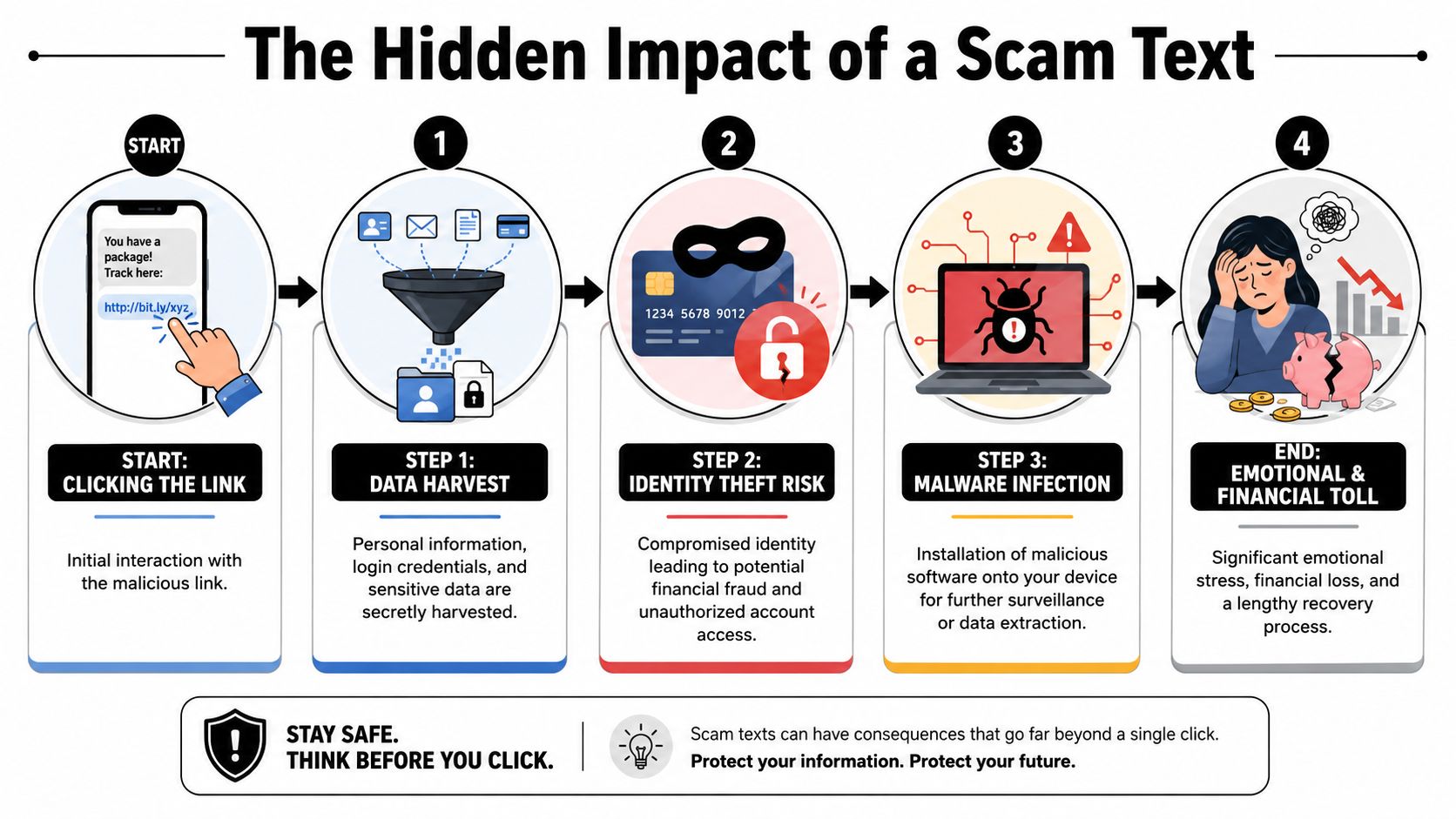
The hidden chain reaction
A single form submission can trigger several downstream problems:
- More scam contact: Once your details are confirmed, you may get more texts, calls, and emails.
- More convincing impersonation: Attackers can tailor future messages using the data you already handed over.
- Profiling: Even basic contact details become more useful when linked with location, interests, and existing public records.
- Long-tail exposure: The gift card text disappears, but your data keeps circulating.
Why this matters beyond one text
Digital privacy and scam prevention frequently overlap. The damage isn’t always immediate, and that’s what makes it dangerous. People think, “I didn’t enter a payment card, so I’m fine.” But the scammer may still have enough information to build a richer identity profile around you.
The absence of an instant bank charge doesn’t mean the incident was harmless.
That’s also why identity theft prevention isn’t only about freezing cards or watching bank statements. It’s about understanding how small pieces of data get combined over time. If you want a grounded overview of those pathways, this article on how identity theft occurs connects the dots well.
Reporting and Remediation Fighting Back Against Fraud
Deleting the text protects you. Reporting it helps protect other people.
You don’t need a complicated process. What matters is sending the scam into the channels that carriers, retailers, and authorities already use to identify abuse patterns and shut down fraudulent campaigns faster.
The practical reporting sequence
Forward the message to 7726.
Most major mobile carriers use 7726, which spells SPAM, as a reporting shortcode for scam texts. Forwarding the message helps your carrier review the sender and related campaigns.Report it to the FTC.
File a complaint through the Federal Trade Commission’s fraud reporting system. Include the phone number, the message text, and the link if you still have it.Notify Walmart through its fraud channels.
If scammers are abusing Walmart’s brand, reporting that impersonation gives the company a chance to track recurring lures and fake domains.Block the sender after reporting.
Reporting first preserves the message for forwarding. Blocking comes after.
If you submitted information
Your next steps depend on what you entered.
- Name, phone, or email only: Watch for a spike in spam, phishing attempts, and fake support contacts.
- Password: Change it immediately anywhere it was reused.
- Payment information: Contact your card issuer and ask what protective steps they recommend.
- Sensitive identifiers: Document what happened and monitor for signs of misuse.
Important: Don’t rely on memory. Write down what you clicked, what you entered, and when it happened. That record helps if you need to report fraud later.
What doesn’t help
Some responses feel productive but aren’t.
- Arguing with the sender only confirms a live target.
- Clicking to investigate exposes you to more risk.
- Assuming one block solves it underestimates how widely scam campaigns rotate numbers and domains.
The goal is to cut off interaction, preserve enough evidence to report, and tighten your accounts if you disclosed anything.
Proactive Defense Monitoring Your Digital Footprint
A Walmart gift card scam text is one message. The larger issue is that scammers usually aren’t guessing in the dark. They benefit from the fact that many people’s phone numbers, email addresses, usernames, and location clues are already scattered across the public web, data broker pages, old accounts, and breach-related exposure.
That’s why purely reactive security has limits. You can delete this text and still remain vulnerable to the next one if your personal data is easy to find, cross-reference, and reuse.
Why digital footprint monitoring matters
Digital footprint monitoring means checking what information about you is publicly accessible and how it could be used in social engineering. In OSINT work, that matters because attackers often build trust by combining small data points into a believable story.
A scammer who knows your phone number is one thing. A scammer who can connect that number to your name, past usernames, public profiles, and shopping-related assumptions has a much better chance of fooling you next time.

A stronger long-term approach
Good defense looks less like panic and more like maintenance.
- Audit exposed data: Search for the contact points scammers already have.
- Review old accounts: Dormant profiles can leak useful clues about you.
- Watch for impersonation risk: Retail, delivery, banking, and account recovery scams often build off the same exposed details.
- Use monitoring tools where appropriate: Services that scan public exposure can help you spot risk before a scammer does.
For a broader view of prevention beyond consumer scams, Sentry’s guide to fraud prevention is a useful read because it explains how fraud succeeds when organizations and individuals leave predictable gaps unaddressed.
If you want a practical starting point, tools for monitoring your digital footprint and keeping your data safe can help you evaluate the kinds of checks that make sense. One option in this space is Digital Footprint Check, which scans public sources, social platforms, breach-related exposure, and other online traces to help users see what personal information is already visible.
The best time to inspect your digital exposure is before the next scam text arrives, not after you’ve clicked one.
A smart response to a 1000 Walmart gift card text message starts with deletion, but it shouldn’t end there. If you want to see what personal information about you may already be exposed online, run a scan with Digital Footprint Check and use the results to reduce the data that scammers can use against you.