· Digital Footprint Check · Content Marketing · 14 min read
Background Check Removal Service: Restore Your Reputation
Worried about your background check? A background check removal service helps with DIY opt-outs & legal expungement to clean your record.

You applied for the job, passed the interviews, and then the background check pulled up something you thought was already handled. Maybe it was a dismissed case, a sealed arrest, or an old entry that should never have been visible in the first place. That moment feels personal, but it’s also a systems problem.
A background check removal service can help, but only if you understand what it does. Many people think “record cleared” and “record gone everywhere” mean the same thing. They don’t. Court relief and private database cleanup are separate jobs, and if you skip the second one, stale data can keep hurting your job search, housing applications, dating life, gaming reputation, and personal safety online.
Why Your Past Lingers on Background Checks
The most common version of this story starts with a rejection email. The employer doesn’t say much. You order a copy of your own report and find a record that was supposed to be gone. The court did its part. A private screening company didn’t.
That gap is bigger than many realize. While 70% of people who successfully expunge records in the U.S. still find their criminal history visible on private background check sites, services often market “total erasure” even though the actual work involves two separate actions: getting the legal order and manually disputing the data with private entities (Foundation for Continuing Justice).
Legal relief and private removal are not the same thing
A court order changes your legal status. It can expunge, seal, dismiss, or otherwise clear a record depending on the state and the case. That matters a lot.
But private background check vendors, people-search sites, public record aggregators, mugshot pages, and data brokers may still have copies they collected earlier. They often keep historical snapshots. That means your official record can be fixed while your digital reputation stays messy.
This issue shows up across more than civilian courts. If you’re dealing with a service-related history, Gonzalez & Waddington on military convictions gives a useful breakdown of how military records can surface on background checks and why that distinction matters when planning cleanup.
For a broader view of how court data, search engines, and people-finder sites shape your online identity, this guide on how public records shape your digital footprint is worth reviewing before you send your first removal request.
Practical rule: If a judge signed an order, that solved the legal problem. It did not automatically solve the commercial data problem.
Why this hits more than employment
Employers aren’t the only audience. Landlords, volunteer organizations, dating matches, parents checking a new partner, and even gaming communities often search names before they trust someone. A stale arrest entry or mugshot page can create a false narrative fast.
The damage also spreads unevenly. A sealed non-conviction might not stop a fingerprint-based review, but a scraped summary on a people-search site can still wreck a first impression. In reputation work, I’ve found that the worst harm often comes from low-quality data presented with high confidence.
A good background check removal service is really part legal follow-through, part privacy cleanup, and part verification workflow. If the service only promises to “erase your past” without explaining which databases it targets, treat that as a warning sign.
First Steps to Discovering Your Data Trail
Before you remove anything, you need an inventory. Many individuals start with a name search and stop too early. That misses the sources employers, dating app matches, investigators, and identity thieves use.
Begin with a full self-audit. Run searches using your full name, name plus city, name plus former city, and combinations with terms like arrest, mugshot, case, booking, court, alias, username, email, and phone. Then repeat that process with old usernames from social media, gaming accounts, and dating profiles.
Here’s the kind of dashboard many people use when mapping exposure across public sources:
What to check first
Start with the highest-risk sources. Those are the places most likely to affect jobs, housing, trust, or safety.
- Court and docket portals: Look for current case visibility, old docket entries, and name variants.
- People-search sites: Check major aggregators and smaller copycat directories. These often spread data widely.
- Employment screening traces: If you’ve recently applied for a role, request the report when possible and compare it with court status.
- Search engine results: Don’t just review page one. Old directories, cached pages, and reposted listings can sit deeper.
- Social and professional profiles: LinkedIn, Facebook, Instagram, Reddit, Discord, and old forum accounts can all reinforce a background-check narrative.
- Gaming and community identities: Old gamer tags, ban records, or public chat logs may not be criminal records, but they can still shape reputational review.
- Dating footprints: If you’re worried about hidden profiles, impersonation, or romance scam crossover, a resource for discreet partner verification can help you think more like an investigator and less like a casual searcher.
Why verification matters
One reason this process takes time is that over 500 private sector background check sources routinely fail to update their databases when a court orders a record cleared (Heinz College at Carnegie Mellon University). If you only remove one visible listing, the same record can persist elsewhere and reappear later through another source.
That’s why a self-audit should capture not just what’s online, but where it came from. If three people-search sites all cite the same county source, you know where the contamination started. If ten sites carry the same stale summary but one site ranks highest in search, remove the visible one first while preparing disputes for the rest.
Build a simple priority map
A plain spreadsheet works fine. Track the site name, URL, what it shows, whether the data is accurate, the likely impact, the removal path, and follow-up status.
A practical order looks like this:
| Priority | Target | Why it matters |
|---|---|---|
| High | Employment screening reports and top search results | These can directly affect jobs and housing |
| Medium | People-search sites and mugshot pages | These influence reputation and personal safety |
| Medium | Public social posts and forum content | These can color employer or dating app review |
| Lower | Old low-visibility mentions | Still worth cleaning, but not first |
If you want a dedicated self-audit before you start sending requests, running a background check on yourself is the cleanest way to see what another person is likely to find before a recruiter, partner, or scammer does.
Search your name like a hostile stranger would. That mindset finds far more than a casual vanity search.
DIY Removal Strategies You Can Start Today
You don’t always need to hire a background check removal service on day one. A lot of cleanup work is administrative, repetitive, and manageable if your case is straightforward.
Start with the low-friction removals first. They won’t solve everything, but they can reduce visibility quickly and give you momentum.
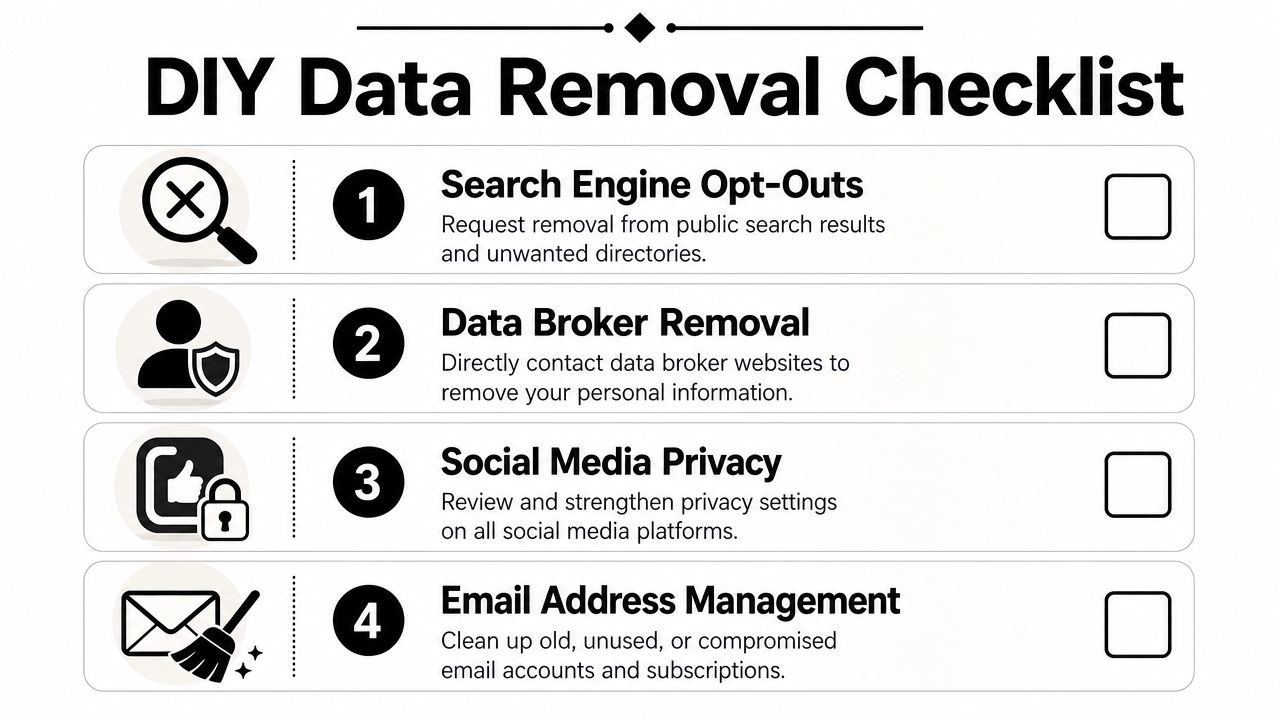
The first removal moves that usually work
Submit data broker opt-outs
Sites like BeenVerified and PeopleWise often have an opt-out or suppression process. Save every confirmation email and screenshot each completed request page.Dispute inaccurate screening data under the FCRA
If an employer used a consumer reporting agency and the report contains outdated or incorrect information, dispute it in writing. Be specific. Attach the court order or dismissal paperwork and ask for reinvestigation and correction.Request de-indexing when source pages are already gone
If a page was removed but still appears in search results, search engines may still show an outdated snippet. Use their outdated-content tools only after the source page changes.Lock down your visible accounts
Tighten privacy settings on social media, remove old bios, review tagged photos, and delete stale posts that create confusion. This matters for employers, dating app vetting, and online harassment prevention.
A deeper walkthrough on data broker removal can help if you’re building a DIY workflow and want to prioritize high-visibility sites first.
A simple opt-out template
Use plain language. Don’t overexplain.
Subject: Request for Removal of Personal Information
I’m requesting removal or suppression of my personal information and record from your database. The listing concerns me and contains information that is no longer appropriate for display.
Name:
Listing URL:
Current city/state:
Supporting documentation attached:Please confirm removal and let me know if any additional verification is required.
If the site allows a portal upload, use that. If it requires email, send from an account you control and keep the thread organized. If it asks for identification, redact anything not needed before uploading.
Here’s a short walkthrough that complements the checklist above:
Digital hygiene that supports removal
Cleanup isn’t only about records. It’s also about reducing adjacent risk.
- Retire old email accounts: Old inboxes often tie together usernames, breach exposure, and people-search profiles.
- Review gaming identities: Public gamer tags can expose location clues, friend graphs, and reused usernames.
- Check dating app visibility: Old bios and duplicate profiles can create trust issues or become scam bait.
- Update profile photos: Reverse-image search can connect accounts you thought were separate.
- Unsubscribe from low-quality directories: Some sites republish data from mailing list and marketing sources.
These steps won’t erase a court-related record, but they reduce the amount of context a stranger can assemble around it. That matters in reputation management because people rarely judge one data point alone. They judge the story built from all of them.
Navigating Legal Remedies Like Expungement and Sealing
You get the court order, assume the record problem is over, and then a landlord or employer still finds something. That usually means two different systems are involved. The court may have changed the legal status of the case, while private background check vendors are still showing an older copy, an arrest entry, or an incomplete update.
That distinction matters. Court-ordered relief handles the official record. Private data broker cleanup handles the commercial copies that keep circulating after the legal fix.
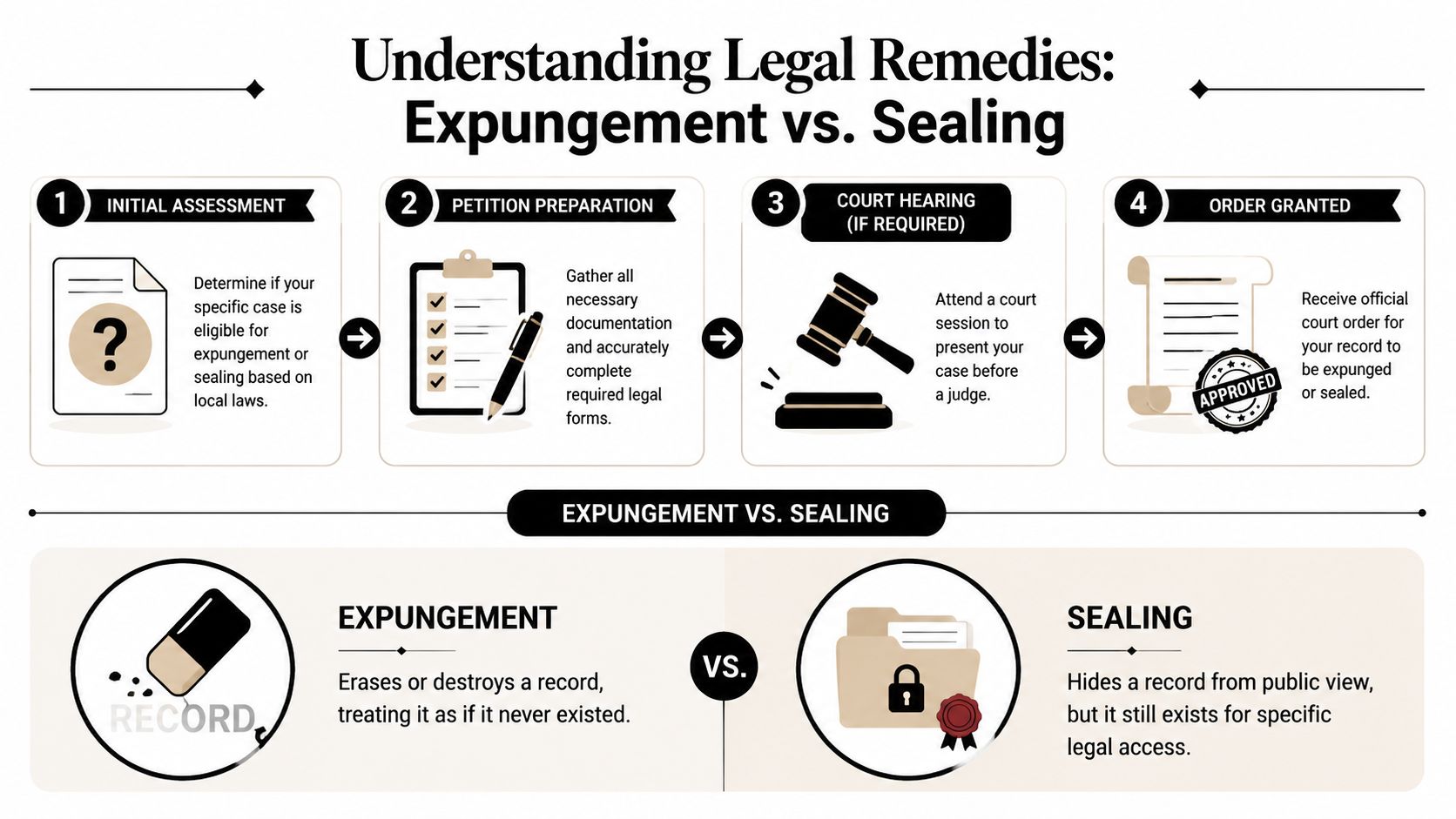
Expungement and sealing do different jobs
Expungement and sealing are not interchangeable. Expungement usually refers to destroying, deleting, or treating a record as removed under state law. Sealing usually means the record still exists but is blocked from ordinary public access. Agencies, courts, and certain licensed employers may still be able to see it.
The right remedy depends on the state, the charge, and how the case ended. Arrest-only records, dismissed charges, acquittals, diversion outcomes, and older convictions are often treated differently. A person with a non-conviction case may qualify for faster relief than someone trying to clear an old guilty plea. State procedure also matters. Filing deadlines, notice requirements, and hearing rules can decide whether a petition succeeds.
If you are comparing state rules, this overview of removing eligible records in Texas shows how much eligibility can turn on details such as dismissal, pardon, or the type of supervision involved.
Where legal relief often breaks down in practice
The failure point is rarely the idea of expungement itself. It is follow-through.
I see the same pattern often. The court grants relief, but the public index is slow to update, the state repository still carries an older entry, or a screening company keeps a stripped-down version of the case that still triggers a match. Sometimes the conviction disappears while the arrest entry remains. Sometimes the docket reflects the new status, but a commercial database has not refreshed yet. A hiring manager reviewing a fast-turn report may never pause long enough to sort out that difference.
That is why a signed order should be treated as the start of the second phase, not the finish line.
A practical workflow after the order is granted
Use a tight sequence and document each step:
- Get certified copies of the order. Keep both scanned and paper copies.
- Check the court record yourself. Confirm the public docket, clerk index, or portal reflects the updated status.
- Contact the state repository if it still shows the case. The right agency varies by state.
- Dispute stale entries with screening companies. Attach the order and ask for written confirmation of correction or deletion.
- Search all name variants. Include aliases, maiden names, middle initials, and prior counties.
- Track dates and confirmations. A simple spreadsheet works if it includes the company name, submission method, and follow-up date.
Clients usually need both legal cleanup and privacy cleanup. If the court record is fixed but your personal details are still easy to connect across people-search sites and broker profiles, the old case can keep resurfacing in context. A coordinated plan for personal information removal helps reduce that exposure while the legal updates work their way through commercial databases.
One caution matters here. Sealed or expunged does not always mean invisible everywhere, immediately. Court systems update on their own timelines. Private vendors refresh on theirs. Good results come from verifying each layer, then pressing any source that still republishes outdated data.
When to Hire a Background Check Removal Service
A background check removal service makes sense when the problem is bigger than a few opt-outs and one court file. The question isn’t whether you can do some of it yourself. You usually can. The question is whether you can manage the legal paperwork, the vendor disputes, and the follow-up without missing a deadline that costs you a job or lease.
The timeline alone changes the calculation. Most removal cases take 2 to 6 weeks, but the process can extend much longer as some data brokers respond within days while others have fixed monthly or quarterly update cycles (EraseTheCase).
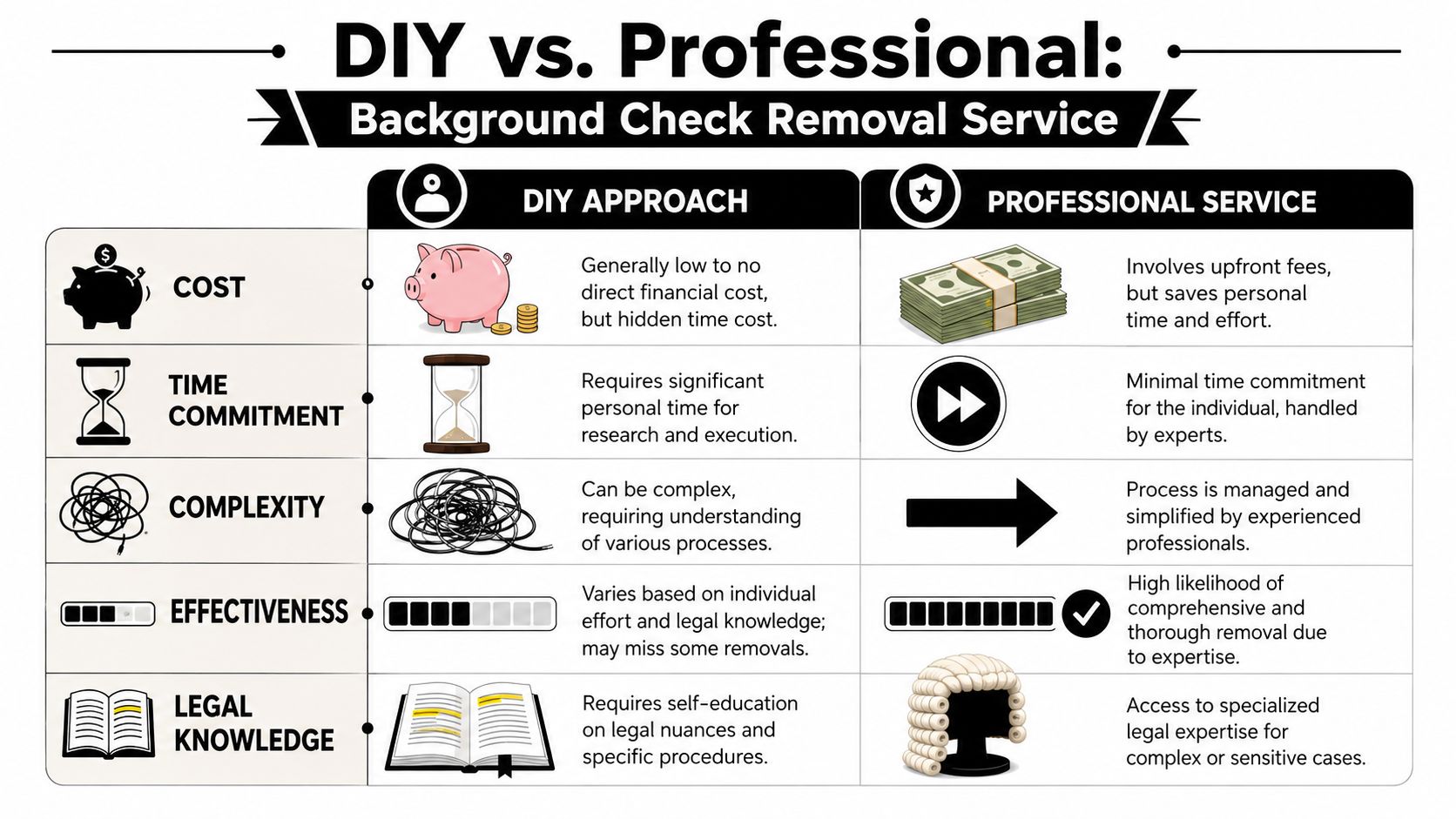
DIY versus professional help
Here’s the practical comparison:
| Factor | DIY approach | Professional service |
|---|---|---|
| Cost | Lower cash outlay | Paid service or legal fees |
| Time | High personal time commitment | Lower personal time burden |
| Complexity | Harder when records span states or vendors | Better for multi-step coordination |
| Follow-up | Easy to neglect | Usually more structured |
| Best fit | One or two simple removals | Older, multi-source, or urgent cases |
When hiring usually makes sense
A professional is worth considering if any of these apply:
- Multiple jurisdictions: Records or references appear across more than one state.
- Old paper-era records: Clerks, archives, and local systems may require extra legwork.
- Employment urgency: You need a clean report quickly for a pending offer.
- Mugshots and copycat sites: These often involve layered requests and repeated monitoring.
- Limited bandwidth: You can’t spend evenings chasing portals, emails, and follow-ups.
A reliable service should explain exactly what it does. Ask whether it handles court filings, vendor disputes, FCRA disputes, mugshot requests, and verification searches. Ask how it documents submissions. Ask what happens if a listing reappears.
A good provider should also be comfortable saying “this can’t be fully removed” when that’s the truth. News coverage, public commentary, and legally protected publication are different from a stale private database listing. If a company promises universal deletion with no caveats, I’d walk away.
For readers comparing options, a breakdown of personal information removal services can help you judge whether you need a privacy cleanup vendor, a lawyer, or both.
The best time to hire help is when the opportunity cost of delay is higher than the service fee.
Frequently Asked Questions About Record Removal
Can I remove a mugshot if I was never convicted
Often, yes, but it may not follow the same path as a conviction-based expungement. A major oversight in most content is how to remove mugshots for arrest-only records where the individual was never convicted. Over 60% of individuals seeking mugshot removal have no conviction, yet face high barriers because commercial sites claim the photo is “legally public,” often requiring a paid fee to opt-out when a free legal petition might suffice. That issue is discussed in the legal-remedy context by RecordFixer.
The practical takeaway is simple. Don’t assume a paid takedown offer is your only option. Check your state’s privacy and mugshot publication rules before paying a site that profits from your anxiety.
How long does record removal really take
For straightforward cases, the first visible changes can happen fairly quickly. Full cleanup usually takes longer because every site and screening vendor runs on its own schedule. Some update fast. Others only refresh on fixed cycles, and some need repeated disputes.
That’s why “done” should mean verified, not just submitted.
Can a removed record come back
Yes. A record can reappear if one vendor republishes from another source, if a stale database syncs late, or if an old cached page gets indexed again before the source is fully corrected. This is common enough that ongoing checks matter even after a successful cleanup.
What should I monitor besides criminal-record listings
Monitor people-search sites, search engine results, old social accounts, data-broker profiles, dating app lookups, and reused usernames from gaming or forum communities. Those side channels often rebuild a narrative around information you already worked hard to suppress.
If you want to see what’s publicly exposed before it affects a job application, relationship, or identity-theft risk, run a scan at Digital Footprint Check. Their free checker is a practical starting point for finding exposed profiles, public records, breach traces, and other online identity signals that can feed background checks and reputation problems.