· Digital Footprint Check · Content Marketing · 14 min read
Are License Plates Public Information? Legal Facts
Are license plates public information? Learn the legal facts about DMV records, DPPA privacy rules, ALPR surveillance, and how
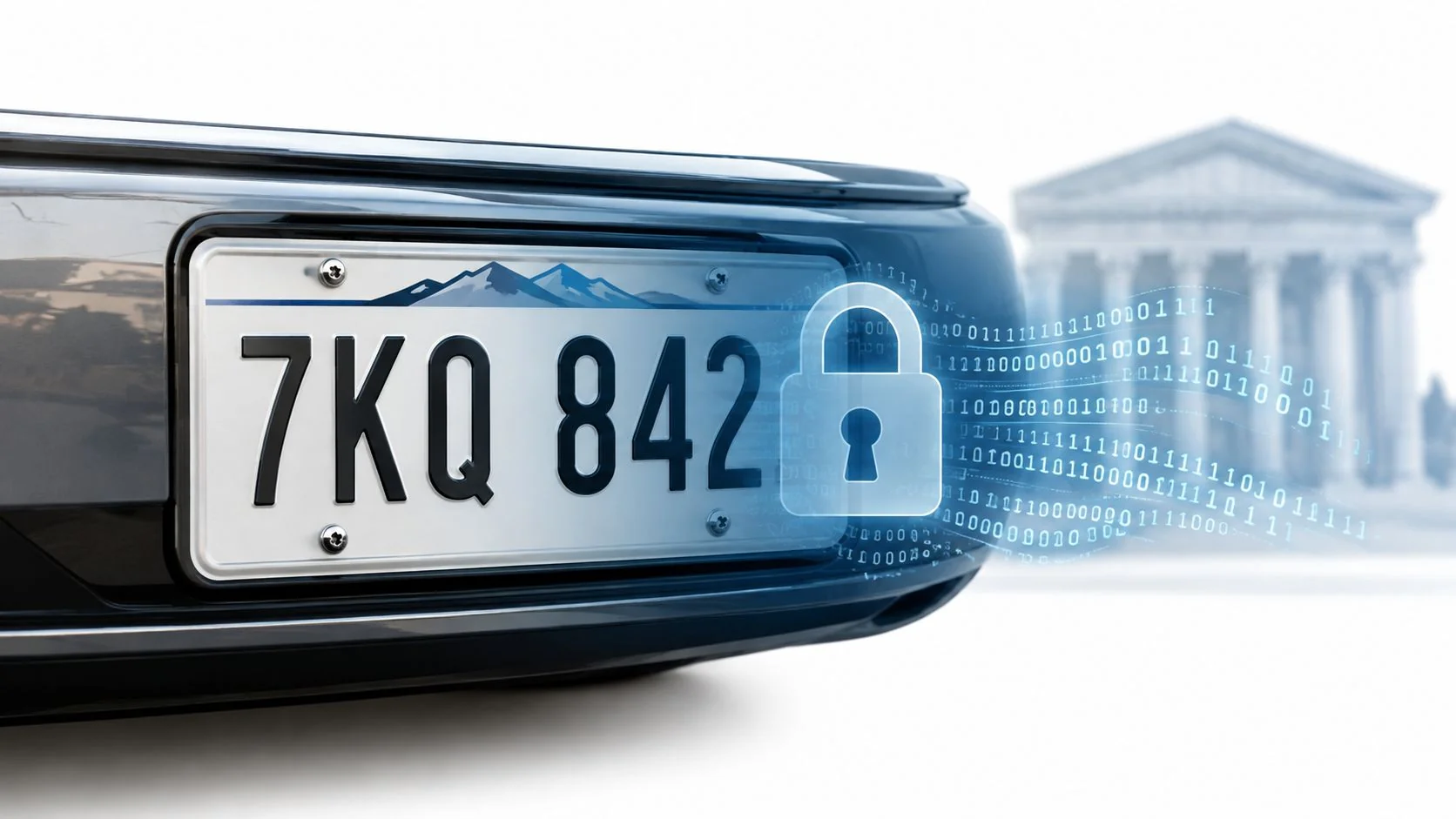
The physical plate is generally visible in public, but the personal identity data linked to it in DMV records is protected by federal law. The Driver’s Privacy Protection Act, enacted in 1994, can impose a civil minimum of $2,500 per violation for an unlawful plate-linked personal-information lookup.
You may be thinking about this after photographing a car in a parking lot, posting a dashcam clip, or noticing a camera reading vehicles on your commute. The question sounds simple, but “are license plates public information” has two different answers depending on what you mean by “public.” The characters printed on the plate are designed to be seen. The owner’s name, home address, telephone number, and other DMV-held details aren’t available to everyone who sees those characters.
That distinction matters even more as license-plate cameras and OSINT tools turn brief roadside observations into searchable records. A plate can be public-facing without becoming a lawful key to someone’s identity or private life.
The Visibility Paradox of License Plates
A driver parks outside a grocery store. Another person photographs the vehicle, perhaps to document a collision, report suspicious conduct, or post a photo from the street. The image may clearly show the plate. That act of seeing or recording a plate doesn’t automatically give the photographer permission to find the driver’s home address.
In the United States, the legal baseline is that plate numbers are generally visible in public because vehicles display them while traveling on public roads. The Driver’s Privacy Protection Act of 1994, however, restricts the release of personal information from motor vehicle records rather than the plate number itself. This distinction is outlined in the legal explanation of posting someone’s license plate number online.

The vehicle is visible, the person is protected
Think of the privacy boundary as two connected but separate layers:
- Plate image layer: Anyone standing on a public road may be able to see the plate, record it, or identify the vehicle carrying it.
- Motor-vehicle-record layer: DMV systems may contain the owner’s name, address, phone number, driver’s license information, and other protected details.
The first layer doesn’t open the second. A person can often identify a vehicle’s make, model, color, or approximate year from publicly observable information. That doesn’t mean they can lawfully use the plate to retrieve the registered owner’s identity.
A public photograph can still create practical risks. Someone might repost it, combine it with a location caption, or associate it with a workplace, school, or regular route. The privacy question therefore isn’t limited to whether the photograph was legal. It also includes what others do with the image after publication.
Practical rule: Treat a visible plate as an exposed identifier, not as permission to expose the person connected to it.
Why trade and vehicle checks are different
Businesses may need to investigate a vehicle’s history for legitimate reasons that don’t require identifying a private owner. For example, buyers and sellers may examine registration-related details, plate changes, or vehicle history through lawful commercial channels. For readers comparing that type of research, the guide to UK trade buying checks in 2026 offers relevant context about vehicle-focused checks.
The key question is purpose. Checking whether a vehicle appears consistent with a sale listing is different from trying to locate the person who drives it. If your goal is safety after a collision or suspected crime, preserve the image and report it to the appropriate authority rather than attempting to uncover private DMV data yourself.
Federal and State Privacy Protections
The federal privacy boundary comes primarily from the Driver’s Privacy Protection Act, or DPPA. It requires states to restrict the release and use of protected personal information obtained from motor-vehicle records unless a recognized legal exception applies. The protected category includes names, addresses, telephone numbers, driver’s license or identification numbers, Social Security numbers, and medical information.
That rule changes the practical answer for ordinary internet users. A plate lookup may produce vehicle-related information through a public or commercial service, but the service generally can’t lawfully provide the registered owner’s personal identity details without a qualifying reason. Law enforcement, insurers, and parties involved in litigation may have permissible uses, but those exceptions aren’t a general invitation for private curiosity.
What the DPPA changes
The DPPA doesn’t make the plate invisible. It limits access to the record behind the plate. That is why a motorist can be photographed on a public road while still retaining legal protection against an unauthorized search of their DMV-linked identity.
The consequences are more serious than a website terms-of-service violation. The DPPA was enacted in 1994, and one legal overview reports criminal fines and a civil minimum of $2,500 per violation for looking up plate-linked personal information without an approved reason. The DPPA penalty explanation for unlawful license-plate lookups describes that enforcement risk.
State rules can add another layer of protection. Nebraska, for example, says DMV records are protected and generally unavailable to the public, while personal information from driver and vehicle records usually requires the record holder’s written consent. The Nebraska DMV disclosure guidance shows how state practice can reinforce the federal baseline.
Permissible purpose matters
A legitimate purpose doesn’t mean every request is automatically approved. An insurer investigating a claim, a government agency performing its duties, or a lawyer handling litigation may need to establish the reason for access. A private individual searching for a neighbor, former partner, online critic, or stranger generally doesn’t have the same authority.
Before using a lookup service, ask three questions:
- What data am I trying to obtain? Vehicle specifications and ownership identity aren’t the same category.
- What is my lawful purpose? Curiosity, revenge, or harassment isn’t a qualifying reason.
- Who controls the record? A commercial vehicle-history database isn’t the same as a state DMV system.
For a broader explanation of how public-source investigation differs from unauthorized personal-data access, review this guide on whether OSINT is legal. Ethical OSINT begins with collection limits, a defensible purpose, and respect for information that remains access-controlled.
What OSINT Tools Can and Cannot Reveal
Public investigation tools work best when you separate vehicle intelligence from identity intelligence. A lawful service may help confirm that a plate is associated with a particular make, model, year, registration status, or history. Those details can help a buyer evaluate a listing or help someone organize information after a traffic incident.
The restricted question is different: “Who owns this vehicle, and where does that person live?” Federal DPPA rules generally block DMVs from releasing the registered owner’s name, address, or phone number to the general public. As explained in this overview of what someone can do with a license plate number, the plate is public-facing, but it isn’t a public shortcut to the owner’s identity.
License Plate Lookup Capabilities
| Data Category | Public OSINT Access | Restricted DMV Access |
|---|---|---|
| Plate characters visible on a vehicle | Often observable in public | Not applicable |
| Make, model, color, or approximate year | May be available through lawful vehicle sources | May also appear in vehicle records |
| Registration or vehicle history | May be available from approved services | May be held in government records |
| Registered owner’s name | Generally unavailable to the public | Protected unless a legal exception applies |
| Home address and telephone number | Not lawfully available through ordinary plate research | Protected personal information |
| Driver’s license or identification number | Not public through a plate search | Protected personal information |
A responsible investigation workflow
Start with the least intrusive source. If you’re checking a used car, compare the seller’s description with vehicle-focused records and inspect the car itself. If you’re documenting a collision, save the original photograph, note the date and location, and provide the evidence to your insurer or law enforcement.
Don’t treat search results as proof of who was driving. Vehicles are borrowed, rented, sold, shared, and used by family members. Even a correct plate-to-vehicle match doesn’t establish the identity of the person behind the wheel at a particular moment.
OSINT also has an ethical boundary beyond the law. Don’t combine a plate with social profiles, breached credentials, property records, or workplace information to pressure or locate someone. The fact that separate details can be found online doesn’t make their aggregation appropriate.
A structured guide to using OSINT can help investigators document sources, verify context, and avoid turning a legitimate vehicle check into an identity hunt. Good research answers the narrow question you’re entitled to ask. It doesn’t expand the question merely because a tool makes additional searching possible.
The Hidden Risks of Automated Plate Readers
The larger privacy concern isn’t a stranger manually typing a plate into a search box. It’s the conversion of millions of brief observations into databases that can be searched later.
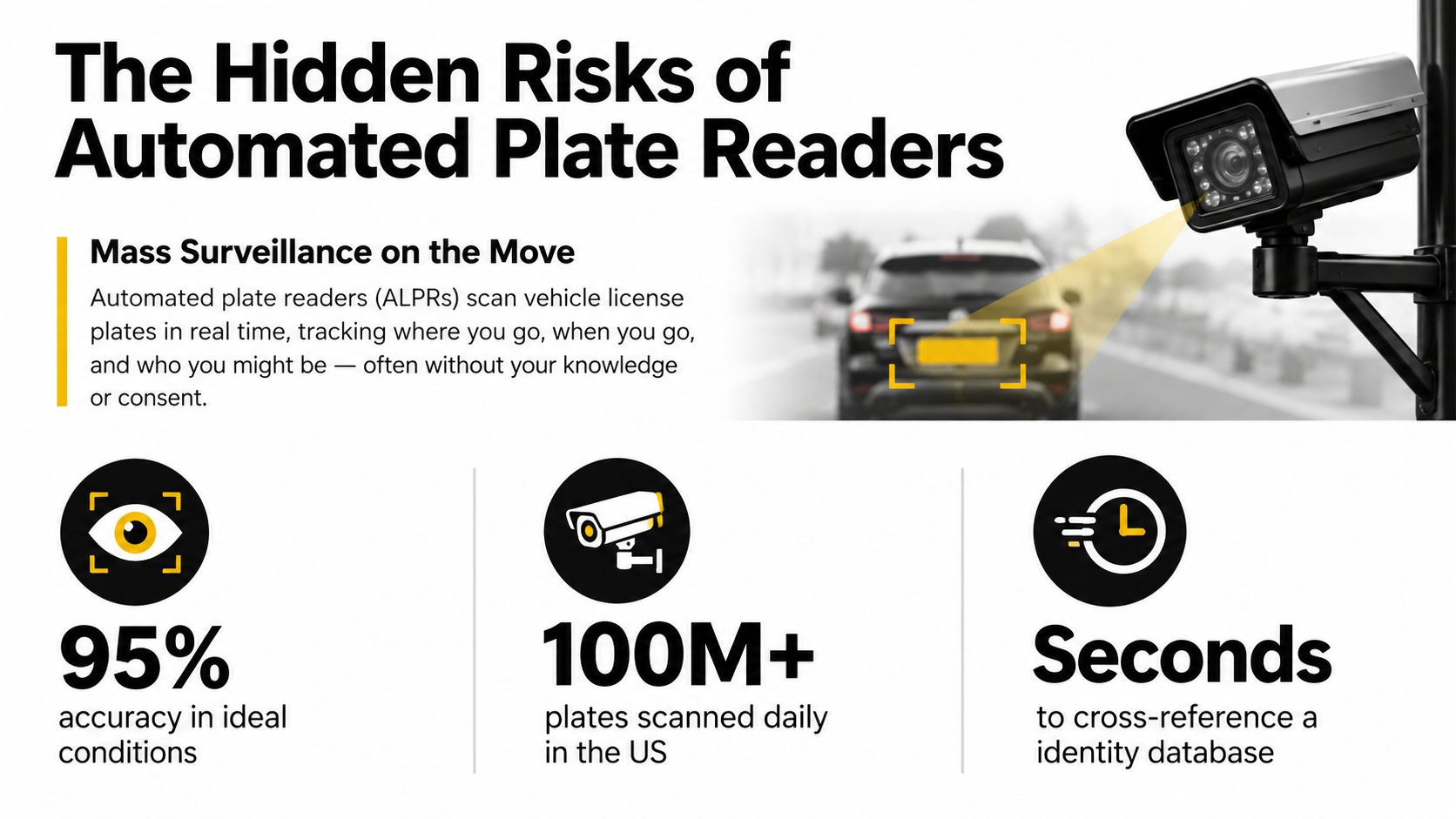
Automated License Plate Readers, or ALPRs, photograph vehicles, extract plate characters, and associate the read with details such as time and location. One isolated image may reveal only that a particular vehicle passed a camera. A database of repeated reads can reveal routines, travel patterns, and likely connections between places.
Ordinary drivers enter the system
A 2020 California state audit, cited by the Brennan Center, reported that the Los Angeles Police Department had accumulated more than 320 million license plate scans. The same audit reported that 99.9% of stored LAPD images showed vehicles that weren’t on a hot list when scanned, meaning most captured vehicles belonged to ordinary vehicles rather than targeted suspects. These figures appear in the Brennan Center analysis of automated license plate readers.
That fact changes the emotional framing. ALPR systems don’t collect only the plates of people accused of wrongdoing. They can sweep up the vehicles of commuters, parents, delivery drivers, patients, customers, and residents who just pass a camera.
The sensitive material may be the surrounding metadata rather than the plate string. Searchable timestamps and locations can help construct a movement history, even when the plate itself is publicly visible. A system operator may not need to know your name immediately to learn that the same vehicle appears repeatedly near a home, workplace, clinic, worship site, or community meeting.
Governance determines the risk
Retention, sharing, access controls, and audit logs determine whether scattered observations remain limited or become a persistent location dossier. A short-lived record with strict access rules presents a different privacy profile from data retained for long periods and shared across jurisdictions.
Recent reporting describes shifts in ALPR policy, including vendors reducing default retention periods and giving agencies more control over sharing. That development reinforces the central point: dynamic surveillance governance matters more than the static visibility of the plate. The reporting on changing ALPR retention and sharing practices provides context for that policy debate.
For a privacy-conscious resident, the useful questions aren’t only “Can the camera read my plate?” Ask who operates the system, how long it keeps scans, which agencies can search them, whether searches require a case code, and whether access records are audited.
The wider implications of plate-reader surveillance are discussed in this guide to the hidden dangers of your digital footprint. The plate may be observable, but the database created around it can carry a much richer story.
Connecting Physical Plates to Digital Footprints
A license plate usually starts as one small clue. A malicious actor may see it in a public photo, then look for the same vehicle in social posts, parking screenshots, marketplace listings, neighborhood discussions, or videos. The DMV may still protect the registered owner’s record, but other websites can expose enough surrounding context to make the person easier to identify.
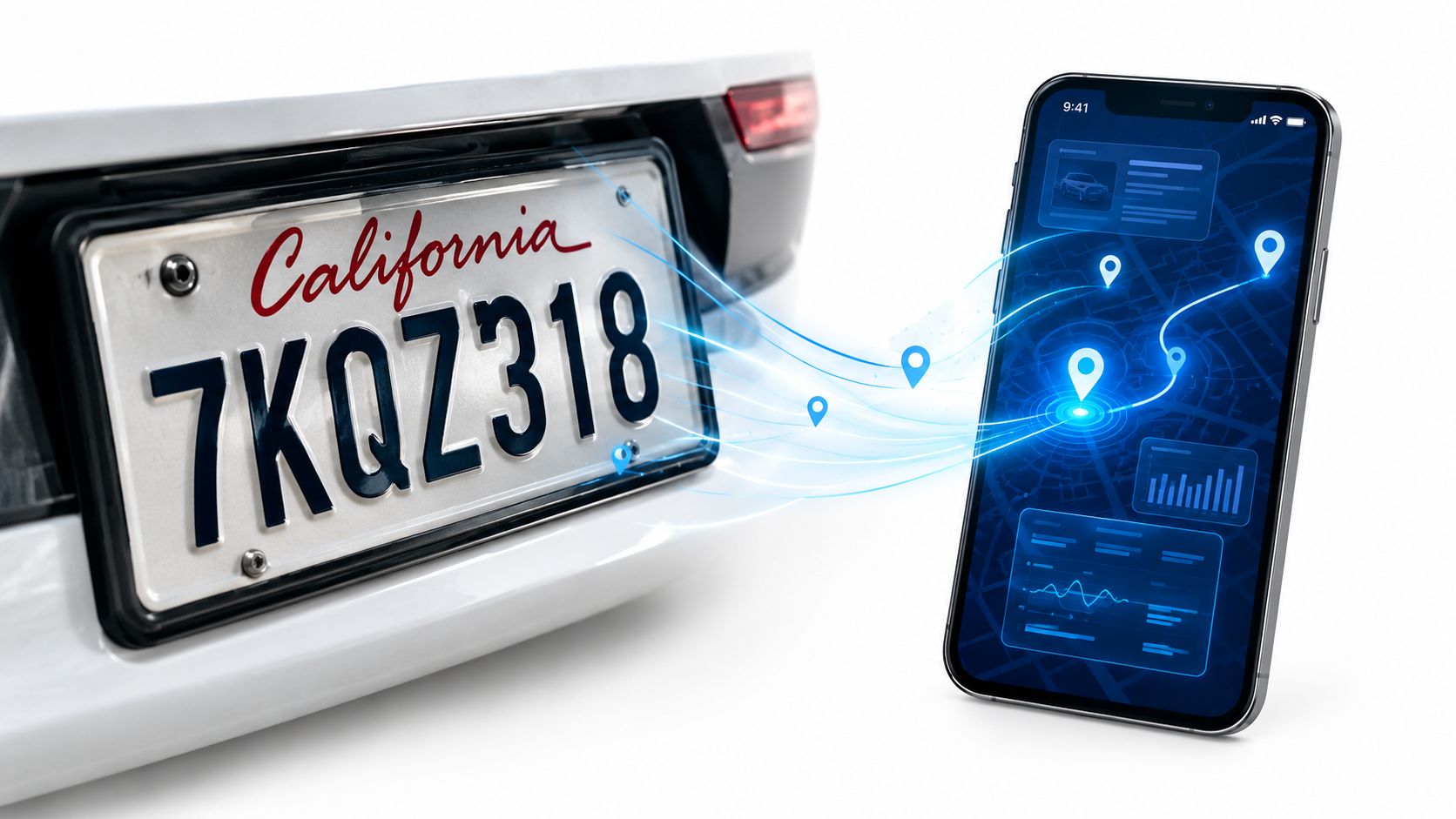
A car photograph may include more than the plate. Reflections can show a house number. A location tag can identify a neighborhood. A caption can reveal a workplace or event. A repeated posting pattern can connect the vehicle to a person’s daily routine without anyone accessing a protected government file.
How linkage happens
The risk comes from correlation, not from one magical lookup. Common connecting points include:
- Public photos: A person may post the same vehicle outside their home, office, gym, or child’s school.
- Marketplace listings: A seller may expose a plate alongside a phone number, username, or meeting location.
- Parking and travel services: Receipts, screenshots, or public reviews can associate a vehicle with a particular destination.
- Data breaches: An exposed email address or phone number may connect a public username to a real identity.
- Forums and social profiles: A vehicle nickname, modification, or recurring route can make the same car recognizable across accounts.
The person doing the research might not obtain a protected owner record. They may instead assemble clues that the owner has published, or that third parties have exposed. This can affect personal safety, reputation, employment, and online account security.
A plate can also become a mistaken identity anchor. Someone may assume the registered owner drove the vehicle during an incident, even though another person borrowed it. Treat matches as leads that require verification, not as proof.
A lawful license plate lookup guide can help distinguish vehicle information from restricted identity data. It should never be used to harass, stalk, threaten, or publish private details.
The following video offers another way to think about the relationship between public identifiers and digital tracking:
Protective habits follow from that model. Blur plates in personal posts when the image doesn’t need them, remove precise location metadata before publishing, avoid showing house numbers, and review old public photos. These steps won’t erase every record, but they reduce the number of clues available for unwanted aggregation.
Taking Control of Your Online Identity
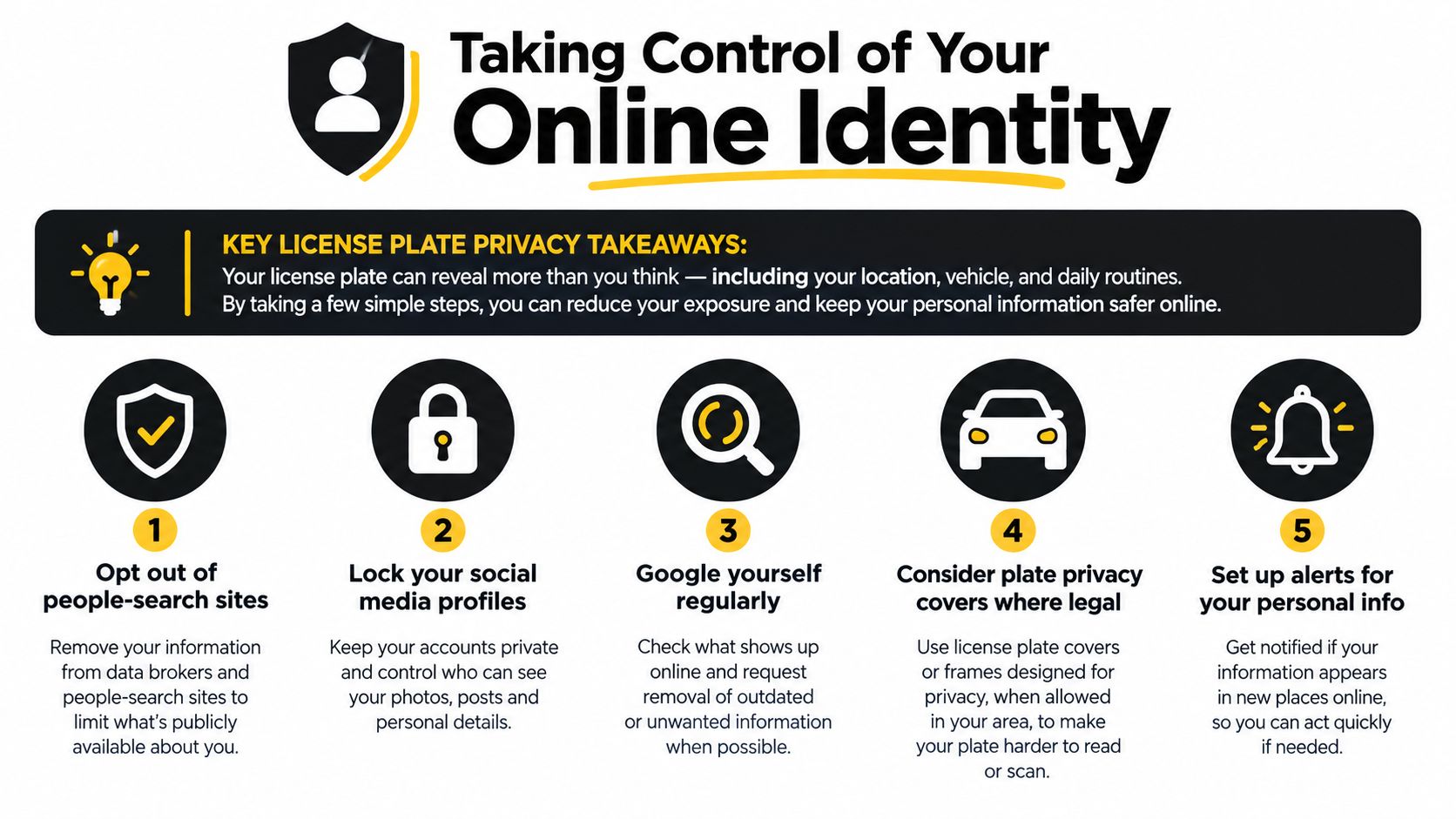
You can’t make a legally required plate invisible while driving on public roads, and you shouldn’t assume that hiding the characters solves every privacy problem. You can control the digital context around the vehicle by reducing unnecessary exposure, checking what connects back to you, and responding when a data broker or public profile reveals too much.
Begin with a personal audit. Search your name, phone number, email addresses, usernames, and vehicle-related terms. Review image results, old marketplace posts, public social profiles, gaming accounts, professional pages, and forum activity. Look for combinations that disclose where you live, work, spend time, or can be contacted.
A practical privacy checklist
- Remove unnecessary vehicle details: Blur a plate in photos that don’t need it, and crop out house numbers, parking permits, and distinctive location markers.
- Lock down social profiles: Review audience settings and older posts, especially images that show your car beside identifiable places.
- Separate identities carefully: Don’t reuse the same username, profile photo, phone number, or email across public hobby, dating, gaming, and professional accounts when separation protects you.
- Check breach exposure: Change reused passwords and enable multifactor authentication when an email address or account appears in a breach.
- Request removals: Contact people-search and data-broker services with their available opt-out procedures, then keep records of your requests.
A privacy audit should also include your family. Children may post vehicles, addresses, school routes, or live locations without recognizing how those clues can be combined. Gamers and online daters face similar risks when public usernames connect to real names, workplaces, or personal photos.
Data-broker removal is one part of the process. The data-broker removal resource can help you think through which exposed records to prioritize and how to approach reducing them.
Recent ALPR policy changes show why privacy can’t be treated as a static question. Vendors and agencies may change retention, sharing, search, and access rules over time, so residents should look for current policies and public accountability information in their jurisdiction.
The essential distinction remains simple: your plate can be visible without your identity being public. The more urgent risk appears when visible vehicle data is joined with searchable location records and unrelated online clues. Audit those surrounding clues, remove what you don’t need to publish, and document suspicious exposure rather than trying to retaliate through private-data searches.
Digital Footprint Check helps individuals and businesses discover exposed information across social platforms, breach databases, gaming profiles, professional networks, and public records. Use the free checker at Digital Footprint Check to see what may connect your vehicle, accounts, and public identity, then take practical steps to reduce unnecessary exposure.