· Digital Footprint Check · Content Marketing · 15 min read
How to Look Up License Plate Info Ethically & Legally
Learn how to look up license plate information legally. Our guide covers DMV requests, commercial services, and ethical OSINT methods for safety and research.
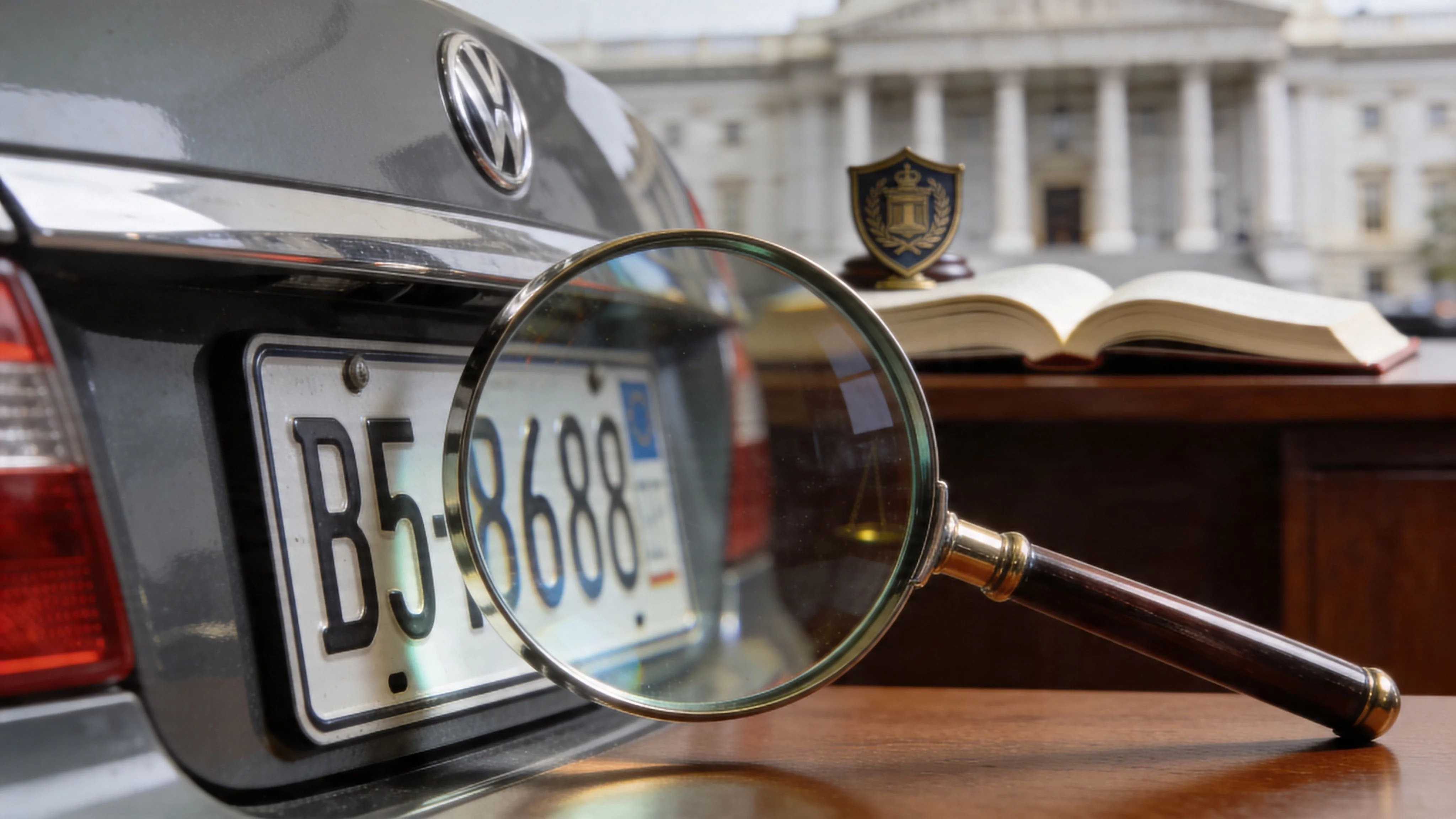
A car cuts you off, clips a mirror, and disappears into traffic. Or you’re about to buy a used car from a marketplace seller who wants to “meet fast” and seems oddly vague about the vehicle’s history. In both moments, the same thought appears: can I look up the license plate?
You can, but not in the way it is commonly assumed.
A lot of advice on how to look up license plate information is either too shallow to help or too reckless to trust. Some guides push questionable websites that hint they can reveal an owner’s home address. Others stop at “contact the police,” which is correct in emergencies but useless when you’re trying to verify a car before handing over money. The correct approach sits in the middle. Some vehicle data is available through lawful channels. Personal owner data is heavily restricted. That distinction matters.
Privacy concerns aren’t abstract here. Existing license plate lookup coverage is heavily US-focused and often ignores how restricted these searches are elsewhere, while a 2023 Pew Research survey found 65% of global internet users express privacy concerns over data aggregation according to EpicVIN’s overview of the topic. That concern is justified. A plate can act like a breadcrumb into broader online exposure if people treat it carelessly.
If you want a useful outside perspective on vehicle checks before going deeper into privacy law, AutoProv’s guide to a professional reg plates check is a practical companion. It helps frame the legitimate use case most readers have, which is verifying a vehicle rather than prying into someone’s private life.
When Curiosity Meets the Law An Introduction
The plate on a car is visible to everyone. That doesn’t mean everything behind it is public.
That’s the first legal and ethical line to understand. A license plate can help you confirm a vehicle’s identity, spot inconsistencies, and support a report to authorities. It should not become a shortcut to stalking, retaliation, or casual surveillance.
What people usually want from a plate lookup
Most readers fall into one of these buckets:
- A buyer checking a used car: You want to confirm the make, model, registration details, title issues, or accident history before paying.
- A witness documenting an incident: You caught a plate after a hit-and-run, dangerous driving event, or suspicious encounter.
- A researcher using OSINT carefully: You’re trying to verify a public clue without crossing into restricted personal data.
- Someone acting from curiosity: With this motivation, people get into trouble fastest.
The first three can have legitimate paths. The last one usually doesn’t.
Public visibility is not the same thing as unrestricted access.
Why simple searches disappoint
Typing a plate number into a search engine rarely gives you what you think it will. Search results may surface auction listings, forum posts, dealership photos, or cached images. Sometimes that’s useful. Often it’s noise.
The bigger problem is that many sites exploit that frustration. They advertise “instant owner reports” because they know people assume a plate works like a username. It doesn’t. In most lawful systems, personal motor vehicle records are protected for good reasons.
The better way to approach how to look up license plate information is to start with a narrow question:
- Are you trying to verify the vehicle?
- Report a safety issue?
- Or identify the person behind the car?
Only the first two usually have straightforward lawful paths.
The Legal Guardrails The DPPA and Public Records
The core rule is simple. Vehicle information and owner information are not the same thing.
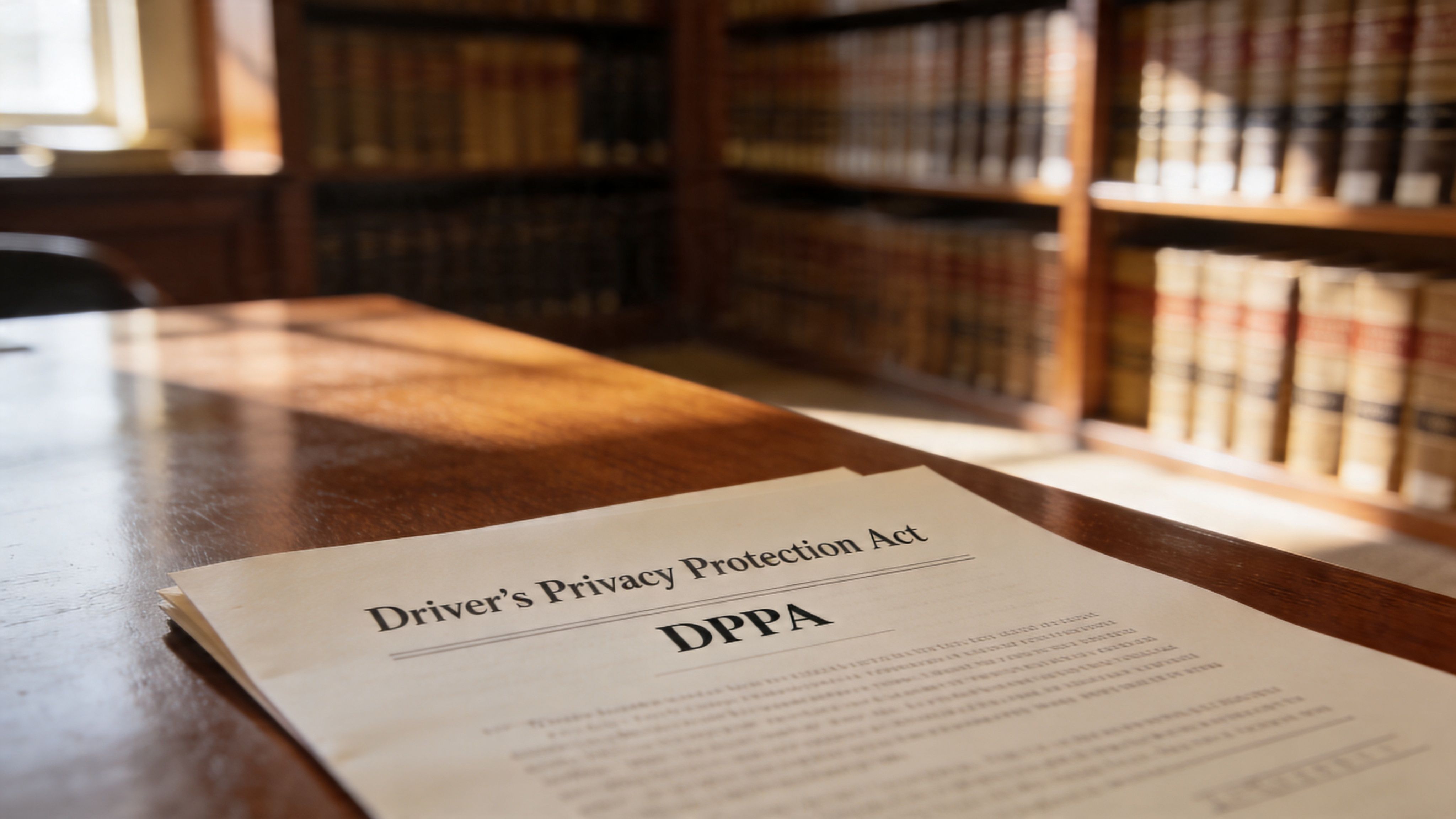
In the United States, the key legal framework is the Driver’s Privacy Protection Act, usually shortened to DPPA. It restricts access to personal information from motor vehicle records. That includes data such as a person’s name, address, and other identifying details.
What you may be able to access
Some states treat license plates and related vehicle details as public records in a limited sense. Florida is a clear example. There, license plates are public records, but owner information is restricted. Public or approved lookup channels can return general vehicle details such as make, model, year, registration status, and history, while access to personal owner data requires a legitimate legal purpose under the state’s privacy framework, as explained by FloridaLicensePlate.org.
That same Florida overview notes that tools such as EpicVIN can resolve plate-to-vehicle data without exposing owner details, and it reports a 99%+ plate-to-VIN match rate for active Florida registrations.
What counts as a legitimate reason
A permissible purpose isn’t “I’m curious who drives that car.”
It usually means something tied to law, safety, business compliance, or formal proceedings. Examples can include government duties, permissible business uses, insurance matters, or court-related needs. Exact categories depend on the legal context, but the pattern is consistent. The request must be defensible, documented, and connected to a recognized purpose.
Use this test before trying any service:
- Vehicle verification: Usually legitimate if you’re checking a car’s history for a transaction.
- Insurance or legal process: Often legitimate when properly documented.
- Employment screening tied to driving roles: Can be legitimate when handled through compliant channels.
- Private curiosity about a stranger: Not legitimate.
- Trying to locate someone’s home address from a plate: A serious red flag.
Legal checkpoint: If a website promises a stranger’s name, address, or phone number from a plate with no documented purpose, assume it’s noncompliant, deceptive, or both.
Why this distinction matters in OSINT
Ethical OSINT relies on public information, context, and verification. It doesn’t bypass privacy law. A plate can be a starting clue, but the law sharply limits what records can be used to identify a person.
If you want a broader privacy context for how public records shape online exposure, this guide on how public records shape your digital footprint is worth reading. It helps explain why lawful access controls exist in the first place.
Official Channels When to Call the Police or Contact the DMV
If a situation involves danger, crime, or an active public safety issue, stop thinking like a researcher and act like a witness. Use official channels.

When police are the right answer
Call the police when the plate is part of an immediate or reportable incident:
- A hit-and-run: Give the plate, time, location, and car description.
- Dangerous driving with a present threat: Report what happened while details are still fresh.
- A suspected crime: Vehicle information can help investigators connect reports.
- Harassment or stalking concerns: Document the plate and contact law enforcement.
Police have tools private citizens don’t. According to the Brennan Center, between 2016 and 2017, 173 US agencies scanned 2.5 billion license plates, and some systems can scan up to 2,000 plates per minute through Automatic License Plate Readers, or ALPRs, as detailed in the Brennan Center’s ALPR analysis.
That scale is exactly why police, not consumers, are the primary channel for serious vehicle investigations.
What to give law enforcement
A useful report is specific and boring. Drama doesn’t help.
Include:
- Plate number: Double-check each character.
- Vehicle description: Make, model, color, body type, visible damage.
- Location details: Street, direction of travel, intersection, parking lot, or landmark.
- Time and sequence: What happened first, next, and last.
- Photos or video: Only if captured safely and lawfully.
For readers who need a broader compliance mindset around vetting people and records, this resource on how to conduct background checks covers the discipline well.
When the DMV matters
The DMV is not a detective hotline. It’s an administrative records system.
That means DMV channels may help with things like registration status, plate or VIN-linked vehicle details, or formal records requests tied to a permissible purpose. They usually won’t help you identify a stranger because you had an uncomfortable interaction in a parking lot.
This short video gives useful context on how these official processes typically work in practice:
What official channels do poorly
Official routes are strong on legality and weak on convenience.
They tend to be:
| Channel | Best for | Weakness |
|---|---|---|
| Police | Emergencies, crimes, active investigations | Not for casual verification |
| DMV | Formal records, registration and administrative checks | Narrow access, documentation burden |
| Courts or attorneys | Disputes with legal standing | Slow and purpose-limited |
That trade-off is intentional. Systems holding motor vehicle data are designed to resist casual misuse.
Evaluating Commercial Plate Lookup Services
Individuals asking how to look up license plate information aren’t trying to identify an owner. They’re trying to verify a vehicle. That’s where commercial services can be useful.
The good ones convert the plate to a VIN, then use lawful data sources to assemble a vehicle history report. The bad ones blur the line and imply they can expose personal owner details for a small fee.
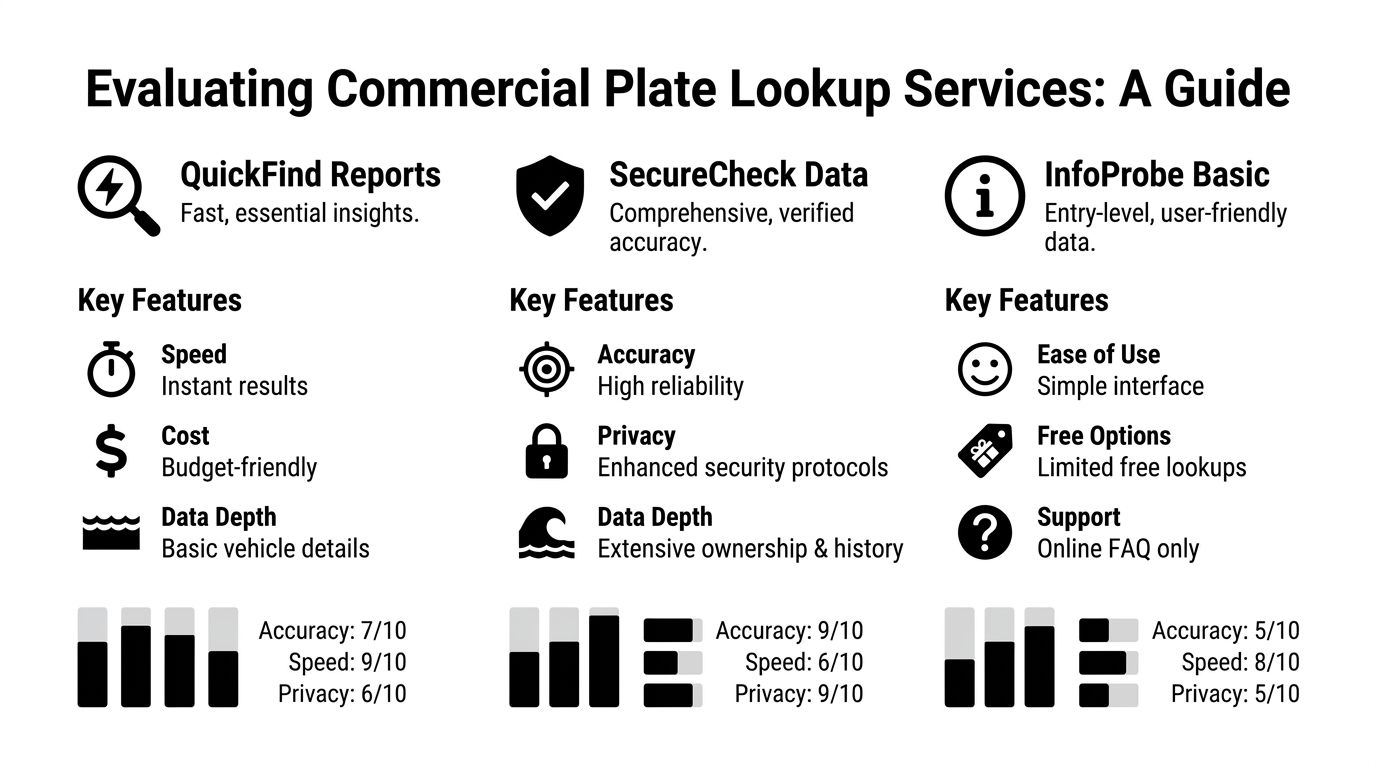
What legitimate services actually do
Commercial tools are strongest when you need answers like:
- Is the plate tied to the vehicle being shown?
- What VIN does this plate resolve to?
- Does the record suggest title issues, odometer records, theft flags, or accidents?
- Does the car description match the seller’s listing?
According to Vininspect’s guide, commercial tools can convert plates to VINs with 92-97% success for non-expired plates when they query DMV feeds and NMVTIS. That same source explains that paid history reports may reveal odometer readings and accident history, but they are still legally barred from providing owner PII under the DPPA. That distinction is central, and it’s laid out in Vininspect’s explanation of plate lookup limits.
Red flags that should end your search
You don’t need deep technical knowledge to spot a sketchy service.
Avoid any site that:
- Promises owner identity for anyone: That’s the classic bait.
- Uses fear-heavy copy: “Find out who’s watching your house tonight.”
- Hides the actual product: If you can’t tell whether you’re buying a VIN report, a people-search product, or a subscription trap, walk away.
- Pushes urgency over documentation: Legitimate data providers explain what they can and can’t lawfully return.
The best commercial lookup services verify cars. The worst ones sell the fantasy of unmasking people.
License Plate Lookup Methods Compared
| Method | Information Provided | Permissible Use | Cost | Speed |
|---|---|---|---|---|
| Official channels | Registration or formal record information, incident handling, law enforcement investigation support | Safety incidents, legal matters, documented administrative needs | Usually fee-based or procedural depending on request | Slow to moderate |
| Commercial lookup services | VIN resolution, title status, accident history, odometer-related records, theft checks | Vehicle verification, used car due diligence, fraud prevention | Free preview or paid report depending on provider | Fast |
| Manual OSINT | Public photos, listing matches, forum mentions, contextual clues, VIN-based public checks | Verification, open-source research, scam prevention | Usually low direct cost | Moderate and labor-intensive |
If you’re weighing paid options as part of a broader due diligence process, it helps to understand the economics and limits of screening tools in general. This overview of background check pricing gives useful context on what paid verification typically buys and what it shouldn’t promise.
What works in real life
For a private car purchase, the best sequence is often simple:
- Run a plate lookup through a reputable vehicle-history provider.
- Convert the plate to a VIN if available.
- Compare the VIN returned by the service with the VIN visible on the car and paperwork.
- Walk away if the records and physical vehicle don’t line up.
Commercial tools work best when you treat them like a fraud filter, not a surveillance product.
Ethical OSINT How to Find Clues in Public Data
When official channels are too limited and commercial reports don’t answer the whole question, ethical OSINT can help. The standard is simple. Use what people or institutions have already made public. Don’t try to break through restricted records.

Start with the vehicle, not the person
The cleanest workflow begins by validating the plate and vehicle relationship.
An expert OSINT method described in a public walkthrough starts by converting the plate to a VIN, then using the VIN to query public databases such as NHTSA for recalls and NICB for theft records. It then uses the vehicle’s make and model with historical imagery in Google Street View to attempt geolocation. That process achieved 40-50% success rates for address confirmation using purely free, public methods, according to the YouTube OSINT walkthrough.
That doesn’t mean “find the owner.” It means confirm whether the public clues around the car are consistent.
A practical OSINT workflow
Use a staged approach.
Verify the plate visually
Make sure the plate belongs to the car you think it does. Photos can be outdated. Listings may reuse images. Plates can be swapped.Resolve the VIN when lawful tools allow it
A VIN opens far better public verification paths than a plate alone.Query public VIN resources
Recall and theft databases can confirm whether the car has known issues or warning signs.Search the plate or VIN in quotes
Sometimes old auction listings, enthusiast forums, dealership galleries, or complaint posts surface.Inspect the background details
Dealership frames, parking permits, bumper stickers, company logos, or neighborhood landmarks can reveal useful context.Compare with public imagery
If you already suspect an area, map and street imagery can help verify whether the same vehicle appears there publicly.
What not to do
Ethical OSINT has hard stops.
- Don’t pretext: Don’t impersonate an insurer, buyer’s agent, or official body.
- Don’t trespass or photograph private property aggressively: Stay within lawful observation.
- Don’t use the result to harass someone: Verification is one thing. Pursuit is another.
- Don’t confuse correlation with proof: A matching bumper sticker is a clue, not an identity verdict.
Field note: The biggest OSINT mistake isn’t missing a clue. It’s forcing a conclusion from weak clues.
If you’re building your own research discipline, these OSINT tools for beginners are a solid next step. The important habit is source separation. Keep vehicle facts, location clues, and identity assumptions in different buckets until multiple public signals line up.
Where manual OSINT shines
Manual work is strongest when you need context, not certainty.
It can help you:
- Spot whether a seller reused old car photos from another listing.
- Confirm whether a vehicle has appeared at auction before.
- Identify whether a story about “one careful owner” clashes with public history.
- Notice that a vehicle shown in a listing doesn’t match the plate, trim, or model year being advertised.
That’s often enough to avoid a bad transaction.
Take Control of Your Own Digital Footprint
After you learn how much can be inferred from a plate, the more important question is what someone could infer from yours.
A visible plate in a social media photo can connect your car to a neighborhood, workplace, gym, school pickup route, or recurring routine. Add a geotag, a public profile, and a few background details, and you’ve given strangers more than most official lookup systems ever would.
Small posts create larger patterns
People often post:
- driveway photos with the plate visible
- “new car” pictures with dealership branding
- event photos that reveal parking passes or local landmarks
- marketplace listings that expose both the vehicle and the owner’s habits
The risk isn’t just personal safety. Employers, clients, and scammers all interpret public breadcrumbs differently. A sloppy post can affect professional reputation, invite impersonation attempts, or help someone correlate your identity across platforms.
For people with larger exposure concerns, ContentRemoval has a useful guide to professional digital footprint cleanup services. It’s especially relevant if your online presence mixes public records, social media, and work-related visibility.
You can also reduce ongoing exposure by learning about data broker removal. That won’t erase lawful vehicle records, but it can shrink the broader web of personal data that makes plate-related OSINT easier than it should be.
The safest mindset is simple. Treat your plate like a publicly visible identifier, not harmless background detail.
Frequently Asked Questions About License Plate Lookups
Is it legal for me to look up any license plate I see
It depends on what you’re trying to get.
Looking up a plate for vehicle-specific information such as make, model, or history can be lawful through compliant services. Trying to obtain the owner’s personal identifying information without a valid legal reason is where the line is crossed.
Can a website give me the owner’s name and address from a license plate
No legitimate, privacy-compliant public website should do that for casual users.
If a site claims it can reveal the owner’s home address, phone number, or full identity for a small fee, treat that as a warning sign. Legitimate access to personal motor vehicle records is purpose-restricted and usually handled through official channels or formal legal processes.
What is the best free license plate lookup method
For free vehicle information, not owner data, your best options are limited but useful.
Try:
- State portals where available: Some states offer basic registration or status checks.
- Free previews from vehicle-history providers: These may return a VIN, make, or model.
- Manual OSINT: Search for public listings, auction pages, or forum mentions tied to the plate or VIN.
Can I use a plate lookup for a used car purchase
Yes. That’s one of the most legitimate uses.
Use the lookup to verify the car, compare records with the seller’s claims, and confirm the VIN matches the vehicle and paperwork. If details conflict, don’t rationalize it.
Should I ever skip lookup tools and just call the police
Yes, when there’s an active safety issue, a crime, or a reportable incident.
A plate is most powerful when it supports the right process. In emergencies, that process is law enforcement, not DIY research.
If this article made you think less about looking up someone else’s plate and more about what strangers could learn from your own online trail, that’s the right takeaway. Digital Footprint Check helps you audit what’s publicly exposed about you across social profiles, breach data, public records, and other open sources. Start with the free checker at www.digitalfootprintcheck.com/free-checker and see what your digital footprint already reveals.