· Digital Footprint Check · Content Marketing · 21 min read
Top 10 Api Security Best Practices for 2026
Explore the top 10 API security best practices for 2026. Learn to protect data with robust authentication, encryption, and monitoring to prevent identity theft.

You've probably signed into a gaming account with Google, checked a work dashboard through a single sign-on button, or connected a privacy tool to your social accounts without thinking twice. That convenience runs on APIs, and those APIs decide how far one login can reach. If one of them is weak, the impact can spill into exposed personal data, stolen identity details, a hijacked professional profile, or a gaming account you can't get back.
That's why api security best practices matter far beyond engineering teams. The same controls that keep an API from leaking records also protect your job prospects, your dating profile, your breach alerts, and the digital traces that shape how strangers see you online. Akamai says modern organizations need automated API discovery because unmanaged APIs are a prime target for threat actors, and it recommends testing APIs before deployment and continuously in production using real-time traffic analysis, which is a useful reminder that APIs need ongoing oversight, not a one-time check Akamai API Security Study 2024.
The fastest way to think about API defense is simple. Each endpoint is a doorway, each token is a key, and each permission is a limit on where that key can go. The practices below help you lock the right doors without breaking the services people rely on every day, whether that's an HR platform, a dating app, a gaming network, or a digital footprint scanner that handles sensitive identity data. For teams in regulated or high-trust environments, the role shift can be real too, especially during integration work like adjusting team roles during API integration.
1. Implement OAuth 2.0 and OpenID Connect for Secure Authentication
OAuth 2.0 and OpenID Connect are the cleanest way to let users grant access without handing over full credentials. That matters whenever an app needs to connect to social platforms, gaming accounts, or HR systems, because password sharing turns one compromise into a multi-account problem. Curity's guidance is blunt about planning API security at design time and enforcing authorization in the API itself, not only at the gateway, and it recommends a centralized OAuth authorization server plus access tokens with limited permissions using scopes and claims Curity API Security Best Practices.
Why delegated access beats password collection
A privacy tool that scans LinkedIn, X, or Facebook for exposed professional information shouldn't need to store a user's password. A gaming audit service shouldn't ask for the same credentials you use to buy games or manage payment methods. OAuth keeps the connection scoped, so if one token is abused, the blast radius is much smaller than a password leak.
That's the trade-off. OAuth adds setup work, token lifecycle management, and user education, but it removes a huge amount of credential risk. Short-lived access tokens, secure refresh token storage, and HTTPS or TLS 1.2+ during token handling are essential because bearer tokens are valuable. StackHawk also notes that GraphQL APIs need authorization at the field-resolver level, and gRPC services should use mutual TLS for service-to-service authentication, which shows how identity controls change by API style StackHawk API Security Best Practices.
Practical rule: if a product asks for your password just to “connect accounts,” ask why OAuth isn't available first.
For individual users, this has direct privacy value. OAuth lets you revoke one app's access without changing your entire login footprint, which is useful if you're cleaning up old integrations before a job search, a dating profile refresh, or a gaming account audit. A good platform also logs authorization events, explains which scopes it wants, and makes it easy to remove stale connections. If it doesn't, that's a warning sign.
The internal secret manager and password hygiene matter too, so keep your credential advice tied to a real workflow like password manager best practices.
2. Use API Rate Limiting and Throttling to Prevent Abuse
Rate limiting is the difference between a healthy API and one that gets dragged down by automated abuse. It stops brute-force attempts, scraping, and accidental overload, but it also protects downstream systems from getting hammered when a feature gets popular. F5 recommends capping API traffic with thresholds such as 10,000 requests per day per account, and it also advises using a WAF that understands API payloads because generic rules can miss attacks buried in JSON or XML bodies F5 API Security Best Practices.
Where throttling helps real users
A digital footprint platform that checks hundreds of sources can't let every account fire unlimited searches. That would invite scraping, make the service noisy, and create costs for the provider and the upstream platforms it depends on. The same logic applies to gaming account lookups, identity verification flows, and breach-monitoring tools that could be abused to enumerate users or repeatedly test credentials.
Throttling is gentler than hard blocking. Instead of cutting users off immediately, it slows them down as they approach limits, which can feel fairer in normal use. The downside is that you need to tune it carefully. Set limits too low and legitimate users hit friction. Set them too high and the control doesn't do much.
APIs should fail boringly under pressure. A controlled slowdown is usually better than a hard outage.
A practical pattern is to use stricter caps for anonymous traffic and higher limits for verified users. Expose rate-limit headers so clients know where they stand, and log violations because repeated hits often tell you more about abuse than about innocent usage. If a service is scanning email addresses, usernames, or phone numbers, rate limiting also becomes a privacy control, because it makes harassment and bulk enumeration harder.
For people outside engineering, the benefit is easy to grasp. Rate limiting helps keep someone from using a public lookup tool to mass-harvest data about your work history, your gaming profile, or your dating presence. It's not glamorous, but it's one of the simplest controls that protects both uptime and personal safety.
3. Encrypt Data in Transit and at Rest with TLS and AES Standards
Encryption is the seatbelt of API security. It doesn't stop a crash, but it keeps a lot of damage from becoming catastrophic. F5's glossary says secure API design should encrypt all network traffic with SSL/TLS, validate inputs, and use rate limiting and throttling, which makes encryption part of the baseline rather than a premium feature F5 API Security Glossary. For internal and external traffic alike, StackHawk also recommends TLS 1.2 or higher, preferably TLS 1.3, and notes that gRPC service-to-service calls should use mTLS for stronger authentication StackHawk API Security Best Practices.
Why transit and storage both matter
If traffic isn't encrypted in transit, someone on the network path can read tokens, profile data, or session details. If data at rest isn't encrypted, a stolen database backup can become an immediate breach. That's a serious problem for systems that store breach alerts, employment records, dating verification data, or gaming account metadata.
The trade-off is operational complexity. Encryption adds certificate management, key rotation, and a little latency overhead. The upside is enormous, especially for products that handle identity-related data. Certificate pinning can help mobile clients resist man-in-the-middle attacks, and separate encryption keys for different data classes limit exposure if one key is compromised. HSTS with includeSubDomains and preload also helps keep browsers on HTTPS once they arrive.
For teams that need a practical reminder, the most important rule is simple. Don't treat internal traffic as safe just because it stays inside your cloud. Shared infrastructure, misrouted packets, and compromised service accounts can all turn “internal” into “visible” faster than people expect.
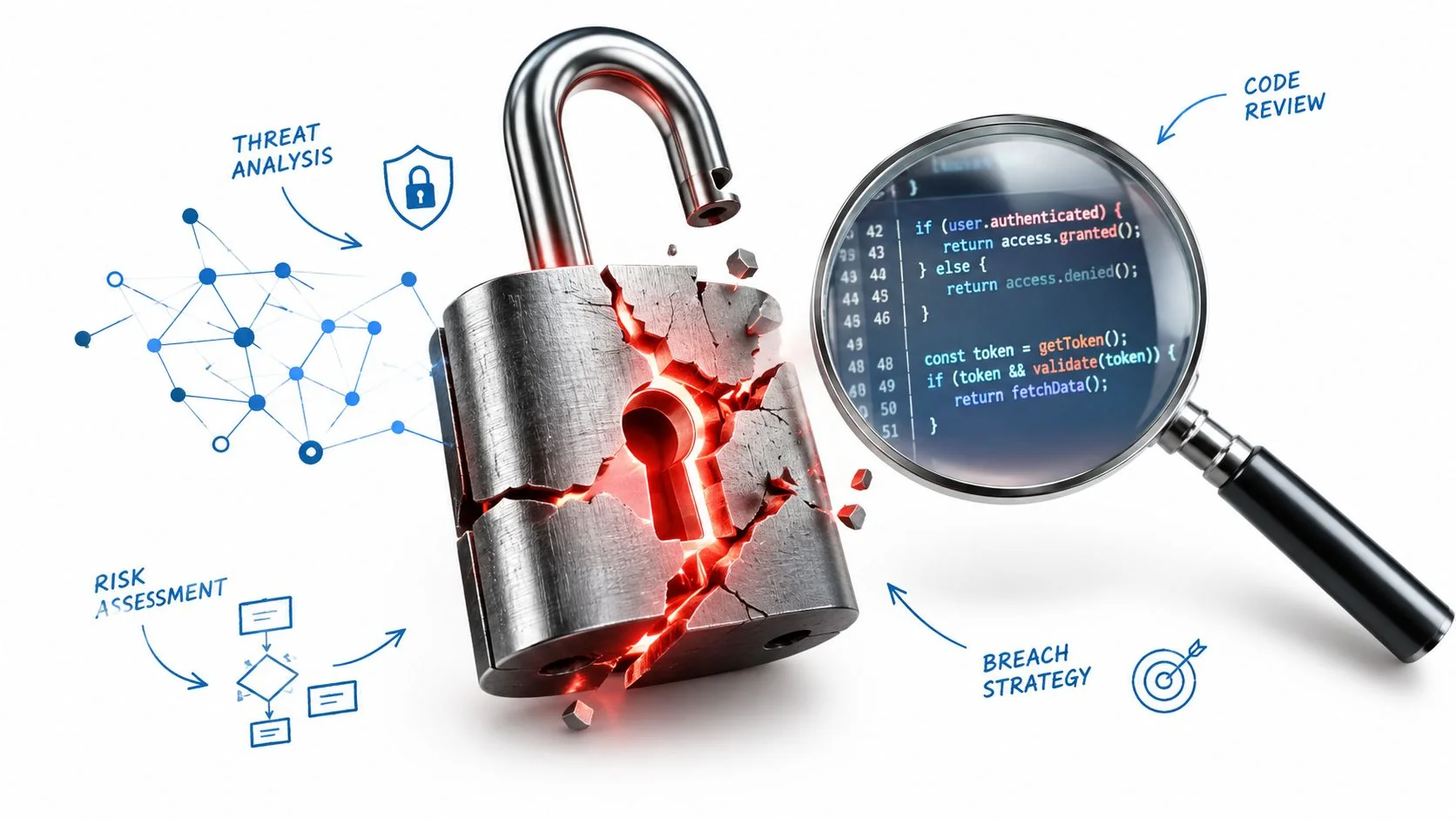
The image below captures the idea cleanly, a locked system is only useful if the lock is on the path users take.

For personal privacy, encryption is what keeps exposed tokens and sensitive records from becoming immediately readable if a platform is breached. That matters whether you're protecting your dating profile, your work identity, or a gaming account tied to a payment method.
4. Implement API Key Management with Rotation and Scope Restrictions
Static API keys are like sticky notes on a monitor. They're convenient until they end up somewhere they shouldn't. F5's guidance on API security says the principle of least privilege should apply to users and systems, and it warns that excessive privileges can be misused or exploited F5 API Security Glossary. The same logic applies to keys, because a key with broad access can turn one leak into a platform-wide incident.
Keys should be narrow, visible, and short-lived
Separate keys for separate functions make incidents easier to contain. A digital footprint platform that uses one key for LinkedIn scans, another for Twitter scans, and another for gaming lookups is already in a safer place than a setup where one credential can touch everything. If a key leaks in a repository, only the matching integration is exposed, not the whole service.
That is the trade-off with key sprawl. More keys mean more operational overhead, but they also mean better blast-radius control. Rotate keys on a schedule, revoke them immediately after suspicion of exposure, and require multi-factor authentication before someone views or regenerates them. Storing keys in environment variables or a secrets manager is better than hardcoding them in source, because repository history keeps a long memory.
Practical rule: if a key can query data it doesn't need for its job, it has too much power.
For everyday users, this shows up in the products you trust. A dating verification service shouldn't need access to your contact list. A breach-monitoring API shouldn't have broad user-management privileges. A gaming security platform should only touch the endpoints required to confirm account status, not reset passwords or alter entitlements.
Key logs should use aliases, not raw secret values, and teams should watch for anomalous usage that suggests a stolen credential. The point isn't just to protect the company. It's to stop a single leaked key from exposing your identity data, your professional profile, or the accounts you rely on for work and leisure.
5. Validate and Sanitize All API Inputs to Prevent Injection Attacks
Every field a user sends is a possible attack surface. That includes emails, usernames, phone numbers, headers, and search parameters, not just the obvious text boxes. Curity and Postman both emphasize input validation and authorization as design-time requirements, and Postman's security guidance explicitly warns against trusting client-side validation alone Postman API Security Best Practices.
Validation should happen before anything else
A service that searches breach databases or scans public profiles often deals with highly structured inputs. That's good news, because structured inputs are easier to validate properly. Email addresses should match expected patterns, usernames should be bounded by length and format, and any unexpected field should be rejected instead of ignored.
The risk is familiar. SQL injection can expose entire records, command injection can hit the backend, and malformed input can distort scan results in ways that hide exposed data instead of revealing it. That kind of bug isn't only a developer problem. It can mislead a user trying to clean up a work account before a job application or checking whether a dating profile is real.
Use allowlists rather than blocklists. Blacklists age badly because attackers keep inventing new ways around them, while an allowlist defines what valid input looks like from the start. Parameterized queries and prepared statements should handle database access, and output should be escaped according to context so returned data can't be reflected back into another system.
The image below shows the idea visually, filtering is better than trying to catch badness after it has already entered the system.

A good privacy platform also logs validation failures for threat analysis, but it should never log sensitive payloads like passwords or full tokens. That balance matters, because weak validation creates silent exposure, while noisy logging can create a second exposure path.
6. Monitor and Log All API Activity for Threat Detection and Compliance
If an API can't prove what happened, it can't really defend itself. Logs show who accessed what, when they did it, and whether a request failed for a security reason or a routine one. Akamai's fundamentals paper says API security monitoring should extend over multiple weeks and sessions, which makes short spot checks insufficient for detecting persistent abuse or slow-burn attacks Akamai API Security Fundamentals.
Logs are evidence, not decoration
The best logs are structured, isolated, and readable by machines. They should record authentication events, access attempts, sensitive changes, and validation failures, but they should not store passwords, tokens, or full credit card details. That matters for compliance, but it also matters for incident response, because a tamper-proof trail can tell you whether a compromise started with credential stuffing, a leaked key, or abuse from a trusted account.
A digital footprint service can use logs to show who ran a scan, from where, and against which data sources. An HR platform can use them to track who viewed candidate records. A gaming service can use them to spot strange verification spikes. When a dating app or breach-notification system gets hit with suspicious activity, logs often become the difference between quick containment and guesswork.
Good logging should help you answer three questions fast, who touched it, what changed, and how far the damage spread.
Teams also need to protect logs from tampering. Attackers often try to erase their tracks after gaining access, so logs should go to a separate system that only receives data. Immutable storage, cryptographic signatures, and redundancy make a real difference here. I also like clear alerting for repeated failed logins or unusual geographic patterns, because that gives analysts a head start before users start noticing weird behavior.
For personal safety, logging supports accountability. If someone abuses a platform to repeatedly look up your identity data, or tries to verify a gaming account they don't own, the audit trail is often the only thing that proves it happened.
You can also tie monitoring to a broader protection workflow through supply chain security, because compromised dependencies often show up first as strange operational behavior.
7. Implement API Versioning to Manage Security Updates Without Breaking Clients
Security fixes are only useful if people can adopt them. API versioning gives teams room to patch vulnerabilities, tighten auth flows, and deprecate risky behavior without forcing every client to upgrade at the same moment. Akamai's guidance on integrating API security into the SDLC and CI/CD pipelines makes this especially important, because security changes need a path from code to production that doesn't destabilize everything else Akamai API Security Fundamentals.
Versioning is an availability decision as much as a design choice
If a platform changes authentication from one pattern to another, old clients may break. Without versioning, teams get stuck choosing between leaving a vulnerable endpoint alive or breaking production integrations. That's a bad trade either way.
Versioning solves that by letting old and new clients coexist. A service can keep /v1/ alive while rolling out /v2/ with stronger OAuth handling, better field-level authorization, or tighter validation. That is especially useful for products that support long-lived integrations, like HR systems, gaming verification tools, and privacy scanners that are wired into other apps.
The cost is more maintenance. You need documentation, deprecation notices, migration support, and a real sunset plan. But that's better than forcing a rushed change that causes outages or leaves a weak version online forever.
If clients can't migrate safely, they'll stay on the old version longer than you want.
The best versioning programs communicate early and often. They also track which versions are still in use so teams know where to focus migration support. That matters for privacy products because users often connect accounts once and then forget about them. A secure API version can reduce risk, but only if the ecosystem moves onto it.
For people outside engineering, this is the difference between a platform improving its safety over time and a platform that keeps running outdated, leaky behavior because nobody wants to break a legacy integration.
8. Enforce Least Privilege Access Control for API Endpoints
Least privilege is one of those ideas that sounds obvious until you see what happens without it. A compromised account should only be able to touch the smallest possible set of data and actions. OWASP's API guidance, summarized by Akamai, emphasizes fine-grained authorization, decommissioning deprecated endpoints, and continuously monitoring for abnormal usage, which is really a least-privilege mindset in practice OWASP API Security Top 10.
Access should stop at the exact point of need
Read-only access is usually safer than broad write access. A scan operator might need to search email addresses, but not delete findings. An HR reviewer might need to view candidate results, but not edit raw records. A gaming support tool might need to check account status, but not reset passwords.
That's the trade-off between convenience and containment. Broader permissions reduce setup friction, but they multiply damage when credentials are stolen. Role-based access control and attribute-based access control both help, but only if teams design permissions carefully and review them regularly.
Least privilege also applies to service accounts, not just people. Internal APIs often get treated as trusted by default, which is a mistake. If a microservice only needs one endpoint, it should not get blanket access to everything behind the gateway. Deny-by-default is slower to configure, but it's much harder to abuse.
The internal reference on account protection fits naturally here, because access control is a major part of reducing takeover risk, and the right hardening workflow belongs alongside account takeover prevention.
For users, least privilege is the hidden reason one breach doesn't have to become total identity loss. If a dating platform, breach-monitoring tool, or gaming service scopes access correctly, a stolen token can reveal less, modify less, and damage less. That's the kind of protection people only notice when it works.
9. Conduct Regular Security Testing Including Penetration Testing and Vulnerability Scanning
Security testing finds the flaws that code review misses. It's the difference between hoping the API is safe and verifying that it behaves safely under attack conditions. Postman's guidance on security testing, combined with Akamai's recommendation for continuous testing and remediation of OWASP API Security Top 10 issues, makes the case plainly, testing belongs in the lifecycle, not at the end Postman API Security Best Practices Akamai API Security Fundamentals.
Use multiple tests because attackers do
Automated scanning is great for known patterns, while manual penetration testing catches logic flaws and chained weaknesses. DAST checks running APIs, SAST inspects source code, and integration testing makes sure external services don't create blind spots. For a platform that queries many data sources, the test plan has to include the API itself and the connectors around it.
That matters because APIs don't fail in one neat way. A bad OAuth flow, a weak validation rule, and a permissive endpoint can line up into one exploit path. Testing should use real data shapes too, such as emails, usernames, and phone numbers, because generic placeholder values sometimes miss the exact bugs attackers look for.
The output needs follow-through. Findings should be remediated, retested, and documented. A bug bounty program can widen the search, but only if the team is ready to fix what researchers find. Teams also need to test disaster recovery and incident response, because a secure API that can't recover cleanly is still a business risk.
Here's the core idea: if a test can't prove the control works under pressure, the control is only a theory. That's especially important for identity products, where a broken check can expose private records, business data, or a user's public reputation.
10. Establish Incident Response Planning and Breach Notification Procedures
Even solid API security doesn't remove breach risk. It reduces the odds and limits the blast radius, but teams still need a plan for detection, containment, recovery, and notification. Akamai recommends monitoring over multiple weeks and sessions, and that kind of visibility only pays off if the organization already knows who does what during an incident Akamai API Security Fundamentals.
The plan matters before anything goes wrong
Incident response should not start with a meeting about what incident response should be. The team needs a war room channel, pre-drafted user notices, legal review, and a go or no-go process for public communication. GDPR breach reporting timelines and state notification windows make speed a legal issue as well as a trust issue, so preparation directly affects whether an organization can respond responsibly.
That's particularly important for services handling identity data. A credential stuffing attack against a gaming company, a profile breach at a dating app, or an exposure at an HR platform all need different containment steps, but the same basic discipline applies. Freeze access, preserve evidence, notify the right people, and avoid making the breach worse by rushing.
If the first hour is spent inventing the process, the breach already has the advantage.
A strong plan also helps non-security teams. Support, legal, PR, and leadership all need to know where they fit, because user confidence often depends on clear communication as much as on technical containment. Rehearsals matter here. Tabletop exercises expose missing contacts, weak assumptions, and slow approval paths before a real attack does.
For users, incident response is what turns a scary disclosure into a manageable one. If a privacy or identity platform has a clear process, you're more likely to get fast instructions, practical next steps, and honest disclosure about what was exposed.
For a closer look at how organizations should handle public exposure events, keep the guidance around data breach notification requirements close to your response playbook.
Top 10 API Security Best Practices Comparison
| Control / Practice | Implementation Complexity 🔄 | Resource Requirements ⚡ | Expected Outcomes 📊 | Ideal Use Cases 💡 | Key Advantages ⭐ |
|---|---|---|---|---|---|
| Implement OAuth 2.0 and OpenID Connect for Secure Authentication | High, provider integration & token flows | Moderate, developer time + IDP setup | Strong delegated auth; no password storage | Cross-platform logins, social/gaming/professional integrations | User-controlled access, scoped tokens, audit trails |
| Use API Rate Limiting and Throttling to Prevent Abuse | Medium, algorithm + tuning per endpoint | Low–Moderate, gateway/config + monitoring | Reduced abuse, stable service availability | High‑traffic APIs, scraping-prone endpoints | Prevents scraping/DDoS; fair resource allocation |
| Encrypt Data in Transit and at Rest with TLS and AES Standards | Medium–High, crypto + key management | High, CPU, KMS/HSM, certificate ops | Confidentiality in transit & at rest; compliance | Any service handling PII, credentials, backups | Prevents MITM and data exposure; regulator alignment |
| Implement API Key Management with Rotation and Scope Restrictions | Medium, key lifecycle + tooling | Moderate, secret stores, rotation automation | Limited blast radius for leaked credentials | Third‑party integrations, developer APIs | Scoped access, easy revocation, accountability |
| Validate and Sanitize All API Inputs to Prevent Injection Attacks | Medium, validation rules + context escaping | Low–Moderate, libraries, dev effort | Prevents injections (SQL, XSS, command) | Any user-input endpoints, search/query APIs | Reduces attack surface; improves data quality |
| Monitor and Log All API Activity for Threat Detection and Compliance | Medium–High, centralization, tamper-proofing | High, storage, SIEM, retention costs | Faster detection, forensic capability, auditability | Compliance-heavy services, incident response needs | Enables investigation, regulatory proof, alerts |
| Implement API Versioning to Manage Security Updates Without Breaking Clients | Medium, routing + docs + backports | Moderate, ops, multiple deployments | Safe rollouts; reduced client breakage | Public APIs, ecosystems with many clients | Enables patches, graceful deprecation, compatibility |
| Enforce Least Privilege Access Control for API Endpoints | High, RBAC/ABAC design and enforcement | Moderate–High, IAM systems, policy mgmt | Limits damage from compromises or insiders | HR, background checks, privileged admin APIs | Minimizes unauthorized access; clearer audits |
| Conduct Regular Security Testing Including Penetration Testing and Vulnerability Scanning | Medium, tooling + scheduling; manual testing adds complexity | High, scanners, consultants, remediation effort | Finds vulnerabilities before attackers do | Periodic security posture reviews, pre‑release checks | Prioritizes fixes by risk; demonstrates due diligence |
| Establish Incident Response Planning and Breach Notification Procedures | Medium–High, processes, roles, playbooks | High, on-call teams, legal/PR, retainer costs | Faster containment, compliant notifications | Any org handling PII or regulated data | Reduces impact, preserves evidence, maintains trust |
Secure Your APIs, Protect Your Digital Footprint
API security is not an abstract developer concern, it's part of how your identity, privacy, and reputation stay intact online. Every control in this list, from OAuth and TLS to logging, versioning, and incident response, exists to reduce the chances that one weak integration turns into stolen data, account takeover, or a mess that follows you into a job search or a relationship. The strongest teams don't treat these practices as optional add-ons. They build them in early, test them often, and keep tightening them as their APIs grow.
For individuals, the lesson is just as practical. If a service asks to connect to your accounts, check whether it uses scoped authorization, clear permission boundaries, and secure token handling. If it doesn't, you're trusting it with more than convenience. You're trusting it with pieces of your digital life, including the things that affect your work, your safety, and how easily someone can impersonate you online.
Digital identity is now assembled from many small signals, public posts, account links, breach records, gaming profiles, and professional pages. API security is what keeps those signals from being stitched together too easily by the wrong person. The more you understand that, the better you can choose services that respect your privacy and reduce your exposure.
Take one concrete step today. Run a free scan to see what the internet already knows about you, then use that result to tighten the accounts and services that matter most. Start with your own footprint at www.digitalfootprintcheck.com/free-checker, because protecting your APIs is one part of protecting yourself.
A CTA for Digital Footprint Check.