· Digital Footprint Check · Content Marketing · 12 min read
Ebay Seller Scams: How to Spot, Avoid, and Report Fraud
Learn how to identify eBay seller scams, protect your money, and report fraud effectively. Discover red flags, prevention tactics, and OSINT tools for safety.
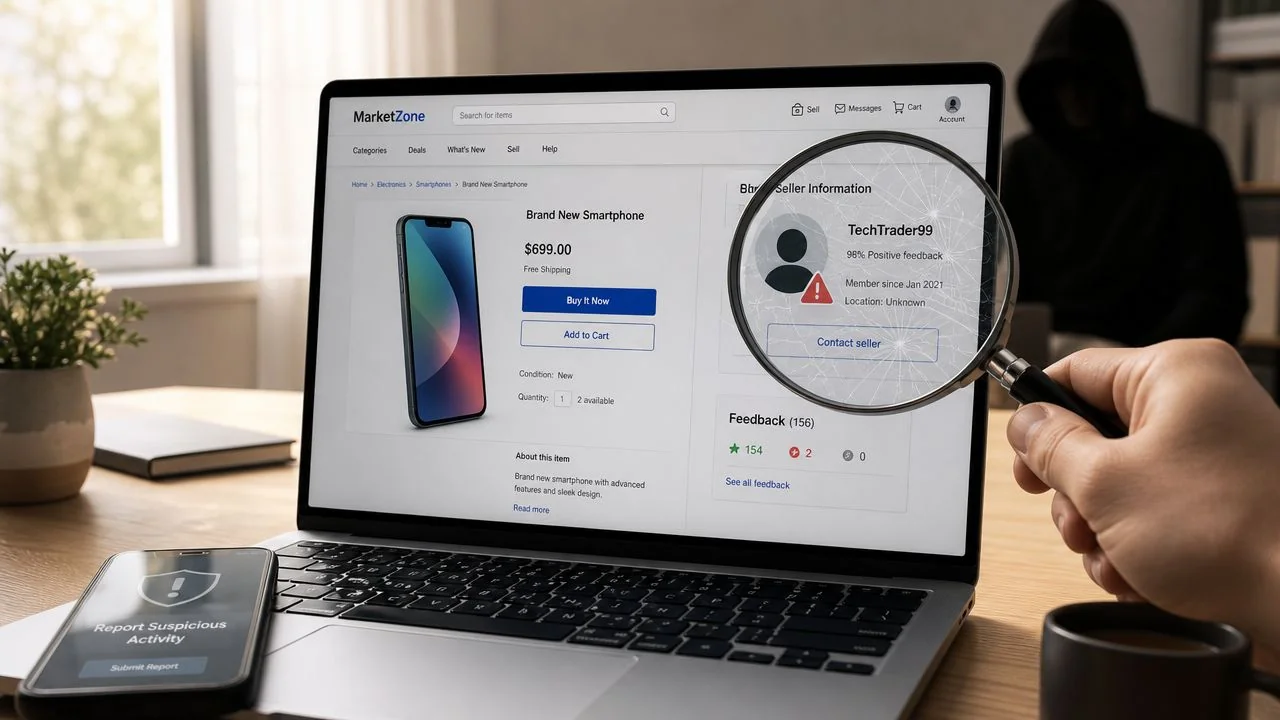
You were probably just trying to buy something simple, a phone, a game console, a camera lens, maybe a hard-to-find part, and the listing looked clean enough to trust. Then the seller pushed for a private message, a different payment method, or a weird shipping arrangement, and the whole transaction started to feel off. That's the danger zone with eBay seller scams, they don't always look sloppy, they often look efficient.
The worst ones don't rely on obvious fake products. They rely on stolen accounts, copied photos, manipulated feedback, and off-platform contact to make a fraudulent seller look routine. Consumer Reports' WebWatch warned that if a seller is “begging you to e-mail privately,” the account is probably stolen, and California's Attorney General tells buyers to stay on eBay's site and avoid wiring money or sending checks when a seller tries to move the deal away from the platform Consumer Reports WebWatch guidance on seller fraud, California Attorney General guidance on eBay safety. If you want the legal angle on why this matters once money changes hands, this overview of fraud charges under Texas law is a useful reference.
The Hidden World of eBay Seller Fraud
A fraudulent listing rarely starts with anything dramatic. The item looks desirable, the photos look familiar, the price sits just low enough to pull you in, and the seller answers fast enough to keep the conversation moving. That speed is the point. Seller-side fraud depends on momentum, because once a buyer starts acting quickly, scrutiny drops.
The strongest scams are built on hidden mechanics, not flashy deception. Fraudsters use stolen accounts, copied photos, manipulated feedback, and concealed bidder identities to make a fake listing look ordinary, then they pressure buyers into private contact or off-platform payment. Consumer Reports' WebWatch warns that a seller who is “begging you to e-mail privately” is likely using a compromised account, and California's Attorney General tells buyers to stay on eBay's site and avoid wiring money or sending checks when a seller pushes the deal elsewhere Consumer Reports WebWatch guidance on seller fraud, California Attorney General guidance on eBay safety.
Why the scam works
These scams work because they attack trust signals buyers already rely on. Feedback looks real, the images look polished, and the listing feels familiar enough to lower suspicion. Once that trust is in place, the seller can steer the buyer toward a bad payment method, a fake shipping story, or a stolen account that disappears after the money clears.
The emotional hit is part of the fraud. Buyers often feel embarrassed for missing the warning signs, then angry when the marketplace itself seems to validate the seller through ratings and photos. That is why you need a hard rule, if a seller wants secrecy, urgency, or private payment, treat the listing as hostile until you prove otherwise.
California's consumer guidance makes the same point in plain terms, stay inside eBay's messaging and payment system instead of following a seller into private channels or outside transfers California Attorney General guidance on eBay safety. The legal consequences can also become serious fast, which is why references like fraud charges under Texas law matter once a transaction crosses into deliberate deception.
The broader lesson is straightforward. Seller-side fraud is impersonation plus manipulation. OSINT tools help you expose both, by tracing reused photos, linked usernames, account history, and digital footprints that do not match the story the listing is trying to sell.
Common Types of eBay Seller Scams Explained
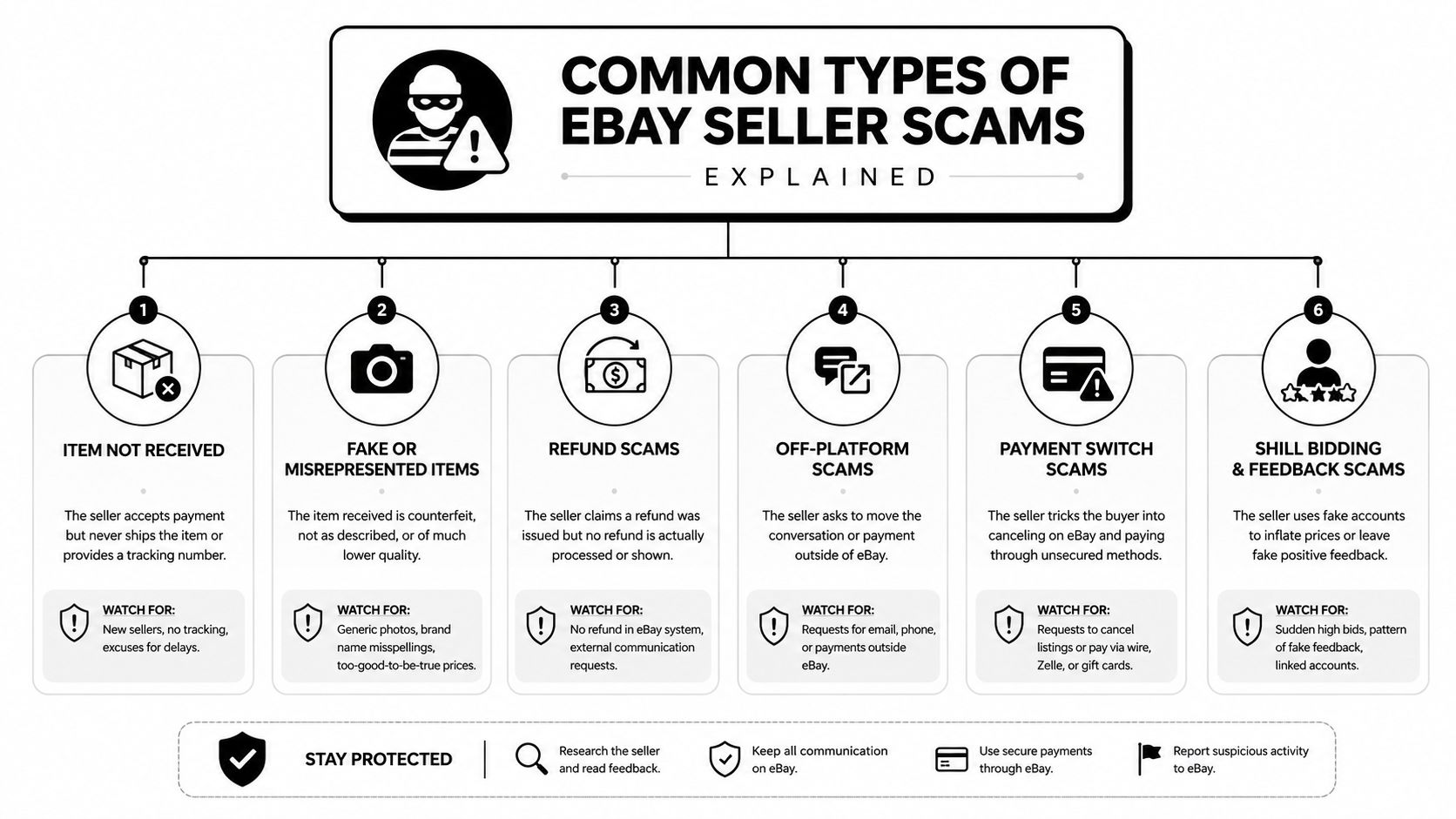
The main scams all follow the same pattern, but they attack different points in the transaction. Some go after your payment method, some target shipping, and some hijack a legitimate account so the fraud looks trustworthy at first glance. A strong defense starts with recognizing which layer is being attacked.
Payment diversion and off-platform pressure
The cleanest scam is also the simplest. The seller asks you to pay outside eBay, often with a method that leaves you outside the marketplace's protection system. That's exactly why California's Attorney General warns buyers to avoid wiring money or sending checks when a seller tries to steer the deal off-site California Attorney General guidance on eBay safety.
Fake goods and misleading listings
Another common tactic is counterfeit or misrepresented inventory. A listing can look polished while hiding vague descriptions, stock photos, missing model numbers, or language that screams imitation. One scam-spotting guide flags terms like “1:1,” “replica,” “AAA quality,” and “same as” as direct warning signs, along with listings priced 40% to 60% below comparable items eBay seller red flags guide.
Shipping manipulation and fake proof
Tracking isn't proof of honesty. Fraudulent sellers may use fake tracking, shipping to the wrong place, or package manipulation to create the appearance of delivery. A tracking number only proves a package entered a system, not that the right item arrived in the right hands. That's why evidence matters so much when you dispute the sale.
Account takeover and impersonation
The ugliest cases involve a real account that's been compromised. Consumer guidance has warned for years that if a seller is pushing private email contact, the account may already be stolen, and the fraudster is using trust built by the original owner Consumer Reports WebWatch guidance on seller fraud. That makes the listing look authentic even when the operator behind it isn't.
Seller persona fraud
Some scammers build a fake identity from scratch, then fill it with copied photos, generic descriptions, and enough feedback noise to look stable. A mismatch between seller tenure, feedback composition, and product category is one of the strongest technical indicators that the profile isn't what it claims to be Norton eBay scam guide. New or low-feedback accounts suddenly listing luxury goods deserve scrutiny, not benefit of the doubt.
Red Flags That Reveal Fraudulent Sellers
A listing that looks like a bargain often is one. If the price sits far below comparable items, treat it as a warning and start checking the seller's footprint instead of chasing the discount. Scammers rely on urgency and the fear of missing out, especially with in-demand goods, because buyers stop asking hard questions.
Read the profile, not just the star rating
A strong-looking star score can hide a weak or mismatched transaction history. A key signal is whether the seller's feedback fits the category they are selling now. A profile built on low-ticket items that suddenly starts pushing expensive electronics or luxury goods is a problem, because the reputation does not support the risk Norton eBay scam guide.
Practical rule: feedback volume matters more than feedback glamour. A shiny profile with the wrong history is not a safe profile.
Compare legitimate and fraudulent listings
| Characteristic | Legitimate Listing | Fraudulent Listing |
|---|---|---|
| Price | Consistent with comparable items | Suspiciously low, often 40% to 60% below comparable items |
| Photos | Original, item-specific images | Stock photos, copied images, repeated visuals |
| Description | Specific model details, serials, condition notes | Vague wording, missing model numbers, vague claims |
| Seller history | History matches the product category | New or low-feedback account listing high-value items |
| Communication | Stays inside the platform | Pushes email, private chat, or off-platform payment |
Watch the language
Counterfeit language gives the game away. So do missing serial numbers, generic condition descriptions, and listings that hide behind urgency instead of specifics. If the seller will not answer direct questions about the exact model, provenance, or packaging, assume they are avoiding the truth.
The digital trail matters too. Use a tool to check if a website is safe, then apply the same scrutiny to the seller's other accounts, domain references, and contact details. Scammers leave patterns across usernames, reused photos, and linked profiles, and OSINT checks can expose those traces fast.
Prevention Strategies for Safe eBay Purchases
The best defense is boring. Stay inside eBay, pay through approved methods, and treat any attempt to move the transaction elsewhere as a hard stop. That's not caution, that's basic survival.
Use the platform the way it was designed
California's Attorney General says to stay on eBay's website and use payment methods designed for internet auction sites, not wire transfers or checks California Attorney General guidance on eBay safety. That advice is old because the attack pattern is old. Scammers win when they drag you out of the protected ecosystem.
Verify the message source, not the email display name
Don't trust email alone. Independent consumer guidance says to check whether the message appears in the eBay inbox or in the Bids and Offers section of My eBay, and not to rely on links in email just because they look official Scambusters eBay guidance. If a message matters, confirm it inside the account you logged into yourself.
Build a quick buyer checklist
- Check the seller history: look for category match, not just feedback quantity.
- Inspect the listing language: avoid vague descriptions and counterfeit phrases.
- Refuse off-platform payment: any request to move the deal is a warning.
- Stay suspicious of urgency: short auctions and pressure tactics are scam tools.
- Use marketplace-approved payment: don't send checks, wire transfers, or gift cards.
The point isn't to become paranoid. It's to remove the attacker's best advantage, which is speed and isolation. If the seller can't control the channel, they lose most of the edge.
If you're also tightening your general online habits, this checklist on personal cybersecurity best practices fits the same mindset. The safer your routine, the harder it is for a scammer to pull you off course.
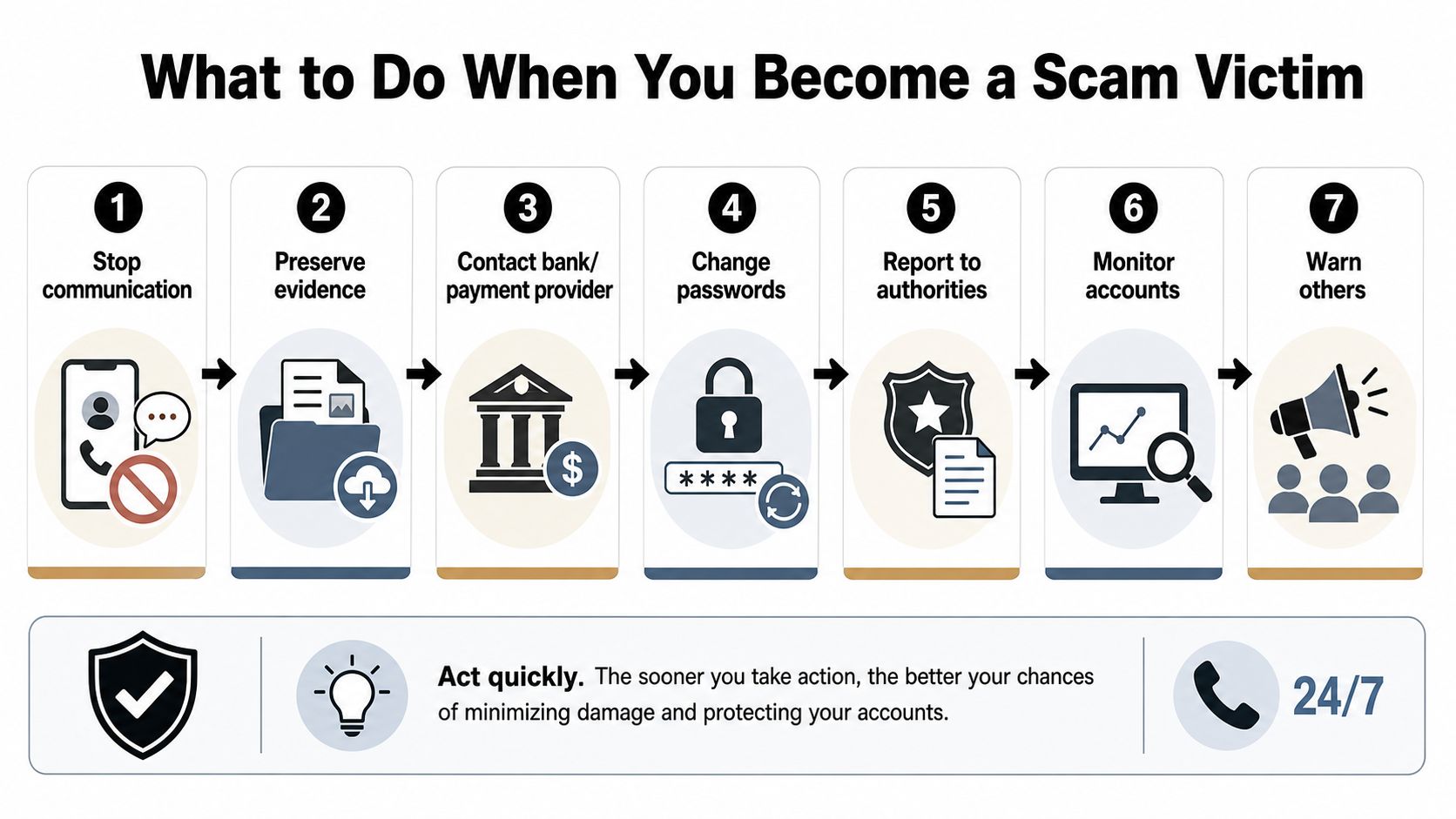
What to Do When You Become a Scam Victim
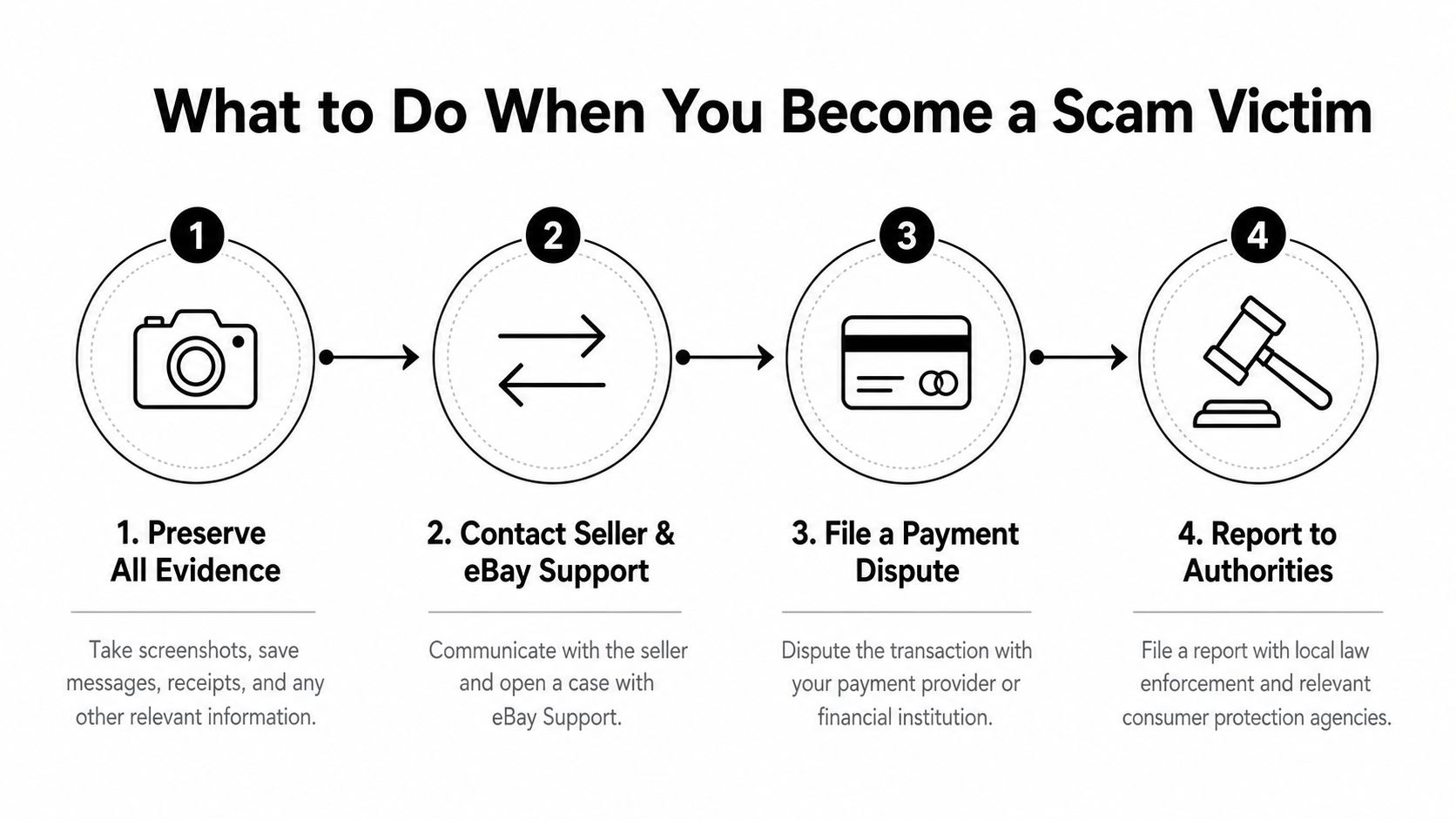
When the deal goes bad, act like evidence is your lifeline, because it is. Save the order ID, the full message thread, tracking data, screenshots, item photos, and packaging material. The point is to build a timeline that survives challenge.
Preserve the evidence chain first
Open the box carefully and keep everything. If the item was damaged, missing, or wrong, document the packaging before you throw anything away. Evidence wins disputes, and casual cleanup destroys evidence.
File inside the right window
One source states that the Resolution Center window is often 30 days for Money Back Guarantee issues, and that clock matters because delay weakens the claim Moonlock eBay scam response guide. Open the case promptly, keep the communication inside eBay, and follow the official path before you start improvising.
Escalate in the right order
A clean recovery sequence looks like this:
- Open the eBay case with your order ID and photos.
- Keep all communication on-platform so the logs stay intact.
- Contact the payment provider if the marketplace path stalls.
- Report the fraud to consumer or law enforcement channels if money or identity exposure is involved.
Keep the packaging, even if you think it's pointless. Fraud cases often collapse because the buyer threw away the one thing that proved the shipment was manipulated.
If you're evaluating a replacement purchase and want to avoid the same trap, even something as ordinary as trying to buy refurbished iPhones should be done with the same discipline. The scam pattern doesn't change just because the item category changes.
For identity exposure after a bad transaction, this explainer on how identity theft happens is worth reading. If you shared personal details, assume the risk extends beyond the sale itself.
Using OSINT Tools to Investigate and Protect Yourself
OSINT works because fraud leaves fingerprints everywhere. A seller profile may look clean on eBay, but the same username, email pattern, or photo asset can show up elsewhere with different behavior. Cross-referencing that footprint is how you separate a real operator from a throwaway scam setup.

What to look for in a suspicious seller
Search for repeated usernames, reused avatars, and identical item photos posted across multiple places. Fraudsters often depend on one-way visibility, where the victim only sees the marketplace listing and nothing else. OSINT breaks that illusion by comparing the same identity signals across services.
Protect your own footprint too
Digital privacy matters even when you're only buying. If your email, username, or phone number is already exposed across multiple platforms, scammers have more to work with when they target you for phishing or account takeover. That's why monitoring your own footprint is useful even if you never sell a thing.
For a beginner-friendly starting point, this guide to OSINT tools for beginners is a practical next step. The idea is simple, collect public signals, compare them carefully, and don't trust isolated data points.
Best practice: use OSINT to verify patterns, not to chase gossip. One suspicious detail is noise, a cluster of matching details is a signal.
Defensive value is key. When you know what your own exposed data looks like, you're harder to phish, harder to impersonate, and less likely to fall for a seller who already knows too much about you. That's marketplace safety and identity protection in the same move.
Building Long-Term Digital Safety Habits
Good marketplace hygiene is just one piece of a larger habit. If you stay skeptical of urgent requests, cross-check identity signals, and keep transactions inside protected systems, you'll make most seller scams fail before they start. Those habits also carry over to gaming accounts, dating apps, and job-related profiles where impersonation is just as common.
Use this guide to protect your online privacy as a baseline, then make verification part of every purchase. The goal is to know what's exposed, what's suspicious, and what needs cleanup before someone else uses it against you.
I'd make one rule essential. Never reward secrecy. If a seller asks for private communication, alternative payment, or any shortcut around the platform, walk away.
If you want a faster way to see what parts of your digital identity are already exposed, use Digital Footprint Check. It helps you review your online footprint, spot risky exposure, and reduce the same kinds of signals scammers use to target victims. Start with a free check, then clean up the data trail before the next fraudster finds it.