· Digital Footprint Check · Content Marketing · 14 min read
Ups Delivery Scam: How to Spot and Stop Fake Alerts
Got a suspicious text about a package? Learn how to identify and report a UPS delivery scam, protect your data, and prevent future phishing attempts.
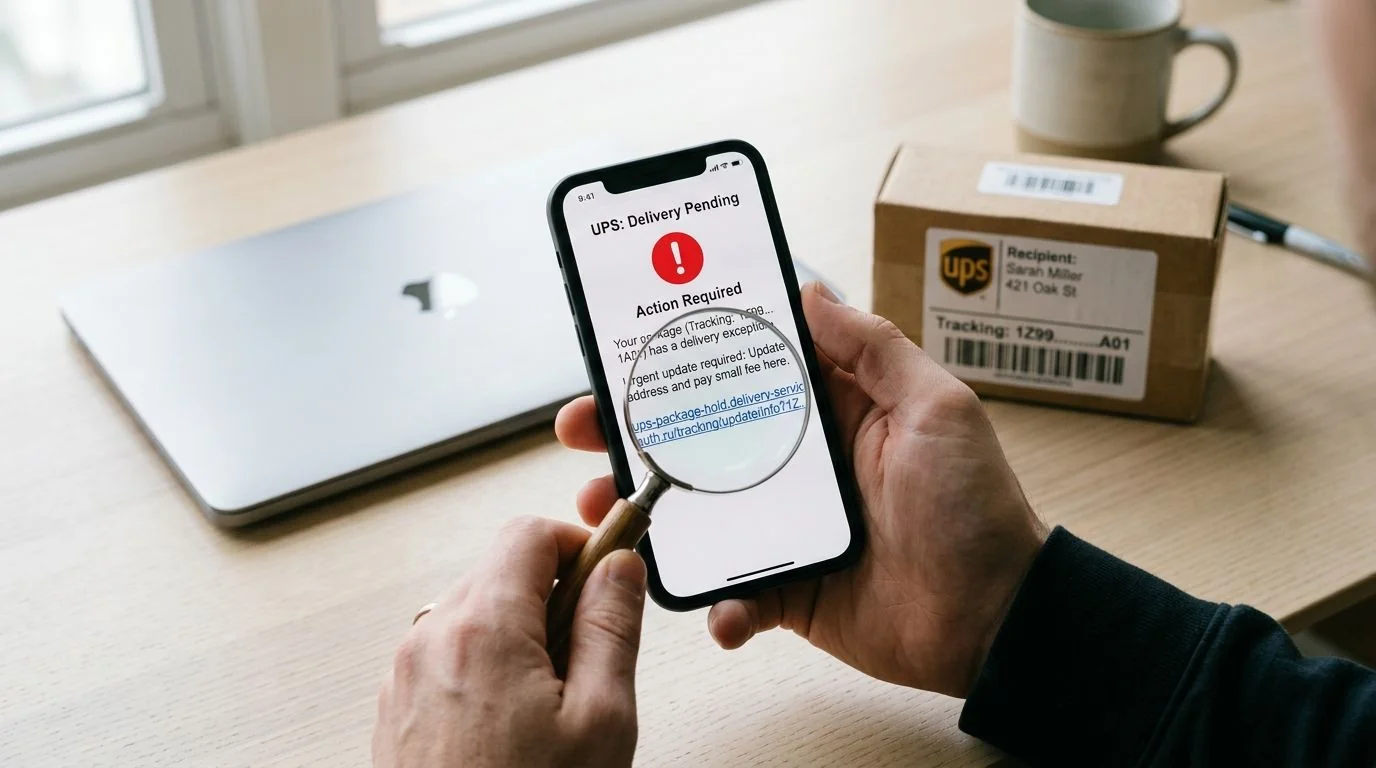
A text lands on your phone while you’re making dinner, commuting, or checking on a gift you ordered. It says your UPS package couldn’t be delivered. There’s a link. Maybe a small fee. Maybe a warning that your parcel will be returned if you don’t act now.
That moment is exactly why the UPS delivery scam works so well. It catches people when they’re busy, already expecting deliveries, and primed to react fast instead of verify carefully.
The threat is widespread. In 2024, the Federal Trade Commission recorded that Americans reported $470 million in losses to text-based scams, and fake package delivery texts were the single most common type. That total was nearly $100 million higher than the previous year, according to AARP’s reporting on FTC scam data.
If you’ve received one of these messages, you’re not overreacting by being concerned. You’re also not powerless. Once you understand how the scam works, what real UPS communications look like, and how to verify a shipment safely, the panic starts to fade.
That Unexpected Text About Your UPS Package
A typical message looks simple enough. “UPS: We couldn’t complete your delivery.” Or, “Your parcel is on hold. Confirm address now.” Sometimes it’s an email instead of a text. Sometimes it includes a tracking number. Sometimes it uses just enough detail to make you think it might be real.
That uncertainty is the hook.
Scammers know many people are shopping online, sending gifts, managing returns, or waiting for important documents. A fake delivery alert doesn’t have to be perfect. It just has to arrive at the right time, when you’re distracted or already worried about a package delay.
Why this feels so believable
A UPS delivery scam works because it blends into ordinary life. You may already be expecting shoes, school supplies, gaming gear, work equipment, or identity documents. If you live with family, several deliveries may arrive in the same week. One suspicious message can feel plausible because everything else around it is real.
Practical rule: If a delivery message creates urgency first and clarity second, treat it as suspicious.
Many people also search the sender right away, or try to figure out whether the number is known to them. That’s a smart instinct. If you want to investigate unfamiliar senders without clicking anything in the message, this guide on how to find out unknown numbers can help you slow the situation down and assess it more safely.
The goal of this scam
The scammer usually wants one of three things:
- Your payment details so they can steal card information through a fake fee page
- Your login credentials by pushing you to a fake website that imitates UPS
- Your personal data such as name, address, phone number, or email for later fraud
The message may mention a missed delivery, an address problem, customs charges, or a redelivery fee. The wording changes. The pressure stays the same.
The Anatomy of a UPS Phishing Scam
A UPS phishing scam doesn’t start with the text you receive. It starts earlier, when criminals gather bits of personal information and use them to build a message that feels credible.
In one especially revealing case, fraudsters exploited UPS’s online shipment tracking tool in Canada in 2023 to harvest phone numbers and other sensitive shipment data, then used that information to create highly targeted SMS phishing messages, as reported by Krebs on Security.
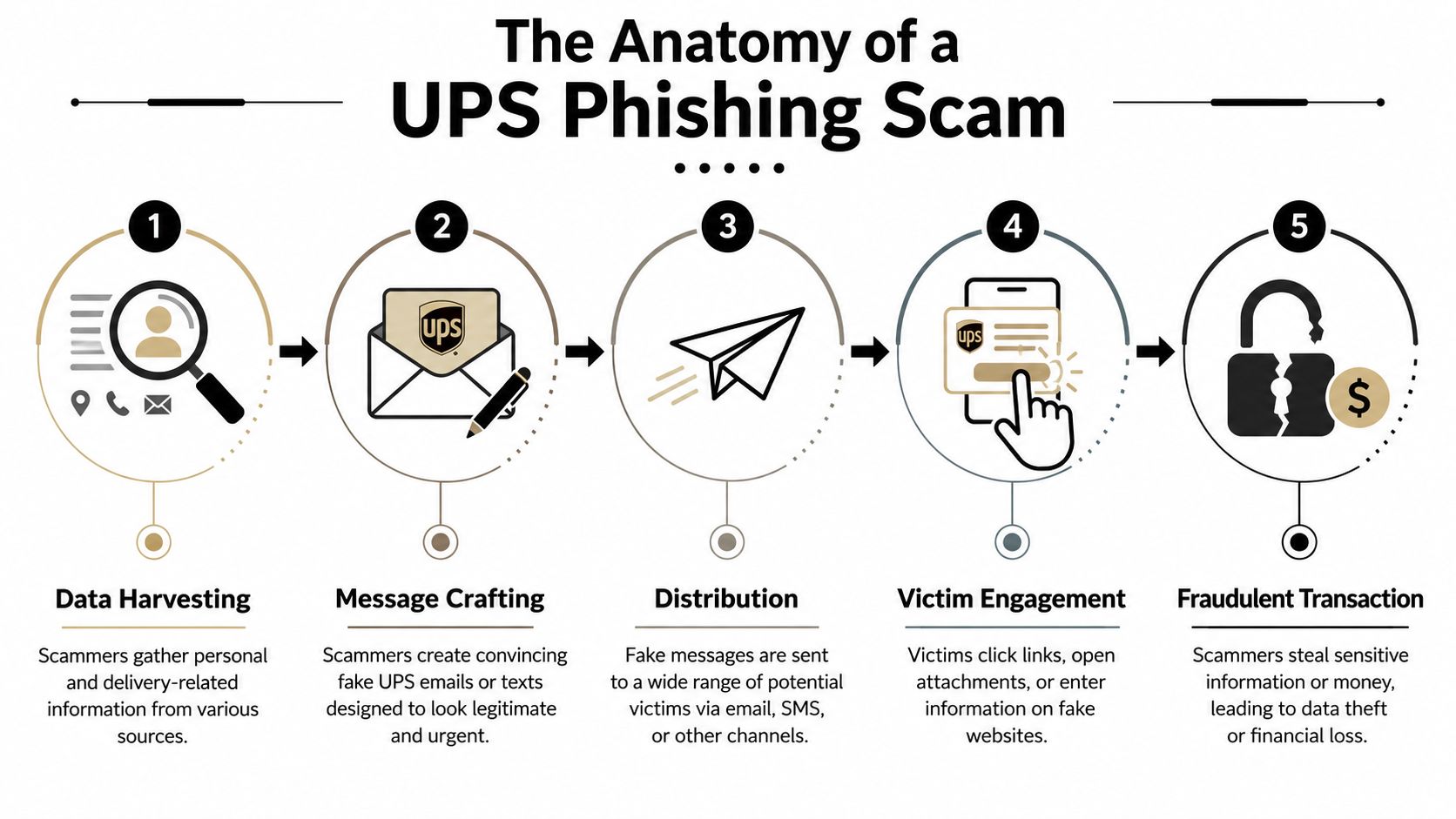
Step one is data harvesting
Think of this like a burglar checking which houses have lights on. Online criminals do something similar with personal data. They look for exposed phone numbers, shipment details, names, and email addresses. They may get those details through privacy incidents, public profiles, old breaches, or abused online tools.
That matters because a message feels more trustworthy when it lands on the right phone at the right moment.
Step two is message crafting
Once scammers have enough detail, they build a fake UPS alert designed to trigger urgency. They might claim your address is incomplete, nobody was home, or you need to pay to release the package. Some use subtle domain tricks, often called typosquatting, where the link looks close to a real UPS address but isn’t.
A fake sender might replace a letter with a number, drop a letter, or use a lookalike domain. Good email hygiene helps here. If you want a broader framework for spotting these tricks in everyday inbox use, review these email security best practices.
Step three is the click
This is the emotional center of the scam. The criminal wants you to react before you think. The text says “finalize delivery now” or warns that your parcel will be returned. The email says there was an address issue. The point isn’t just to inform you. It’s to rush you.
Panic is the scammer’s shortcut around your judgment.
Step four is data theft or payment fraud
If you click, the fake site may ask for card details, account credentials, address confirmation, or other personal information. Some scams aim for immediate payment theft. Others collect data covertly so criminals can use it later for identity theft, account takeover, romance scam pretexting, or more convincing phishing attempts.
That’s where this becomes bigger than one package. A stolen email and password can affect shopping accounts, gaming profiles, dating apps, and even professional accounts tied to your reputation.
Real Examples of Fake UPS Messages
Seeing the scam in plain language makes it easier to recognize under pressure. The fake messages change often, but the red flags stay surprisingly consistent.
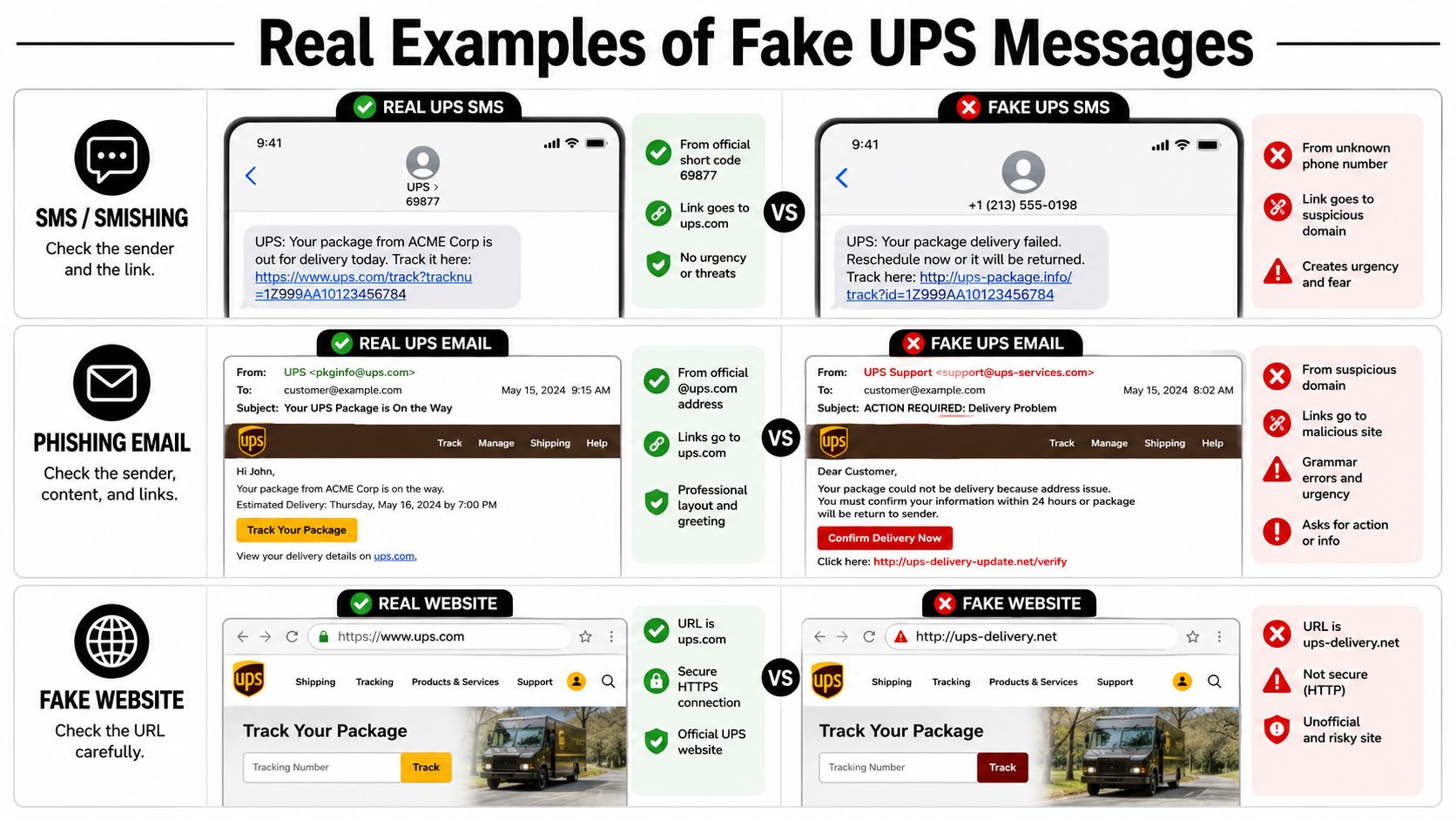
What a fake text often looks like
A scam text may say:
Your UPS delivery is pending. Finalize delivery now.
That message is suspicious for several reasons. A key technical indicator of a fake UPS text is the lack of a valid tracking number verifiable on UPS.com, along with shortened or non-UPS.com links and pressure phrases such as “finalize delivery now”. Legitimate UPS text communications often originate from 75137, according to Aura’s UPS text scam breakdown.
UPS communications that come from odd numbers, international numbers, or random area codes deserve extra scrutiny. Another useful detail is that UPS text communications are widely identified as coming from 75137, as noted by Norton LifeLock’s UPS scam guidance.
What a fake email often looks like
A phishing email may use a subject line like “Delivery Exception” or “Urgent parcel update.” Inside, it might contain a generic greeting, awkward wording, or a message that pushes you to click a button rather than verify independently.
Common warning signs include:
- Spoofed sender details where the address looks close to UPS but isn’t
- Urgent payment requests for redelivery or release of a package
- Generic greetings such as “Sir or Madame”
- Links that don’t resolve to UPS-owned domains
- Requests for gift cards, cryptocurrency, or wire transfers, which UPS doesn’t use for legitimate delivery fees
What a fake website often looks like
The page may copy UPS branding, colors, and layout. That doesn’t make it legitimate. Scam pages often look polished enough to pass a quick glance on a phone screen.
Check the destination carefully. Legitimate UPS links strictly originate from known domains such as https://ups.com, https://billing.ups.com, or https://ftp2.ups.com for ePackage services, as described in ExpressVPN’s technical guide to UPS scam emails.
Real vs. Fake UPS Message Comparison
| Feature | Legitimate UPS Message | Scam Message |
|---|---|---|
| Sender | Often tied to recognized UPS channels, with texts often associated with 75137 | Random phone number, unusual area code, or a sender that only looks similar to UPS |
| Tracking number | Can be checked directly on UPS.com | Missing, invalid, or can’t be verified on UPS.com |
| Link destination | Uses known UPS domains | Uses shortened links, misspellings, or non-UPS domains |
| Tone | Informational and specific | Pushy, urgent, threatening, or vague |
| Payment request | Doesn’t demand gift cards, cryptocurrency, or wire transfers | May ask for immediate fee payment using suspicious methods |
| Greeting and wording | Professional and clear | Generic greeting, odd grammar, strange formatting |
| Action to take | Verify through your order details or official UPS site | Click the embedded link right now |
A quick gut-check list
Before trusting any UPS message, pause and ask:
- Can I verify the tracking number on UPS.com
- Did this come from a recognized UPS channel
- Is the link clearly a UPS domain
- Is the message trying to rush me
- Would I still trust this if I weren’t expecting a package
That last question helps more than people expect.
Your Immediate Action Plan for a Suspicious Message
When a suspicious UPS text or email arrives, you don’t need a complicated response. You need a calm one. The first few minutes matter because the scam is designed to make you react fast.
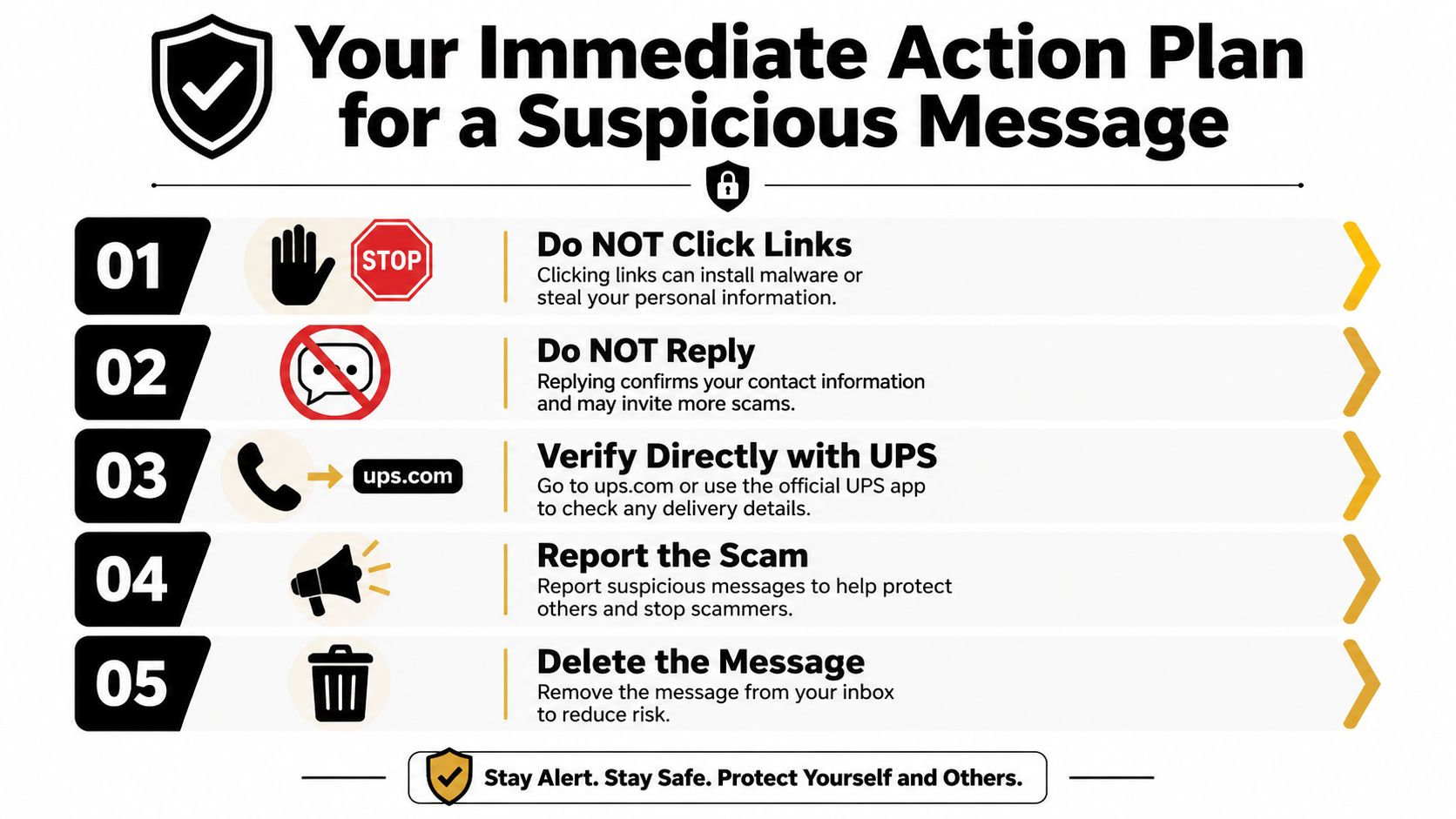
The first five things to do
Don’t click the link
The link is the trap. Even if the message looks polished, treat the embedded link as untrusted.Don’t reply
Replying can confirm your number is active. It also keeps you engaged with the scammer’s script.Verify through official UPS channels
Open your browser yourself and type the official UPS website manually. If you have an order confirmation from a retailer, use that original order record instead of anything in the message.Report the scam
If the message claims to be from UPS, forward suspicious emails or screenshots to fraud@ups.com. You can also report internet fraud through ic3.gov and to the FTC. Reporting helps investigators track patterns and warn others.Block and delete the message
After you’ve saved any evidence you need, remove it so you don’t accidentally tap it later.
A short visual walkthrough can help if you want to see the process in action:
If you already clicked
Clicking doesn’t always mean immediate disaster, but it does mean you should act quickly.
- If you entered a password, change it right away anywhere else you’ve reused it.
- If you entered card details, contact your bank or card issuer and explain what happened.
- If you downloaded anything, run security checks on the device and watch for unusual behavior.
- If you gave up your email address, be alert for follow-up phishing, account reset emails, and credential stuffing attempts.
If you’re worried your inbox may already be part of a larger breach or phishing cycle, use this guide to check if your email was hacked.
Act fast, but act in order: contain the risk first, then report it, then clean up exposed accounts.
What not to do
People often make things worse because they’re embarrassed or in a rush. Avoid these common mistakes:
- Don’t trust the phone number inside the message
- Don’t use the message’s tracking link to “double-check”
- Don’t assume a small payment request is harmless
- Don’t keep the message around for later if you’ve already confirmed it’s fake
The scam relies on hesitation almost as much as panic.
How to Securely Verify Any UPS Shipment
The hardest part of a UPS delivery scam isn’t spotting a bad message when you’re not expecting anything. The hard part is what happens when the timing is perfect.
Maybe you really are waiting on a package. Maybe a gift is delayed. Maybe your child ordered something for gaming, your partner is expecting a work shipment, or you’re waiting for replacement documents. In those moments, generic advice like “just check the tracking number” isn’t always enough.
A major blind spot in scam advice is what happens when you don’t have a tracking number at all. In that situation, 42% of victims couldn’t perform a check and ended up clicking the fraudulent link, according to Fox 35 Orlando’s report on UPS package delivery scams.
If you are expecting a real package
Use a clean verification chain. That means you ignore the text or email and work backward from something you already trust.
- Open the original store confirmation from the retailer where you placed the order
- Find the tracking information there, if it exists
- Type UPS.com into your browser manually
- Enter the tracking number yourself
- Compare the delivery status with your order details
Don’t use the number, button, or link inside the suspicious message. A real delivery problem can exist at the same time as a scam. That’s what makes this scenario so dangerous.
If you aren’t expecting a package and have no tracking number
Many people often freeze. They think, “What if someone sent me something?” or “What if this is a missed package I forgot about?”
Use a different process:
| Situation | Safe verification method |
|---|---|
| No tracking number | Contact UPS directly using official contact details you look up independently |
| Strange sender or unusual link | Don’t interact with the message. Check the official UPS site manually |
| Claimed payment due | Assume it’s suspicious until verified directly with UPS |
| Claimed package arriving tomorrow | Wait for confirmation through channels you already trust, such as a known retailer account or official UPS lookup |
If you need to inspect a suspicious delivery page without visiting it blindly, this guide on how to check if a website is safe is useful.
If you can’t verify a shipment independently, that is not a reason to trust the message. It’s a reason to slow down and contact UPS directly.
UPS’s official phone number is 1-833-242-1931 in the verified guidance provided for this topic. If a message gives you a different number, don’t assume it’s real.
Proactive Strategies to Prevent Future Scams
It’s often thought that a UPS delivery scam is a one-time nuisance. It isn’t. It’s often a sign that your personal details are circulating in places you can’t easily see, such as old data exposures, public profiles, reused credentials, shopping accounts, or searchable social media posts.
That broader picture matters for more than package fraud. The same details that make a fake delivery text believable can also be used against your dating app identity, gaming accounts, job-search reputation, or family members who share contact details online.

Reduce what scammers can use
The less exposed information criminals can collect, the harder it is for them to build convincing pretexts.
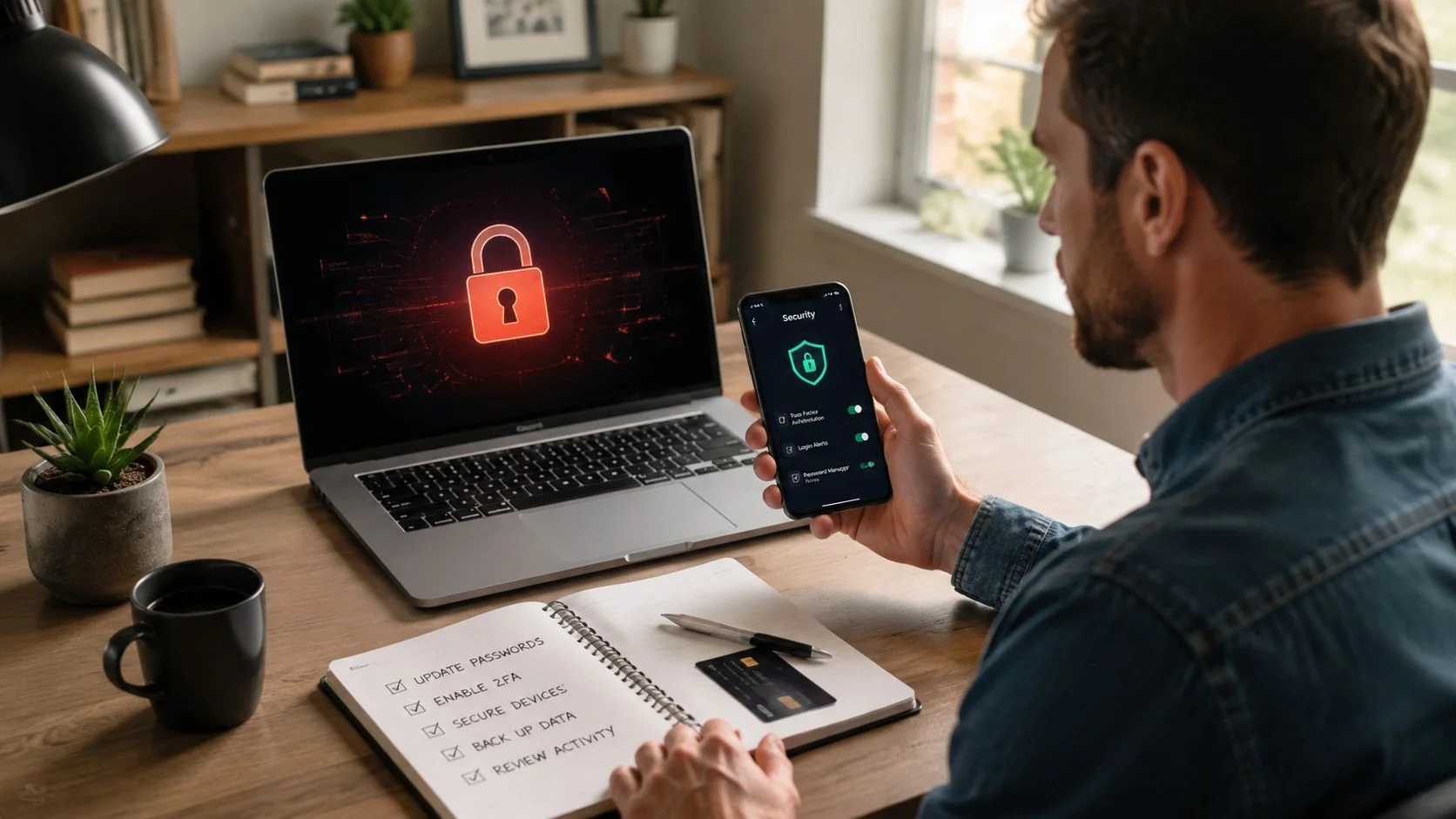
- Use unique passwords for shopping, email, banking, gaming, and social accounts
- Turn on two-factor authentication wherever it’s available
- Limit public exposure of phone numbers, email addresses, and home details on social platforms
- Review old accounts you no longer use, especially retail, marketplace, and forum accounts
- Be selective about what you post when sharing travel, deliveries, gifts, or personal milestones
A password manager helps here because reused credentials turn a small phishing mistake into a bigger identity problem. These password manager best practices are a good place to start if you haven’t built that habit yet.
Think beyond one scam
A fake UPS message isn’t just about a fake package. It can be an entry point.
If someone gets your email and password, they may try the same login on shopping sites, gaming services, and social platforms. If they collect your name, address, and phone number, they can build more convincing lures later. If they learn your interests or shopping habits, they can tailor scams around online dating, giveaways, marketplace sales, or fake support requests.
That’s why general cyber hygiene still matters. For a broader overview of current threats and defensive habits, this guide on how to defend against cyber attacks gives useful context.
Build a family-level routine
One of the most effective defenses is a shared household rule:
Never act on delivery messages from inside the message itself. Verify separately.
That simple habit protects parents, teens, older relatives, online shoppers, and even gamers waiting on hardware deliveries or account-related shipments. It also lowers the chance that one family member’s rushed click becomes a wider financial or identity theft problem for everyone else.
From Potential Victim to Vigilant Protector
A UPS delivery scam works by borrowing trust from everyday life. It shows up when you’re busy, expecting a package, or unsure whether the alert might be real. The best defense isn’t panic or guesswork. It’s independent verification.
Watch for the pattern. Suspicious sender. Pressure to act fast. Link that doesn’t clearly belong to UPS. Payment demand that doesn’t make sense. Tracking details you can’t verify. Those clues matter more than logos or polished wording.
If a message feels off, stop. Verify through your own records, the official UPS site, or a trusted phone number you looked up yourself. If you’ve already clicked, contain the risk quickly and report it.
Long term, your safety depends on more than spotting one text. It depends on reducing your exposed personal data, securing your accounts, and building habits that make phishing harder to pull off. That’s how you move from reacting to scams to staying ahead of them.
Your digital footprint often explains why scams reach you in the first place. Digital Footprint Check helps you see what personal information is exposed across the web so you can reduce privacy risks, protect your identity, and make yourself a harder target. If you want a simple starting point, try the free scan at www.digitalfootprintcheck.com/free-checker.