· Digital Footprint Check · Content Marketing · 19 min read
8 OSINT Examples: Real-World Privacy and Security Lessons
Explore 8 OSINT examples from Bellingcat, Have I Been Pwned, and romance scam checks, with tactics for privacy, safety, and ethical investigation.
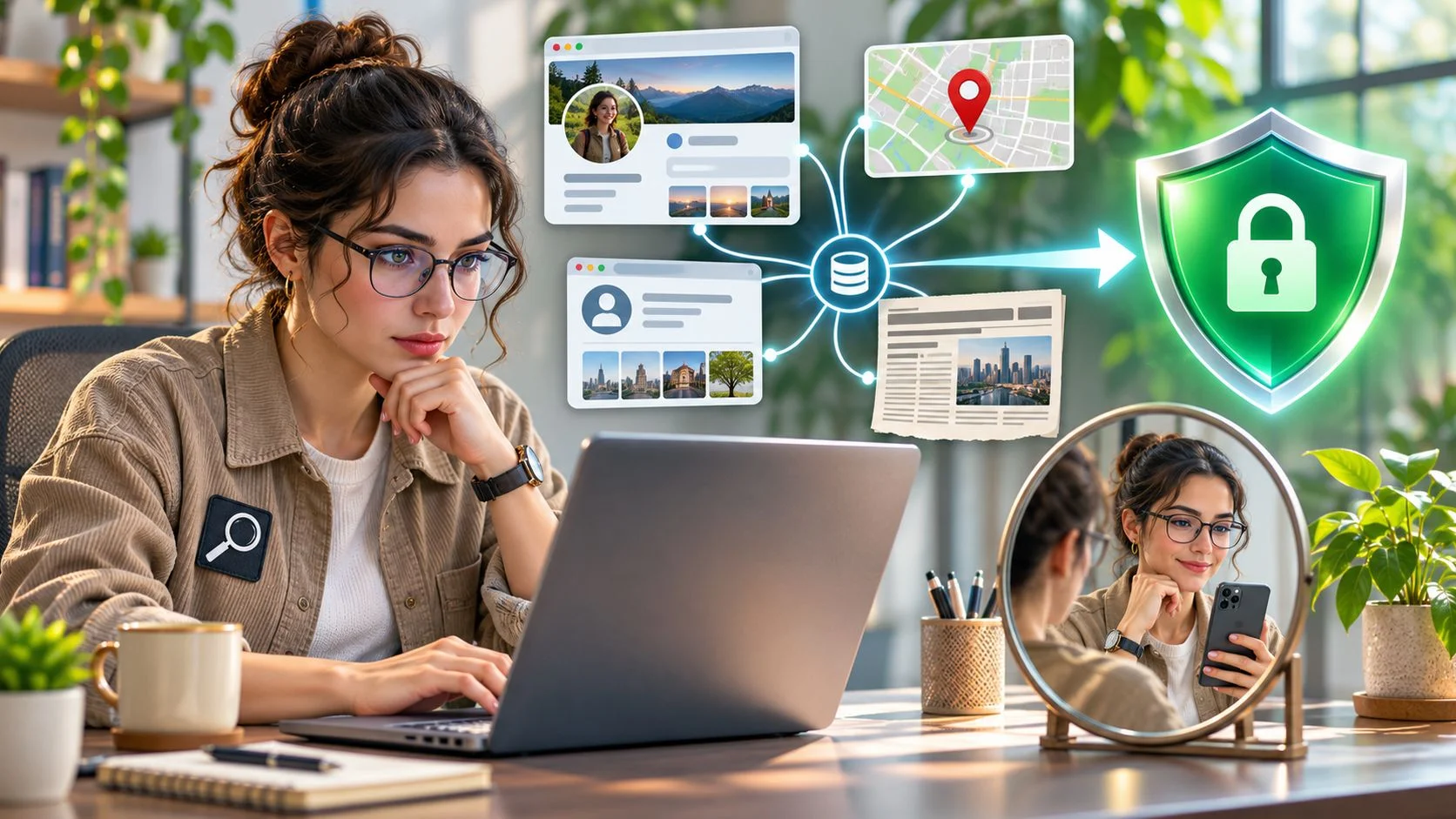
You've got an interview on Thursday. It's late on Tuesday, and you're three pages deep into searching your own name, hoping nothing embarrassing sits above your CV. Or you matched with someone whose photos look a little too polished, and you're trying to work out whether the face belongs to the person who sent it.
Both of those moments are OSINT, short for open-source intelligence: the structured collection, verification, and interpretation of legally accessible public information. No hacking. No paid database. Just method.
The discipline has real institutional history. A major milestone came in 2005, when the U.S. Office of the Director of National Intelligence established the Open Source Center on the recommendation of the 9/11 Commission, as an academic history of open-source intelligence documents.
Theory tells you what OSINT is. Cases tell you where it breaks. The same pattern that runs through famous reputation crisis case studies runs through the eight examples below: one unverified assumption travels faster than any correction.
Here are eight OSINT examples, each stripped down to the method you can copy and the limit you shouldn't cross.
1. Bellingcat and the MH17 Investigation, Identifying a Missile Launcher from Public Posts
When Malaysia Airlines Flight MH17 was brought down over eastern Ukraine, some of the first useful evidence came from people filming a heavy vehicle on a flatbed truck, with no idea what they were recording. Independent researchers, most visibly the Bellingcat network founded by Eliot Higgins, turned that scattered material into a testable timeline.
How a photo becomes evidence
Investigators geolocated and time-sequenced social-media photographs and videos by matching road layouts, buildings, billboards, terrain, shadows, and satellite imagery. They also found a physical fingerprint: damage to the rubber side skirt above the tracks of a Buk missile system, which stayed consistent across separate images.
Image-forensics review found no evidence of digital alteration in photographs showing the launcher and the suspected launch smoke. The same review concluded that Russian Ministry of Defense satellite imagery had been manipulated and was not credible evidence.
By correlating convoy imagery, vehicle features, witness accounts, launch-site geography, and public satellite data, the investigation identified Buk 332, from Russia's 53rd Anti-Aircraft Missile Brigade near Kursk, as the only credible launcher candidate, as Bellingcat's MH17 review sets out.
Why the method held up
Reproducibility is what gave this evidence weight. In proceedings concerning MH17, the European Court of Human Rights noted that the Joint Investigation Team analysed the evidence itself, and that consistency between its conclusions and those reached independently by Bellingcat and other open-source contributors enhanced the credibility and reliability of the findings, as recorded in Bellingcat's account of the court ruling.
Copy the habits, not the drama:
- Archive on sight. Save the original URL and capture the page the day you find it. Posts get deleted and accounts get locked, and a dead link is not evidence.
- Check the timestamp against the event. A photo posted after a battle can still have been taken weeks earlier. Reverse image search and available metadata both help.
- Score confidence, don't announce identity. One match is a lead. Two unrelated source types agreeing is evidence.
The rule that survives contact with real cases: every finding should be auditable by someone who can reconstruct where it came from, when you collected it, and which part is your inference.
Your version of this: checking whether a dating profile photo is stolen follows the same three habits. Archive the profile, reverse search the image, and treat any hit as a hypothesis.
2. Crowdsourced Identification After the Boston Marathon Bombing, A Cautionary OSINT Case
The Boston Marathon bombing produced the clearest warning in the field. After the FBI released surveillance images and asked the public for help, online communities, Reddit most of all, began matching faces in crowd photographs against missing-person reports and personal photo albums.
People were named. Some of those names belonged to innocent strangers. Sunil Tripathi, a missing Brown University student, was named as a suspect, and his family, already living through a disappearance, faced public harassment. Media outlets later issued corrections, and the episode became a standard teaching case on verification discipline.
The lesson that gets skipped
Attention is not evidence, and neither is consensus. A crowd repeating a guess doesn't verify it. Say a photo shows a young man in a blue jacket near a barrier. Within an hour, someone has matched the jacket to a missing student's last photo and posted his name, and the match spreads faster than any correction.
The 2009 Iranian election protests showed the upside of the same dynamic: during the first week, 60% of all blog links posted on Twitter concerned Iranian politics, according to Bellingcat's brief history of open-source intelligence. Smartphones and blogs produced a huge, decentralized stream of eyewitness material. They also produced reposts, mislabeled dates, and manipulated images at the same speed.
That problem has sharpened. Recent industry analysis of OSINT practice identifies source verification, data quality, privacy compliance, and generative-AI-enabled deception as central challenges, and makes the contrarian point that more data does not necessarily produce better intelligence. Automated collection amplifies stale, duplicated, or deliberately planted material as easily as real signals.
Working rules for a crowd, or a team of one:
- Separate a lead from a finding. Write down what you observed and what you concluded in two different columns, and don't merge them.
- Run a false-positive check before you speak. Ask who else fits the same description, then go looking for them.
- Report to authorities, not to a timeline. If the information matters, investigators can act on it. A public post mostly harms the person you got wrong.
Never publish a name or photograph of a private individual without evidence you'd be willing to defend in a courtroom.
3. The Panama Papers, Mapping Offshore Networks from Leaked Corporate Records
Start with the file names before you start with the people. That kind of work looks like this on a desk.

The Panama Papers, published by the International Consortium of Investigative Journalists, were built from documents leaked out of the Panamanian law firm Mossack Fonseca. Reporters didn't just read the files. They linked them to public corporate registries, court records, and social profiles to map shell companies, directors, and beneficial owners across dozens of jurisdictions.
What made the project replicable
The leaked material told reporters which names to look for. Public records told them whether those names meant anything. A name in a registry isn't proof of ownership until you can tie it to a date of birth, an address, a role, or a second document that agrees.
Any small business can run the same order of operations. Say a supplier's registration lists a director whose name also appears on a shell company in another country. That's a lead, not a finding. Pull the filings for both entities, compare officer lists and filing dates, and see whether the same person appears with matching registration details before you put it in a report.
- Registries first, allegations second. Public company records are lawful, dated, and citable. Start where the paperwork is.
- Log the source and date of every document. Registries get amended and filings get restated.
- Break name matches apart. Common names produce false positives constantly. Date of birth, address, and role are what turn a match into a person.
When you're doing this for a client, a deal, or a hire, the workflow matters more than the tool, and our guide to due diligence investigation walks through the same sequence.
4. Breach Monitoring with Have I Been Pwned, Knowing When Your Credentials Are Exposed
Breaches are not rare events. In 2025, U.S. state attorneys general and federal agencies reported 4,080 unique breach events affecting approximately 375 million individuals, according to the Privacy Rights Clearinghouse 2025 data breach report. Your email address is almost certainly in one of them.
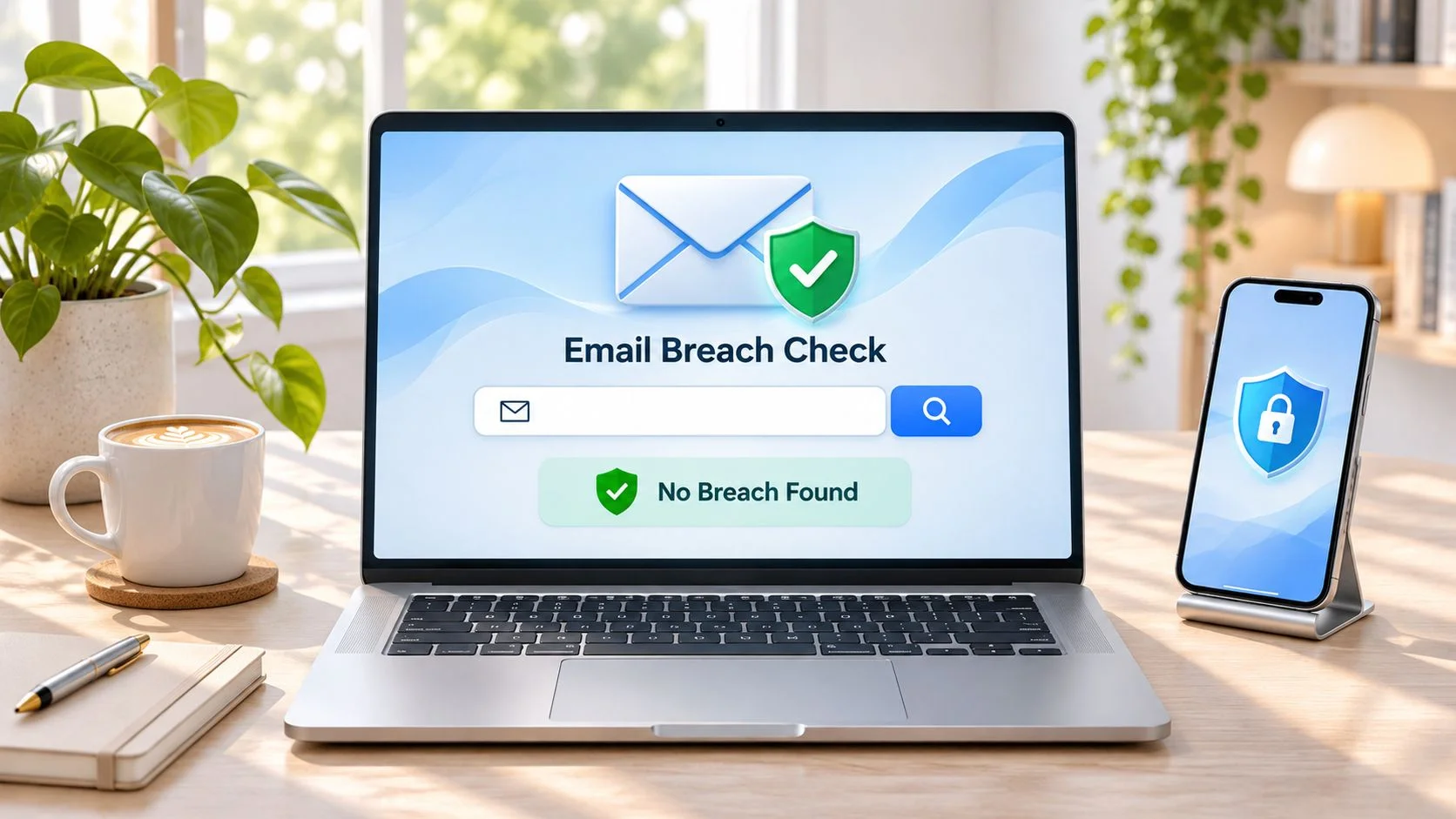
Have I Been Pwned, built by security researcher Troy Hunt, aggregates breached datasets that have been publicly shared or disclosed, then lets you search an email address and receive notifications when a new breach includes it. Its password check uses k-anonymity, so the full password never leaves your machine.
The part people skip
Finding your address in a breach is the easy half. The hard half is what happens next.
The NIST Digital Identity Guidelines define phishing as an attack where a subscriber is lured into interacting with a counterfeit verifier and tricked into revealing information that can be used to impersonate them at the legitimate service. The same guidelines grade authentication: AAL1 gives minimal protection against attacks focused on passwords, AAL2 supports multifactor authentication and offers phishing-resistant options, and AAL3 requires phishing resistance plus protection against verifier compromise.
In practice, any MFA beats a password alone, but a one-time code typed into a fake login page still hands over your session.
- Check every address you own. The old university one, the old employer one, the one you made for a gaming account years ago.
- Change breached passwords, then change the pattern. A tweaked version of the same password is not a new password.
- Protect the recovery channel first. If you harden only one account, harden the email that can reset all the others.
- Use a manager to generate unique strings. Memory is not a security control.
If you only do one thing this week: open your recovery email, confirm the recovery phone number and backup codes are current, and enable phishing-resistant MFA there before you touch anything else.
If you want a second opinion after HIBP, our Have I Been Pwned alternative checks exposure across a wider set of public sources.
5. Trace Labs and Crowdsourced Missing Persons Searches
Some of the most disciplined OSINT work happens on a clock, for a family you'll never meet. Trace Labs is a nonprofit that runs OSINT search events, sometimes structured as capture-the-flag competitions, where volunteers receive a case file of publicly available information about a missing person and use legal open-source methods to find traces: social profiles, public posts, location clues, old forum accounts. Verified findings go to investigators, who decide what happens next.
Why the structure works
The design is the point. Volunteers never contact the subject. They never touch private accounts. They compete on documented, reproducible leads rather than on volume, and a volunteer who finds nothing useful has still done the job correctly. That's rare in this field.
A worked example of a good lead: a participant finds a username tied to a hobby forum, and posts from three years ago mention a town and a sibling's first name. They don't message the account. They log the URL, the post date, and the method that connected the username to the case file, then pass all three to the case coordinator, who checks them against what the family already knows.
- Stay inside public, legal sources. No password guessing, no private-account access, no pretexting.
- Record the URL, the date, and the method. A finding your reviewer can't reproduce is a rumour with a screenshot.
- Route it to the authority, not the person. Contacting a missing adult directly can put them at risk.
- Accept a not-enough-evidence outcome. Write it down rather than filling the gap with speculation.
When a case moves past volunteer capacity and into formal tracing, families and employers often hand it to professionals such as finding missing people London, who work under the same legal boundaries with more resources.
6. Romance Scam and Catfishing Detection Using Reverse Image Search and Profile Verification
The Federal Trade Commission reported that nearly 60% of people who said they lost money to a romance scam in 2025 stated the scam began on a social-media platform, and put losses from romance scams originating on social media at $298 million for that year, according to the FTC's social media spotlight report.
That figure describes a mechanism, not bad luck. Scammers study what's visible on a target's profile, tailor the approach, build trust, then invent a crisis that requires money or steer the target toward a fraudulent investment platform.
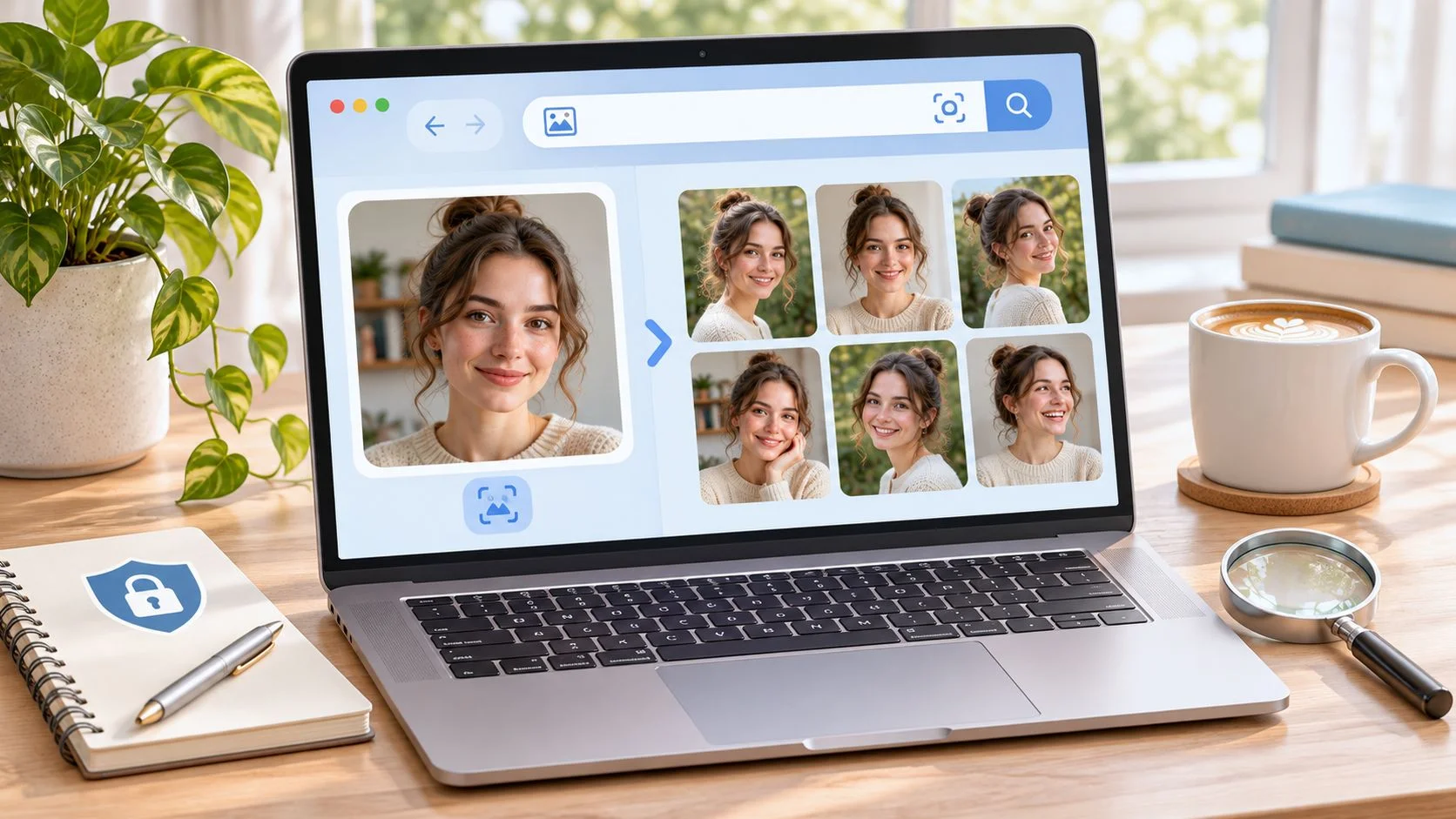
Three checks that take ten minutes
Reverse image search the profile photos. If the same face appears on an unrelated account with a different name, job, or country, stop. Search the username and any email or phone number you've been given, and see whether the accounts that come back agree with the story you're hearing. Then ask for a live video call and watch what happens, not just what's said. A refusal plus a reason is information.
The Netflix documentary The Tinder Swindler made the pattern famous, but the pattern is older and cheaper than the documentary suggests. A stolen photo gallery and a scripted biography cost almost nothing to assemble.
If a conversation moves off the dating app to another platform within days, treat that as a warning, not a compliment. A scammer wants more material and fewer moderation rules.
- Never send money, gift cards, or cryptocurrency to someone you haven't met in person. Emergencies, investments, customs fees, hospital bills: they're all the same request.
- Verify claims independently. A job title, an employer, a city. Real people leave corroborating traces.
- Report the profile to the platform and to the FTC or your local authority, even if you got out early.
For a repeatable method, our guide to reverse image search for people covers the sequence step by step.
7. Pre-Employment Screening, Ethical and Compliant Social Media Background Checks
A hiring manager opens a candidate's public profile before the interview. The post is old, the context is unclear, and the role has nothing to do with it. That is where a written screening policy earns its value.
A 2024 peer-reviewed study on social-media screening in recruitment, by Yeqing Kong and Huiling Ding, reports that a 2018 CareerBuilder survey found 70% of employers screened candidates' social-media content during hiring, and 57% of employers rejected candidates because of damaging social-media content, as published in the Journal of Business and Technical Communication. Those numbers cut both ways. Job seekers should assume a recruiter will look. Employers should assume a rejected candidate might ask how the decision was made.
The difference between screening and snooping
Done well, screening means checking professional profiles, published work, licences, and public records against what the application claims. Done badly, it means reading an old argument on a personal profile and calling it culture fit. The method creates the risk.
Check the hiring laws that apply where you operate and who is doing the search. If a third party compiles a background report, different duties may apply. If the process involves personal data from people in Europe, data protection rules may affect what you collect, why you collect it, and how long you keep it. When in doubt, keep the search job related, limited, and documented.
A defensible check looks like this on a desk.

Two candidates, same public record issue, two different outcomes. That's a discrimination claim waiting to happen, and consistency is the defence.
- Define the purpose in writing before anyone opens a browser. Job-relevant criteria only.
- Never ask for passwords or account access. It's a legal problem and a trust problem at once.
- Give the candidate the finding and a chance to explain. Context changes meaning more often than people expect.
- Keep a record of what was checked and by whom. So the next candidate gets treated the same way.
A useful report stays narrow. A sample report shows only the source categories and is illustrative, not a real person's search result. That matters because a hiring decision should rest on checked evidence, not a polished dashboard. Our pre-employment screening process follows that order: purpose, scope, evidence tiers, human review.
8. Gaming Account Security Audits, Lessons from the PlayStation Network Breach
Gaming accounts became identity documents. They hold payment methods, friends lists, purchase histories, and often the same email address you use for work.
The PlayStation Network breach is the reference case. Sony's network was compromised, personal information for a very large number of accounts was exposed, and the service was taken offline while Sony investigated. Sony offered identity theft protection and told users to change passwords. The lesson that outlasted the headlines is how much a gaming account holds, and how little attention most players give it.
An OSINT-style audit of a gaming identity looks like this:
- Find the email behind the account, then check that address for breach exposure.
- Map reused usernames. The handle you've used since you were a teenager connects your game profile, forum posts, and old comments into one identity.
- Read your public profile as a stranger would. Real name, birth year, hometown, squad, play schedule. Attackers use all of it for social engineering.
Hacking-related incidents accounted for 77% of reported breaches, out of 2,349 breaches affecting 9,275,938 residents reported in North Carolina in 2025, according to the North Carolina data breach report. Credential attacks are the default, not the exception.
Recovery is the real attack surface
The NIST authentication guidance states that a verifier or credential service provider should bind at least one physical authenticator to a subscriber's online identity, and at least two when possible, alongside a memorized secret or biometrics. The reason is recovery: a second device or key means a lost phone isn't a lost account. The same guidance notes that human-assisted recovery creates social-engineering risk, because an attacker can impersonate the owner to persuade support staff to reset access.
That's why the checklist ends at recovery, not at login. Turn on MFA, register a backup authenticator, store recovery codes offline, and review unexpected password-reset notifications. Attackers go after the reset link because it's cheaper than breaking authentication.
Our breakdown of real data security breach examples applies the same audit to every account you own.
How the 8 OSINT Examples Compare by Use Case, Method, and Risk
| Item | Best For | Core Method | Main Risk |
|---|---|---|---|
| Bellingcat and the MH17 Investigation: Identifying a Missile Launcher from Public Posts | Verifying events and movements in conflict zones | Geolocate and chronolocate public posts, then cross-check sources | Propaganda or fabricated content can mislead researchers |
| Crowdsourced Identification After the Boston Marathon Bombing: A Cautionary OSINT Case | Learning the limits of crowdsourced investigations | Rapidly compare images and public reports | Misidentification can harm innocent people and divert investigations |
| The Panama Papers: Mapping Offshore Networks from Leaked Corporate Records | Investigating complex ownership networks | Link leaked records with public registries and network analysis | Privacy, legal concerns, and mistaken identity links |
| Breach Monitoring with Have I Been Pwned: Knowing When Your Credentials Are Exposed | Checking whether email accounts or passwords appear in known breaches | Search breach datasets and use k-anonymity for password checks | Undiscovered breaches remain unknown, and exposed data cannot be removed |
| Trace Labs and Crowdsourced Missing Persons Searches | Supporting missing-person investigations through volunteering | Search legal public sources and send verified findings to investigators | Privacy violations or distress if volunteers exceed boundaries |
| Romance Scam and Catfishing Detection Using Reverse Image Search and Profile Verification | Assessing whether a dating profile may be fraudulent | Check images, usernames, profile consistency, and video verification | A clean search does not prove a profile is genuine |
| Pre-Employment Screening: Ethical and Compliant Social Media Background Checks | Conducting job-relevant candidate checks | Review public professional information using consistent criteria | Discrimination, privacy violations, and legal noncompliance |
| Gaming Account Security Audits: Lessons from the PlayStation Network Breach | Reducing exposure and takeover risks for gaming accounts | Check reused usernames, breach exposure, public details, and account settings | Audits can miss changing risks or expose users to impersonation |
Use this table as a decision aid, not as a ranking. Each case rewards a different level of caution. A conflict-zone post needs source cross-checking before it becomes evidence. A missing-person tip needs a narrow scope and a clean handoff. A dating profile check needs patience, because a lack of hits proves little.
The method matters as much as the finding. Geolocation, breached-record searches, reverse image checks, and public profile review all start with collection. They become useful only after comparison. Match a name against a location. Match a photo against unrelated accounts. Match an email against known breach exposure. Then write down what the match supports and what it does not.
Risk rises when speed replaces that comparison. Crowdsourced identification can produce false leads and reputational harm. Pre-employment screening can drift into private life or biased judgment. Romance scam checks can turn suspicion into harassment if you contact the wrong person or push beyond public sources. Keep the work inside legal, public, and job-relevant boundaries.
The personal-use takeaway is the same across all eight cases. Use OSINT to decide what deserves attention, not to declare guilt or identity. For privacy checks, remove exposed details you control. For cybersecurity, change reused credentials and tighten recovery options. For journalism and background research, preserve the source, timestamp, and reasoning path so another person can repeat the work.
Turn These 8 Cases Into a Personal OSINT Action Plan
Eight cases, one pattern. The method that worked in every one of them was slower than the alternative: record the source, check the timestamp, compare two unrelated signals, and write down what you know. The failures all came from collapsing that sequence. A crowd named a stranger. A registry entry became proof of ownership. A matching username became an identity.
Verification isn't a stage you finish at the end. It's a habit you apply to every hit before it turns into a sentence, and it's what separates the OSINT examples worth studying from the ones that ended in an apology.
Four rules cover all eight cases. Verify before you trust, and treat any single match as a hypothesis. Document every step, because evidence you can't reproduce is an opinion. Stay inside public and legal sources, since the moment you open a private account the finding stops being defensible. And act on what you find, whether that's changing a password, ending a conversation, or closing an old account you'd forgotten existed.
Your first step takes about fifteen minutes. Search your own name the way a recruiter would, then run each email address and username you've used through a breach and profile check. Many find at least one account they don't remember creating and one profile detail they'd rather not have public.
Start with the free profile check. It searches public sources for accounts tied to your username or email and shows you what's discoverable before someone else does.
If you want this running continuously, PRO starts at $10 per month for 30 searches, with API access and ongoing monitoring alerts that tell you when new accounts or breach exposures appear.
The point isn't to disappear from the internet. It's to know what's out there, so you decide what happens next.
Knowing what's publicly attached to your name, your email addresses, and your old usernames is the difference between managing your reputation and reacting to it in an interview or on a first date. Digital Footprint Check searches 500+ platforms, including social networks, breach databases, gaming profiles, and public records, and returns a report you can act on. Run your own check before an employer, a date, or a scammer runs it for you.